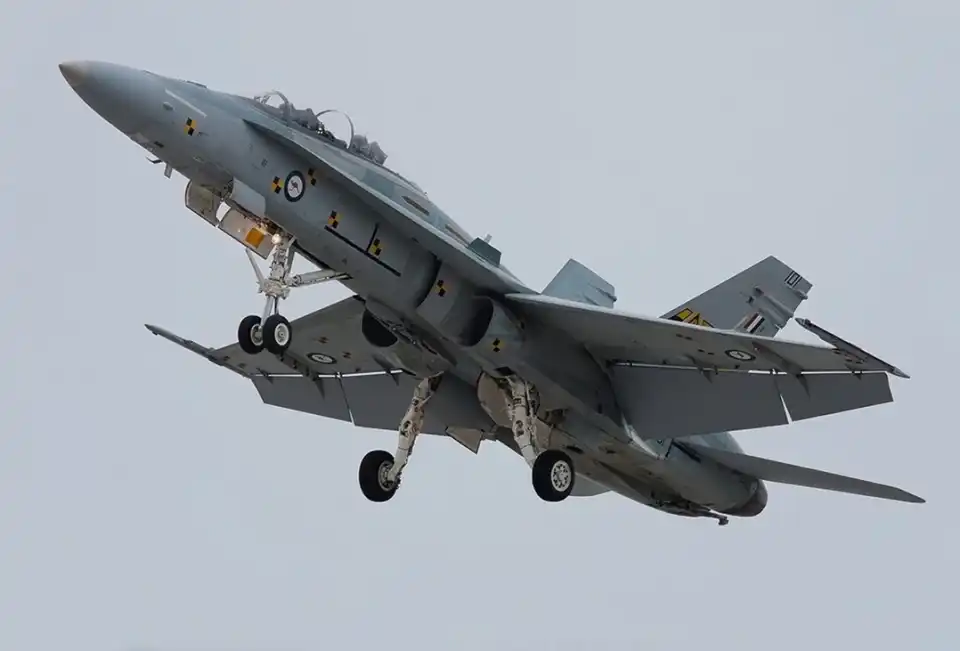
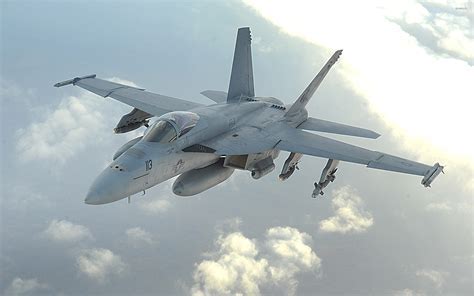
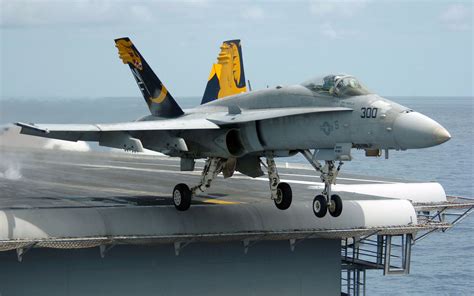
The F/A-18 Hornet and its advanced variant, the F/A-18E/F Super Hornet, are multi-role fighter aircraft designed to withstand high-G maneuvers while maintaining superior agility and flight control. The G-limit of an aircraft defines the maximum gravitational force it can sustain without compromising structural integrity or pilot safety. The F/A-18 series, employed extensively by the U.S. Navy and Marine Corps, has specific G-limit parameters determined by airframe strength, flight control systems, and operational requirements.
Structural G-Limits of the F/A-18
The structural G-limit of a fighter jet is a critical factor that dictates its ability to perform high-speed maneuvers without incurring damage.
- The F/A-18C/D Hornet has a maximum structural G-limit of 7.5G, meaning it can sustain 7.5 times the force of gravity before reaching stress thresholds that could lead to airframe fatigue or failure.
- The F/A-18E/F Super Hornet maintains this 7.5G limit despite its larger frame and increased weight, owing to reinforced airframe components and advanced composite materials that enhance structural resilience.
Operational Maneuverability and G-Limits
G-force tolerance in combat scenarios is essential for evasive maneuvers, air-to-air engagements, and ground attack missions. The F/A-18E/F Super Hornet is designed to optimize G-load distribution while maintaining superior control under extreme conditions.
- Evasive Combat Maneuvers: The Super Hornet can execute sustained 6G turns, which are critical when dodging surface-to-air missiles (SAMs) or enemy aircraft fire.
- Simulated Bombing Runs: During ground attack missions, pilots frequently endure 4G transitions when maneuvering from inverted dive positions before weapon release.
- High-Angle-of-Attack (AoA) Performance: Unlike some fighters that lose control at extreme AoA, the Super Hornet remains controllable up to 59° AoA, aided by its digital flight control system (FCS).

Flight Control System and G-Limit Enforcement
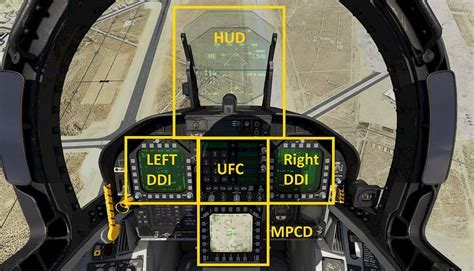
The F/A-18E/F’s flight control system (FCS) plays a pivotal role in preventing excessive G-loads that could endanger the aircraft or pilot.
- Automatic Input Restrictions: The system prevents over-G maneuvers by dynamically adjusting control surfaces, ensuring the aircraft does not exceed safe operational thresholds.
- Virtual Airbrake System: This innovative “virtual airbrake” system coordinates flap and rudder deflections to decelerate smoothly without abrupt G-load spikes, improving safety and efficiency in dogfights and landing approaches.
- Energy Management: The F/A-18 balances thrust-to-weight ratio and aerodynamic efficiency, allowing for aggressive but controlled maneuvers without excessive G-strain.
How the F/A-18 Compares to Other Fighters
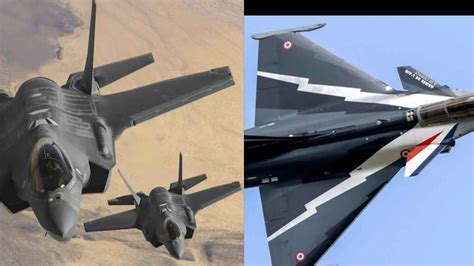
When assessing G-limits, the F/A-18’s 7.5G threshold is slightly lower than that of some contemporary fighter aircraft but remains highly effective due to its combat versatility and technological enhancements.
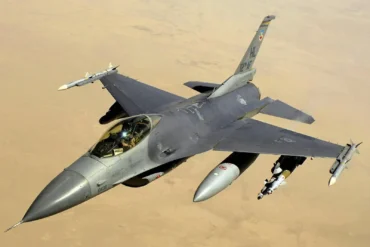
- F-16 Fighting Falcon: Designed for high-G dogfighting, the F-16 has a 9G limit, providing superior sustained turn rates but relying on fly-by-wire corrections to prevent structural overstress.
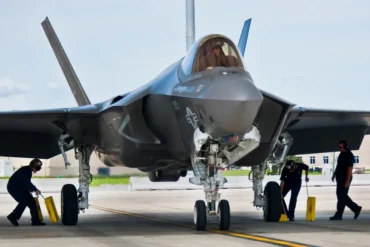
- F-35 Lightning II: The F-35’s G-limit varies by variant (ranging from 7G to 9G), but its stealth and sensor fusion compensate for any maneuverability differences.
- Eurofighter Typhoon & Rafale: Both European aircraft feature 9G limits, with a focus on high-speed agility and air superiority.
Despite its lower G-limit compared to some air superiority fighters, the F/A-18 excels in naval operations, where carrier landings, low-altitude strike missions, and multi-role adaptability outweigh sheer G-force performance.
Aerodynamic Enhancements in the F/A-18E/F
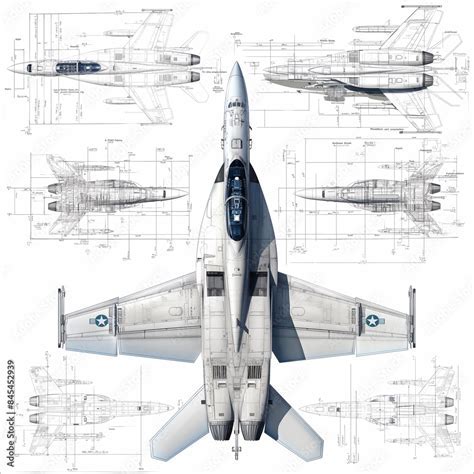
The Super Hornet incorporates several refinements over the legacy F/A-18C/D to improve maneuverability within its 7.5G limit:
- Enlarged Wing Area: Provides greater lift and stability during tight turns.
- Leading-Edge Extensions (LEX): Enhances high-AoA control, preventing stall conditions in extreme maneuvers.
- Stronger Composite Materials: Reduces fatigue stress, allowing for repeated high-G engagements without compromising structural durability.
- Enhanced Thrust-to-Weight Ratio: The GE F414 engines offer superior thrust over the older F404 engines, maintaining energy retention in aggressive maneuvers.
Key Takeaways
- Structural G-Limit: The F/A-18C/D and F/A-18E/F both have a 7.5G structural limit, ensuring durability under operational stress.
- Advanced Flight Control: The FCS prevents excessive G-loading while maximizing maneuverability through automated corrections and energy management.
- Combat Effectiveness: Despite lower G-limits than some competitors, the F/A-18 excels in carrier operations and multi-role missions.
- Aerodynamic Improvements: The Super Hornet’s refined wing design, stronger airframe, and virtual airbrake system enhance its high-G combat performance.
FAQ Section
1. Why does the F/A-18 have a lower G-limit than some other fighters?
The 7.5G limit is a design choice balancing structural longevity, naval operational demands, and multi-role capabilities. Unlike lightweight air superiority fighters, the F/A-18 prioritizes carrier suitability, strike capabilities, and durability over extreme agility.
2. Can an F/A-18 exceed 7.5G in an emergency?
While the aircraft is structurally rated for 7.5G, pilots may momentarily exceed this in critical situations. However, sustained over-G maneuvers risk airframe fatigue and require post-flight inspections for stress damage.
3. How does the Super Hornet compensate for its lower G-limit in combat?
The Super Hornet’s advanced flight controls, high-AoA handling, and energy management allow it to compete effectively against higher-G aircraft by utilizing precision maneuvering, superior sensor integration, and multi-role adaptability.