The F-35 Lightning II program, developed under the Joint Strike Fighter initiative, remains the most expensive defense acquisition project in U.S. military history. However, the latest analysis by the U.S. Government Accountability Office (GAO) paints a stark picture of persistent inefficiencies, rising costs, and systemic maintenance failures that continue to limit the jet’s operational value. Based on the 2023-2024 GAO findings, the program’s technical superiority is being severely undermined by operational dysfunctions, casting doubt on its sustainability as the backbone of allied airpower through 2070.
Falling Mission Capability Rates Despite Soaring Budgets
The GAO’s most damning revelation centers around the mission capability rate (MCR) of the F-35 fleet. As of 2023, the average MCR across all variants stood at a disappointing 55%, well below the Department of Defense’s (DoD) target of 90%. The Air Force’s F-35A variant fared even worse, achieving an MCR of only 50% despite substantial investments in maintenance and sustainment.
Between 2018 and 2023, the operation and maintenance (O&M) budget for the F-35A nearly quadrupled, reaching approximately $7.5 billion, yet the readiness improvements have remained marginal. This divergence between spending and performance exposes a critical structural flaw in the management and sustainment ecosystem.
Exploding Maintenance Costs and Lifecycle Burdens
The GAO estimates that the full lifecycle sustainment cost of the F-35 program surged from $1.1 trillion in 2018 to $1.58 trillion by 2023. This exponential growth is primarily driven by escalating maintenance demands, inefficient repair cycles, and an overreliance on original equipment manufacturers (OEMs) like Lockheed Martin and Pratt & Whitney.
For instance, in Fiscal Year 2023:
- The U.S. Marine Corps and Navy expended 95% and 99.5% of their allocated F-35 maintenance budgets respectively.
- Combined, these two branches spent over $4.6 billion on F-35B and F-35C variants.
This unsustainable cost trajectory presents a serious budgetary dilemma, particularly as the U.S. military moves to scale production towards a global fleet of 2,500 aircraft by the 2040s.
Contractor Reliance and Technical Data Gaps
A central issue identified by the GAO is the military’s heavy reliance on contractors for routine maintenance and repairs. The failure to transfer sufficient technical data and maintenance manuals to the Department of Defense has left repair crews dependent on Lockheed Martin personnel for even basic servicing of critical subsystems.
Out of 68 essential maintenance tasks for core components, the military currently lacks the capacity to independently perform 24. This situation directly conflicts with efforts to develop organic sustainment capabilities and increases the time and cost associated with field repairs.
Logistical Bottlenecks and Repair Delays
The repair ecosystem supporting the F-35 has proven inefficient and vulnerable to disruption. The average repair turnaround time now stands at 141 days, well above the targeted 60 to 90-day benchmark. This inefficiency is further compounded by chronic spare parts shortages, which account for 22% of grounded aircraft at any given time.
As of late 2023:
- The backlog of components awaiting depot-level maintenance exceeded 10,000 units.
- The scarcity of parts caused operational flight hours to drop, affecting pilot training and mission readiness cycles.
The inability to build a resilient and responsive maintenance architecture continues to cripple the jet’s full-spectrum combat readiness.
Engine Module Crisis and Airframe Downtime
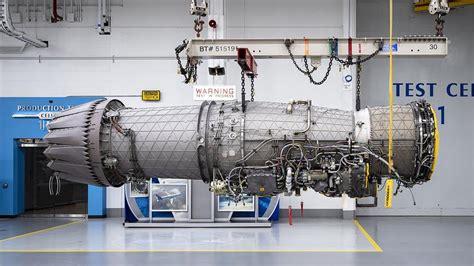
The F-35’s F135 engine, developed by Pratt & Whitney, faces a unique challenge stemming from its modular architecture. A shortage of Power Modules (PMs), particularly during peak demand in 2022, grounded 36 aircraft—representing 9% of the entire fleet at that time.
Although some progress has been made in reducing the number of engine-less aircraft, insufficient depot capacity remains a strategic vulnerability. The delayed expansion of maintenance facilities and the lack of alternate engine production lines have further aggravated the situation.
Uncertain Transition to Government-Led Maintenance
The 2022 National Defense Authorization Act (NDAA) mandates the transition of maintenance responsibilities from the Joint Program Office to individual military services by 2027. However, the GAO notes that the DoD still lacks a clear roadmap for defining the roles of contractors versus government personnel.
Furthermore, without full access to the proprietary technical data held by OEMs, this transition could deepen logistical inefficiencies rather than resolve them. The delayed implementation risks increasing dependency on private-sector partners rather than enhancing sovereign sustainment capabilities.
Block 4 Upgrade Delays and Capability Gaps
Originally envisioned to significantly enhance the F-35’s sensor fusion, electronic warfare, and strike capabilities, the Block 4 modernization program has become emblematic of the program’s persistent delays and cost overruns.
Key findings include:
- Undefined technical requirements have caused project scope ambiguity.
- Immature subsystems, especially thermal management technologies, have impeded integration.
- Cost discrepancies between initial projections and actual requirements have led to extended schedules.
These challenges not only threaten the aircraft’s combat edge but also delay integration with other modern systems across allied fleets.
Mismatch Between Production and Sustainment Capacity
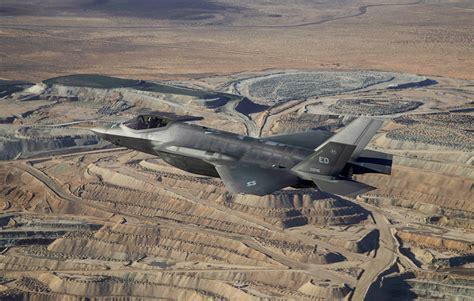
As the global F-35 fleet surpasses 1 million flight hours in 2025, nearly half the aircraft remain non-mission capable due to unresolved sustainment issues. The pace of production is increasingly misaligned with maintenance infrastructure, creating a cascading effect of underperformance across training, operational readiness, and allied interoperability.
The DoD aims to acquire over 2,500 F-35s by the 2040s, but without corresponding investment in domestic maintenance, training pipelines, and data access, this expansion risks overwhelming an already strained system.
Geostrategic Risk in the Indo-Pacific Theater
The implications of the F-35’s underperformance extend beyond U.S. borders. The GAO highlights specific concerns regarding the fighter’s strategic reliability in the Indo-Pacific region, where it is expected to counter peer threats such as China’s J-20 stealth fighter.
In scenarios involving rapid deployment or contested logistics chains, the F-35’s high support footprint and limited availability could diminish its tactical advantage. Despite Pentagon efforts to pursue Performance-Based Logistics (PBL) contracts aimed at cost containment, the entrenched contractor-led model continues to restrict adaptive responses.
Conclusion: Structural Reform, Not Just Technical Fixes
The GAO report serves as an authoritative indictment of the F-35 program’s sustainment and management architecture. While the fighter remains a marvel of engineering with unmatched battlefield integration potential, its operational utility is compromised by structural inefficiencies, opaque data sharing, and rising costs.
Moving forward, the Department of Defense must:
- Accelerate the transfer of technical data to ensure independent maintenance capabilities.
- Invest in domestic depot infrastructure and personnel training to reduce turnaround times.
- Rebalance the contractor-government relationship to reclaim strategic autonomy.
Only through these structural reforms can the U.S. and its allies ensure that the F-35 fulfills its promise as a fifth-generation cornerstone for 21st-century airpower.
FAQs
What is the current mission capability rate of the F-35 fleet?
As of 2023, the average mission capability rate for the entire F-35 fleet stands at approximately 55%, with the F-35A variant operated by the U.S. Air Force achieving only 50%. This is significantly below the DoD’s target of 90%, raising concerns about the aircraft’s readiness for real-world missions.
Why are F-35 maintenance costs increasing so rapidly?
F-35 maintenance costs have surged due to several compounding factors:
- Dependence on contractors for basic repairs
- Delays in technical data transfers
- Inefficient repair cycles and logistical bottlenecks
- High spare parts consumption and shortages
By 2023, the total lifecycle sustainment cost had ballooned to $1.58 trillion, up from $1.1 trillion in 2018.
What risks does the F-35 program face in the Indo-Pacific region?
In the Indo-Pacific theater, where the F-35 is expected to counter advanced threats like the Chinese J-20, its low availability and high maintenance demands could hinder forward deployment and rapid response. The high dependency on contractor logistics also creates vulnerabilities in a contested or resource-constrained environment.