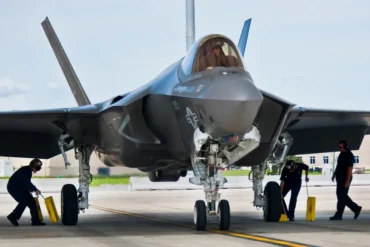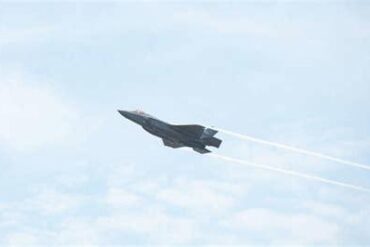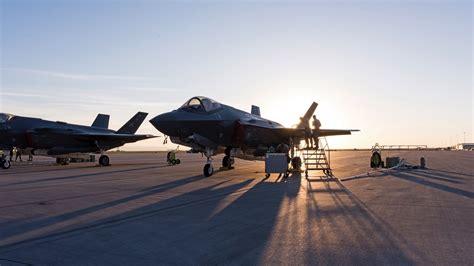
The F-35 program has become the most powerful magnifying glass ever held over the global arms trade. Whenever nations debate transparency, accountability, and the cost of security, this aircraft sits quietly in the background like a $2 trillion reminder that vast sums of public money move through a system where oversight often bends under political pressure, industrial lobbying, and strategic fear. As we examine the evolution of this program, we find a revealing pattern: even in countries considered paragons of institutional integrity, the defense sector behaves according to its own gravitational forces—ones that frequently pull budgets, policies, and political choices off course.
These forces are visible in every major defense scandal of recent years. From Eastern Europe’s shell-rebranding schemes to billion-euro submarine fiascos in Australia, corruption is not a byproduct of conflict but an internal engine of the global defense marketplace. The F-35 simply exposes this truth at a scale unprecedented in modern military history.
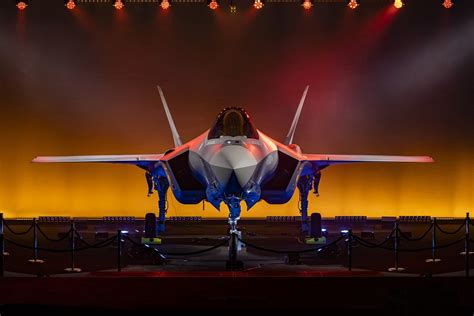
The Illusion Of Clean Hands In A Multi-Trillion-Dollar Market
Some countries present themselves as islands of ethical clarity in a foggy international system. Yet the data collected by institutions like the World Peace Foundation demonstrates that the world’s “cleanest” countries—by reputation—are frequently players in the dirtiest defense dealings. The United States, the United Kingdom, Germany, France, and Israel all rank among the least corrupt nations on global indices, yet they dominate corruption trackers in the arms trade.
The contradiction is startling. Nearly 86% of tracked arms-trade corruption cases involve nations ranked among the world’s least corrupt. It is not because these countries are uniquely dishonest. It is because the arms trade is uniquely shielded. Secrecy is woven into its legal framework. National security exemptions shut doors that would remain open in other public-spending sectors. And so accountability becomes selective, episodic, and often symbolic.
The F-35 Program: A Monument To Structural Incentives
The F-35 Lightning II should have been the ultimate expression of 21st-century joint defense innovation. Instead, it evolved into a sprawling symbol of systemic dysfunction: a program that kept expanding in cost, scope, and complexity because those expansions benefited the very institutions tasked with containing them.
By 2024, lifetime costs had already soared beyond $2 trillion, with sustainment expenses alone estimated at $1.6 trillion. Acquisition accounted for another $442 billion—a figure that continues to grow as new partners join the program. Oversight agencies warned repeatedly of pricing irregularities, rushed procurement, maintenance bottlenecks, and technical shortfalls. Yet the program continued to advance, protected by its multinational nature and its strategic indispensability.
At one point, Lockheed Martin agreed to a $30 million settlement with the U.S. Department of Justice for inflating prices related to the F-35 supply chain. The settlement was a drop in a lake—symbolic accountability rather than structural reform. But the episode illustrated a much larger issue: the arms industry is so consolidated that governments often have no alternative supplier. Sole-source contracts create perfect conditions for inflated bids, hidden fees, and strategic price escalation.
How Cost Overruns Become A Feature, Not A Bug
A government can cancel a transport project, a stadium, or a power plant when costs explode beyond reason. But a fighter jet program involving more than a dozen allied militaries is impossible to unwind. Defense contractors understand this, and so costs become elastic. Each new technical challenge becomes a budgetary event. Every maintenance issue invites additional funding. The complexity of the program—the very thing that makes oversight difficult—becomes a guarantor of its continuation.
Price inflation is not subtle. The World Peace Foundation’s research shows numerous cases where bribes and cost padding eventually exceeded the value of the equipment itself. It is a grimly consistent pattern: the larger the project, the more invisible the full cost becomes to the public, and the more freedom contractors have to push boundaries.
Examples abound. Australia’s AUKUS nuclear-submarine program, projected to cost AUD$368 billion by mid-century, replaced an already-signed €56 billion deal with France—incurring a €555 million cancellation penalty. Its Hunter-class frigate program ballooned from AUD$35 billion to AUD$65 billion. These are not isolated cases but symptoms of a system where secrecy and lack of competition distort the incentives at every stage.
Corruption’s Many Masks: From Bribes To Structural Capture
The popular imagination still associates corruption with envelopes of cash or offshore accounts. Yet modern defense corruption is rarely so crude. It appears through layers of commissions, special advisors, lobbying relationships, consultancy networks, and mismatched oversight jurisdictions. The actors include intermediaries, subcontractors, ministry officials, political appointees, and state-owned firms. The money moves through legal channels, and that is precisely the danger.
In Romania, recent investigations exposed a scheme involving Russian-style shells purchased in Kazakhstan, rebranded in Romania, and resold to Ukraine at inflated prices—an operation designed to attract future EU rearmament funding. In Bulgaria, raids uncovered patterns of systematic overpricing on arms sent to Ukraine. In China, a wave of high-ranking PLA generals fell under anti-corruption investigations. Their downfall reflected a deeper, structural problem: rapid military modernization had opened channels for opaque acquisitions at a scale not seen since the 1990s.
Meanwhile, the United States witnessed political controversy when senators moved to block $3.5 billion in arms sales to the UAE and Qatar over concerns that the deals could personally enrich members of the Trump family. The allegations intertwined cryptocurrency investments, sovereign funds, and influence networks—a reminder that corruption in modern defense procurement rarely looks like the scandals of old.
Why The F-35 Is The Ultimate Case Study
The F-35 program consolidates nearly every structural weakness of the global arms industry into a single narrative. Its multinational footprint creates diplomatic pressure to continue funding. Its supply chain spans hundreds of subcontractors across multiple continents, making transparency nearly impossible. Its technical demands ensure that cost overruns can always be rationalized as necessities. And its strategic role gives it immunity from political cancellation.
Governments cannot simply walk away from a fighter jet that forms the backbone of allied air power for the next half-century. Contractors know this. They leverage it. They expand their influence through lobbying, industrial partnerships, and manufacturing offsets that politicians can sell to their constituents as job creation.
The result is a system where accountability becomes a performance rather than a principle.
The Hidden Cost: Erosion Of Public Trust
When tens of billions evaporate into opaque procurement channels, the damage goes far beyond budgets. It erodes confidence in institutions that depend on legitimacy: defense ministries, parliaments, and even democratic processes themselves. Niger’s case is a sobering example. Despite receiving nearly $240 million from the United States to strengthen its armed forces, auditors discovered that more than $137 million vanished into over-invoicing, corruption, and waste. The equipment bought included overpriced, outdated hardware from Russian, Chinese, and Ukrainian suppliers.
Such cases reveal a dangerous dynamic: corruption in defense does not simply redirect funds. It weakens militaries. It produces hollow arsenals, inflated inventories, and artificially optimistic reports. And in the worst cases, it creates false confidence—an illusion of readiness that collapses under real pressure.
The Secrecy Paradox In Modern Democracies
National security is often invoked to justify redactions, closed-door briefings, and classified procurement pathways. While secrecy is sometimes indispensable, it also creates an environment in which corruption can grow unchecked. The paradox is striking: the same secrecy intended to protect states can make them vulnerable to internal manipulation.
This paradox is most visible in the defense sectors of wealthy democracies. These countries often have strong anti-corruption institutions, but their defense procurement processes exist in a gray zone—part public, part classified, part outsourced. The result is a hybrid ecosystem where accountability becomes fragmented. No single body has full visibility, and no investigator can follow every thread.
Limited Competition: The Quiet Catalyst
The global arms market is astonishingly small. A handful of companies dominate advanced fighter production. The barriers to entry are astronomical. This creates an environment where competition is rare, and contractors have unusual leverage. The F-35 program embodies this dynamic: it was positioned from the outset as the only feasible next-generation multirole aircraft for the United States and its allies. Once the program gained momentum, alternatives disappeared.
The fewer the competitors, the higher the risk of overpricing. Each additional layer of subcontracting introduces new opportunities for swelling the budget. And because governments need long-term security relationships, they tolerate this inflation—year after year, decade after decade.
What The F-35 Teaches Us About The Future
The F-35 is not merely a fighter jet. It is a case study in how modern defense procurement works—and why it so often breaks down. The program reveals that corruption is not an aberration but an emergent property of a system where technical complexity, strategic dependency, and political incentives converge.
As new mega-programs emerge—from autonomous drones to hypersonic weapons to nuclear modernization cycles—the same structural vulnerabilities will persist unless transparency is reconstructed from the ground up. Without reform, the next multi-trillion-dollar project will follow the same trajectory: expanding budgets, limited oversight, and a widening distance between official rhetoric and fiscal reality.
The F-35’s story continues, stretching toward 2088. Its cost will shape defense budgets for generations. Its procurement structure will influence how future systems are negotiated. And its legacy may well be this: a lesson written in trillion-dollar ink about what happens when national security becomes a shield that even accountability cannot penetrate.