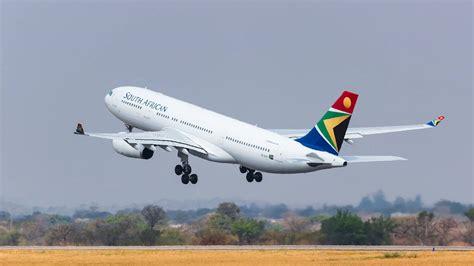
South African Airways (SAA), once a proud emblem of African aviation, is now the focus of a renewed and intensified corruption probe. At the heart of this investigation is South African Airways Technical (SAAT), the airline’s maintenance division, which until recently had managed to avoid the scrutiny of the Special Investigating Unit (SIU). That veil has now been lifted.
Presidential Proclamation Opens the Door to Deeper Scrutiny
On December 19, 2025, President Cyril Ramaphosa issued Proclamation No. 303, effectively amending a prior 2020 proclamation to include SAAT under the SIU’s mandate. This adjustment followed a growing acknowledgment that maladministration and irregular conduct within SAAT could no longer be ignored, especially in the wake of mounting allegations surrounding procurement fraud and ghost assets.
The proclamation grants the SIU sweeping authority to investigate any improper, irregular or unlawful conduct by SAAT personnel or associated third parties. This includes an examination of procurement, operational, and governance practices, many of which are suspected of being riddled with ghost parts—equipment or aircraft components that may have been purchased but never existed, or were documented to be installed but never were.
The Ghost Parts Allegation: A Technical Scandal in the Making?
At the core of the ‘ghost parts’ theory is a sinister possibility: that individuals within SAAT may have engineered a complex fraudulent scheme by recording the procurement and use of non-existent or counterfeit aircraft parts. This not only raises financial red flags but also severe safety concerns for a national carrier trying to rebuild its reputation.
While there is yet no public confirmation of ghost parts being discovered, the scope of the investigation hints at deep-rooted systemic manipulation. Forensic accountants, maintenance logs, and inventory audits will likely be central in confirming whether SAAT personnel fabricated maintenance records, created dummy purchase orders, or funneled public funds through bogus vendors.
A Legacy of Corruption: SAA’s Troubled Past Comes Into Focus
This probe is not an isolated event but the continuation of years of financial mismanagement and corruption that have plagued SAA since the early 2010s. Under the leadership of former board chair Dudu Myeni (2012–2017)—a central figure in South Africa’s broader state capture scandal—SAA witnessed rampant abuse of power and resources.
One of the most infamous cases involved a R375 million ($22 million) tyre tender scandal, where contracts were allegedly awarded under dubious circumstances. Further irregularities surfaced with RA 1.8 billion ($108 million) in questionable payments made between the airline, subsidiaries, and key executives.
The Auditor General, Tsakani Maluleke, delivered a scathing assessment of the airline’s finances from 2018 to 2022. Reports highlighted that financial statements lacked credibility and revealed an astonishing RA 19 billion ($1.2 billion) in losses over four years.
COVID-19, Business Rescue, and the Illusion of a Fresh Start
SAA’s operational grounding in May 2020 due to the COVID-19 pandemic seemed, at first, to be an opportunity for reinvention. A business rescue plan was enacted, employees were downsized, and assets consolidated. The airline was even floated for partial privatization in 2021, but the deal collapsed, leaving SAA still a fully state-owned enterprise.
In September 2021, SAA resumed flight operations on a downsized scale, operating a fleet of 21 aircraft and serving 15 destinations. However, beneath this restructured veneer, the old skeletons remained buried. SAAT, despite being a technical backbone of the airline, had avoided full scrutiny until now. This omission was not only suspicious—it was dangerous.
The SIU’s Expanded Mission: Targets and Objectives
The newly included SAAT probe is not just about identifying culprits; it aims to map out systemic weaknesses that allowed such misconduct to fester. The SIU is now authorized to:
- Investigate all undisclosed or unauthorized financial interests involving SAAT staff and contractors.
- Review past procurement contracts for red flags like inflated pricing, missing inventory, or fictitious vendors.
- Examine governance breakdowns that enabled unchecked executive power.
Should ghost parts be confirmed, the implications would be staggering—not just financially, but in terms of passenger safety and public trust.
Operational Overview: A Carrier on Shaky Wings
Today, SAA operates out of Johannesburg’s O.R. Tambo International Airport (JNB) and maintains a secondary hub at Cape Town International Airport (CPT). The airline has managed to stabilize its operations somewhat, but the underlying financial and governance frameworks remain fragile.
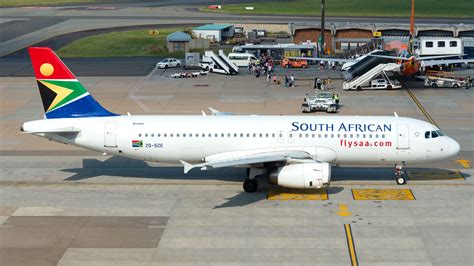
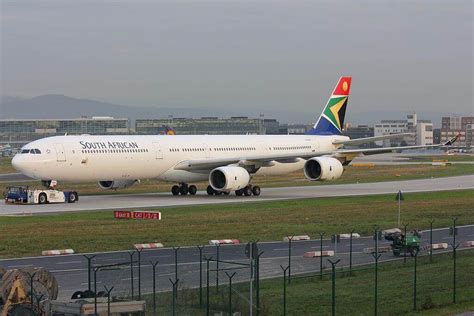
Its current fleet includes:
- 14 Airbus A320-200
- 3 Airbus A330-300
- 2 Airbus A340-300
- 2 Boeing 737 MAX 8
While it has resumed international services—such as routes to São Paulo, Perth, and Mauritius—the airline is still in recovery mode, both reputationally and operationally. This makes the timing of the SAAT probe especially critical.
A Cultural Problem: Governance Beyond SAAT
The challenge now lies not just in rooting out individual bad actors, but in addressing the entrenched culture of corruption and poor oversight that has crippled SAA for years. The SIU’s report, once published, could serve as a pivotal document that lays the groundwork for permanent reform within not just SAAT, but the wider SAA group.
If ghost parts do emerge as a central finding, it would expose a multi-layered failure of auditing, procurement, and maintenance controls. It would also likely involve both internal staff and external vendors, suggesting a wide-reaching conspiracy that went unchecked due to the lack of enforcement.
Public Trust and the Stakes Ahead
Public perception of SAA has deteriorated substantially over the last decade. The ghost parts allegation—if substantiated—could completely erode what remains of its credibility. In a global aviation industry that is increasingly focused on safety and transparency, SAA cannot afford another scandal of this magnitude.
Moreover, the probe’s findings will influence future investment, regional partnerships, and potentially international aviation compliance. Regulatory bodies such as ICAO and IATA are likely to pay close attention to the investigation’s results.
Conclusion: Accountability or Collapse?
South African Airways stands at a crossroads. The inclusion of SAAT in the SIU investigation presents a critical opportunity to purge systemic corruption and lay the groundwork for genuine reform. However, the effectiveness of this initiative will depend on the transparency of the findings, the willingness to prosecute those involved, and the implementation of structural safeguards that prevent future misconduct.
The ghost parts allegation is more than a logistical anomaly—it’s a litmus test for whether South Africa’s national carrier can truly emerge from the shadow of corruption and state capture.
If justice is served, SAA may yet reclaim its legacy. If not, the ghost of misgovernance will continue to haunt its every flight.