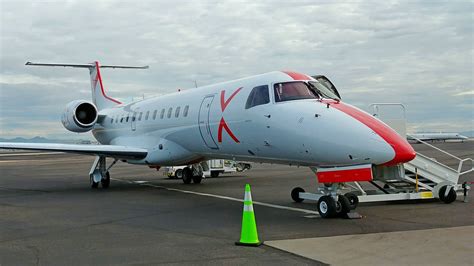
Public charter flights have quietly served America’s underserved regions for over four decades, providing vital air travel links where commercial airline service is insufficient or nonexistent. As defined under Part 380 of the U.S. Aeronautics and Space Regulations, this form of aviation enables operators to sell individual seats on chartered flights, bridging the gap between private jet travel and commercial airlines. Recently, however, public charter has come under scrutiny—not due to safety incidents, but as a result of a regulatory clash between legacy carriers and newer operators seeking to innovate within the current framework.
What Is Public Charter and How Does It Work?
At its core, public charter is an air transportation model where a Public Charter Operator (PCO) arranges flight services with a direct air carrier. The PCO does not operate the aircraft themselves but contracts with certified air carriers—often smaller Part 135 operators—to conduct the flights. These flights are then offered to the public on a per-seat basis, commonly referred to as “charter by the seat.”
Unlike traditional private charters that require a full aircraft rental, public charter opens up a more affordable and flexible option for consumers. The economic burden of filling seats lies squarely with the PCO, incentivizing competitive pricing and consumer-friendly scheduling.

PCOs are required to:
- File necessary documents with the DOT.
- Escrow passenger payments to protect customers.
- Ensure compliance with cancellation protections and financial guarantees.
Operational safety and airworthiness, however, are strictly regulated by the FAA, creating a dual-regulatory structure—DOT governs the economic side; FAA governs flight operations.
A Lifeline for Underserved Regions
For thousands of Americans in rural or remote locations, public charter flights are essential infrastructure. These flights serve regions where commercial carriers have reduced or abandoned service altogether. They are also used for:
- Medical evacuations and urgent transport.
- Business connections in isolated regions.
- Tourism access to niche or seasonal destinations.
As electric vertical takeoff and landing (eVTOL) aircraft emerge, public charter could expand into high-density urban corridors, revolutionizing regional mobility.
The Regulatory Controversy: SkyWest Charter’s Bold Step
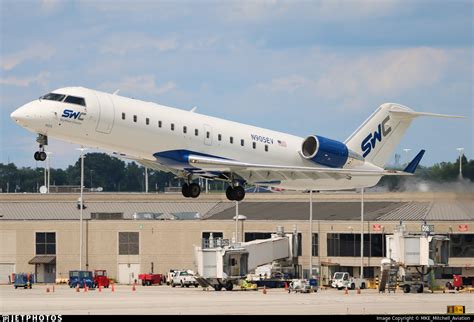
The controversy began when SkyWest Charter (SWC), a subsidiary of SkyWest Airlines, applied to operate as a commuter air carrier under public charter rules. Their proposal involved 30-seat CRJ-200 regional jets, aimed at providing scheduled flights to underserved cities.
More than 60 municipalities, airport authorities, and citizen groups expressed strong support. Their argument: such service would restore critical air links, bolstering local economies and connectivity.
However, the proposal drew intense opposition from labor unions like the Air Line Pilots Association (ALPA) and major carriers such as American Airlines. Their objections centered on the claim that operating scheduled flights under Part 135 was a safety risk and regulatory workaround—a method to bypass stricter Part 121 requirements.
ALPA warned that pilots flying under Part 135 lack the same qualifications and hours of service as their Part 121 counterparts, thereby “degrading the safety margin” of U.S. air travel. American Airlines called it a “facsimile of scheduled service”, demanding that DOT clamp down on what they viewed as regulatory evasion.
FAA’s Response and Industry Pushback
In May 2023, the Federal Aviation Administration issued a Notice of Intent, signaling concern over the growing scale and complexity of public charter operations under Part 135. The agency announced it was considering regulatory changes to potentially reclassify some charter operations as scheduled services, which would then mandate Part 121 compliance.
This move caused alarm among stakeholders such as the National Business Aviation Association (NBAA) and the National Air Transportation Association (NATA). They issued a joint statement arguing that:
- Part 380 regulations have functioned safely for over 40 years.
- The rise in public charter use reflects growing demand, not system abuse.
- No significant safety incidents have prompted the need for regulatory overhaul.
Tens of thousands of public comments were submitted to the FAA, most in strong support of preserving public charter as it currently exists.
The Part 135 vs. Part 121 Debate: Unpacking Safety Concerns
The central issue in the debate is whether Part 135 operations are less safe than their Part 121 counterparts. On paper, the difference lies in scope and complexity:
- Part 135 governs smaller, on-demand and commuter operators, typically using aircraft with 30 or fewer seats.
- Part 121 applies to scheduled commercial airlines, requiring stricter pilot certification, training, and operational procedures.
Critics argue that expanding scheduled services under Part 135 erodes oversight. However, industry experts contend that the existing safety record of public charter under Part 135 does not warrant alarm. In fact, the FAA’s own guidance, reaffirmed in a 2014 Chief Counsel opinion, supports the inclusion of public charters within “on-demand” classifications, allowing them to legally bypass full Part 121 requirements if they meet the conditions of Part 380.
Economic Competition or Safety Smokescreen?
Many in the aviation community see the current dispute not as a safety issue, but as economic protectionism. Major airlines have much to lose if public charter expands:
- Lower-cost alternatives could siphon market share from regional routes.
- Flexible scheduling and smaller aircraft offer consumer-friendly choices.
- Charter innovations, such as app-based seat booking, appeal to a younger demographic.
Unions and carriers argue for uniform safety standards, but critics believe these objections may be disguised attempts to limit competition. Without concrete safety data to support sweeping regulatory changes, calls for a crackdown on public charter appear speculative.
The Future of Public Charter: Regulation, Innovation, or Restriction?
If the FAA enacts stricter rules, many public charter providers could be forced to cease operations or drastically alter their business models. This would:
- Reduce affordable regional access to underserved cities.
- Undermine investment in eVTOL integration.
- Reverse recent gains in consumer choice and mobility.
On the other hand, preserving and refining Part 380 operations could lead to a renaissance in regional air travel. By striking a balance between safety assurance and market flexibility, public charter can become a key pillar in America’s multi-modal transportation ecosystem.
Conclusion: Preserving a Critical Aviation Option
Public charter has functioned safely and effectively for decades. Its structure—rigorously compliant with DOT and FAA frameworks—provides a flexible, affordable alternative to traditional airline routes. Rather than eliminating or restricting this vital option, regulators should focus on enhancing transparency, strengthening oversight where needed, and embracing innovation in mobility.
In an age where remote work, regional travel, and emerging aircraft technologies are redefining transportation, public charter stands poised to play an increasingly critical role. The challenge is not whether it should exist—but how to scale it responsibly, ensuring it remains both safe and accessible for the millions who depend on it.