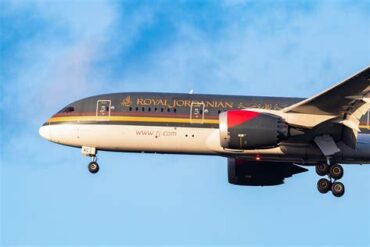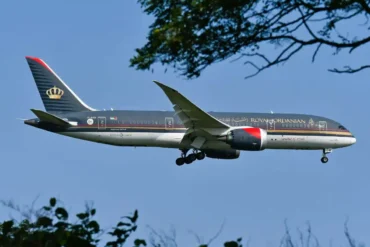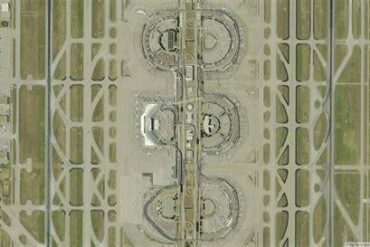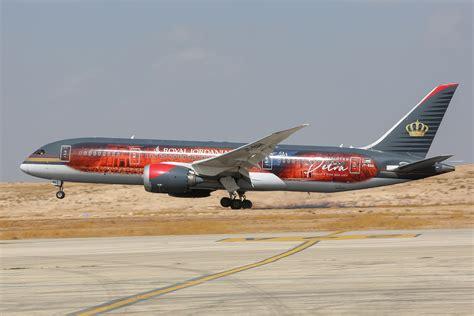
Royal Jordanian has officially entered a new era in its North American strategy with the launch of nonstop flights between Amman Queen Alia International Airport and Dallas/Fort Worth International Airport. The inaugural service, which departed on May 10, marks the first-ever direct connection between the two cities and instantly becomes one of the most significant long-haul additions of 2026.
The new route stretches 6,114 nautical miles across continents and deserts, linking Jordan’s capital with one of America’s largest aviation hubs in a journey lasting more than 14 hours. While the announcement initially raised eyebrows among aviation analysts due to the route’s length and niche appearance, the commercial logic behind the service is becoming increasingly clear.
Royal Jordanian is not merely adding another US destination. The airline is strategically positioning Dallas as a major gateway connecting North America with the Middle East, South Asia, and the Eastern Mediterranean.
Royal Jordanian’s Dallas Route Sets Multiple Records
The Amman-to-Dallas service is historic for several reasons beyond its status as a brand-new airport pair. With a maximum scheduled block time of 14 hours and 20 minutes, the flight is now Royal Jordanian’s longest route by duration, surpassing the carrier’s Chicago service by as much as 40 minutes.
It also becomes one of the most ambitious nonstop links currently operated between the Middle East and Texas.
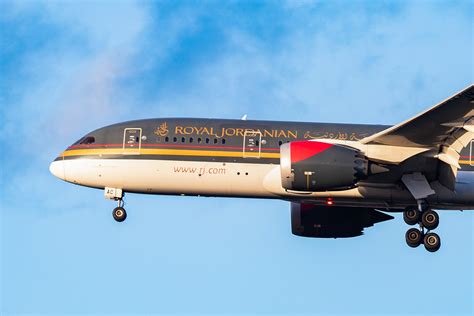
The route initially launched with Royal Jordanian’s newly delivered Boeing 787-9 Dreamliner, a move widely viewed as a deliberate showcase of the airline’s newest premium cabin product. The aircraft, delivered only weeks before the inaugural flight, offers 312 seats and represents the carrier’s latest investment in long-haul modernization.
Although the airline originally intended to deploy its standard 270-seat Boeing 787-8 on the route, using the larger 787-9 for the opening service sent a strong message. Royal Jordanian clearly views Dallas as a high-profile expansion opportunity rather than an experimental niche route.
Flight schedules reveal aggressive confidence from the airline. The service will operate four times weekly initially before ramping up to daily flights from mid-June through late October, coinciding with the peak summer travel season.
That increase is particularly noteworthy because earlier planning documents only anticipated four weekly operations throughout the year. The rapid capacity expansion strongly suggests that advance bookings and connecting traffic projections are outperforming expectations.
Why Dallas Became Royal Jordanian’s Next US Target
At first glance, Dallas may not seem like the most obvious destination for Jordan’s national airline. Yet booking data paints a surprisingly compelling picture.
According to 2025 passenger demand figures, Amman ranked as the third-largest Middle Eastern market from Dallas/Fort Worth among cities lacking nonstop service. Only Dubai and Tel Aviv generated stronger traffic volumes.
Dubai already enjoys nonstop Emirates service, leaving Amman as the second-largest unserved Middle Eastern destination from DFW before Royal Jordanian entered the market.
The underlying demand is not purely local. In fact, the airline’s strategy depends heavily on connecting passengers traveling beyond Jordan.
Dallas/Fort Worth serves as American Airlines’ largest hub, giving Royal Jordanian access to one of the deepest domestic networks in the world through its oneworld alliance partnership. The codeshare relationship allows travelers from dozens of US cities to connect seamlessly onto the new Amman flight.
Passengers from Los Angeles, San Francisco, Houston, Phoenix, and New Orleans are expected to form a meaningful share of the route’s traffic base.
The Route’s Real Strength Lies Beyond Jordan
The Dallas-Amman flight is designed as far more than a simple point-to-point operation. Royal Jordanian intends to transform Amman into a transfer gateway for travelers heading to destinations across the Middle East and South Asia.
Connectivity analysis shows particularly strong opportunities on routes such as Dallas to Mumbai, Cairo, Jeddah, Doha, and Beirut.

Mumbai stands out as a major target market. Roughly 170 passengers currently travel daily between Dallas and Mumbai using one-stop itineraries on competing airlines. Royal Jordanian’s revised schedules now allow more practical connections through Amman, significantly improving the attractiveness of the route.
Cairo and Jeddah also represent substantial opportunities due to strong business, diaspora, and religious travel demand.
The airline is additionally expected to benefit from so-called “bridging traffic,” where passengers connect through both Dallas and Amman to reach entirely different endpoints. Examples include travelers flying from Los Angeles to Beirut or Phoenix to Cairo.
This strategy mirrors the successful hub models long used by Gulf carriers such as Emirates and Qatar Airways, though Royal Jordanian operates on a smaller scale with more targeted network deployment.
Dallas Gains Another Middle Eastern Carrier
The arrival of Royal Jordanian also carries symbolic significance for Dallas/Fort Worth International Airport itself.
For the first time in eight years, DFW once again hosts three passenger airlines from the broader Middle East region. The airport lost Etihad Airways service years ago, leaving Emirates as the primary nonstop Middle Eastern operator.
Royal Jordanian’s entry restores competitive diversity while enhancing DFW’s global connectivity profile.
The route additionally becomes the airport’s longest nonstop service operated by a Boeing 787-8 when that variant is assigned to the schedule. That distinction further highlights the operational challenge of the mission, particularly during periods of strong headwinds over the Atlantic.
From a passenger perspective, however, the Dreamliner is ideally suited for ultra-long-haul operations. Its lower cabin altitude, improved humidity levels, and quieter interior environment make a noticeable difference on flights exceeding 14 hours.
Royal Jordanian Expands North America Network Aggressively
The Dallas launch comes during a period of remarkable growth for Royal Jordanian across North America.
During the peak summer season, the airline plans to operate 35 weekly nonstop departures to the United States and Canada — the highest frequency in its history.
Compared with last year, Royal Jordanian’s North American seat capacity is expected to rise by approximately 40%. When measured against pre-pandemic levels from 2019, the expansion reaches an impressive 75%.
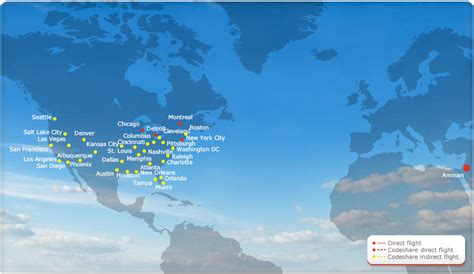
Chicago remains the airline’s largest North American destination with 10 weekly flights, while New York JFK and Dallas both receive daily service during the summer peak. Detroit continues with five weekly operations, while Montreal and Toronto maintain combined service frequencies alongside Washington Dulles flights.
The expansion reflects a broader recovery trend among international carriers targeting underserved long-haul markets rather than relying exclusively on traditional mega-hubs.
For Royal Jordanian, Dallas represents more than another dot on the route map. It is a calculated attempt to strengthen Jordan’s role as a strategic aviation bridge linking North America with the Middle East and beyond.
The airline’s willingness to rapidly scale the route from four weekly flights to daily operations suggests confidence that the market can sustain the service long term. If passenger demand continues to grow, the Dallas-Amman connection may soon evolve from a surprising newcomer into one of Royal Jordanian’s most important intercontinental routes.