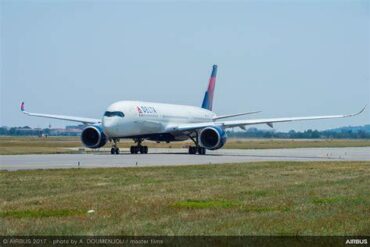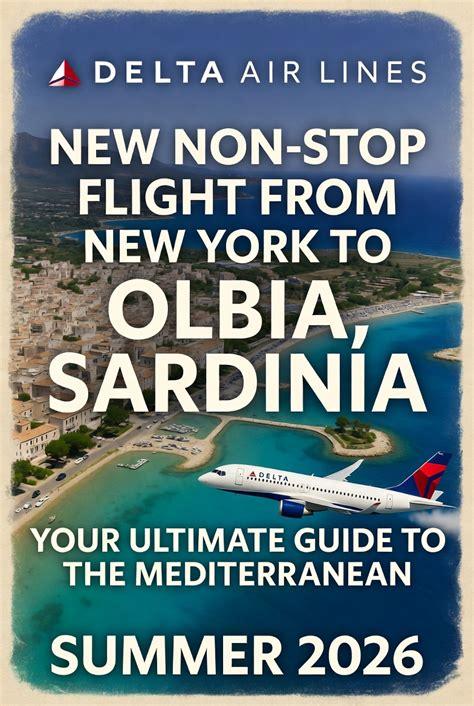
Delta Air Lines has officially entered a new chapter in its transatlantic expansion strategy with the launch of its first-ever nonstop service between New York John F. Kennedy International Airport and Olbia Costa Smeralda Airport in Sardinia, Italy. The inaugural flight marks a milestone not only for Delta but also for the broader North American aviation market, as no airline has previously operated a nonstop route between New York and Olbia.
The new seasonal service strengthens Delta’s growing dominance in the competitive United States–Italy market while giving American travelers direct access to one of the Mediterranean’s most exclusive summer destinations. Sardinia has long been a favorite among European luxury travelers, yet reaching the island from North America traditionally required at least one connection through major hubs such as Rome, Milan, Paris, or Amsterdam. Delta’s move eliminates that inconvenience entirely.
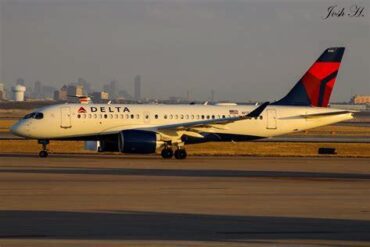
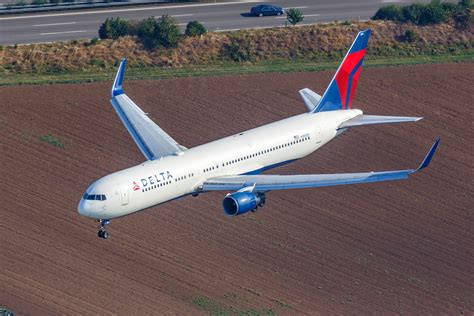
Operating four times weekly aboard Boeing 767-300ER aircraft, the route immediately becomes one of the most strategically important niche additions in Delta’s summer 2026 network.
Delta Opens A New Gateway To Sardinia From New York
The inaugural Delta flight departs New York JFK at 6:10 PM and arrives in Olbia at 9:00 AM the following morning after an 8-hour and 50-minute transatlantic crossing. Return flights depart Olbia at 11:20 AM and arrive back in New York at 2:46 PM local time.
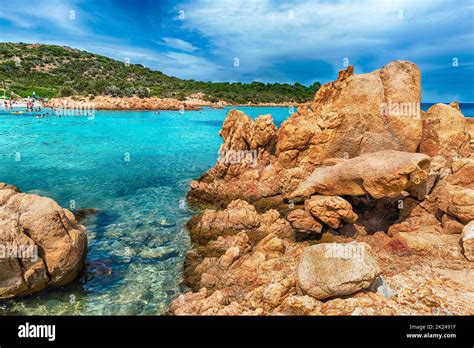
The route covers approximately 3,626 nautical miles, connecting one of America’s largest international gateways with the heart of northeastern Sardinia. Olbia serves the glamorous Costa Smeralda region, famous for turquoise beaches, luxury resorts, superyachts, and celebrity tourism during the European summer season.
Unlike Rome or Milan, Olbia has historically lacked nonstop North American service. Delta’s decision to launch the route reflects changing traveler demand patterns, where passengers increasingly seek direct access to premium leisure destinations rather than traditional European capitals.
The service also arrives at a moment when Mediterranean travel demand remains exceptionally strong. Italy continues to outperform many European tourism markets, driven by American travelers prioritizing culture, coastal experiences, culinary tourism, and upscale vacation destinations.
Premium-Heavy Boeing 767 Configuration Targets Leisure Travelers
Delta is deploying its premium-configured Boeing 767-300ER aircraft on the route, signaling the airline’s confidence in high-yield demand. The aircraft configuration includes 216 seats distributed across four cabins, with a particularly strong emphasis on premium seating.
Passengers can choose from:
- 26 Delta One lie-flat suites
- 18 Delta Premium Select seats
- 21 Delta Comfort+ seats
- 151 Main Cabin seats
The 1-2-1 Delta One layout provides every premium passenger direct aisle access, a feature increasingly expected on long-haul international routes. Meanwhile, Premium Select offers enhanced recline, upgraded dining, and wider seating targeted at affluent leisure travelers unwilling to pay full business-class fares.
This aircraft choice reflects broader industry trends. Airlines are increasingly prioritizing premium leisure routes where travelers are willing to spend more for comfort, convenience, and direct access to luxury destinations.
Sardinia fits perfectly into that strategy.
Delta Strengthens Its Leadership In The US–Italy Market
With the addition of Olbia, Delta now operates 15 routes connecting the United States and Italy, more than any competing US airline this summer season. According to Aviation Week data, Delta currently controls approximately 27.9% of total US–Italy market capacity, surpassing both United Airlines and American Airlines.
United holds roughly 22.4% of the market, while American accounts for around 22%.
The numbers illustrate how aggressively Delta has invested in Italy over the past several years. The airline is scheduled to offer approximately 1.64 million seats between the US and Italy during Summer 2026, representing a 6.5% increase over Summer 2025 and more than 20% growth compared with Summer 2024.
Italy has become Delta’s fastest-growing European market, driven by consistently high demand from both leisure and premium travelers. While destinations such as London, Paris, and Frankfurt remain business-heavy markets, Italy delivers strong tourism demand with fewer seasonal corporate fluctuations.
Delta’s network planners appear determined to capitalize on that momentum before competitors expand further into underserved Italian destinations.
JFK Continues To Anchor Delta’s Italian Expansion
New York JFK remains the centerpiece of Delta’s Italian strategy. The airport now connects to six Italian destinations through Delta-operated flights, more than any other US hub in the airline’s network.
Rome Fiumicino remains the largest Italian destination within Delta’s system, receiving flights from six American cities:
- Atlanta
- Boston
- Detroit
- Minneapolis
- New York JFK
- Seattle
The airline operates more than 50 weekly flights to Rome alone during peak summer periods. Atlanta contributes 17 weekly services, while JFK accounts for 14.
Beyond Rome, Delta’s Italian network includes Milan, Venice, Naples, Catania, and now Olbia, allowing the carrier to diversify beyond traditional business centers into leisure-focused destinations.
That diversification is increasingly important as airlines chase higher-margin international traffic. Seasonal Mediterranean routes often deliver exceptionally strong yields during summer months, particularly when competition remains limited or nonexistent.
Delta’s Broader Transatlantic Strategy Comes Into Focus
The Olbia launch is part of Delta’s wider summer transatlantic expansion, which includes dozens of additional routes across Europe. This year, Delta’s Atlantic schedule reportedly exceeds even United Airlines in total capacity, a significant achievement given United’s traditionally dominant transatlantic presence.
The strategy combines major business markets with carefully selected leisure destinations that competitors have underserved. Rather than focusing exclusively on giant European hubs, Delta is increasingly targeting secondary destinations with strong premium tourism appeal.
Olbia perfectly fits that formula.
The route benefits not only from local Sardinian demand but also from Delta’s extensive partnership network through SkyTeam and joint venture allies Air France and KLM. Travelers can seamlessly connect through Amsterdam Schiphol or Paris Charles de Gaulle under a single booking, opening broader European connectivity options.
At the same time, inbound European travelers gain easier access to New York and Delta’s enormous domestic network beyond JFK.
Why The JFK–Olbia Route Matters
The significance of the new service extends beyond a single seasonal route announcement. It represents how transatlantic aviation is evolving after years of shifting travel behavior.
Passengers increasingly value nonstop convenience over traditional hub connections. Airlines, meanwhile, are prioritizing routes that combine premium demand, strong tourism appeal, and limited direct competition.
For Delta, Olbia checks every box.
The route gives the airline exclusive access to a wealthy leisure market, strengthens its Italian network leadership, and enhances JFK’s role as a global transatlantic gateway. It also positions Delta ahead of rivals in a rapidly expanding US–Italy market that shows little sign of slowing down.
If the service performs strongly this summer, it could pave the way for additional secondary Italian destinations in future seasons. For now, though, Delta holds a unique distinction: operating the first-ever nonstop connection between New York and Sardinia.