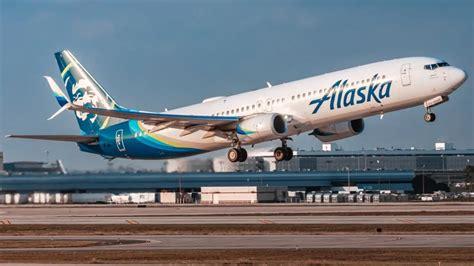
Anchorage has reached a significant aviation milestone with the launch of its first-ever nonstop service to Sacramento, California. This long-anticipated route cements Sacramento as the 19th destination in the Lower 48 states to receive direct flights from Alaska’s largest city. Operated by Alaska Airlines, the inaugural flight departed Ted Stevens Anchorage International Airport (ANC) on June 14, representing both an exciting expansion and a calculated experiment in regional connectivity.
Anchorage to Sacramento: A Milestone in Alaska’s Domestic Aviation Map
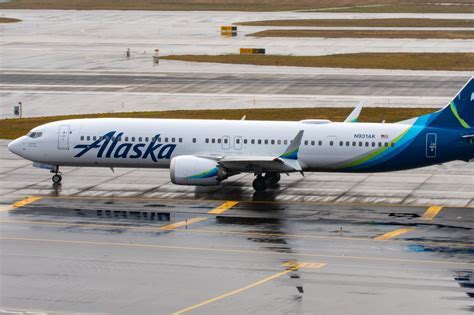
The new Anchorage–Sacramento service bridges two capitals separated by 1,714 nautical miles (3,714 kilometers). The route, previously unserved directly, now operates once weekly on Saturdays only until August 16, utilizing the 179-seat Boeing 737 MAX 9. According to Alaska Airlines’ published schedule, the outbound leg from Anchorage departs at 14:55, arriving in Sacramento at 18:30 local time, while the return journey leaves at 18:35, landing back in Anchorage just before midnight at 23:59.
This move marks a bold strategic step by Alaska Airlines, particularly given that the Anchorage–Sacramento route had no direct service history prior to this launch. Based on U.S. Department of Transportation (DOT) data, the route already had a solid base of 38,400 round-trip passengers in 2023, translating to approximately 53 daily passengers in each direction. With Alaska Airlines capturing 72% of that traffic through one-stop connections primarily via Seattle and Portland, this nonstop trial is more than just symbolic — it’s a data-driven gamble with tangible upside.
Strategic Expansion Amid Growing Demand
The Anchorage–Sacramento launch comes amid a broader upward trend in Anchorage’s domestic traffic. According to the DOT, almost 3.1 million passengers flew between Anchorage and the Lower 48 in 2024, an increase of 4% over 2023 and a 7% rise from pre-pandemic 2019 levels. This surge not only signals a rebound but sets a new record — 2024 marks the first year Anchorage surpassed the 3-million mark in Lower 48-bound traffic.
This increase underscores a growing demand for connectivity from Alaska’s main population hub to the contiguous United States. Alaska Airlines, the dominant carrier in the state, is clearly aware of this momentum and is investing accordingly. Though the Anchorage–Sacramento service is limited to just eight rotations this summer, it represents a testbed for potential permanent service, contingent on performance and profitability.
Competing Against Convenience: The Challenge of One-Stop Alternatives
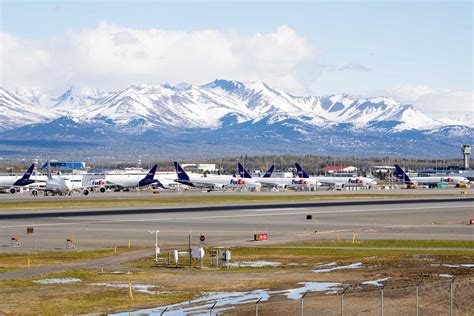
While the direct flight offers clear benefits in time savings and convenience, the route faces stiff competition from well-established one-stop itineraries through Seattle and Portland. Alaska Airlines, Delta, and United all offer multiple daily flights connecting these hubs to both Anchorage and Sacramento, giving passengers a variety of departure times and price points.
Nonetheless, nonstop service can command a premium, especially among leisure travelers, business passengers, and those valuing time over cost. The question remains whether Alaska Airlines can consistently fill its Saturday flight and justify the operational cost of a longer-range MAX 9 deployment.
From an airline perspective, the weekend-only schedule minimizes financial risk, allowing Alaska Airlines to test demand without the commitment of daily operations. If the performance metrics — including load factor, revenue per available seat mile (RASM), and fare yield — prove satisfactory, the route could evolve into a summer seasonal staple or even a year-round connection.
Sacramento Joins a Growing Map of Lower 48 Connections
With the addition of Sacramento, Anchorage now boasts scheduled flights to 19 Lower 48 destinations, a testament to its role as a vital air bridge between Alaska and the rest of the United States. The ten most traveled routes to and from Anchorage in 2024, according to point-to-point passenger counts, include:
- Seattle – 399,000 passengers
- Phoenix – 148,000 passengers
- Minneapolis – 128,000 passengers
- Portland – 123,000 passengers
- Denver – 118,000 passengers
- Los Angeles – 114,000 passengers
- Las Vegas – 111,000 passengers
- Chicago O’Hare – 101,000 passengers
- Salt Lake City – 84,000 passengers
- Dallas/Fort Worth – 81,000 passengers
Seattle remains the dominant link, fueled by Alaska Airlines’ massive network hub and strong connectivity. Alaska alone flew 342,000 of the 399,000 Seattle-bound passengers, with another 1.3 million transiting through Seattle to other destinations, highlighting the importance of this gateway for Alaskan travelers.
The Competitive Landscape Heats Up With Hawaiian Airlines’ New Service
Just two days before the Anchorage–Sacramento inaugural flight, Hawaiian Airlines began Seattle to Anchorage flights, a move driven by its recent acquisition by the Alaska Air Group. Deploying the widebody Airbus A330-200, Hawaiian now offers double daily service, including an ultra-early 2:50 AM departure from Anchorage.
With Alaska Airlines and Delta already crowding the Seattle–Anchorage corridor, Hawaiian’s entrance raises the stakes. Anchorage travelers now have access to as many as 26 daily flights on this single city pair, cementing Seattle’s status as the premier Lower 48 gateway from Alaska. It also provides insights into how Alaska Air Group might integrate and differentiate brands while leveraging joint strength in regional dominance.

Orlando and Spokane: The Last Big Holes in Anchorage’s Lower 48 Network
Despite this growth, a few Lower 48 destinations remain surprisingly unlinked from Anchorage. Orlando, Florida, tops the list, with 49,000 round-trip passengers in 2024, despite lacking nonstop service. The route’s extreme distance — it would be Alaska’s longest domestic flight — makes a direct connection logistically challenging and economically daunting.
Still, 57% of Orlando-bound passengers flew with Alaska Airlines, largely via Seattle. Delta carried 27% via its hubs in Seattle and Minneapolis, while United also posted solid traffic. Though the demand exists, the cost-benefit equation is unlikely to favor nonstop service in the short term.
Conversely, Spokane, Washington, holds the title of Anchorage’s closest large unserved destination, with 48,000 round-trip passengers in 2024. Its proximity, coupled with modest yet consistent demand, could make it a prime candidate for future seasonal service, especially with a 737-700 or regional aircraft. Whether Spokane becomes the next Sacramento remains to be seen, but the precedent is now firmly established.
Conclusion: An Experiment With Broader Implications
The Anchorage–Sacramento route represents more than just a new line on a route map. It is a reflection of shifting travel patterns, pent-up demand, and Alaska Airlines’ willingness to experiment with underserved city pairs. Sacramento’s status as a state capital, economic center, and leisure gateway enhances the viability of this connection — particularly during the busy summer travel season.
If the route proves successful, it could open the floodgates for similar low-frequency, high-potential routes, allowing Anchorage to further solidify its place as the aerial lifeline between America’s most remote state and its mainland counterparts. For now, Sacramento stands as a symbol of connectivity in motion — a direct link made real by the data, the demand, and the vision to test the skies.