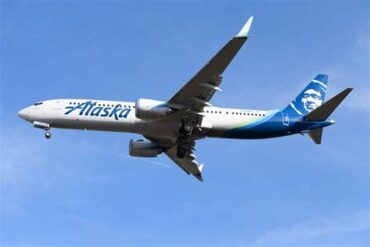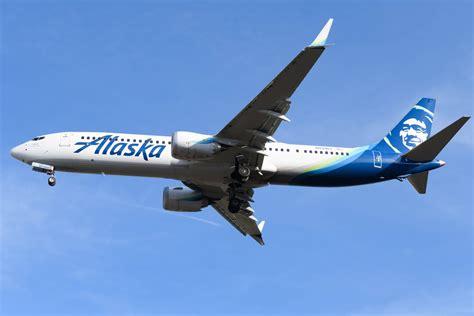
Alaska Airlines has expanded its domestic network with the introduction of a first-ever nonstop connection between Anchorage and Boston Logan International Airport, giving travelers a direct option between Alaska and New England for the first time. The new seasonal operation, launched on June 13, represents another strategic use of the airline’s Boeing 737 MAX fleet on extended narrowbody missions while reducing reliance on connecting hubs across the United States.
Stretching more than 3,300 miles, the route demonstrates how airlines are increasingly identifying underserved city pairs where nonstop service can unlock new demand and improve passenger convenience.
A Historic Direct Link Between Alaska and New England
For years, passengers traveling between Anchorage and Boston typically connected through major airline hubs such as Seattle, Minneapolis, Chicago, or Denver. The introduction of nonstop flights removes that extra step, creating a significantly smoother journey during Alaska’s busy summer tourism season.
The service is scheduled to operate weekly through August 15, targeting the period when visitor demand for Alaska traditionally reaches its annual peak. Rather than committing to year-round operations immediately, Alaska Airlines is using a measured seasonal approach that allows it to evaluate customer interest while maintaining operational flexibility.
The launch also reinforces the carrier’s ongoing strategy of expanding beyond its historical dependence on Seattle as the primary gateway linking Alaska with destinations across the eastern United States.
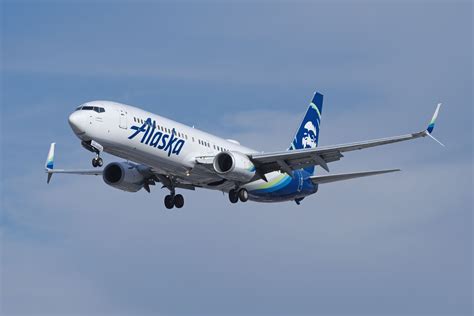
Boeing 737 MAX 8 Enables Nearly Eight Hours of Continuous Flight
Operating flights approaching eight hours with a narrowbody aircraft would have been considerably more challenging in previous generations. The Boeing 737 MAX 8 provides the range and fuel efficiency necessary to support these extended missions while remaining economically attractive for airlines.
The return journey from Boston to Anchorage carries a scheduled duration of up to 7 hours and 53 minutes, making it one of the airline’s longest nonstop services operated by the aircraft type this year.
Only two Alaska Airlines Boeing 737 MAX routes currently exceed it in scheduled duration:
- New York JFK–Anchorage at approximately 7 hours and 57 minutes
- Seattle–Reykjavik at approximately 7 hours and 55 minutes
These lengthy sectors highlight the growing capabilities of modern narrowbody fleets, allowing carriers to serve markets once considered practical only for larger widebody aircraft.
Passenger Demand Created a Strong Business Case
Market statistics indicate that the Anchorage–Boston corridor already supported meaningful traffic despite the absence of nonstop flights.
During the twelve-month period from March 2025 through February 2026, approximately 43,000 round-trip passengers traveled between the two cities. That translates into well over 100 travelers per day in each direction, all previously requiring at least one connecting flight.
Alaska Airlines captured roughly 47% of that market, largely by routing passengers through Seattle. Delta Air Lines accounted for around 33%, while United Airlines represented approximately 14%, using their own connecting hubs to carry travelers.
Those figures suggest that demand existed before nonstop service became available, providing a foundation for Alaska Airlines to test whether convenience can stimulate even greater passenger volumes.

Strategic Network Growth Beyond Traditional Hubs
The new route reflects broader changes taking place across airline network planning. Instead of funneling every passenger through massive connecting airports, carriers are increasingly examining opportunities for point-to-point operations where direct flights can save time and attract premium demand.
For Alaska Airlines, the Boeing 737 MAX has become an important tool in executing that strategy. Its combination of operating efficiency and extended range enables the airline to connect distant city pairs without deploying larger aircraft that may be difficult to fill consistently.
This flexibility allows Alaska to experiment with routes that might previously have been considered too specialized or seasonal to justify nonstop service.
The Anchorage–Boston launch fits neatly into that evolving approach, balancing operational risk with the opportunity to establish a unique market position.
Travelers Benefit From Faster and Simpler Journeys
The most immediate advantage belongs to passengers, who no longer need to coordinate connecting itineraries or worry about delays affecting onward flights.
A nonstop option reduces total travel time while eliminating many of the uncertainties associated with transferring between terminals or waiting through extended layovers. Leisure travelers heading to Alaska’s national parks, cruise departures, wildlife destinations, and outdoor attractions may find the simplified itinerary particularly appealing during the busy summer season.
Business travelers also gain additional scheduling flexibility by avoiding intermediate stops that previously lengthened journeys between the two regions.
Seasonal Performance Could Shape Future Expansion
Whether the Anchorage–Boston service evolves into a more frequent operation or returns in subsequent summer schedules will likely depend on booking performance during its inaugural season.
If passenger loads remain strong and revenue targets are achieved, Alaska Airlines could explore additional frequencies or extend the seasonal operating window. The underlying traffic data already demonstrates a stable customer base, while the availability of nonstop service may encourage entirely new travel demand that did not previously exist.
For now, the route stands as an example of how airlines are leveraging modern aircraft technology and detailed market analysis to open connections once viewed as impractical. By linking Anchorage directly with Boston using the Boeing 737 MAX 8, Alaska Airlines has introduced a distinctive nearly eight-hour domestic flight that strengthens its network while offering travelers an unprecedented nonstop bridge between Alaska and New England.