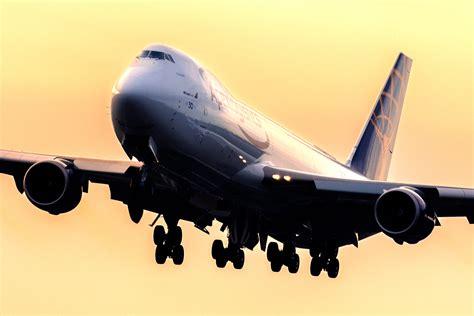
The Boeing 747-200 transformed long-haul aviation in a way that permanently changed travel across the Pacific. For years, passengers departing New York for Tokyo expected an unavoidable stop in Anchorage, Alaska, where their aircraft would refuel before continuing the journey across the North Pacific. It was simply part of the experience of intercontinental flying during the early jumbo jet era. Yet within only a few years, that familiar stop disappeared from schedules, not because airlines changed their strategy, but because Boeing fundamentally improved the aircraft itself.
Rather than designing an entirely new airplane, Boeing refined the original 747 with stronger engines, increased maximum takeoff weight, and greater fuel capacity. Those seemingly incremental improvements combined to deliver a dramatic leap in range, allowing the Boeing 747-200 to fly nonstop between New York and Tokyo while carrying a full passenger load. The aircraft not only eliminated hours from one of the world’s busiest long-haul routes but also reshaped airline economics and paved the way for the ultra-long-range aircraft that dominate premium international travel today.
The story of how the 747-200 eliminated Anchorage from passenger itineraries illustrates one of aviation’s most important engineering lessons: sometimes the biggest revolutions come from improving an existing design rather than replacing it.
After entering service in 1971, the Boeing 747-200 quickly proved that enhanced performance could unlock routes previously considered impractical. Airlines discovered that greater range was not simply about flying farther—it fundamentally changed scheduling flexibility, operating costs, passenger convenience, and fleet planning.
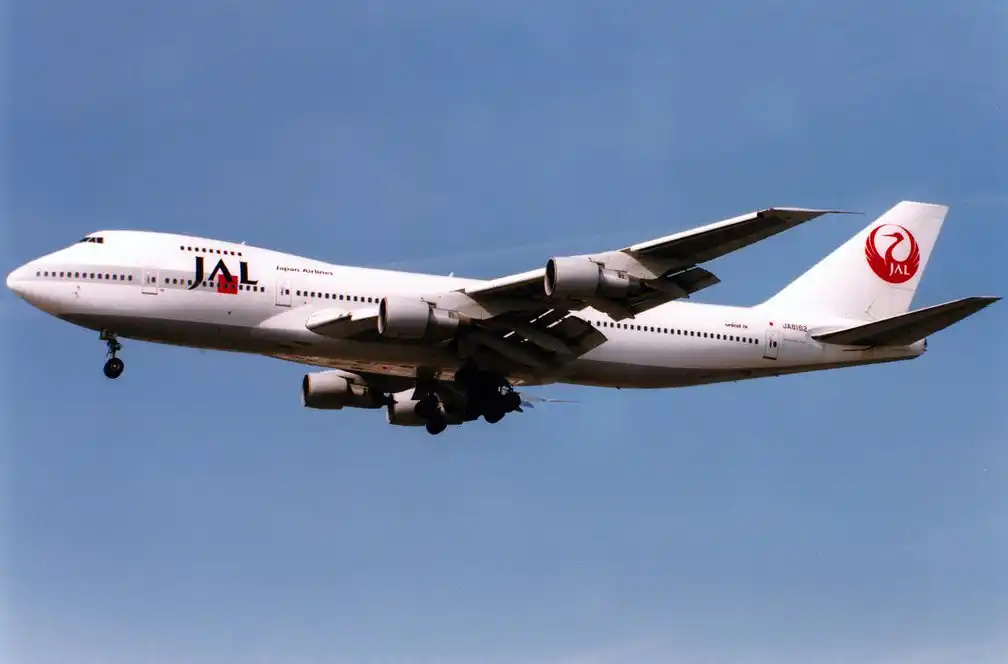
Why the Original Boeing 747-100 Needed an Anchorage Fuel Stop
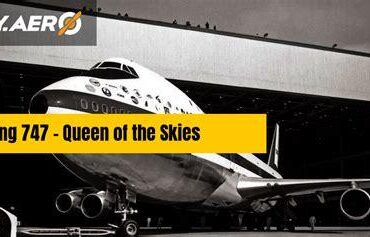
When the Boeing 747-100 entered commercial service with Pan Am in January 1970, it immediately revolutionized international air travel. Never before had an airliner transported so many passengers across oceans in such comfort. However, despite its enormous size and impressive capability, the aircraft had one important limitation: range.
Powered by four Pratt & Whitney JT9D-3A turbofan engines, each producing approximately 43,500 pounds of thrust, the 747-100 could fly roughly 5,300 nautical miles (9,800 kilometers) with a full passenger complement. While this comfortably covered transatlantic sectors such as New York to London, it fell short of what was needed for nonstop service between New York and Tokyo.
Although the straight-line distance measures approximately 5,850 nautical miles (10,834 kilometers), real-world airline operations rarely follow perfect great-circle routes. Headwinds over the Pacific, air traffic control restrictions, weather deviations, and fuel reserve requirements all increase the effective distance an aircraft must be capable of flying. With 350 to 400 passengers onboard, sufficient baggage, cargo, and mandatory fuel reserves, the original 747 simply could not make the journey reliably without stopping.
Anchorage, Alaska, happened to occupy the ideal geographical position. Located close to the midpoint of the great-circle route linking the eastern United States with Japan, it became the natural technical stop where aircraft could quickly refuel before continuing westward.
Passengers often viewed the stop as a normal part of international travel. Although it added two to three hours to total travel time, airlines had little choice until aircraft technology advanced.
Anchorage Became One of the World’s Most Important Aviation Hubs
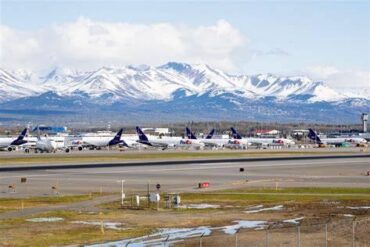
The limitations of first-generation jumbo jets unexpectedly transformed Anchorage International Airport into one of the busiest transit airports anywhere on Earth.
Instead of serving primarily Alaska-bound travelers, Anchorage became an international crossroads linking Asia, Europe, and North America. Every day, numerous Boeing 747s arrived solely to refuel before continuing their long journeys.
Passengers typically disembarked while ground crews rapidly refueled the aircraft. Depending on airline procedures and traffic volume, these technical stops usually lasted between one and two hours.
The airport developed specialized facilities to support this enormous transit operation, including:
- Duty-free shopping areas
- International transit lounges
- Restaurants serving passengers at all hours
- Expanded fuel storage infrastructure
- Multiple widebody parking stands
- Customs facilities for international transit traffic
Major international airlines—including Pan Am, Japan Air Lines, Northwest Orient, Lufthansa, Korean Air, and several European carriers—scheduled routine refueling stops in Anchorage, making it one of the world’s busiest long-haul transfer points throughout the early 1970s.

The Boeing 747-200 Introduced the Upgrades That Changed Everything
Rather than redesigning the famous jumbo jet from scratch, Boeing focused on solving the aircraft’s range limitations through a combination of engineering improvements.
Three major upgrades defined the Boeing 747-200:
- More powerful engines
- Higher maximum takeoff weight
- Increased fuel capacity
Individually, each improvement offered modest benefits. Together, they fundamentally changed what the aircraft could accomplish.
The Boeing 747-200 became the first member of the 747 family to offer airlines a choice of engine manufacturers. Operators could select Pratt & Whitney JT9D-7 engines, General Electric CF6-50 engines, or Rolls-Royce RB211-524 engines. Each produced approximately 50,000 pounds of thrust, representing roughly a 15% increase over the original JT9D engines fitted to the 747-100.
Those additional thrust levels enabled something equally important: a significantly higher maximum takeoff weight.
The aircraft’s certified maximum takeoff weight increased from 735,000 pounds (333,390 kilograms) to as much as 833,000 pounds (377,842 kilograms)—an increase approaching 100,000 pounds.
Much of that additional allowable weight could be devoted to carrying more fuel.
With greater fuel capacity onboard, the aircraft’s maximum range expanded by approximately 1,550 nautical miles (2,870 kilometers), increasing total capability to around 6,850 nautical miles (12,700 kilometers).
That improvement crossed a critical operational threshold.
Why More Engine Power Alone Was Not Enough
One of the most common misconceptions about long-range aircraft is that stronger engines automatically produce greater range. In reality, the Boeing 747-200 demonstrates a far more nuanced engineering relationship.
The additional thrust did not directly make the aircraft fly farther.
Instead, more powerful engines enabled the aircraft to safely lift a substantially heavier airplane from the runway. That increased certified takeoff weight allowed airlines to load significantly more fuel. Only because the aircraft could carry more fuel did its practical range increase enough to eliminate intermediate stops.
Each enhancement depended upon the others:
- More thrust supported higher takeoff weights.
- Higher takeoff weights allowed additional fuel.
- Additional fuel enabled nonstop transpacific operations.
Without all three improvements working together, the dramatic range increase would never have been achieved.
How the New York–Tokyo Nonstop Flight Became Routine
The route that benefited most immediately from the Boeing 747-200’s improvements was New York to Tokyo.
With a practical range of approximately 6,850 nautical miles, the aircraft now possessed more than 1,000 nautical miles of additional margin beyond the route’s great-circle distance.
That reserve provided airlines with comfortable operational flexibility to account for:
- Strong Pacific headwinds
- Weather avoidance
- Air traffic routing changes
- Diversion requirements
- Mandatory fuel reserves
Instead of carefully balancing payload against fuel, airlines could now schedule nonstop service with considerably greater confidence.
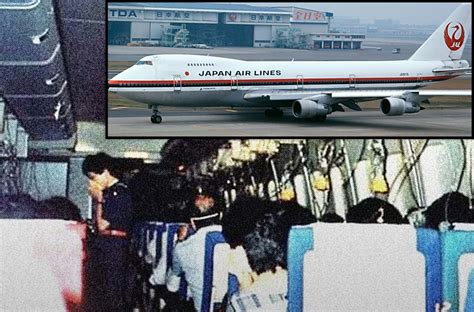
Japan Air Lines, Pan Am, and Northwest Orient rapidly introduced nonstop operations after taking delivery of their Boeing 747-200 fleets.
Passengers immediately benefited through significantly shorter travel times while airlines eliminated the costs associated with an intermediate landing.
The Boeing 747-200 Opened Numerous Long-Haul Routes
The range increase extended far beyond New York and Tokyo.
Several important city pairs that previously required technical stops suddenly became practical nonstop routes.
Among the most significant were:
- Frankfurt–Los Angeles
- London–Singapore
- Paris–Tokyo
- Multiple Europe-to-Asia nonstop services
Although weather conditions and seasonal winds still occasionally influenced payload restrictions, airlines now possessed a level of scheduling flexibility that had previously been impossible.
The financial benefits were equally significant.
Removing an intermediate fuel stop eliminated landing fees, reduced ground handling expenses, shortened aircraft turnaround times, lowered crew duty costs, simplified scheduling, and improved aircraft utilization. Every hour saved allowed airlines to generate greater productivity from each aircraft while simultaneously improving the passenger experience.
The Boeing 747-200 therefore became more than simply a longer-range airplane—it became a substantially more profitable one.
What Happened to Anchorage After Passenger Fuel Stops Disappeared?
As increasingly capable aircraft entered airline fleets—including later variants such as the Boeing 747-400—Anchorage gradually lost its role as the world’s premier passenger refueling hub.
The bustling international transit terminal became noticeably quieter.
Yet Anchorage never lost its strategic geographic advantage.
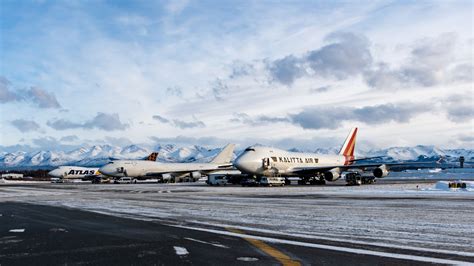
Cargo airlines continue to benefit enormously from the airport’s position along North Pacific great-circle routes. Unlike passenger airlines, cargo operators frequently prioritize maximum payload over nonstop capability, making technical fuel stops economically attractive.
Today, Anchorage remains one of the world’s most important cargo gateways. Aircraft departing Asia can efficiently refuel before continuing toward North America or Europe while remaining within crew duty limitations.
The airport can reach roughly 90% of the industrialized world within approximately 9.5 hours, making it uniquely positioned for global freight operations.
Its reinvention demonstrates how geography can remain valuable even as aircraft technology evolves.
The 747-200 Established the Blueprint for Every Modern Long-Range Airliner
The engineering philosophy introduced by the Boeing 747-200 has influenced every generation of long-range aircraft that followed.
Instead of relying on revolutionary airframe redesigns, manufacturers increasingly focused on combining more efficient engines, higher certified weights, aerodynamic improvements, and smarter fuel management systems.
The Boeing 747-400 pushed range beyond 7,200 nautical miles, introducing winglets and advanced avionics that further expanded nonstop possibilities.
The Boeing 777-200LR extended practical range to nearly 9,400 nautical miles, becoming the world’s longest-range commercial airliner upon its introduction.
More recently, the Airbus A350-900ULR enabled Singapore Airlines to relaunch nonstop Singapore–New York service, while future aircraft such as the A350-1000ULR and Boeing 777-8 continue extending the boundaries of commercial aviation.
Each represents another chapter in the same engineering philosophy pioneered by the Boeing 747-200.
The Legacy of the Boeing 747-200 Goes Far Beyond Greater Range
The Boeing 747-200 is often remembered as an improved version of the original jumbo jet, but its significance extends much further.
Its enhanced engines, greater structural capability, and increased fuel capacity fundamentally altered how airlines planned global networks. By eliminating the Anchorage fuel stop on New York–Tokyo flights, it demonstrated that relatively targeted engineering improvements could unlock entirely new commercial opportunities without requiring a completely new aircraft.
That achievement reshaped passenger expectations, reduced operating costs, expanded airline route maps, and accelerated the transition toward truly global nonstop air travel.
Today, travelers routinely board ultra-long-haul flights spanning 15 hours or more without considering the technological milestones that made such journeys possible. Yet one of the most influential of those milestones arrived in 1971, when the Boeing 747-200 proved that a carefully engineered evolution could accomplish what once seemed impossible: connecting New York and Tokyo without stopping in Alaska.