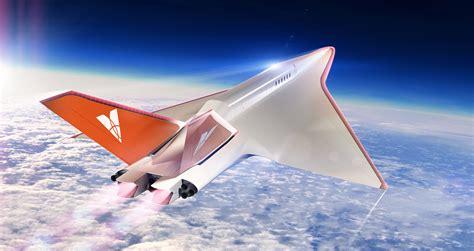
In the relentless pursuit of speed, hypersonic flight has emerged as the next frontier in aerospace engineering. Defined as velocities exceeding Mach 5, or five times the speed of sound, hypersonic technology promises to redefine the boundaries of air travel. The most ambitious manifestation of this future is Venus Aerospace’s Stargazer — a pioneering concept aircraft designed to travel at Mach 9, nearly 6,905 mph, slashing intercontinental flight times from hours to mere minutes.
The Texas-based firm Venus Aerospace, founded in 2020, is spearheading efforts to materialize this vision. Their goal is not merely to build another fast plane, but to create a radically new class of aircraft that can reach 170,000 feet above Earth — high enough to witness the curvature of the planet while traveling at unprecedented speeds.
Unlike conventional jets, the Stargazer uses an innovative rotating-detonation engine — a propulsion technology long theorized but rarely realized. At the heart of this engine is a combustion process that occurs supersonically within the engine, creating a continuous spinning detonation wave. According to Andrew Duggleby, Venus Aerospace’s co-founder and CTO, the Stargazer’s engine rotates at a staggering 20,000 times per second, delivering powerful thrust while maintaining fuel efficiency.
Rotating detonation propulsion is not just fast — it’s also efficient. This engine technology consumes approximately 20% less fuel than conventional turbine engines. Moreover, Venus has achieved a breakthrough by running the engine on room-temperature storable propellant, a milestone that could make it suitable for regular commercial and defense applications.
To bring the Stargazer to life, Venus Aerospace has raised $33 million in funding and secured a testing facility at Spaceport Houston. Their recent successful ignition of the VDR2 engine marks a pivotal step forward. The firm will now initiate flight testing using a 20-foot drone capable of reaching Mach 5, before progressing toward a full-scale prototype of the Stargazer.
The aircraft’s design is as bold as its ambitions. The Stargazer spans 150 feet in length and 100 feet in width, making it one of the largest concept jets in development. Weighing 150,000 pounds, it is intended to carry up to a dozen passengers, with a proposed mission to cut flights such as New York to Tokyo down to one hour. At cruising altitude, passengers would see the darkness of near-space and the curvature of Earth — an experience reserved until now for astronauts.
The Stargazer’s flight profile is hybrid. The aircraft will take off using conventional jet engines and switch to its hypersonic system at high altitude. While its route remains below the Kármán line (the edge of space, roughly 100 km or 62 miles above Earth), the ride will be unlike anything seen in commercial aviation.
Jim Bridenstine, former NASA administrator, emphasized that the Stargazer project is more than a technological marvel — it’s a critical leap forward. He described the engine test as a “key advancement towards real flying systems,” suggesting that hypersonic aircraft will play an essential role in both commercial and defense sectors in the coming decades.

This development comes amidst a global race to achieve hypersonic passenger flight. Several firms and nations are vying to lead this revolution:
- Hermeus (USA): Developing the Quarterhorse, a Mach 5-capable aircraft backed by the U.S. Air Force.
- Sierra Space (USA): Working on the Dream Chaser, aimed at high-speed orbital transportation.
- Space Transportation (China): Engineering a 12-passenger vehicle to reach Mach 5.7 for intercontinental trips.
- Virgin Galactic (USA): Pushing past Mach 2.47 with its Unity 2, aiming to eventually enter the hypersonic regime.
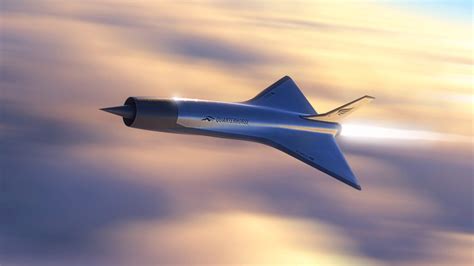
What sets Venus Aerospace apart is its practical focus. Unlike many of its peers, Venus is not purely fixated on orbital systems or massive capital investments. Instead, it aims to integrate hypersonic capabilities into suborbital commercial routes, delivering transformative speed without the immense costs and complexities of space travel.
Moreover, their commitment to room-temperature storable propellants makes their technology more adaptable to real-world logistics. This detail is crucial: while cryogenic fuels require complex storage infrastructure, Venus’s system could be deployed from existing airfields with minimal changes.
The journey to hypersonic travel is not without its challenges. Materials must withstand extreme thermal loads, control systems need to operate flawlessly at edge-of-envelope velocities, and safety mechanisms must evolve to protect passengers from aerodynamic forces unheard of in commercial aviation.
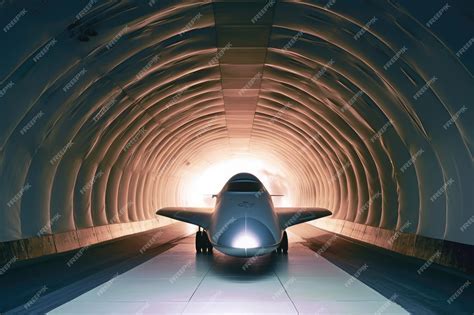
Yet progress is unmistakable. The successful test of the VDR2 engine, combined with ongoing developments in materials science and high-speed avionics, signals a coming era where hypersonic aircraft might become a staple of intercontinental travel.
As public and private interest continues to grow, we must also consider the broader implications. The introduction of such aircraft could revolutionize global logistics, military response capabilities, and the very fabric of international business travel. Time zones would become nearly irrelevant. Business professionals could meet in Tokyo for breakfast and return to New York for dinner.
Still, timelines remain uncertain. Venus Aerospace has not disclosed when the full-scale Stargazer prototype will fly, nor when commercial operations might begin. However, with successive milestones and continued investor backing, its trajectory looks promising.
In the realm of aviation, few concepts have captured the imagination as forcefully as hypersonic travel. With the Stargazer, we stand at the threshold of a future that once existed only in science fiction — a future where 6,905 mph is not only possible, but practical. As Venus Aerospace moves from concept to prototype, the aerospace industry — and the world — watches with bated breath.