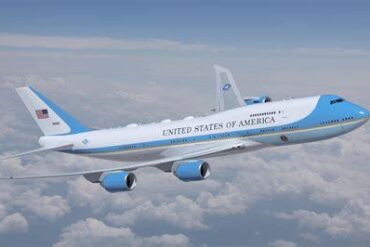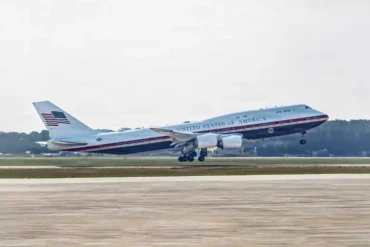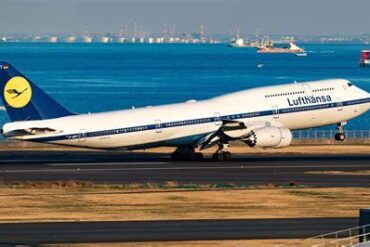
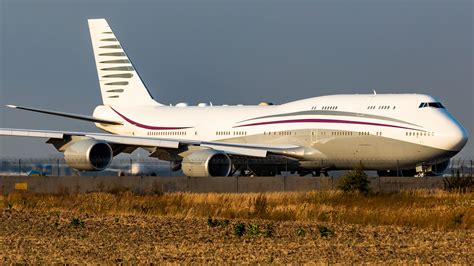
The idea is audacious, cinematic, and deeply political: a lavish Boeing 747-8 Business Jet donated by Qatar, repainted and hardened into a temporary “Bridge Air Force One,” lifting off in new presidential colors just in time for America’s 250th anniversary in 2026. The question is not whether it looks good on paper. The question is whether physics, bureaucracy, and national security reality will allow it to happen.
Donald Trump’s acceptance of the aircraft shortly after returning to office in 2025 was driven by impatience. The long-delayed VC-25B program, meant to replace the aging Air Force One fleet, remains years behind schedule. Against that backdrop, the Qatari 747 emerged as a high-risk, high-visibility workaround—a flying Band-Aid priced at roughly $400 million and wrapped in controversy.
From the outside, the jet already resembles power incarnate. Inside, it is anything but ready. What lies ahead is one of the most compressed, complex aircraft conversions ever attempted for presidential service.
The timing alone raises eyebrows. The Pentagon did not formally accept the aircraft until May 2025, and the Air Force confirmed that conversion work began only in September. A summer debut would mean transforming a foreign-owned luxury airliner into a secure, survivable command post in under a year. By Air Force One standards, that borders on the miraculous.
A $400 Million Stopgap With Presidential Stakes
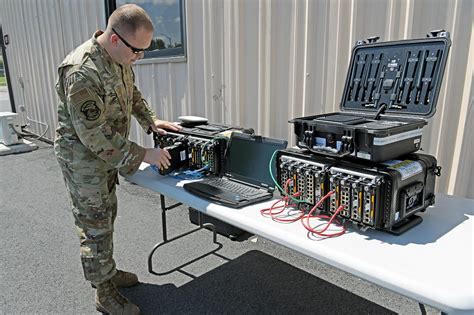
Air Force Secretary Troy Meink placed the estimated retrofit cost at $400 million, a figure that underscores how little of the original jet can remain untouched. This is not a paint-and-polish job. To function as Air Force One—even temporarily—the aircraft must be stripped to the frame and rebuilt with hardened systems capable of surviving cyberattack, electromagnetic pulse events, and attempted electronic intrusion.
Every wire, panel, and conduit must be inspected for surveillance devices. The concern is not hypothetical. Any aircraft previously owned and operated by a foreign government represents a counterintelligence puzzle of the highest order. A retired senior military official summed it up bluntly: the plane must be taken apart, searched for bugs, and rebuilt so no one can hijack its electronics—not remotely, not ever.
Beyond security sweeps, the aircraft must receive a dense stack of communications hardware, enabling the president to command U.S. forces globally under any conditions. That includes redundant satellite links, secure voice and data systems, and classified defensive countermeasures. Even aerial refueling capability, a hallmark of true Air Force One status, requires invasive structural modification and extensive testing.
Why the Timeline Feels Unrealistic
The skepticism surrounding the “Bridge Air Force One” timeline is not political; it is historical. The VC-25B program, launched during Trump’s first term, offers a sobering comparison. Those aircraft—also Boeing 747-8s—have been under modification for nearly a decade. Boeing has admitted losses exceeding $2.3 billion, and delivery is now projected for 2028, at least two years late.
Those jets were never foreign-owned, never flew under another government’s control, and were still delayed by layers of security certification, contractor issues, and technical complexity. Compressing a similar process into a single year invites skepticism from defense analysts and aviation engineers alike.
Yet this project is different in one crucial respect: expectations. The “bridge” aircraft is not intended to serve for decades. It is designed to fill a political and ceremonial gap, then be retired and donated to Trump’s presidential library. That shorter service life may justify compromises—fewer redundancies, narrower mission scope, or deferred capabilities—that would be unacceptable on a permanent Air Force One.
L3Harris, Secrecy, and the Texas Question
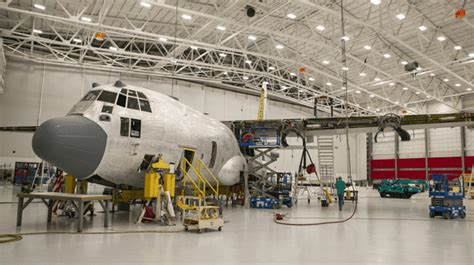
Officially, the U.S. Air Force has declined to name the contractor responsible for the retrofit. Unofficially, the aircraft has been repeatedly spotted at L3Harris facilities in Texas, and multiple outlets report that the defense electronics giant is leading the effort. The silence is telling. Programs involving presidential security rarely advertise their details, especially when foreign ownership and accelerated timelines intersect.
What remains unclear is the precise scope of the modifications. Is the aircraft being brought fully up to Air Force One survivability standards, or is it receiving a reduced, mission-specific configuration? That distinction matters. A lighter retrofit could explain the ambitious schedule. It would also explain why officials avoid precise language when describing the jet’s final capabilities.
Symbolism Versus Strategic Reality
The appeal of unveiling a gleaming new presidential 747 during America’s Semiquincentennial is obvious. Few images broadcast continuity and power more effectively. Trump’s frustration with Boeing’s delays has been vocal and persistent, and the “Bridge Air Force One” is as much a statement as it is an aircraft.
Still, symbolism does not override security doctrine. Air Force One is not just transportation; it is a survivable node in the U.S. nuclear command-and-control system. Any shortcut carries implications far beyond optics. That tension—between political urgency and institutional caution—defines the entire project.
Will It Be Ready in Time?
A summer debut is possible, but only under a narrow definition of “ready.” If the aircraft rolls out in a new livery, equipped with secure communications and limited defensive systems, it could plausibly fly presidential missions by mid-2026. Achieving full, gold-standard Air Force One capability on that timeline remains unlikely.
What is far more certain is that this jet will never be just another airplane. Whether it becomes a triumphant symbol of decisive action or a case study in accelerated risk will depend on how much capability is built—and how much is quietly deferred. Either way, the Qatar 747 has already secured its place in aviation and political history, hovering somewhere between ambition and audacity as America’s 250th birthday approaches.