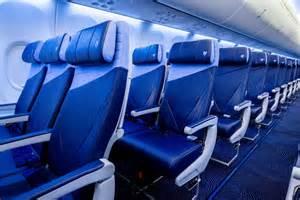
On a flight stretching nearly 6,800 miles across the Pacific, comfort becomes a commodity. The route between New York and Tokyo is one of the world’s most important long-haul air corridors, linking two global financial capitals while serving millions of travelers annually. Yet for most passengers, the experience begins in economy class, where every inch of personal space can feel incredibly valuable after thirteen or fourteen hours in the air.
The question many travelers ask is surprisingly simple: how much is an extra inch of legroom actually worth? Airlines have spent years refining the answer, transforming cabin layouts into highly sophisticated pricing systems where even a small increase in seat pitch can command a significant premium. On the New York–Tokyo market, the cost of gaining just a few additional inches can range from modest to remarkably expensive, depending on which airline operates the flight and how the seat is marketed.
As premium economy continues its rapid expansion and extra-legroom economy products become increasingly popular, understanding the economics behind seat spacing reveals how airlines maximize revenue while giving travelers a wider range of choices than ever before.
Economy Class on New York–Tokyo Routes: The Baseline Experience
The New York–Tokyo market is served primarily by All Nippon Airways (ANA), Japan Airlines (JAL), American Airlines, and United Airlines. While several daily flights connect New York-area airports with Tokyo’s airports, the competitive landscape is more complex than it initially appears. Joint ventures between airlines mean that ANA and United often coordinate pricing strategies, while American and JAL do the same.
For economy travelers, seat pitch becomes one of the most important differentiators.
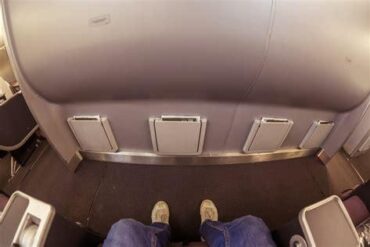
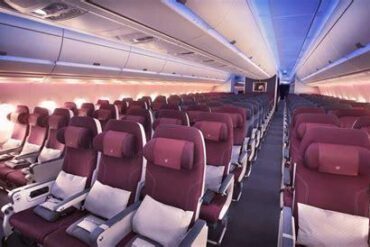
American Airlines and United Airlines generally provide approximately 31 inches of seat pitch in standard economy cabins. This measurement represents the distance between one point on a seat and the same point on the seat directly in front. It does not equate perfectly to usable legroom, but it remains the industry’s primary metric for passenger space.
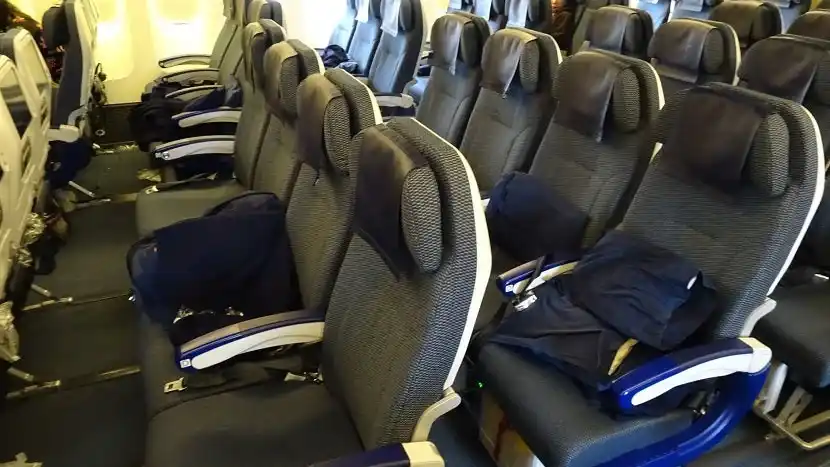
Japanese carriers take a different approach. ANA typically offers 34 inches of pitch on many aircraft operating this route, while JAL often provides between 33 and 34 inches. Those extra inches may seem insignificant on paper, yet during a fourteen-hour journey they can dramatically alter passenger comfort.
The difference becomes especially noticeable during meal services, sleeping periods, and moments when passengers need to retrieve personal items stored beneath the seat ahead. Over the course of a transpacific flight, even minor increases in personal space can reduce fatigue and improve the overall travel experience.
Why Japanese Airlines Offer More Space
The superior economy legroom offered by ANA and JAL is not accidental. It reflects decades of competitive pressure within the Japanese aviation market, where passenger expectations regarding service quality remain exceptionally high.
Japanese airlines have historically emphasized passenger comfort as part of their brand identity. While airlines worldwide have reduced seat pitch over the years to maximize revenue and increase capacity, ANA and JAL maintained relatively generous standards.
This strategy helps differentiate their products from American competitors. Travelers comparing fares frequently discover that Japanese carriers charge somewhat higher ticket prices but deliver a noticeably more spacious cabin environment.
The result is a clear market segmentation. American and United often position themselves as the lower-cost alternatives, while ANA and JAL appeal to travelers willing to pay slightly more for additional comfort without upgrading to a premium cabin.
The Hidden Market for Extra Legroom Seats
The modern airline industry has become remarkably skilled at monetizing passenger comfort.
Instead of reserving additional space exclusively for premium economy or business class, airlines increasingly sell enhanced economy seats that offer a few extra inches of legroom while retaining the same basic service level.
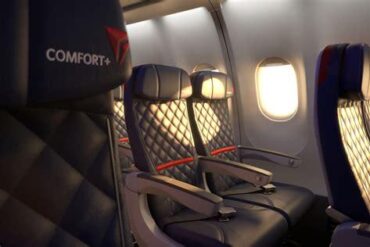
American Airlines markets these seats as Main Cabin Extra, while United Airlines calls its product Economy Plus.
On aircraft operating New York–Tokyo routes, dozens of these seats are available. American’s Boeing 787-9 fleet includes a substantial number of Main Cabin Extra positions, while United’s Boeing 777-200ER and Boeing 787-9 aircraft feature large Economy Plus sections.
These seats generally increase pitch from 31 inches to approximately 34 inches.
That seemingly small increase transforms the economics of the cabin.
Passengers purchasing these seats often pay anywhere from $50 to $250 above the lowest available economy fare. Interestingly, that premium frequently places the final ticket price close to the standard economy fares offered by ANA or JAL.
In practical terms, airlines have created a pricing structure where passengers can choose between paying more for additional space on a U.S. carrier or selecting a Japanese carrier that already includes similar legroom in its base product.
Calculating the Cost of an Extra Inch
When viewed purely through a pricing lens, the numbers become fascinating.
Assume a traveler purchases an economy ticket from New York to Tokyo on a U.S. airline and pays an additional $150 for an extra-legroom seat. If that upgrade increases pitch from 31 inches to 34 inches, the passenger effectively pays $50 per additional inch of seat pitch.
At the higher end of the pricing spectrum, a $250 surcharge equates to more than $83 per additional inch.
For a round-trip journey, those figures can double.
This illustrates how airlines have transformed cabin space into one of the most profitable ancillary revenue streams available. Unlike meals, checked baggage, or onboard Wi-Fi, selling extra legroom requires virtually no ongoing operational cost once the aircraft configuration is established.
The economics become even more attractive because many passengers perceive additional space as a necessity rather than a luxury on ultra-long-haul flights.
Premium Economy Changes the Equation Entirely
While extra-legroom economy seats provide incremental improvements, premium economy represents a far more substantial upgrade.
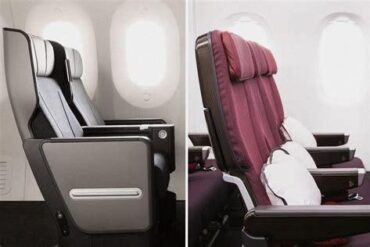
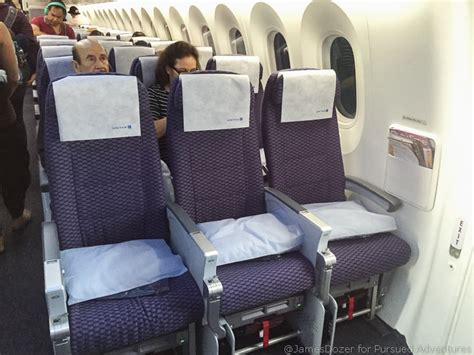
Premium economy cabins on New York–Tokyo routes generally feature significantly wider seats, deeper recline, enhanced dining service, larger entertainment screens, and considerably more personal space.
Most airlines operating this route provide approximately 38 inches of seat pitch in premium economy.
Compared with standard economy on American or United, that represents an increase of roughly seven inches.
Passengers also benefit from wider armrests, greater seat width, improved cushioning, dedicated cabin sections, and often priority boarding privileges.
However, the price difference is far more dramatic.
Economy fares frequently begin around $700 one-way, while premium economy fares commonly range from $1,400 to $1,800 or more for the same journey.
This means passengers may pay an additional $700 to $1,100 for seven extra inches of pitch plus the broader premium experience.
Viewed strictly in terms of legroom, the cost per additional inch remains remarkably high. Yet travelers are purchasing far more than space alone. They are buying a significantly improved environment for spending nearly an entire day in the air.
JAL’s Premium Economy Stands Apart
Among the airlines serving New York and Tokyo, Japan Airlines offers perhaps the most distinctive premium economy product.
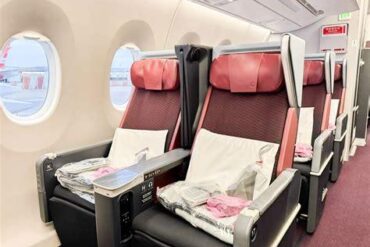
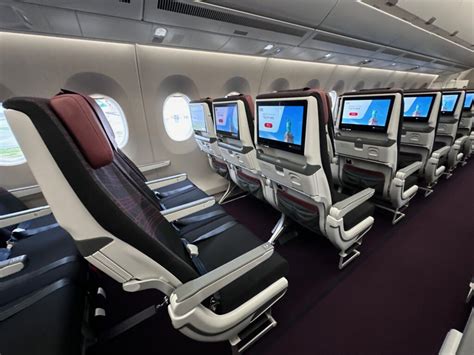
Its flagship Airbus A350-1000 features a premium economy cabin built around advanced fixed-shell seating technology. Unlike traditional recliner seats that move backward into another passenger’s space, fixed-shell designs preserve personal territory while still allowing comfortable relaxation.
The seats feature approximately 42 inches of pitch, substantially exceeding the industry norm.
Passengers also receive large 4K entertainment displays, adjustable privacy dividers, enhanced storage options, and carefully designed headrest wings.
These features transform premium economy from a simple seat upgrade into a genuinely different travel experience.
For travelers seeking comfort without paying business-class prices, JAL’s premium economy often represents one of the strongest value propositions on the Pacific.
How Airline Alliances Shape Pricing
The cost of legroom cannot be understood without examining airline alliances and joint ventures.
Although four airlines compete directly between New York and Tokyo, the reality is closer to a two-player market. ANA and United coordinate many commercial decisions, while American and JAL operate under a similar partnership structure.
These arrangements allow carriers to optimize schedules, share revenue, and align pricing strategies.
As a result, seat upgrades and fare differences often reflect broader network objectives rather than direct competition alone.
For example, extra-legroom economy products frequently serve as strategic tools that bridge the gap between basic economy and premium economy. Airlines can attract price-sensitive travelers with low entry-level fares while simultaneously encouraging upselling through comfort enhancements.
This layered pricing model allows airlines to extract maximum revenue from passengers with varying budgets and priorities.
Why Business Class Makes Legroom Seem Cheap
The economics of extra space become even more striking when compared with business class.
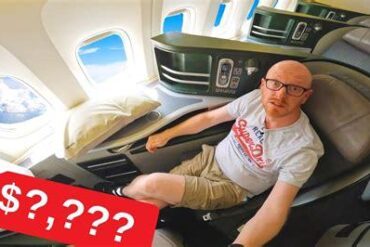
Business-class tickets on New York–Tokyo routes routinely exceed $4,000 one-way and can climb beyond $5,000 depending on seasonality and demand.
At these prices, passengers receive lie-flat beds, premium dining, lounge access, priority services, and extensive privacy features.
The amount of personal space increases dramatically, but the fare increase dwarfs the cost of extra-legroom economy seating.
For many travelers, spending $150 to $250 for additional legroom suddenly appears reasonable when contrasted with the thousands of dollars required for a business-class upgrade.
This psychological comparison is precisely why airlines invest heavily in intermediate products such as Economy Plus, Main Cabin Extra, and premium economy.
They create attractive stepping stones between economy and premium cabins while generating substantial incremental revenue.
The Real Value of an Extra Inch
The true value of an extra inch of legroom depends entirely on the traveler.
A leisure passenger focused on minimizing expenses may gladly tolerate a tighter seat for fourteen hours. A business traveler preparing for meetings immediately upon arrival may view additional space as essential. Taller passengers often consider extra-legroom seating less of a luxury and more of a necessity.
What remains clear is that airlines have successfully quantified comfort.
On the New York–Tokyo route, an extra inch of legroom can effectively cost anywhere from $50 to more than $80. Move into premium economy and the price rises further, though accompanied by a much broader package of benefits.
As airlines continue refining cabin segmentation strategies, every square inch inside an aircraft becomes a revenue-generating asset. For passengers, the decision ultimately comes down to a personal calculation: how much is comfort worth during fourteen hours crossing the Pacific?
For millions of travelers every year, the answer is increasingly clear. The willingness to pay for space has transformed legroom from a simple cabin measurement into one of aviation’s most valuable products.