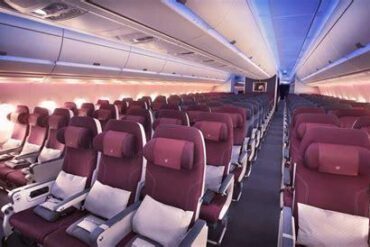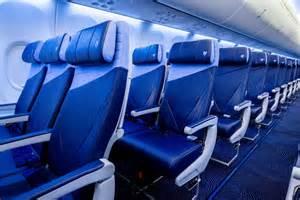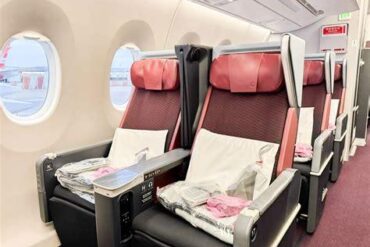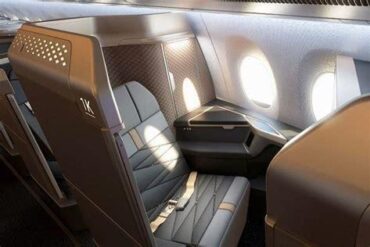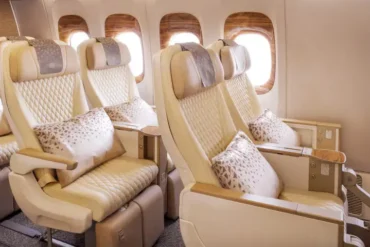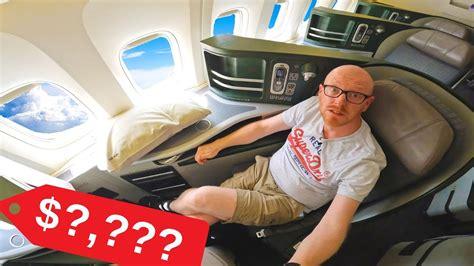
Long-haul travel across the Pacific is rarely forgiving. A flight between North America and Asia often stretches beyond twelve hours, pushing even seasoned travelers to the limits of endurance. In this demanding environment, airlines compete fiercely to create cabins that transform a long flight from a test of patience into something closer to a refined travel experience. Among these contenders, EVA Air has quietly engineered one of the most spacious business class environments in the transpacific market, anchored by a remarkable statistic that frequently surprises even frequent flyers: 60 inches of seat pitch.
For passengers accustomed to tighter premium cabins, the difference is immediately noticeable. Seat pitch—the distance between a point on one seat and the same point on the seat in front—serves as a fundamental indicator of personal space onboard. While many airlines have trimmed cabin layouts in pursuit of efficiency, EVA Air has taken a different route with its flagship Royal Laurel Class, prioritizing breathing room and thoughtful design over density.
This approach has transformed the airline’s reputation over the past decade. Today, EVA Air is frequently mentioned alongside the most respected premium carriers in the world, and its long-haul cabins have become a point of fascination for aviation enthusiasts and travelers alike. The airline’s blend of Taiwanese hospitality, carefully engineered seating, and one of the most generous seat pitches in business class has helped reshape expectations for what transpacific travel should feel like.
The Origins Of EVA Air And Its Commitment To Premium Travel
Understanding the airline’s current reputation requires looking back to its beginnings. EVA Air—officially EVA Airways Corporation—was founded in March 1989 by Dr. Chang Yung-Fa, the visionary entrepreneur behind Evergreen Marine Corporation, one of the world’s largest container shipping companies. Based in Taiwan, the airline emerged during a period of regulatory transformation that allowed private carriers to enter the island’s aviation sector.
From the start, EVA Air embraced an ambitious outlook. Instead of building slowly with small regional aircraft, the airline placed substantial early orders for Boeing and McDonnell Douglas jets, positioning itself as an international carrier from day one. Its first scheduled flights took off on July 1, 1991, connecting Taipei with major Asian hubs such as Bangkok, Seoul, and Kuala Lumpur before gradually expanding toward Europe and North America.
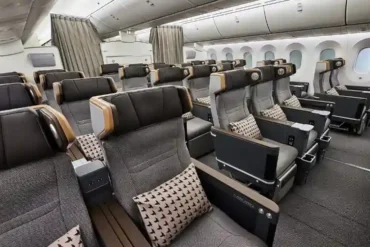
What set EVA Air apart was its early emphasis on passenger experience as a strategic differentiator. The airline introduced innovations that would later become standard across the industry. Perhaps the most notable example was the launch of the world’s first premium economy cabin on Boeing 747 long-haul routes. At a time when most airlines offered only economy and business class, EVA Air created a new category that delivered wider seats, additional legroom, and upgraded amenities.
That pioneering spirit continued as the airline expanded globally. Over the following decades, EVA Air developed a network spanning more than 65 destinations across Asia, North America, Europe, and Oceania. In 2013, the airline joined Star Alliance, aligning itself with a powerful global network that includes United Airlines, Air Canada, Lufthansa, and Singapore Airlines.
Why 60 Inches Of Legroom Matters In Business Class
In the competitive world of premium aviation cabins, a few inches can dramatically alter the passenger experience. EVA Air’s 60-inch seat pitch stands out because it exceeds the typical spacing found on many business class products, especially on densely configured widebody aircraft.
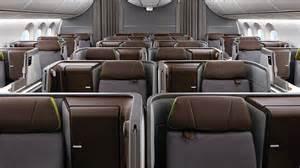
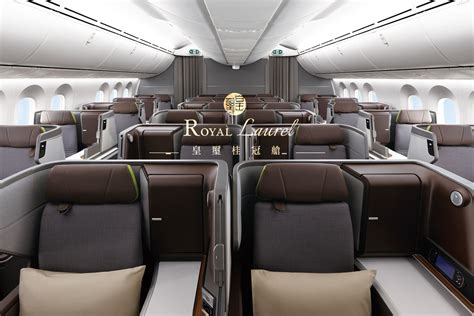
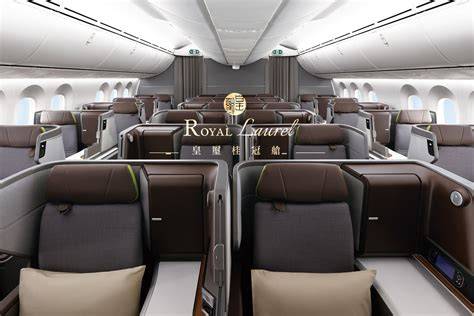
Seat pitch alone does not fully define comfort, but it sets the foundation for everything else. When designers have more physical space between seats, they gain freedom to integrate wider armrests, larger consoles, deeper storage areas, and more ergonomic seat structures. In EVA Air’s Royal Laurel Class, that additional room is used to create a seat that feels less like a conventional airline chair and more like a semi-private personal suite.
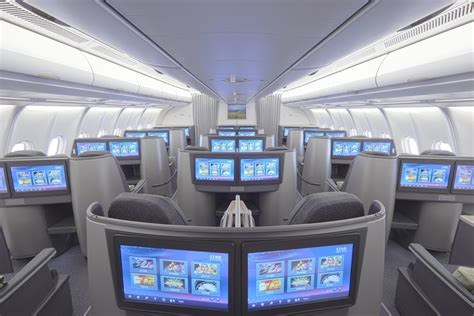
The layout plays an equally important role. EVA Air’s long-haul aircraft—particularly the Boeing 777-300ER and Boeing 787-9—feature a 1-2-1 configuration, ensuring every passenger enjoys direct aisle access. This arrangement has become the gold standard in modern business class cabins because it eliminates the awkward necessity of climbing over a sleeping neighbor during overnight flights.
The combination of a staggered seat design and generous pitch means passengers enjoy both privacy and openness. Window seats feel cocooned and personal, ideal for travelers who prefer quiet and uninterrupted rest. Meanwhile, center seats are designed with adjustable dividers, allowing couples or colleagues to travel together while maintaining individual space.
From Seat To Bed: The Lie-Flat Advantage On Transpacific Flights
Comfort on ultra-long-haul routes ultimately comes down to sleep quality. EVA Air’s Royal Laurel Class seats are engineered to convert into fully lie-flat beds, extending to roughly 78 inches in length depending on the aircraft configuration. The transformation from upright seat to bed occurs smoothly, creating a horizontal sleeping surface that significantly improves rest during flights exceeding twelve hours.
The generous seat pitch becomes particularly valuable in this mode. Because there is ample space between seat shells, passengers rarely feel boxed in when reclining fully. There is enough room to bend a knee, shift positions, or turn slightly without encountering rigid cabin structures. That subtle freedom of movement often determines whether a traveler wakes refreshed or stiff after a long overnight crossing.
The bedding itself enhances the experience further. EVA Air collaborates with premium textile brands to provide soft mattresses, plush duvets, and supportive pillows, ensuring the seat functions as a genuine bed rather than a compromised reclining surface.
For many travelers flying routes such as Taipei to Los Angeles, San Francisco, or New York, the ability to sleep comfortably can transform the journey. Arriving rested after crossing eight or nine time zones dramatically reduces the fatigue associated with long-haul travel.
Cabin Design That Prioritizes Space And Serenity
Beyond the seat itself, EVA Air’s cabin environment plays a critical role in shaping the passenger experience. Designers deliberately avoided clutter, creating an atmosphere that feels organized and calm even when the cabin is fully occupied.
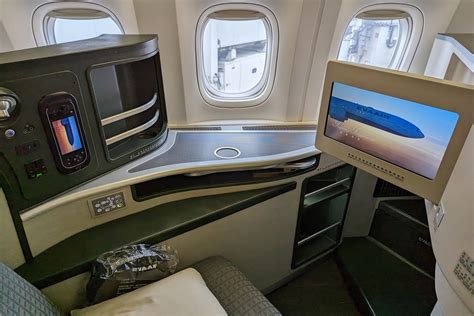
The expanded seat spacing allows the integration of large side consoles, which serve as multifunctional surfaces for drinks, laptops, reading materials, or personal electronics. Dedicated storage compartments hold items such as water bottles, headphones, and amenity kits, reducing the need for passengers to constantly access overhead bins.
Lighting is another area where EVA Air’s design philosophy becomes clear. Adjustable LED reading lamps allow passengers to illuminate their space without disturbing neighbors, while soft ambient lighting gradually shifts throughout the flight to simulate natural day-night cycles. This subtle feature helps reduce jet lag by encouraging the body to adapt to a new rhythm.
The overall effect is a cabin that feels less like a crowded aircraft interior and more like a carefully arranged lounge in the sky.
Dining And Service At 30,000 Feet
Space alone does not define a premium cabin. EVA Air has built its reputation equally on the quality of onboard service and dining, areas where Taiwanese hospitality traditions are clearly visible.
Meals in Royal Laurel Class are served on proper dishware rather than disposable trays, and the airline offers menus that blend international cuisine with Taiwanese culinary influences. Passengers might choose between Western dishes, seasonal Asian specialties, or lighter options designed for overnight flights.
The generous seat pitch improves the dining experience in subtle ways. Large tray tables feel stable and spacious, allowing meals to be served course by course without the cramped feeling sometimes associated with airline dining. Elbow room remains plentiful even during full meal service, a small but meaningful detail that contributes to the overall sense of comfort.
Cabin crew members are often praised for their attentiveness. Service tends to be polished without feeling overly formal, striking a balance that frequent business travelers particularly appreciate.
A Powerful Transpacific Network Connecting East And West
EVA Air’s premium cabin would hold little significance without the extensive network that supports it. From its main hub at Taipei Taoyuan International Airport (TPE), the airline operates one of the most comprehensive transpacific route systems in Asia.
Key destinations across the United States include:
- Los Angeles International Airport (LAX)
- San Francisco International Airport (SFO)
- Seattle-Tacoma International Airport (SEA)
- Chicago O’Hare International Airport (ORD)
- Dallas/Fort Worth International Airport (DFW)
- Houston George Bush Intercontinental Airport (IAH)
- New York John F. Kennedy International Airport (JFK)
In 2026, EVA Air plans to launch a new route to Washington Dulles International Airport (IAD), creating the first nonstop connection between Taipei and Washington, DC. This expansion highlights the airline’s commitment to strengthening links between Taiwan and major North American cities.
Canada also plays a crucial role in the network. EVA Air maintains regular services between Taipei and Vancouver International Airport (YVR) as well as Toronto Pearson International Airport (YYZ), routes that are particularly popular with business travelers and diaspora communities.
A Modern Widebody Fleet Supporting Long-Haul Comfort
Behind the scenes of EVA Air’s passenger experience lies a fleet strategy focused heavily on widebody aircraft optimized for long-distance operations. As of 2026, the airline operates 78 aircraft, with the majority dedicated to intercontinental travel.
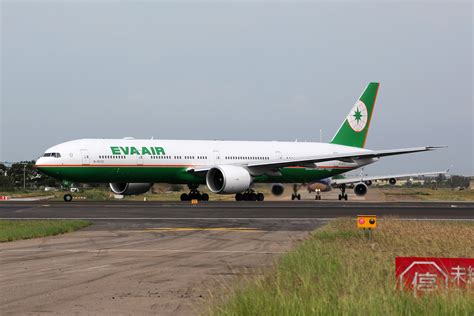
The backbone of the fleet consists of Boeing 777-300ER aircraft, widely regarded as one of the most capable long-haul jets ever built. These aircraft feature the airline’s flagship Royal Laurel Class cabins and operate many of the longest routes across the Pacific.
Complementing the 777 fleet are Boeing 787 Dreamliners, including the 787-9 and 787-10 variants. Known for their quieter cabins, higher humidity levels, and larger windows, the Dreamliner family provides an ideal platform for premium travel experiences.
EVA Air’s future fleet plans also signal continued investment in passenger comfort. The airline has 24 Airbus A350-1000 aircraft on order, a next-generation widebody renowned for its efficiency and spacious cabin architecture. These aircraft are expected to further elevate EVA Air’s long-haul offering once they enter service.
Why EVA Air’s Business Class Continues To Stand Out
In an industry where airlines often prioritize seat density and revenue optimization, EVA Air has carved out a different path. Its decision to maintain 60 inches of seat pitch in business class represents more than just a design choice; it reflects a broader philosophy that long-haul travel should emphasize comfort and thoughtful engineering.
For travelers crossing the Pacific, the result is a cabin environment that feels distinctly more relaxed than many competitors. The combination of direct aisle access, spacious seating, lie-flat beds, and refined service transforms what might otherwise be an exhausting journey into something closer to a premium hospitality experience.
As global travel continues to evolve and airlines compete to attract high-value passengers, cabins like EVA Air’s Royal Laurel Class demonstrate that generous space remains one of the most powerful luxuries in aviation. On flights lasting more than half a day, those extra inches of legroom can mean the difference between simply enduring the journey and genuinely enjoying it.