The modern long-haul traveler has become far more discerning, especially on grueling transpacific routes that can stretch well beyond twelve hours. Premium economy has emerged as the most competitive cabin in global aviation, positioned precisely where comfort, value, and thoughtful design intersect. While many airlines offer premium economy as a marketing label, only a select group have invested deeply in seat engineering, spatial generosity, and ergonomic refinement. These carriers understand that on ultra-long routes, the seat itself becomes the product.
Skytrax’s Best Premium Economy Class Airline Seats ranking isolates this exact factor, stripping away catering, lounges, and soft service to focus entirely on what passengers physically experience for the duration of the flight. Among airlines that actually operate transpacific services, a clear elite emerges. Japan Airlines, Singapore Airlines, Delta Air Lines, Cathay Pacific, and Air New Zealand stand apart not because of branding, but because their premium economy seats fundamentally redefine long-haul comfort.
These airlines have approached premium economy as a true intermediate cabin, not an upsold economy seat. The result is a category that increasingly rivals older-generation business class products, particularly for travelers who prioritize space, posture support, and uninterrupted personal zones over lie-flat beds.
Japan Airlines Sets the Global Benchmark for Premium Economy Seats
Japan Airlines occupies a singular position in transpacific aviation, offering what is widely regarded as the most spacious premium economy seat flying across the Pacific Ocean. While 38 inches of pitch has become the industry norm, Japan Airlines breaks from convention with an extraordinary 42 inches of pitch on its Boeing 777-300ER and Boeing 787 fleets. This is not a marginal improvement; it fundamentally changes how the cabin feels, particularly for taller passengers who typically struggle outside business class.
Seat width, ranging between 18.9 and 19.3 inches, is complemented by substantial fixed dividers that preserve personal space even when cabins are full. The experience is further elevated by a three-step adjustable footrest and an extended leg rest, allowing passengers to shift posture throughout the flight without disturbing neighbors. For many travelers, this configuration achieves a comfort level that rivals angled-flat business class seats from a decade ago.
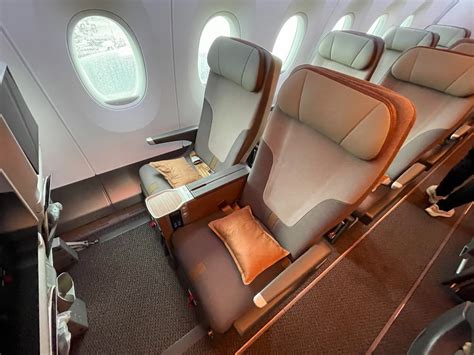
One of the most underrated yet transformative design elements is Japan Airlines’ fixed-back shell architecture. Instead of reclining into the space behind, the seat slides forward within its shell, preserving laptop usability, meal stability, and screen distance regardless of the recline angle. On long transpacific sectors where passengers work, dine, and sleep in cycles, this feature eliminates one of economy-class travel’s most persistent frustrations.
Japan Airlines has doubled down on this philosophy with its Airbus A350-1000, introduced as the carrier’s future flagship. Featuring Safran’s latest articulated fixed-shell seats, the A350-1000 premium economy cabin maintains the airline’s leadership in spatial efficiency while integrating modern materials and improved cushioning. With only 24 premium economy seats arranged eight-abreast, the cabin feels intimate, controlled, and deliberately premium.
Singapore Airlines Brings Precision Engineering to Premium Economy
Singapore Airlines’ reputation for cabin excellence extends seamlessly into its premium economy offering, which ranks among the world’s best for seat quality. Available on A350-900s, A380s, and 777-300ERs, the airline’s premium economy seat reflects a design philosophy rooted in precision, consistency, and functional luxury rather than dramatic excess.
The Safran Z535 recliner seats on the 777-300ER deliver 38 inches of pitch, a generous 19.5-inch width, and eight inches of recline, creating a balanced seating envelope that suits a wide range of body types. The A350-900 variant maintains the same seat design with only a marginal reduction in pitch, a compromise barely perceptible in practice.
Where Singapore Airlines truly excels is in micro-comfort engineering. Dual USB ports ensure continuous device charging, while adjustable reading lights, personal stowage areas, and refined calf rests address the cumulative discomfort that builds over long-haul flights. The leg rest mechanism supports the lower body without forcing awkward angles, allowing passengers to relax without sliding forward.
What makes this achievement particularly notable is that premium economy was once controversial within Singapore Airlines’ leadership. The airline feared it would dilute its premium cabins. Instead, market demand reshaped strategy, and the resulting product reflects a meticulous commitment to excellence rather than reluctant participation. Today, Singapore Airlines’ premium economy seat stands as a textbook example of how thoughtful design can elevate a mid-tier cabin into a genuinely aspirational experience.
Delta Air Lines Redefines Premium Economy for the Western Hemisphere
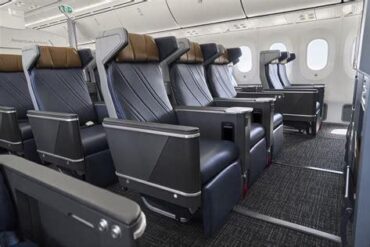
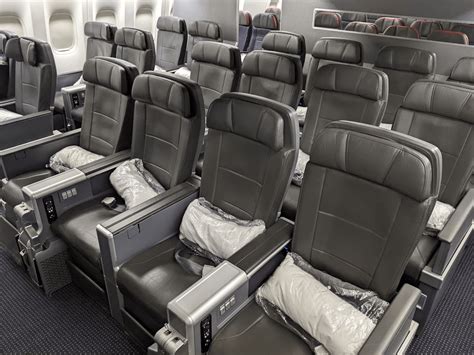
Delta Air Lines remains the only Western Hemisphere carrier to rank among the world’s best premium economy seats on transpacific routes, a distinction earned through steady investment rather than sudden innovation. Its Premium Select cabin, particularly on the Airbus A350-900, demonstrates how a legacy airline can deliver a credible long-haul premium economy experience without abandoning operational efficiency.
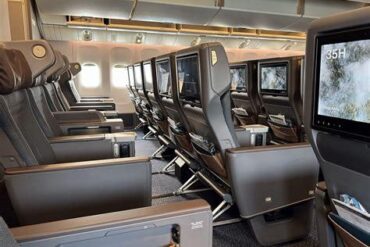
Delta’s A350 Premium Select seats offer 38 inches of pitch, up to 19 inches of width, and seven inches of recline, figures that place them squarely within global competitive standards. The 2-4-2 layout, while denser than some Asian counterparts, is mitigated by sculpted seat shells and firm cushioning that maintain posture support during long flights.
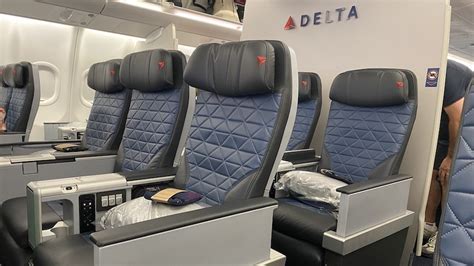
Delta’s strength lies in consistency across its transpacific network, particularly on heavily trafficked routes such as Atlanta–Seoul and Los Angeles–Sydney. The airline has standardized Premium Select as a true long-haul product rather than a route-specific upgrade, ensuring passengers know what to expect regardless of departure point.
While the cabin may feel busier than boutique premium economy offerings, Delta compensates with ergonomic seat design and reliable performance. For travelers accustomed to North American carriers, Premium Select represents a significant elevation above traditional economy, narrowing the experiential gap with Asia-Pacific competitors.
Cathay Pacific Offers Tailored Premium Economy Across Multiple Aircraft
Cathay Pacific’s premium economy ranks highly due to its fleet-specific seat customization, allowing the airline to optimize comfort across different aircraft types rather than forcing a single solution. Available on A330-300s, A350-900s, A350-1000s, and 777-300ERs, the product adapts intelligently to each platform.
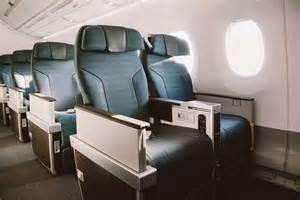
On the A350-900, Cathay Pacific employs Collins Aerospace MiQ seats with an impressive 40 inches of pitch and nine inches of recline, making them among the most accommodating premium economy seats on transpacific routes. The seat’s sculpted backrest and supportive headrest encourage natural posture shifts during long flights.
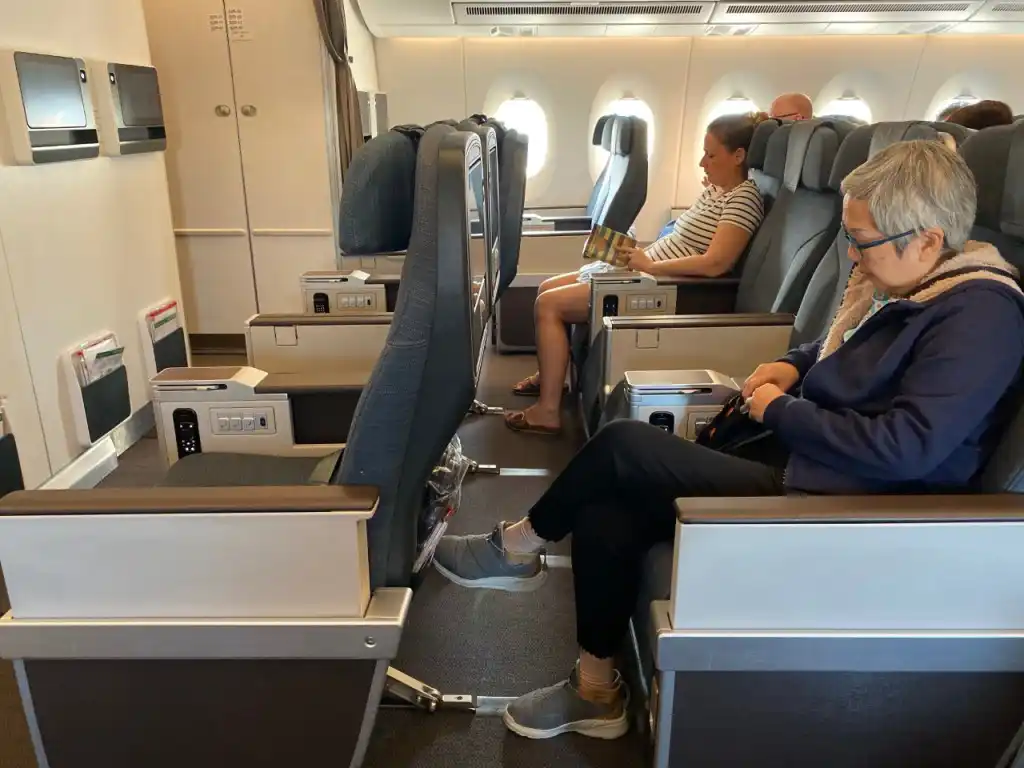
The 777-300ER tells a slightly different story, using Recaro R5 seats with a wider 19.5-inch profile but reduced recline. This variation allows passengers to choose aircraft based on personal comfort priorities, a level of transparency rare in airline seat design.
Cathay Pacific emphasizes full-length calf rests, leather-padded footrests, and enhanced lumbar support, elements that collectively reduce fatigue on ultra-long sectors. While the airline’s overall premium economy experience extends beyond the seat, it is the physical design that secures its place among the world’s best.
Air New Zealand Delivers Exceptional Space with a Distinctive Approach
Air New Zealand’s premium economy stands out for one overriding reason: space. On its Boeing 787-9 and 777-300ER fleets, the airline offers between 41 and 42 inches of pitch, rivaled only by Japan Airlines among transpacific carriers. This generous spacing transforms the cabin into a noticeably more relaxed environment, especially on flights departing from Auckland to North America.
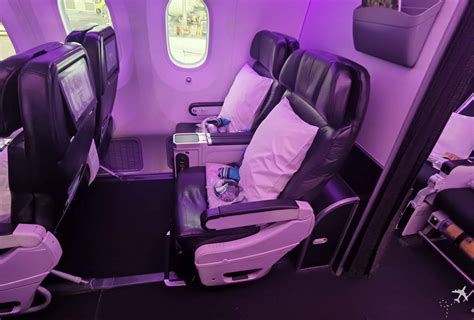
The standard 787-9 configuration includes 21 premium economy seats, while the V2 layout expands capacity without sacrificing pitch. On the 777-300ER, the larger cabin accommodates up to 54 premium economy seats while preserving the same spatial standards. This scalability reflects Air New Zealand’s confidence in the seat’s design rather than a compromise.
Despite ranking lower in overall premium economy awards, the seat itself remains one of the most comfortable in the sky, particularly for passengers who value legroom over embellishments. The airline’s extensive transpacific network, including routes to Los Angeles, San Francisco, Houston, and Vancouver, makes this product widely accessible.
Why Emirates Still Holds the World’s Best Premium Economy Seat
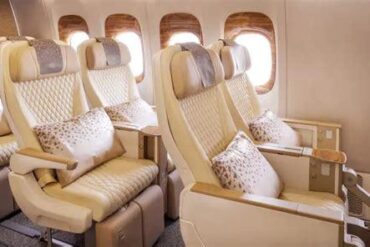
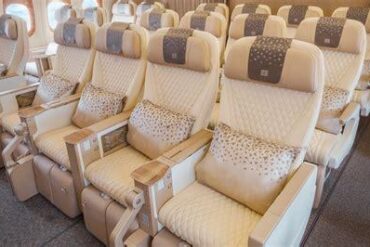
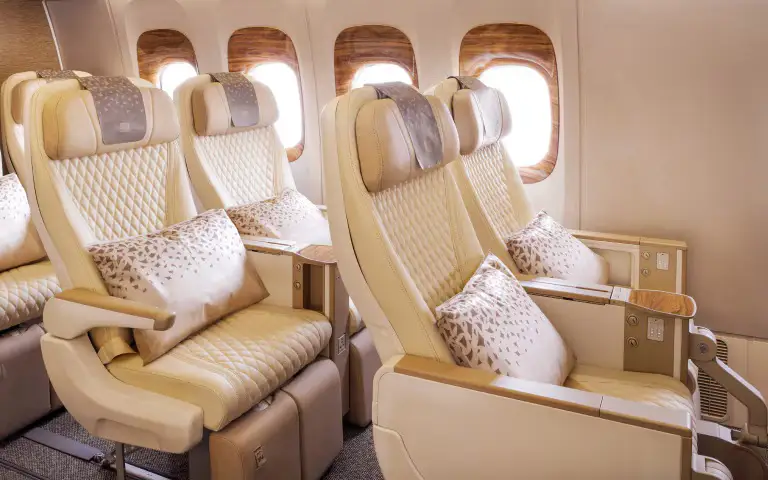
Although unavailable on transpacific routes, Emirates’ premium economy seat deserves recognition as the global gold standard. Introduced as part of a $2 billion cabin upgrade, the product redefines what premium economy can be when unconstrained by legacy layouts.
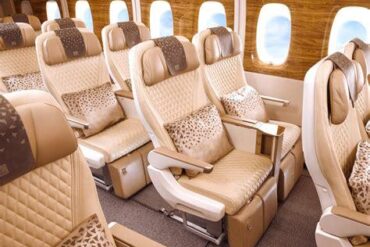
With 40 inches of pitch, 19.5 inches of width, and eight inches of recline, the seat delivers exceptional comfort. Cream upholstery, adjustable headrests, leg support cushions, and footrests combine to create a cabin that feels closer to business class than economy.
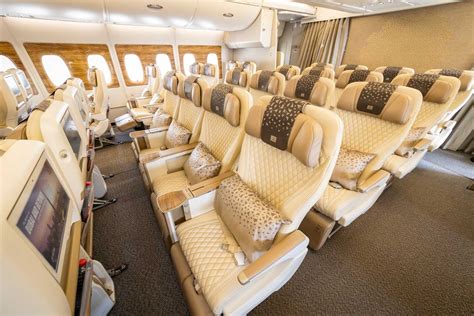
Installed primarily on Airbus A380s, the 2-4-2 layout minimizes middle-seat discomfort, while the forward economy placement enhances cabin tranquility. Although transpacific travelers cannot access this seat, its influence is unmistakable, setting benchmarks that other airlines increasingly strive to meet.
The New Reality of Premium Economy on Transpacific Flights
Premium economy is no longer a secondary cabin defined by modest upgrades. On transpacific routes, it has become a fiercely competitive space where seat design determines airline reputation. Japan Airlines leads through unmatched legroom and structural innovation, Singapore Airlines excels through precision and balance, Delta brings credibility to the Western Hemisphere, Cathay Pacific offers tailored versatility, and Air New Zealand delivers expansive comfort.
Together, these airlines prove that the world’s best premium economy seats are not accidents of branding, but the result of deliberate engineering, passenger-focused design, and long-term investment. For travelers crossing the Pacific, the right premium economy seat can redefine the journey itself.