Premium economy has evolved from a modest upgrade into one of commercial aviation’s most fiercely contested battlegrounds. In 2026, the gap between economy and business class is no longer defined simply by wider seats or extra legroom. Airlines are now investing heavily in cabin architecture, advanced ergonomics, elevated dining, privacy features, and premium ground services to transform premium economy into a destination product of its own.
For travelers unwilling to pay business class fares but unwilling to endure cramped long-haul economy cabins, premium economy has become the sweet spot of international flying. The best airlines are no longer treating the cabin as an afterthought. Instead, they are designing experiences that feel remarkably close to the business class products of just a decade ago.
Across the industry, a handful of airlines stand clearly above the rest. These carriers have mastered the balance between comfort, exclusivity, value, and consistency, creating premium economy cabins that genuinely justify the higher fare.
From ultra-spacious Japanese seating concepts to Emirates’ luxury-inspired recliners and Virgin Atlantic’s stylish social atmosphere, these six airlines are setting the global benchmark for premium economy in 2026.
Virgin Atlantic Offers The World’s Best Overall Premium Economy Experience
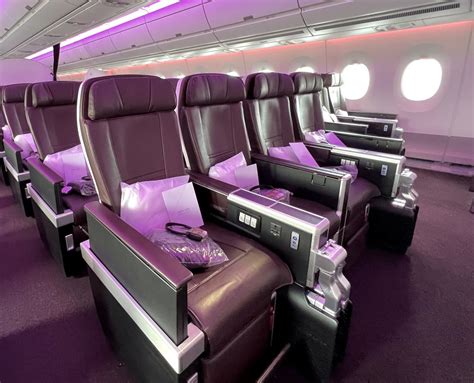
Virgin Atlantic continues to dominate the premium economy conversation in 2026 after securing the top position in the 2025 Skytrax rankings. The airline’s success comes from its ability to combine comfort, aesthetics, and service into a package that feels genuinely premium rather than merely upgraded economy.
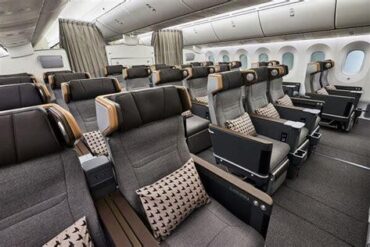
The first thing passengers notice onboard Virgin Atlantic’s premium economy cabin is space. The seating layout feels intentionally intimate, avoiding the crowded atmosphere often found on competing airlines. On both the Airbus A350 and Boeing 787 Dreamliner fleets, the cabin maintains a refined atmosphere with wider seats, elegant mood lighting, and a noticeably quieter environment than standard economy.
Virgin Atlantic’s seats measure approximately 21 inches wide with a generous 38-inch pitch, creating one of the roomiest setups in the transatlantic market. Unlike many carriers that market premium economy aggressively while offering only incremental improvements, Virgin delivers a visibly different experience from the moment boarding begins.
Priority check-in, accelerated boarding, and enhanced meal service immediately separate the product from economy class. Passengers are welcomed with pre-departure drinks, upgraded tableware, and menus that feel carefully curated rather than mass-produced. The smaller cabin size also creates a calmer onboard atmosphere that frequent long-haul travelers increasingly value.
What makes Virgin Atlantic particularly compelling is balance. Some airlines excel in seat comfort but fall behind in service consistency. Others provide polished hospitality but mediocre cabin hardware. Virgin Atlantic succeeds because every element works cohesively together, creating a premium economy experience that feels complete from departure gate to arrival.
Japan Airlines Delivers The Most Spacious Premium Economy Cabin
Japan Airlines has taken a very different approach to premium economy, prioritizing personal space and passenger comfort above flashy aesthetics. The result is one of the most intelligently engineered cabins currently flying.
Its premium economy seat pitch reaches an industry-leading 42 inches on many long-haul aircraft, significantly exceeding what most competitors provide. That extra space transforms the experience on overnight flights, especially for taller travelers or passengers attempting to work and sleep during ultra-long-haul journeys.
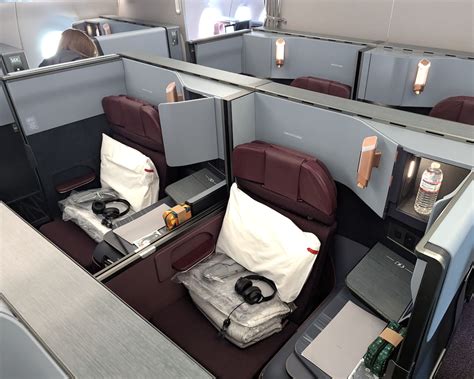
One of the most innovative features is the fixed-shell seat design. Instead of reclining backward into the personal space of the passenger behind, the seat slides forward within its own shell. This subtle engineering decision dramatically reduces the tension often associated with recline etiquette on long flights.
Japan Airlines also excels in ergonomic details. Adjustable leg rests, deep cushioning, spacious tray tables, and large center dividers create an environment that feels private without becoming claustrophobic. The cabin aesthetic reflects the airline’s broader philosophy: understated sophistication rather than excessive luxury.
Service consistency remains another defining advantage. Japan Airlines has built its reputation on precision, attentiveness, and calm professionalism, and those qualities extend naturally into premium economy. Cabin crews maintain an impressive ability to anticipate passenger needs without becoming intrusive.
The airline may not market premium economy with the same glamour as Middle Eastern competitors, but seasoned travelers often prefer Japan Airlines precisely because of its restraint. Every design choice feels practical, refined, and optimized for long-haul comfort rather than social media appeal.
For travelers who prioritize sleep quality, personal space, and a peaceful onboard atmosphere, Japan Airlines remains one of the strongest premium economy choices in the world.
Emirates Brings Business Class Luxury Into Premium Economy
When Emirates entered the premium economy market in 2021, expectations were enormous. The Dubai-based carrier had built its global reputation on extravagance, and many wondered whether it could successfully translate that identity into a mid-tier cabin product.
It did exactly that.
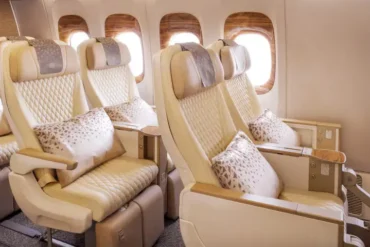
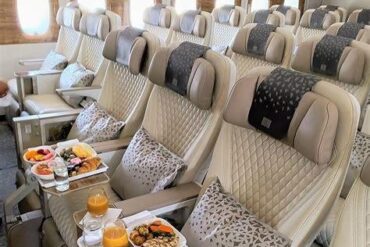
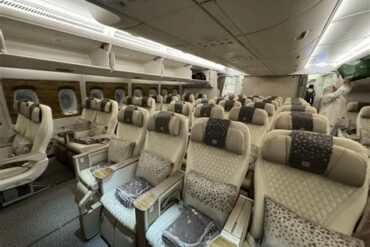
Emirates now operates one of the most visually impressive premium economy cabins anywhere in the world. Inspired heavily by its business class aesthetic, the cabin features cream leather seating, woodgrain finishes, bronze accents, and soft ambient lighting that create a far more luxurious environment than most competitors.
The seat itself is exceptionally comfortable. Multiple adjustable positions, deep recline functionality, calf rests, and footrests combine to create a genuinely relaxing long-haul experience. The cushioning is noticeably superior to what many airlines offer even in business class on older aircraft.
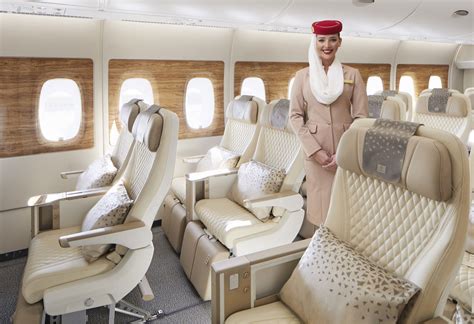
Skytrax recognized Emirates as offering the world’s most comfortable premium economy seat, and that distinction feels well deserved. The cabin avoids the dense layouts that undermine comfort on some competing carriers, instead prioritizing openness and personal space.
Dining is another major strength. Emirates approaches premium economy meals with far greater seriousness than most airlines. Meals are plated elegantly, beverages are carefully selected, and presentation feels elevated throughout the flight. Even the tray tables and dishware contribute to the perception of luxury.
Perhaps most importantly, Emirates understands emotional branding. Flying premium economy on Emirates still feels aspirational. Passengers receive many of the visual and experiential cues associated with premium international travel without paying business class prices that can often exceed several thousand dollars.
As Emirates expands premium economy across more Airbus A380s and Boeing 777s, its influence on the industry is becoming increasingly apparent. Other airlines are now redesigning cabins to match the level of sophistication Emirates introduced to the segment.
Singapore Airlines Excels On Ultra-Long-Haul Routes
Few airlines understand long-haul passenger psychology as thoroughly as Singapore Airlines. That expertise becomes particularly evident in its premium economy product, which is optimized for endurance, consistency, and inflight wellbeing.
Singapore Airlines operates some of the world’s longest nonstop flights using Airbus A350-900ULR aircraft, including routes exceeding 18 hours. On journeys of that length, premium economy cannot simply offer more legroom. Every element of the experience must support sustained comfort over nearly an entire day onboard.
The airline’s premium economy seats are generously padded with carefully engineered recline mechanisms designed to minimize fatigue. Adjustable calf rests and foot bars improve circulation during ultra-long-haul operations, while large entertainment screens help passengers remain engaged throughout extended flights.
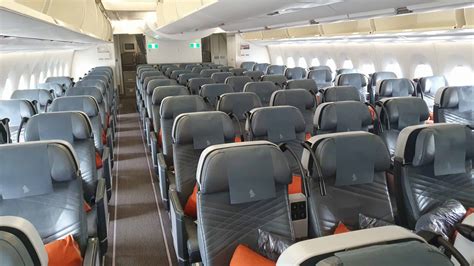
Singapore Airlines also distinguishes itself through inflight dining. The carrier consistently ranks among the world’s strongest airlines for catering quality, and premium economy passengers benefit directly from that commitment. Menus feature regional options, thoughtfully paired beverages, and presentation standards that surpass much of the industry.
Another major differentiator is cabin composition. Some Singapore Airlines ultra-long-haul aircraft are configured almost entirely around premium cabins, with business class and premium economy dominating the aircraft layout. This dramatically changes the onboard atmosphere compared to flights heavily weighted toward standard economy seating.
Cabin crews contribute enormously to the overall experience. Singapore Airlines maintains one of aviation’s strongest reputations for service professionalism, and premium economy passengers receive a level of attentiveness that feels distinctly premium rather than transactional.
For travelers facing marathon intercontinental flights, Singapore Airlines remains one of the safest choices in global aviation. The airline understands that comfort on ultra-long-haul routes is not created through a single standout feature, but through the seamless interaction of seating, service, food, lighting, and cabin atmosphere.
Cathay Pacific Prioritizes Privacy And Smart Ergonomics
Cathay Pacific has long cultivated a reputation for elegant minimalism, and its newest premium economy cabins continue that philosophy beautifully. Rather than relying on flashy luxury gimmicks, Cathay focuses on practical comfort and personal privacy.
The airline’s redesigned Boeing 777-300ER premium economy cabin introduces improved ergonomics alongside a more contemporary aesthetic. Seats feature 40 inches of pitch in a spacious 2-4-2 layout, providing a noticeably more open environment than many competing products.
What truly separates Cathay Pacific, however, is its intelligent attention to passenger privacy.
Customized privacy wings integrated into the headrests create subtle visual separation between passengers without making the cabin feel enclosed. This small feature has an outsized psychological effect, particularly during overnight flights where reducing visual distractions helps create a calmer environment.
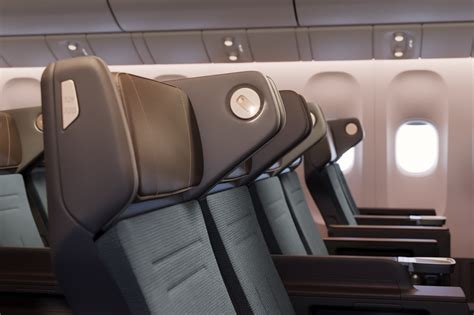
The airline’s 15.6-inch 4K entertainment screens are among the best in the category, while Bluetooth audio connectivity solves one of the most persistent annoyances in modern flying: tangled wired headphones.
Cathay Pacific’s design language remains refreshingly restrained. The cabin feels mature, refined, and efficient rather than overly theatrical. Frequent business travelers often gravitate toward Cathay precisely because the airline avoids unnecessary extravagance while delivering consistently high standards.
The carrier is also heavily investing in fleet-wide premium economy upgrades through 2027, signaling just how important the cabin has become strategically. In an industry where many airlines still treat premium economy as secondary, Cathay Pacific is clearly building for long-term leadership.
EVA Air Emerges As Premium Economy’s Fastest Rising Star
EVA Air may not receive the same global attention as Emirates or Singapore Airlines, but among experienced long-haul travelers, its premium economy reputation has grown rapidly into elite territory.
The Taiwanese airline has quietly assembled one of the industry’s most complete premium economy experiences by combining strong seat design with exceptional hospitality and consistently polished service execution.
Its latest Boeing 787 premium economy cabins are especially impressive. The seats incorporate ergonomic concepts similar to Cathay Pacific’s highly regarded designs, offering generous personal space, supportive cushioning, and modern cabin aesthetics.
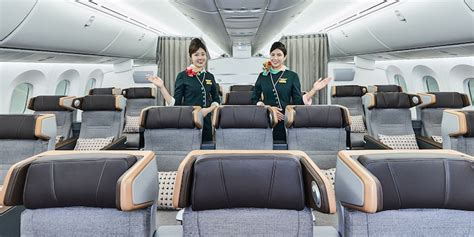
Where EVA Air truly excels is soft product consistency. Meals are reliably high quality, cabin crews are exceptionally attentive, and the overall passenger experience feels remarkably refined regardless of route. Many airlines can deliver an impressive flight occasionally. EVA Air has built its reputation on delivering the same high standards repeatedly.
The airline also understands subtle luxury. Rather than overwhelming passengers with branding or extravagant design choices, EVA focuses on thoughtful details that improve the actual travel experience. Amenities feel purposeful, cabins remain calm and clean, and service interactions consistently feel warm and professional.
This reliability has elevated EVA Air into serious contention among the world’s best premium economy airlines. As more travelers discover the carrier through transpacific routes, its reputation continues to strengthen rapidly.
In many ways, EVA Air represents the future direction of premium economy itself: refined rather than flashy, comfortable rather than excessive, and premium in ways passengers genuinely appreciate during long-haul travel.
Premium Economy Has Become Aviation’s Most Important Battleground
The rapid evolution of premium economy reflects broader changes across the airline industry. Travelers increasingly want meaningful comfort improvements without the extreme pricing associated with international business class. Airlines, meanwhile, recognize premium economy as one of the most profitable sections of the aircraft.
That combination has triggered an innovation race unlike anything the segment has seen before.
Virgin Atlantic leads through balance and style. Japan Airlines dominates personal space. Emirates delivers luxury-driven comfort. Singapore Airlines masters ultra-long-haul endurance. Cathay Pacific prioritizes privacy and intelligent ergonomics. EVA Air excels through consistency and refinement.
Together, these six airlines define the global standard for premium economy in 2026 — and they are proving that the future of long-haul travel may no longer belong exclusively to business class.