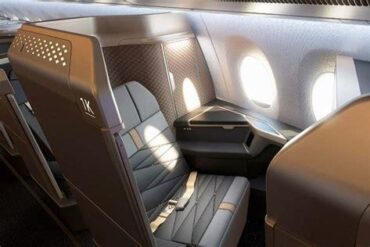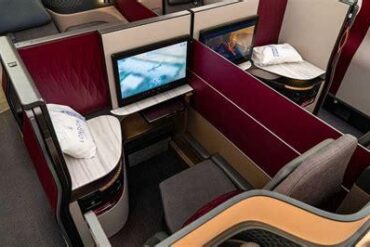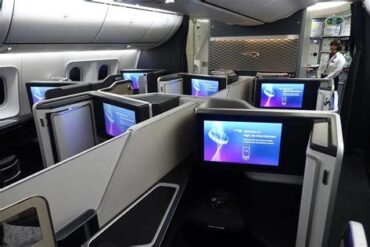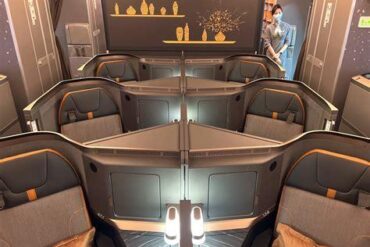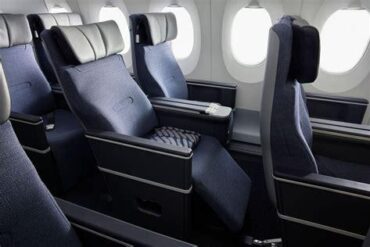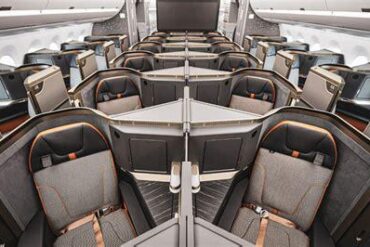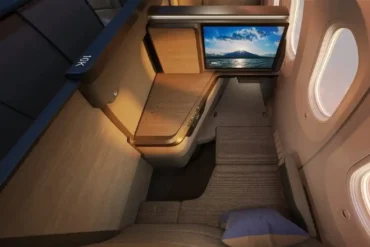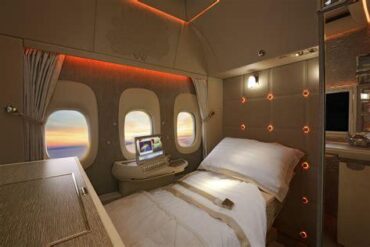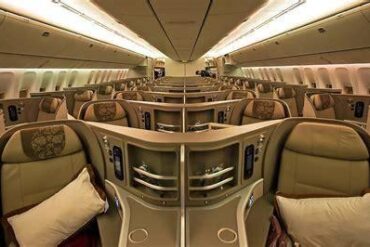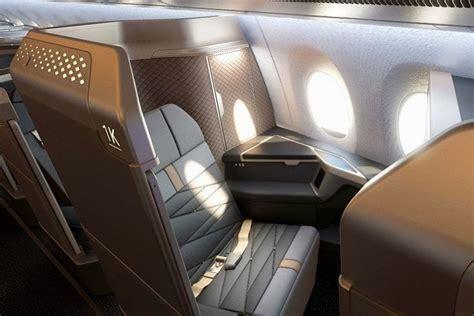
The Airlines With the World’s Most Innovative Business Class Seats in 2026 showcase just how dramatically premium air travel has evolved over the past decade. Business class is no longer simply about wider seats, better meals, and priority boarding. Instead, airlines are competing through intelligent cabin architecture, personalized technology, privacy-focused suites, wellness features, and carefully designed environments that transform long-haul flights into genuinely comfortable experiences. As aircraft become more efficient and capable of flying farther than ever before, passenger expectations have risen accordingly. Travelers flying for business or leisure increasingly expect a cabin that functions as an office, dining room, entertainment lounge, and bedroom—all within a single private suite.
The newest generation of business class cabins demonstrates that airlines are thinking far beyond the traditional lie-flat seat. Sliding privacy doors have rapidly become the industry standard among premium carriers, while wireless charging, Bluetooth connectivity, massive OLED entertainment displays, and carefully engineered storage solutions have become defining characteristics of flagship products. Airlines are also recognizing that travelers have different priorities depending on the journey. Some passengers value productivity, others prioritize uninterrupted sleep, while couples increasingly seek shared spaces that allow them to travel together without sacrificing privacy.
Rather than competing solely on seat dimensions, airlines are now investing heavily in passenger psychology. Lighting, cabin acoustics, seating orientation, personal space, and intuitive technology all contribute to reducing travel fatigue, particularly on flights exceeding fifteen hours. The result is a generation of business class suites that feel less like aircraft seats and more like private hotel rooms designed specifically for flight.
United Airlines Raises The Standard With Elevated Polaris Suites
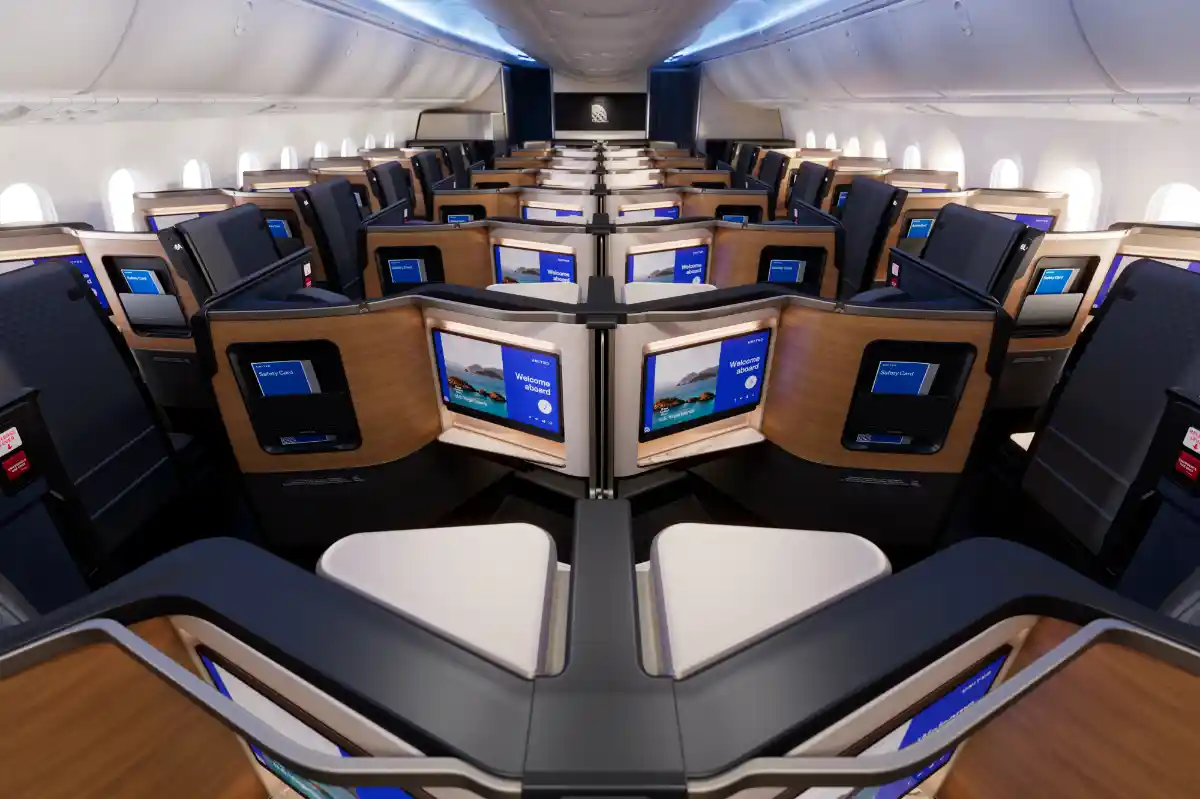
United Airlines enters 2026 with one of the industry’s most ambitious cabin redesigns through its Elevated interior aboard the Boeing 787-9 Dreamliner. Rather than simply refreshing the existing Polaris product, the airline has completely reimagined what premium passengers can expect during long-haul travel.
The cabin introduces 32 enclosed suites featuring sliding privacy doors, higher suite walls, and an entirely redesigned layout that gives travelers more flexibility depending on whether they are flying alone or alongside a companion. Two different center-seat configurations allow passengers to choose either enhanced privacy or closer interaction, an unusually thoughtful approach that recognizes different travel styles.
The headline innovation is undoubtedly the Polaris Studio, located in the first row of business class. These oversized suites include companion seating that allows another passenger to comfortably join for dining or conversation. This effectively creates a social space without compromising the privacy expected from modern business class.
Technology also plays an equally important role. Every suite features complimentary Wi-Fi, wireless charging, generous personal storage, and an enormous 27-inch OLED entertainment display, currently among the largest installed in any U.S. airline’s business class cabin. Combined with premium dining enhancements including caviar service and curated wine pairings, United’s newest Dreamliners represent a substantial leap forward in premium travel.
The airline plans to debut the aircraft on flagship services between San Francisco, London, and Singapore before gradually expanding the product across its growing Boeing 787 fleet.
Qantas Designs Business Class Around Twenty-Hour Flights
Ultra-long-haul travel presents challenges unlike conventional international flights, and Qantas has built its upcoming Airbus A350-1000ULR specifically to solve them.
Rather than treating the cabin as merely a collection of seats, Qantas has approached Project Sunrise as a complete passenger wellness program. The aircraft will eventually operate nonstop services connecting Australia with London and New York, requiring passengers to remain onboard for well over twenty hours.
Its 52 business class suites, developed using Safran’s Unity platform, feature exceptionally tall privacy walls and sliding doors that create an unusually enclosed environment. Each 25-inch-wide seat transforms into an 80-inch fully flat bed, providing generous sleeping accommodation for travelers of varying heights.
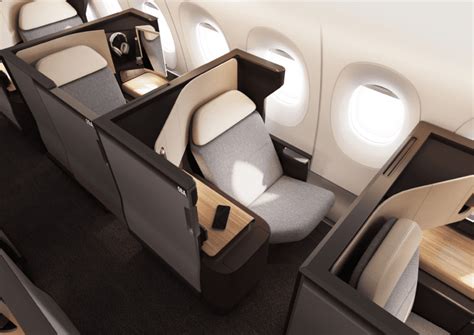
Technology has been carefully integrated throughout the suite without overwhelming the passenger. An 18-inch entertainment display, Bluetooth audio, wireless charging, USB connectivity, and touchscreen-controlled mood lighting allow travelers to personalize their environment throughout the journey.
Perhaps the aircraft’s most distinctive innovation lies outside the business class cabin itself. Qantas has introduced a dedicated Wellbeing Zone, positioned between premium economy and economy. Equipped with hydration stations, stretching areas, and guided movement programs displayed on integrated monitors, the space acknowledges growing research showing that movement significantly improves passenger comfort on ultra-long-haul flights.
Riyadh Air Introduces Premium Technology From Day One
Unlike legacy airlines constrained by decades of existing fleet designs, Riyadh Air has enjoyed the advantage of starting with a clean sheet of paper.
Its Boeing 787 business class incorporates just 28 suites, creating an intentionally spacious premium cabin. Built upon Safran’s acclaimed Unity platform, every suite features tall privacy walls measuring approximately 52 inches alongside full sliding doors that deliver exceptional seclusion.
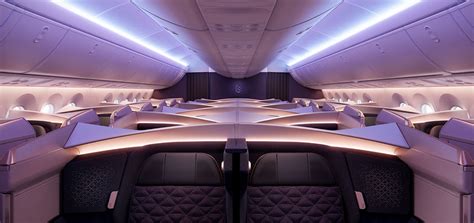
The first row introduces four oversized Business Elite Suites, each equipped with companion seating similar to first-class products offered by some global airlines. Even more impressive, center suites can transform into genuine double beds, allowing couples traveling together to enjoy a significantly more comfortable sleeping arrangement.
Technology becomes a defining feature throughout the cabin. Large 32-inch 4K OLED displays, Bluetooth connectivity, wireless streaming to personal devices, multiple charging options, and one particularly distinctive innovation help differentiate Riyadh Air from competitors. Speakers integrated directly into each headrest allow passengers to enjoy entertainment without disturbing neighboring travelers, reducing dependence on headphones during less immersive listening sessions.
As the airline expands toward its ambitious goal of serving more than one hundred global destinations by the end of the decade, its premium cabin immediately positions it among aviation’s most technologically advanced newcomers.
Air Canada Brings Widebody Luxury To The Narrowbody Market
Business class innovation is often associated with large twin-aisle aircraft, yet Air Canada demonstrates that premium comfort can also flourish aboard a single-aisle airplane.
Its Airbus A321XLR introduces Signature Class suites arranged in an unusually spacious 1-1 configuration, ensuring every passenger enjoys direct aisle access while maintaining excellent personal privacy. Built around Collins Aerospace’s Aurora mini-suite platform, each seat is angled slightly away from the aisle in a reverse herringbone arrangement that maximizes both workspace and sleeping comfort.
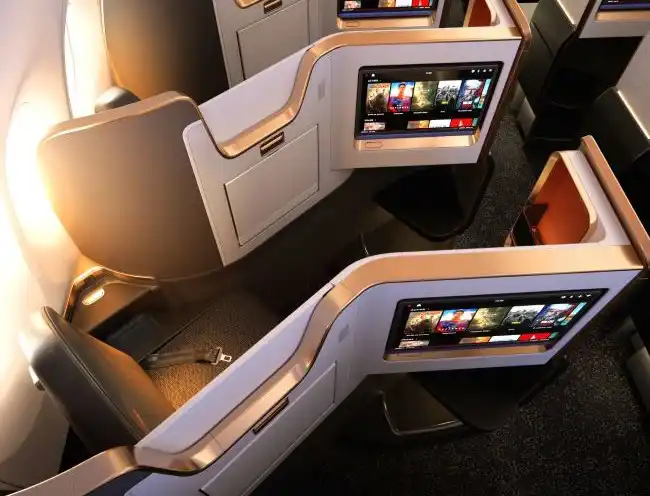
The surrounding Airbus Airspace cabin architecture contributes significantly to the passenger experience. Larger overhead bins, redesigned sidewalls, and carefully curved interior panels create the visual impression of a much wider cabin despite the aircraft’s narrow fuselage.
Passengers also benefit from Bluetooth-enabled entertainment systems, reliable high-speed connectivity, and exterior aircraft cameras that display real-time views during taxi, takeoff, and landing. Collectively, these features narrow the historical gap between narrowbody and widebody premium travel, making transcontinental and thinner international routes substantially more attractive.
ANA Reinvents The Business Class Seat With The Room FX
Among all products debuting in 2026, few are likely to generate as much discussion as All Nippon Airways’ The Room FX aboard the Boeing 787.
Instead of following the industry’s conventional reclining-seat formula, ANA has challenged long-established assumptions about passenger comfort. The seat itself does not recline in the traditional sense. Instead, it begins in a naturally reclined lounge position while an adjustable leg support creates an exceptionally generous 76.5-inch sleeping surface measuring up to 41.5 inches wide.
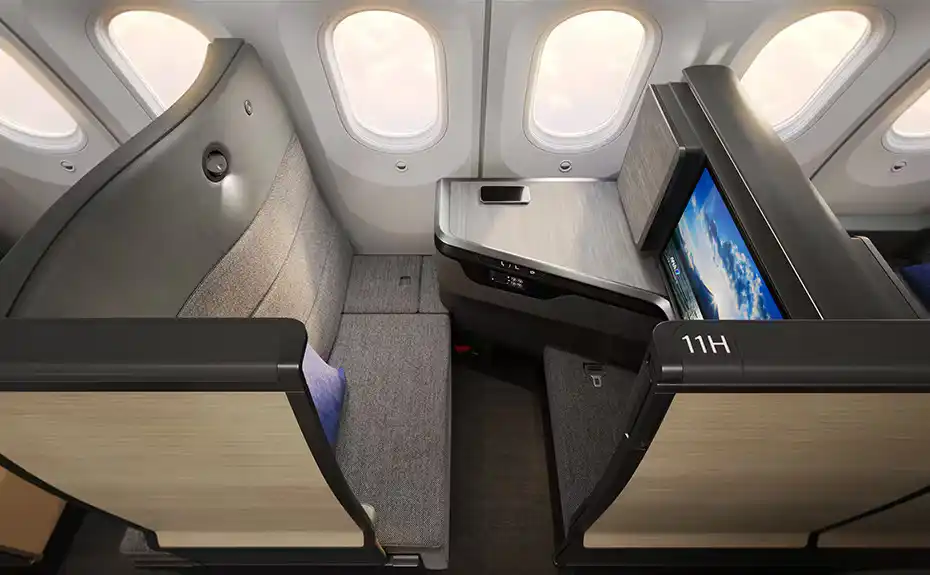
The design reflects changing passenger behavior. Modern travelers increasingly shift between multiple sitting positions while working, watching entertainment, reading, or relaxing. Rather than forcing passengers into a limited number of preset recline angles, The Room FX allows significantly greater flexibility throughout the journey.
Each suite also includes sliding privacy doors, wireless charging, Bluetooth connectivity, USB-A and USB-C ports, universal power outlets, and a 24-inch HD entertainment display. Alternating forward- and rear-facing suites optimize cabin density without sacrificing personal space.
Building upon the tremendous success of ANA’s original The Room introduced on its Boeing 777 fleet, The Room FX illustrates how innovation sometimes comes from fundamentally questioning accepted design principles rather than simply adding new technology.
Privacy Has Become The New Definition Of Premium Travel
One unmistakable trend unites nearly every flagship business class introduced in 2026: privacy has overtaken seat width as the industry’s primary competitive battleground.
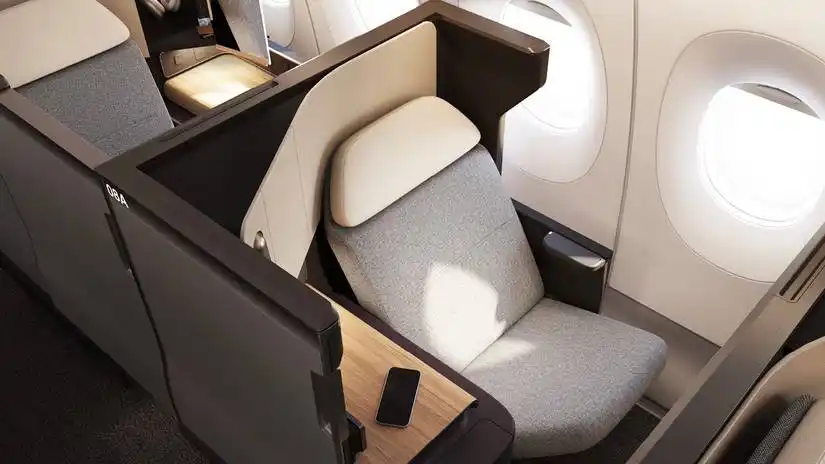
Sliding doors, taller suite walls, carefully positioned lighting, and intelligent seating layouts now define premium travel far more than upholstery materials or decorative finishes. Airlines increasingly understand that travelers value psychological comfort as much as physical comfort.
Noise reduction, personal territory, and visual isolation contribute significantly to reducing travel fatigue, particularly on overnight flights spanning multiple continents. Even passengers who never fully close their suite doors benefit from the greater sense of personal ownership these enclosed environments create.
Designers have also become increasingly sophisticated in balancing openness and privacy. Suites no longer resemble isolated boxes but instead feel spacious while maintaining individual boundaries through carefully considered architecture.
Connectivity And Personalization Are Driving Cabin Innovation
Technology now influences nearly every aspect of the premium passenger experience. Fast onboard Wi-Fi has evolved from an optional luxury into an essential service for international travelers. Wireless charging eliminates cable clutter, while Bluetooth audio enables passengers to use their preferred headphones rather than airline-issued alternatives.
Entertainment displays continue growing dramatically larger. United’s impressive 27-inch OLED monitor and Riyadh Air’s 32-inch 4K display demonstrate how airlines increasingly view inflight entertainment as a defining competitive advantage.
At the same time, digital cabin controls have become remarkably intuitive. Passengers can adjust lighting, seating positions, entertainment, meal preferences, and environmental settings from integrated touchscreen panels that simplify rather than complicate the user experience.
These technological improvements collectively transform business class suites into multifunctional personal spaces where travelers can work productively, relax comfortably, dine privately, or sleep peacefully with minimal interruption.
More Premium Business Class Products Are Already On The Horizon
The pace of innovation shows no signs of slowing beyond 2026. Several major airlines are preparing entirely new premium cabins that promise to continue redefining international business travel.
Cathay Pacific is preparing a new Airbus A330 business class heavily influenced by its acclaimed Aria Suite introduced on the Boeing 777. Singapore Airlines is expected to unveil an all-new Airbus A350 business class that will later transition onto its delayed Boeing 777X fleet, emphasizing exceptional comfort and enclosed suite design.
Turkish Airlines is likewise introducing its elegant Crystal Suites, combining wide flat-bed seating with premium bedding, wireless charging, USB-C connectivity, large entertainment displays, and carefully refined interior finishes. These suites will gradually appear aboard both the Airbus A350-1000 and refurbished Boeing 777 aircraft operating some of the airline’s longest international routes.
Each of these developments reinforces a broader industry trend: airlines increasingly compete through premium cabin design rather than simply expanding route networks.
Business Class In 2026 Is Becoming A Private Luxury Experience
The newest business class cabins introduced throughout 2026 illustrate an industry undergoing one of its most significant transformations since the introduction of lie-flat seating. Airlines are moving decisively beyond traditional definitions of premium travel by combining privacy, wellness, intelligent technology, and sophisticated cabin architecture into cohesive passenger experiences.
Whether it is United Airlines’ spacious Polaris Studios, Qantas’ wellness-focused Project Sunrise suites, Riyadh Air’s technology-driven Business Elite cabins, Air Canada’s widebody-inspired narrowbody experience, or ANA’s unconventional yet remarkably spacious The Room FX, every innovation reflects a deeper understanding of how passengers actually travel today.
Rather than competing solely through luxury finishes, airlines are designing environments that adapt to individual travelers. Business class has evolved into a personalized living space where productivity, rest, entertainment, and privacy coexist seamlessly. As additional next-generation cabins from Singapore Airlines, Cathay Pacific, and Turkish Airlines enter service, 2026 stands as one of the most exciting years yet for premium air travel, setting new expectations for comfort and innovation on journeys across the globe.