Business class has changed dramatically over the past decade. What was once defined by wider reclining seats, premium meals, and priority services has evolved into an intensely competitive market where airlines compete on privacy, innovation, and personal space. Features such as fully flat beds, direct aisle access, and enclosed suites are increasingly common, making genuine physical space one of the last true differentiators in premium travel.
For travelers spending ten, twelve, or even fifteen hours in the air, seat width has become one of the most important comfort factors. A broader seat provides greater freedom to change sleeping positions, reduces shoulder and hip pressure, and creates a noticeably less restrictive environment for working, dining, or simply relaxing. While many airlines continue maximizing cabin density to improve profitability, a select group has prioritized passenger comfort instead, sacrificing seating capacity in favor of significantly more generous dimensions.
This ranking focuses exclusively on airlines offering the world’s widest business class seats in 2026. Rather than evaluating catering, lounges, or onboard service, the emphasis is placed on measurable seat width and the overall amount of usable personal space available to each passenger.
The result highlights five airlines that have redefined what business class can feel like when space is treated as a luxury rather than an efficiency compromise.
5. Air France Delivers Elegant Comfort Through Refined Cabin Design
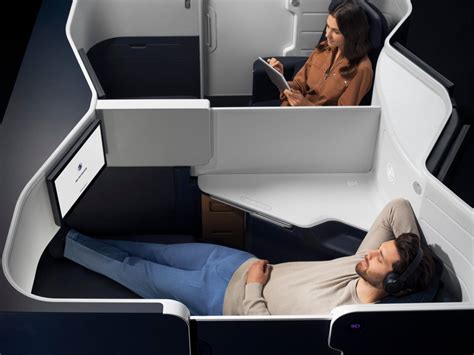
Air France has completely modernized its long-haul business class over the past several years, creating one of the most visually sophisticated cabins flying today. The French flag carrier emphasizes understated luxury, contemporary styling, and practical comfort instead of chasing industry records for seat dimensions.
Its newest business class suites feature sliding privacy doors, premium upholstery, improved storage solutions, wireless charging, and a carefully curated cabin aesthetic inspired by French luxury. Every design choice contributes to a calm and relaxing environment that feels distinctly premium from boarding through arrival.
Seat width generally ranges between 21 and 23 inches, placing Air France comfortably within modern industry standards. Although this does not rival the exceptionally wide seats found elsewhere on this list, the available space feels intelligently utilized thanks to thoughtful ergonomics and uncluttered cabin architecture.
The airline excels in balancing visual openness with privacy. Storage compartments are positioned naturally within arm’s reach, work surfaces are generously sized, and every control has been designed with simplicity in mind. Rather than overwhelming passengers with complex mechanisms, Air France delivers a business class experience that feels polished and intuitive.
Sleeping comfort also benefits from improved mattress padding and high-quality bedding, allowing passengers to enjoy restful overnight flights despite the seat not being among the industry’s widest.
Passengers who prioritize elegant design, refined finishes, and consistent quality throughout the journey will find Air France’s business class especially rewarding. Instead of competing through sheer dimensions, the airline succeeds by making every inch of available space work efficiently.
4. Cathay Pacific Maximizes Comfort Through Intelligent Reverse-Herringbone Design
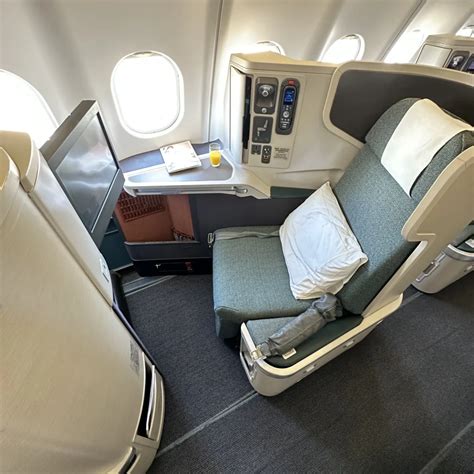
Cathay Pacific continues to earn praise for delivering one of aviation’s most balanced premium cabin experiences. Although its business class seats are narrower than several competitors, careful engineering allows the airline to create an environment that feels considerably larger than its measurements suggest.
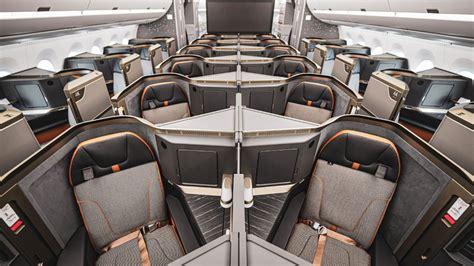
Its reverse-herringbone configuration remains one of the industry’s most respected layouts. Every passenger enjoys direct aisle access while sitting slightly angled away from neighboring travelers, naturally increasing privacy without requiring excessively high partitions.
Seat width typically falls between 20 and 21 inches, making it one of the narrower entries in this ranking. However, dimensions alone fail to capture the overall experience.
The cabin’s success comes from exceptional ergonomics. Deep side consoles provide useful storage while simultaneously creating separation between passengers. Carefully sculpted cushioning supports multiple seating positions during long-haul flights, while the fully flat sleeping surface offers consistent comfort throughout overnight journeys.
Cathay Pacific also excels in minimizing visual clutter. Soft lighting, muted color palettes, and premium materials produce a tranquil atmosphere that complements the seat’s cocoon-like layout.
Rather than attempting to maximize physical dimensions, Cathay Pacific focuses on maximizing usability. Every compartment, shelf, charging port, and tray table has been positioned to reduce inconvenience, creating an environment where passengers rarely feel confined despite the comparatively modest width.
This philosophy results in one of the world’s most cohesive business class products—proof that exceptional comfort depends as much on intelligent design as it does on raw measurements.
3. Qatar Airways Qsuite Revolutionizes Premium Cabin Space
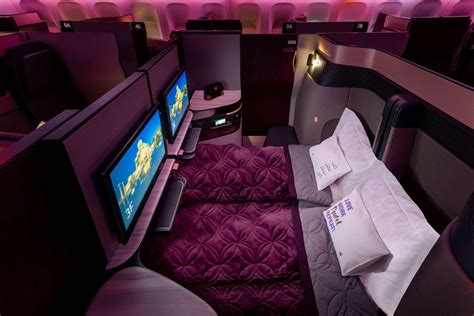
Few business class products have influenced the aviation industry as profoundly as Qatar Airways’ Qsuite. Since its introduction, the concept has fundamentally changed passenger expectations regarding privacy, flexibility, and personalization.
Measured strictly by seat width, however, Qsuite does not dominate the category. The seat itself typically measures between 21 and 22 inches, similar to many premium competitors.
Its true innovation lies elsewhere.
Instead of expanding the seat itself, Qatar Airways reimagined how surrounding space could function. Fully enclosed suites equipped with sliding privacy doors immediately transform the cabin into something resembling international first class.
Center seats can convert into spacious double beds for couples, while movable privacy panels allow four adjacent seats to become an interconnected family or meeting space. No competing airline has replicated this level of flexibility with equal success.
These design innovations dramatically enhance passengers’ perception of available space. The suite feels substantially larger than its physical dimensions suggest because travelers can control their surroundings in ways traditional business class seats simply cannot offer.
Large side tables, abundant storage, expansive entertainment screens, and carefully engineered lighting further reinforce the impression of spaciousness throughout the flight.
Although airlines like Singapore Airlines and ANA provide wider seats, Qatar Airways demonstrates that thoughtful architecture can often rival pure size. Travelers seeking privacy, adaptability, and a premium suite experience continue to regard Qsuite as one of the world’s finest business class products.
2. Singapore Airlines Sets the Standard for Traditional Wide Business Class Seats
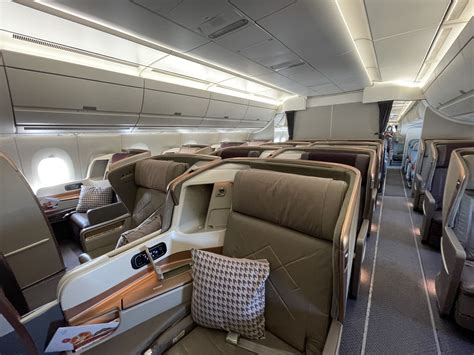
Singapore Airlines has long followed a remarkably consistent design philosophy: prioritize physical comfort above everything else.
While many airlines have shifted toward narrower staggered layouts incorporating privacy doors and compact footprints, Singapore Airlines has continued investing in exceptionally broad seating that allows passengers genuine freedom of movement.
Its long-haul Airbus A350 and Boeing 777 fleets feature business class seats measuring approximately 28 to 30 inches wide, making them among the widest conventional business class seats currently available anywhere in commercial aviation.
The difference becomes obvious immediately after sitting down.
Passengers enjoy noticeably greater shoulder room, generous elbow space while dining or working, and an overall feeling of openness rarely found elsewhere. Larger travelers especially appreciate the additional width, which significantly reduces the confined sensation common in narrower premium cabins.
When converted into fully flat beds, Singapore Airlines maintains impressive mattress width throughout most of the sleeping surface. Unlike many staggered seat designs that taper dramatically toward the feet, these beds remain consistently spacious, encouraging more natural sleeping positions throughout overnight flights.
Another strength is the airline’s open cabin philosophy. Rather than surrounding passengers with towering partitions, Singapore Airlines allows the naturally generous dimensions to create a luxurious atmosphere. This produces an airy environment that feels remarkably relaxing despite the absence of sliding privacy doors.
The combination of exceptional craftsmanship, durable upholstery, intuitive storage, premium bedding, and industry-leading width continues attracting frequent business travelers who prioritize unrestricted comfort over enclosed suites.
For travelers who judge premium cabins primarily by how comfortable they feel after ten or more hours in the air, Singapore Airlines consistently ranks among the very best.
1. All Nippon Airways’ The Room Offers the Widest Business Class Seat in the World
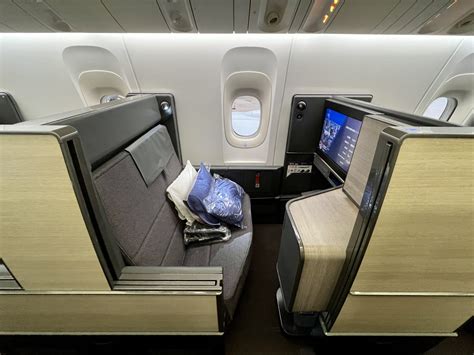
No airline has challenged conventional business class design more dramatically than All Nippon Airways.
Rather than making incremental improvements to existing seat concepts, ANA introduced The Room, a revolutionary product that effectively erased the traditional boundaries between business and first class.
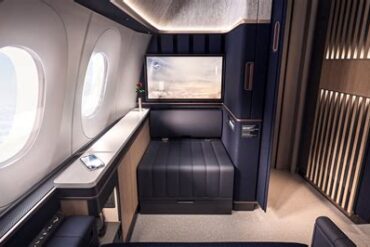
Installed aboard selected Boeing 777 aircraft, The Room abandons the narrow, forward-facing layouts common throughout the industry in favor of an extraordinarily spacious suite emphasizing unrestricted movement above all else.
The seat offers an estimated 35 to 38 inches of usable width, depending on measurement methodology, making it comfortably the widest business class seat available in 2026.
The difference is immediately striking.
Passengers can comfortably shift positions without contacting sidewalls, cross their legs naturally, stretch during long flights, or simply enjoy personal space that rivals many international first-class products.
Unlike conventional staggered seats, which often rely on narrow footwells and compact sleeping areas to maximize cabin density, The Room delivers a sleeping surface that remains consistently broad and stable throughout its length. This substantially improves overnight comfort by allowing passengers to sleep in more natural positions without feeling constrained.
Large sliding doors further reinforce the private atmosphere, while expansive side consoles create room for personal belongings, laptops, meals, and entertainment devices without overcrowding the seat itself.
Perhaps most remarkable is that privacy serves as a complement rather than the defining feature. The true luxury comes from the extraordinary amount of physical space surrounding each traveler.
Every aspect of The Room communicates a willingness to sacrifice seating capacity in exchange for unmatched passenger comfort. It represents a fundamentally different philosophy from most modern business class cabins, where airlines increasingly seek to fit more premium seats into the same fuselage dimensions.
Even several years after its debut, no competitor has produced a business class product capable of matching The Room’s sheer scale.
For travelers who define luxury by freedom of movement rather than decorative finishes or technological gimmicks, ANA continues setting the global benchmark.
Why Seat Width Remains One of the Most Important Business Class Features
While privacy doors, entertainment systems, gourmet dining, and premium amenities receive considerable attention, seat width continues to influence the overall flying experience more than almost any other physical characteristic.
Extra width improves comfort during every phase of the journey. Working becomes easier because there is more elbow room. Dining feels less restrictive. Reading, watching movies, or relaxing requires fewer compromises in posture. Most importantly, sleeping becomes significantly more comfortable, especially on ultra-long-haul flights exceeding twelve hours.
As airlines continue introducing increasingly sophisticated suite concepts, some have achieved greater privacy at the expense of usable space. Others, particularly ANA and Singapore Airlines, have demonstrated that generous physical dimensions remain one of the clearest indicators of premium comfort.
For passengers selecting business class primarily to arrive well-rested and refreshed, seat width often proves more valuable than flashy technology or elaborate cabin architecture.
In 2026, these five airlines represent the industry’s leaders in creating premium cabins where personal space is treated as an essential luxury rather than a limited resource. Whether through elegant refinement, intelligent engineering, innovative flexibility, or simply unprecedented dimensions, each carrier demonstrates a different interpretation of what exceptional business class should feel like—while ANA’s The Room continues to stand alone as the undisputed champion of spaciousness in the skies.