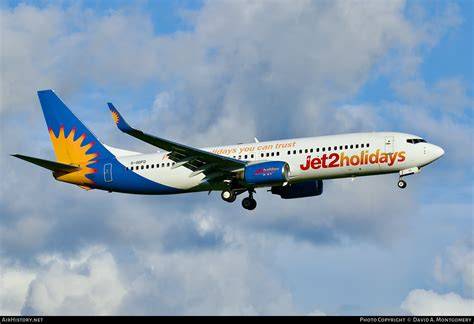
The world’s oldest surviving Boeing 737-800 has flown its last paying passenger. Jet2’s G-GDFD, the second 737-800 ever built and the oldest surviving member of the entire 737 Next Generation family, completed its final commercial rotation on October 18, 2026, ending a career that began on Boeing’s flight-test line in Renton, Washington, and finished on a charter ramp at East Midlands Airport nearly three decades later. The aircraft logged at least 81,999 flight hours across more than 30,000 flights, according to UK Civil Aviation Authority records and Jet2’s own confirmation—figures that place it among the hardest-working narrowbodies of its generation.
What makes the withdrawal striking is not simply the age of the airframe. It is the contrast between the historic weight of the registration and the ordinariness of its last week. G-GDFD did not spend its closing days on a preservation ramp or in ceremonial farewells. It flew 16 sectors between October 12 and October 16 alone, hopping between Scotland and holiday airports in Spain, Greece, Turkey, and the Canary Islands before repositioning south to finish its passenger career. The final week was a working week, and the aircraft went out the way it came in: busy.
G-GDFD’s Final Week: Four Sectors a Day From Glasgow
According to flight-tracking data compiled by Simple Flying, the aircraft opened its last full week on October 12 at Glasgow Airport (GLA), departing at 06:19 AM UTC as LS177 for Alicante Airport (ALC) in Spain. It arrived two hours and 29 minutes later at 08:48 AM, turned around, and returned to Scotland as LS178, touching down at 01:26 PM. Two hours and 33 minutes after that, it was airborne again as LS181 bound for Rhodes International Airport (RHO), and the return leg, LS182, did not land back in Glasgow until 00:30 AM UTC on October 13. Four sectors and a full working day of flying, completed in under 19 hours.
The pace continued without relief. On October 13, G-GDFD flew the long Canary Islands rotation to Tenerife South Airport (TFS) and back as LS125 and LS126, logging eight hours and 45 minutes of flight time between 09:54 AM and 07:45 PM. October 14 brought another island round trip, this time to Fuerteventura Airport (FUE), with LS137 and LS138 consuming nine hours and 37 minutes. October 15 was the heaviest day of the sequence: the aircraft departed Glasgow at 05:26 AM for Corfu International Airport (CFU) and was back on the ground by 01:34 PM before departing again at 03:04 PM for Heraklion International Airport (HER) on Crete, returning shortly after midnight on October 16 in a rotation that added four hours and 16 minutes. October 16 closed the Glasgow chapter with four more sectors—Dalaman Airport (DLM) in Turkey and Palma de Mallorca Airport (PMI) in Spain—the last of which, LS102 from Palma, arrived at 11:21 PM UTC.
Sixteen sectors over five days is not the schedule of an aircraft being eased toward retirement. It is the schedule of a 29-year-old Boeing operating precisely the way a leisure carrier needs it to: high utilization, short turnarounds, and long days that stretch well past midnight.
Glasgow to East Midlands: The Final Commercial Assignments
The final departure from Glasgow came on October 17, when G-GDFD lifted off at 06:39 AM UTC as LS179 for Tenerife South, landing at 10:37 AM after a four-hour sector. Nothing in the flight data suggested the aircraft’s commercial life was ending. What followed was the decisive shift: instead of returning to Scotland, G-GDFD positioned to East Midlands Airport (EMA) as LS3030, departing Tenerife at 11:53 AM and arriving at 04:04 PM UTC. That single repositioning leg ended its Glasgow-based operations and placed the airframe at the airport from which Jet2 would finish the aircraft’s passenger career.
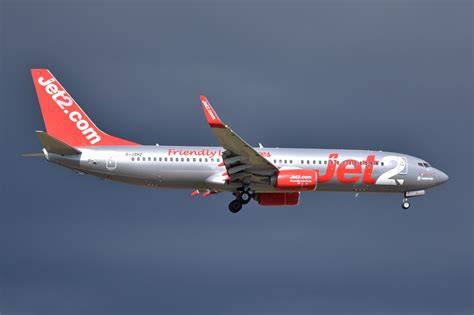
That evening it continued working. As LS653, G-GDFD departed East Midlands at 05:22 PM UTC for Antalya International Airport (AYT) in Turkey, landing four hours and one minute later at 09:23 PM. The return service, LS654, departed Antalya at 10:52 PM and arrived back at East Midlands at 02:55 AM UTC on October 18. That overnight Turkish rotation closes the supplied initial tracking dataset, but it was not the aircraft’s last commercial flight. According to Airliner World, G-GDFD completed an outbound service to Ibiza later on October 18 and returned as LS644, and that Ibiza leg—not the pre-dawn arrival from Antalya—is the final passenger rotation of its career.
| Date | Flight(s) | Route | Departure–arrival (UTC) |
|---|---|---|---|
| October 12 | LS177 / LS178 | Glasgow–Alicante–Glasgow | 06:19–13:26 |
| October 12–13 | LS181 / LS182 | Glasgow–Rhodes–Glasgow | 14:59–00:30 |
| October 13 | LS125 / LS126 | Glasgow–Tenerife–Glasgow | 09:54–19:45 |
| October 14 | LS137 / LS138 | Glasgow–Fuerteventura–Glasgow | 08:52–18:29 |
| October 15 | LS111 / LS112 | Glasgow–Corfu–Glasgow | 05:26–13:34 |
| October 15–16 | LS193 / LS194 | Glasgow–Heraklion–Glasgow | 15:04–00:22 |
| October 16 | LS195 / LS196 | Glasgow–Dalaman–Glasgow | 05:22–15:30 |
| October 16 | LS101 / LS102 | Glasgow–Palma–Glasgow | 16:48–23:21 |
| October 17 | LS179 | Glasgow–Tenerife | 06:39–10:37 |
| October 17 | LS3030 | Tenerife–East Midlands | 11:53–16:04 |
| October 17–18 | LS653 / LS654 | East Midlands–Antalya–East Midlands | 17:22–02:55 |
| October 18 | Outbound / LS644 | East Midlands–Ibiza–East Midlands | Final commercial rotation |
From Boeing Prototype N35030 to Jet2’s G-GDFD
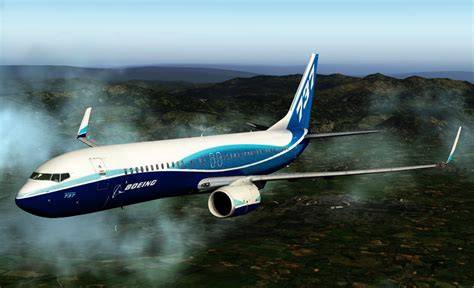
Before it carried holidaymakers, G-GDFD was a Boeing test airframe. Registered N35030, it was the second 737-800 prototype and made its maiden flight on August 15, 1997, just over two weeks after the first 737-800 prototype flew on July 31. It was the eighth airframe built for the 737NG program at Renton, following six 737-700s and the first 737-800. Every one of those seven earlier aircraft has since been scrapped, a fact that makes G-GDFD’s survival—and its long commercial second life—all the more unusual.
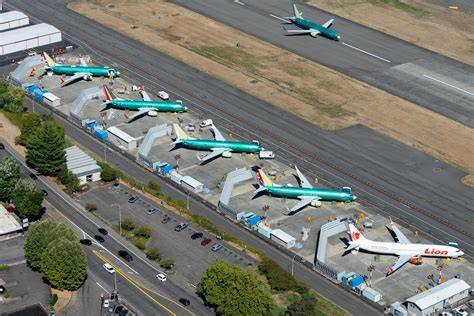
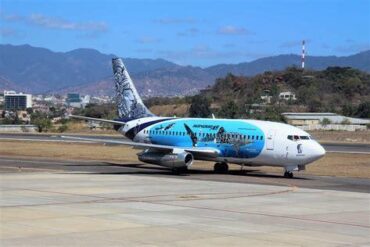
The 737NG itself was a substantial generational leap. Compared with the 737 Classic, the new family used a redesigned wing, improved aerodynamics, updated flight deck avionics, and CFM International CFM56-7 engines, gaining range and efficiency that allowed Boeing to compete directly with the Airbus A320 family. After flight testing, N35030 entered commercial service with German leisure carrier Hapag-Lloyd in December 1998 as D-AHFB, per Planespotters.net. It flew under the Hapagfly identity from 2005, joined TUIfly in 2007—where it appeared in a special Volkswagen Sharan promotional livery—and in April 2011 entered Jet2’s fleet as G-GDFD. Over the following 15 years it became a familiar sight at British regional airports, and by March 18, 2026, CAA records showed the 81,999-hour total.
Why Jet2 Is Retiring Its 737-800s for Airbus A321neo
G-GDFD’s withdrawal is part of a fleet strategy, not a single-aircraft decision. Jet2 received its first Airbus, A321neo G-SUNB, in March 2023, breaking with a Boeing-dominated narrowbody history; by July 2026 it had taken delivery of its 30th A321neo against a firm order for 155. The A321neo carries 232 passengers to the 737-800’s 189, roughly 23% more capacity per flight, with newer-generation engines and lower fuel burn per seat. On routes such as Tenerife, Antalya, Palma, and Alicante, that extra capacity spreads operating costs across more holidaymakers.

The transition is deliberately gradual. Jet2 is fitting Split Scimitar Winglets to 74 of its 737-800s in a multimillion-pound program and has applied lightweight paint to more than 80 aircraft to trim weight and fuel burn. The 737-800 will remain central to the operation for years, but the arrival of 155 A321neos sets an expiry date for the oldest airframes.
Older 737s Still Fly: This Was Not the Oldest 737
G-GDFD was the oldest 737-800, not the oldest 737. Jet2 still operates a 29-year-old 737-300, and Nolinor Aviation in Canada flies 737-200s built roughly 50 years ago, using gravel-runway capability to reach remote destinations where newer jets cannot operate. The distinction matters: older airframes survive where specialized capability outweighs fuel efficiency, and that logic does not apply to high-frequency European holiday flying.
What Happens Next for the Oldest Surviving 737NG
After Ibiza, G-GDFD was ferried to Manchester on October 19 for de-branding and lease-return work. Jet2 confirmed the aircraft was designated for return to its lessor but could not say whether it will fly again, be preserved, or be dismantled, and the CAA registry showed an active de-registration case. Preservation is plausible: as the second 737-800 prototype and the oldest surviving NG, it documents how the most successful NG variant—nearly 5,000 passenger 737-800s produced—began.
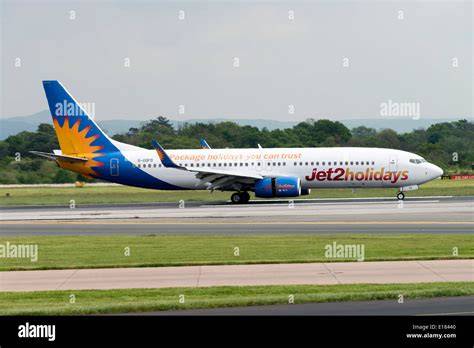
For Jet2, the retirement is routine fleet arithmetic. For aviation history, it is the closure of a thread stretching from Boeing’s test program through three German leisure operators and fifteen years of British holiday flying. Whether G-GDFD returns to the sky or settles permanently on the ground, its last Ibiza arrival ended a career few airframes ever approach.