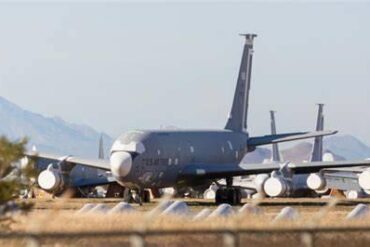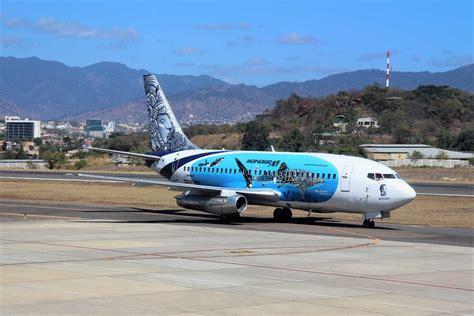
The Boeing 737-200 occupies a legendary place in aviation history. Introduced in the late 1960s during the rapid expansion of global air travel, it was designed as a compact yet capable short-haul jetliner capable of connecting regional cities with larger aviation hubs. Few could have predicted at the time that this aircraft would evolve into one of the most durable airframes ever built. More than half a century later, a small number of these jets continue to fly, defying expectations and rewriting assumptions about aircraft longevity.
What makes the 737-200 extraordinary is not merely its age but its adaptability. In an industry driven by fuel efficiency, advanced avionics, and composite materials, older aircraft usually fade away once operating costs become too high. Yet the 737-200 persists in specialized roles where rugged engineering, mechanical simplicity, and operational flexibility matter more than modern efficiency metrics.
Today, only a handful remain active worldwide. Among them is a remarkable aircraft operated by the Indian Air Force, an airframe that has remained airborne for an astonishing 55 years. Its continued service is not a relic of nostalgia but proof that the right combination of design, maintenance, and mission requirements can extend an aircraft’s life far beyond expectations.
The Birth of the “Baby Boeing”
The Boeing 737 program began during a transformative moment in commercial aviation. Airlines were searching for aircraft that could efficiently serve short routes while accommodating growing passenger demand. Boeing responded with a compact twin-engine jet that would become the smallest member of its narrowbody lineup.

When the 737-200 variant entered service in 1968 with United Airlines, it represented a leap forward for regional jet travel. Compared with earlier versions, the -200 featured more powerful Pratt & Whitney JT8D engines, improved aerodynamics, and greater payload capacity. Airlines quickly embraced the aircraft because it combined reliability with operational flexibility.
The jet’s design reflected a practical philosophy. Its engines were mounted close to the ground, making maintenance easier at smaller airports without sophisticated ground equipment. Its robust landing gear allowed it to operate from relatively short or underdeveloped runways. For airlines expanding into secondary markets during the 1970s, the aircraft became a perfect fit.
Within a decade, the 737-200 had spread across the globe. Airlines from North America to Southeast Asia adopted the type for domestic routes, charter flights, and cargo operations. Thousands of passengers experienced jet travel for the first time aboard this aircraft, cementing its reputation as a dependable workhorse.
Meet the Oldest Active Boeing 737-200
The most remarkable survivor of this era is aircraft K3187, operated by the Indian Air Force. Delivered in 1971, this jet has accumulated more than five decades of operational service and still remains active today. In a world where commercial aircraft often retire after 25–30 years, such longevity borders on extraordinary.
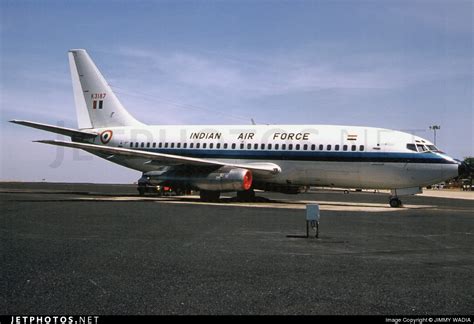
Originally designed for civilian airline service, the aircraft eventually transitioned into military operations. In the Indian Air Force, the jet primarily performs personnel transport and government missions, moving officials and military staff across India’s vast geography.
Several factors explain why K3187 continues flying:
- Rigorous military maintenance schedules
- Robust JT8D turbofan engines
- Reliable mechanical systems
- Operational flexibility for mid-range transport missions
Unlike commercial airlines that must prioritize fuel efficiency and passenger comfort, military operators often value durability and mission readiness above all else. If an aircraft continues to perform reliably, there is little reason to retire it prematurely.
India operates two additional 737-200s—K2412 and K2413, delivered in the early 1980s. Though younger than K3187, both aircraft are over four decades old, demonstrating how deeply the air force trusts the platform.
Technical Anatomy of a Long-Lasting Aircraft
The resilience of the 737-200 is rooted in its engineering. Unlike modern aircraft with highly integrated digital systems, the early 737 relied on straightforward mechanical and hydraulic components. This simplicity reduces maintenance complexity and allows technicians to keep aircraft operational with fewer specialized tools.
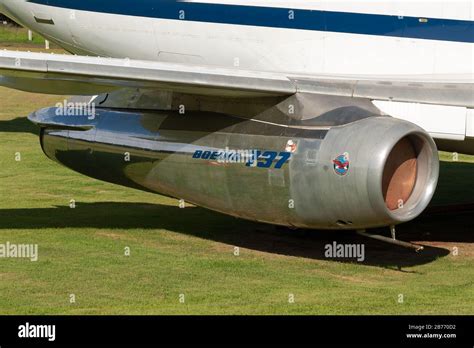
At the heart of the aircraft are two Pratt & Whitney JT8D engines, low-bypass turbofans famous for their reliability. Though less fuel-efficient than modern engines, they deliver consistent thrust and have been widely used across multiple aircraft types, simplifying spare-parts logistics.
Key specifications of the aircraft include:
- Wingspan: 93 ft (28.35 m)
- Length: 100 ft 1 in (30.53 m)
- Height: 36 ft 10 in (11.23 m)
- Maximum Take-Off Weight: 115,500 lb
- Cruise Speed: 400 knots
- Service Ceiling: 37,000 ft
- Range: 1,200 nautical miles
These numbers may appear modest compared with modern narrowbodies, but they are perfectly suited to the aircraft’s original mission: short to medium-haul regional transport.
Latin America: A Stronghold for the Classic 737
While most Western airlines retired their 737-200 fleets decades ago, Latin America remains a surprising sanctuary for the aircraft. Several carriers continue operating these jets for passenger and charter services.
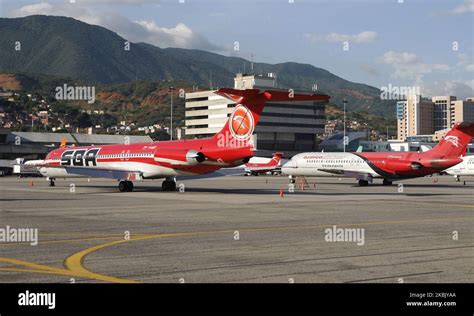
One of the most notable examples is Venezolana’s YV3471, delivered in 1978. At nearly half a century old, this aircraft continues flying passengers across regional routes. For travelers accustomed to modern cabins and quiet engines, boarding such a jet can feel like stepping back into aviation’s golden age.
Other operators include Estelar Latinoamérica and Avior Airlines, which maintain early-1980s airframes that remain operational thanks to careful maintenance and strategic deployment.
Several factors explain the aircraft’s persistence in the region. Infrastructure limitations in certain areas mean that airports may lack the facilities required for newer aircraft. Additionally, acquiring second-hand aircraft and maintaining them locally can be more economical than purchasing modern jets.
The Fuerza Aérea Ecuatoriana also operates a veteran 737-200, registered FAE-630, which serves government and transport roles. Ecuador’s mountainous terrain and high-altitude airports make rugged aircraft particularly valuable.
Indonesia’s Archipelago Workhorses
Few nations illustrate the practical advantages of the 737-200 better than Indonesia. The country consists of more than 17,000 islands, creating one of the most complex logistical environments on Earth.
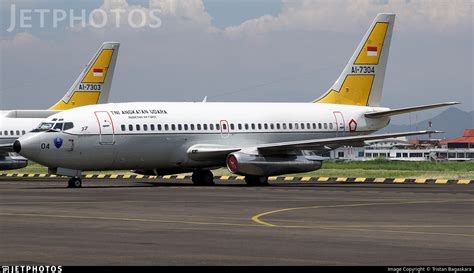
The Indonesian Air Force maintains several aircraft of this type, including AI-7301, AI-7302, AI-7303, and AI-7304, many of which were delivered in the early 1980s. Despite being more than 40 years old, they remain active assets in the nation’s military transport network.
For Indonesia, the aircraft offers a nearly ideal balance between capacity and flexibility. Its performance characteristics allow it to operate from shorter or less developed runways, an essential capability when connecting remote bases scattered across a vast archipelago.
Military aircraft often avoid the strict economic pressures faced by commercial airlines. As long as maintenance standards are upheld and mission requirements are met, an aircraft can remain operational for decades. The 737-200’s robust design has made it a natural fit for such environments.
Canada’s Arctic Specialist
Far from tropical archipelagos and equatorial airfields, another 737-200 thrives in an entirely different environment: the Arctic wilderness of Canada.
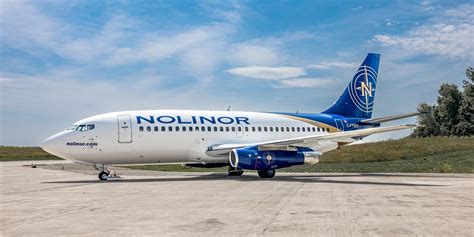
Nolinor Aviation, a Quebec-based charter airline, operates aircraft C-FTWW, built in 1981. What sets this aircraft apart is its specialized gravel kit, a modification allowing it to land on unpaved runways without damaging engines or fuselage components.
This capability makes the aircraft indispensable for operations in northern Canada, where many communities and mining sites rely on gravel airstrips rather than paved airports.
The gravel kit includes several distinctive features:
- Deflectors that prevent debris from entering engines
- Reinforced landing gear
- Protective shielding along the fuselage underside
These modifications allow the aircraft to transport passengers, heavy equipment, and supplies into remote locations inaccessible to most modern jets.
For Nolinor, the aircraft’s ruggedness is not a historical curiosity—it is an operational necessity.
Military Operators Around the World
Beyond India and Indonesia, several other military organizations continue to rely on the 737-200 for specialized transport duties. Unlike commercial airlines, which prioritize efficiency and cabin upgrades, military fleets often emphasize reliability, adaptability, and cost-effective logistics.
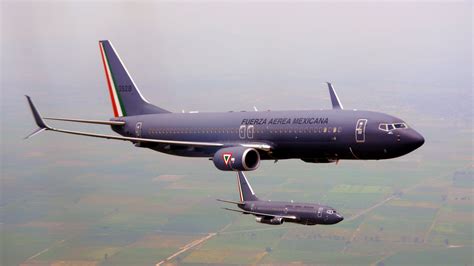
The Mexican Air Force operates aircraft FAM-3520, delivered in 1984, which remains active in government and logistical missions. Similar examples have served in South American and African air forces over the years, demonstrating the aircraft’s versatility.
Military aircraft frequently undergo periodic modernization. Avionics upgrades, cockpit instrumentation improvements, and interior refits help extend operational life while maintaining safety standards.
These updates allow decades-old airframes to remain compliant with evolving aviation regulations and operational requirements.
Why the Boeing 737-200 Refuses to Disappear
Aviation technology has advanced dramatically since the 737-200 first flew, yet the aircraft continues to operate in environments where newer jets struggle.
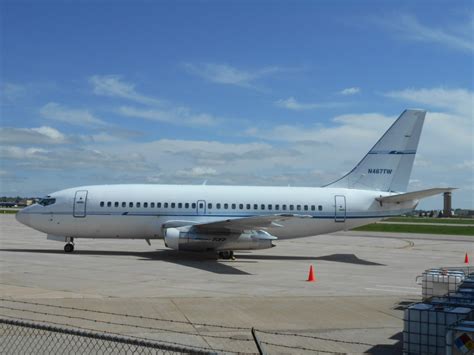
Several characteristics explain this remarkable longevity.
The aircraft’s structural durability allows it to withstand demanding conditions. Its airframe was designed during an era when engineering margins were often generous, contributing to long service lives when maintenance standards remain high.
Another key factor is mechanical simplicity. Modern aircraft rely heavily on complex electronics and advanced digital systems. While these technologies improve efficiency, they also require specialized maintenance infrastructure. In remote or resource-limited regions, simpler aircraft can be easier to keep operational.
Finally, the aircraft offers operational versatility. The 737-200 can carry passengers, cargo, or mixed loads while operating from shorter runways than many modern jets. That flexibility makes it valuable in environments ranging from Arctic mining routes to island logistics networks.
A Living Artifact of Aviation History
The continued presence of the Boeing 737-200 in the skies represents something rare in aviation: a machine that refuses to fade quietly into retirement.
More than fifty years after its introduction, aircraft like K3187 remain operational not because of nostalgia but because they still perform essential tasks. Whether transporting military personnel across India, connecting remote communities in Canada, or linking islands in Southeast Asia, these aircraft continue fulfilling roles that newer designs do not always handle as effectively.
For aviation enthusiasts, encountering a 737-200 today feels like spotting a living museum piece in motion. The distinctive engine sound, the classic fuselage profile, and the analog cockpit all reflect an era when jet travel was rapidly expanding across the world.
Yet these aircraft are not static relics. They remain active tools—machines built with a durability that allows them to adapt across generations.
As long as specialized operators continue to find value in its rugged engineering and versatile design, the Boeing 737-200 will keep flying. In an industry obsessed with the newest technology, the aircraft stands as a quiet reminder that sometimes the most reliable machines are the ones that have already proven themselves over millions of miles and half a century of flight.