In the high-tech theater of modern warfare, where stealth drones and hypersonic missiles dominate headlines, a quieter truth persists: many of the U.S. military’s most reliable helicopters are decades old. Some have weathered Cold War tensions, multiple Gulf conflicts, and modern asymmetrical warfare. Despite technological leaps, these aircraft remain airborne—testaments to mechanical resilience and adaptable engineering. This is not a story of obsolescence, but of enduring relevance.
1. UH-1 Iroquois “Huey” — Introduced 1959
When discussing legacy aircraft, no helicopter carries more battlefield symbolism than the UH-1 Iroquois, affectionately known as the “Huey.” Developed by Bell Helicopter in the late 1950s, the Huey was born from a U.S. Army requirement for a medical evacuation and utility helicopter. It quickly proved indispensable in the Vietnam War, ferrying troops, rescuing the wounded, and supporting combat operations with its adaptable frame and powerful engine.
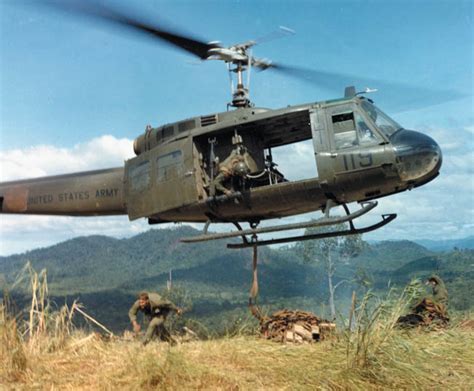
Although the original single-engine models have long been retired, the twin-engine UH-1N, introduced in 1970, remains in limited service. As of 2025, the U.S. Air Force continues using the Huey, particularly for nuclear missile site security and transportation. However, the MH-139A Grey Wolf is rapidly replacing it. Still, few aircraft have the historical gravity and raw longevity of the Huey.
2. H-47 Chinook — Introduced 1962
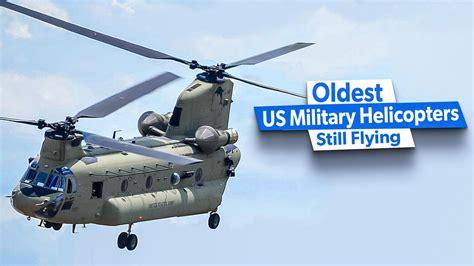
The H-47 Chinook is one of the most iconic tandem-rotor helicopters in military history. Developed by Vertol and later produced by Boeing, this twin-engine, heavy-lift behemoth has supported the U.S. Army since 1962. With a load capacity exceeding 24,000 pounds, the Chinook has carried everything from artillery to Humvees to humanitarian aid.
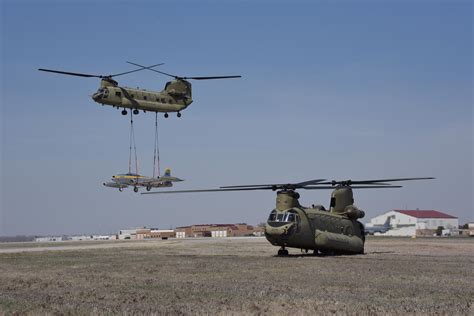
The latest CH-47F Block II variants feature digitized cockpit systems, advanced avionics, and airframe improvements to increase lift capacity. With plans in place to keep the Chinook flying well into the 2070s and possibly beyond, this is one of the few helicopters designed with a projected century of service in mind.
3. TH-57 Sea Ranger — Introduced 1968
While not a combat helicopter, the TH-57 Sea Ranger plays a critical training role for the U.S. Navy. Based on the Bell 206 Jet Ranger, this light utility helicopter has trained thousands of naval aviators since 1968. Its simplicity, reliability, and predictable flight characteristics make it an ideal classroom in the sky.
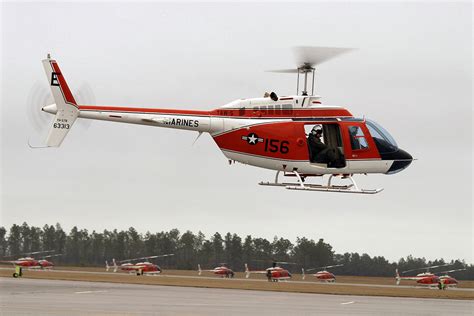
The TH-57B and TH-57C variants, introduced in the 1980s, brought improved avionics and instrumentation. Despite being phased out in favor of the TH-73A Thrasher by the end of fiscal year 2025, the Sea Ranger remains an unsung hero in shaping the next generation of rotary-wing pilots.
4. S-70/UH-60 Black Hawk — Introduced 1978
The UH-60 Black Hawk is the backbone of modern U.S. Army aviation. Since entering service in 1978, the Black Hawk has been the go-to platform for tactical transport, medevac missions, and special operations. Built by Sikorsky, the Black Hawk’s durability, modular design, and powerful twin engines have made it a global workhorse.
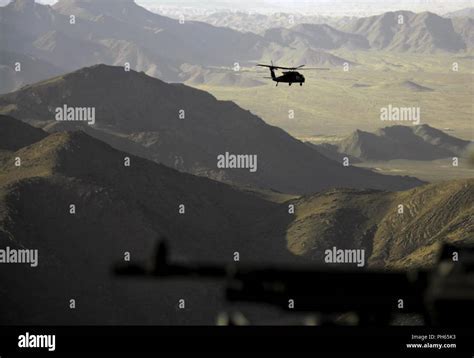
Sikorsky has continued improving the model through the UH-60L and UH-60M, the latter including glass cockpits, improved lift capability, and networked avionics. Though Future Vertical Lift (FVL) programs are underway, the Black Hawk will remain front-line relevant well into the 2040s, possibly beyond.
5. Mil Mi-17 — U.S. Use Introduced 1981
It’s unusual—but true—that the U.S. military has used Russian-built helicopters. The Mil Mi-17, a heavily upgraded version of the Mi-8, entered Soviet service in 1981. Due to logistical operations in regions like Afghanistan, the U.S. acquired several Mi-17s for training, covert missions, and foreign military support.
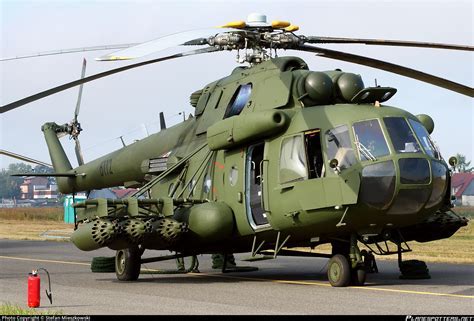
These helicopters have been sighted at U.S. training facilities and in operations requiring low-profile insertions. Their ability to operate in rugged terrain and blend with regional aircraft inventories makes them a strategic asset, though not a widely publicized one.
6. AH-6/MH-6 Little Bird — Introduced Early 1980s
Compact, nimble, and deadly, the Little Bird series embodies special operations aviation. Developed from the OH-6 Cayuse, the AH-6 (attack) and MH-6 (transport) variants are tailored for the 160th Special Operations Aviation Regiment. These helicopters excel at inserting elite troops into tight urban or rugged spaces where larger helicopters cannot land.
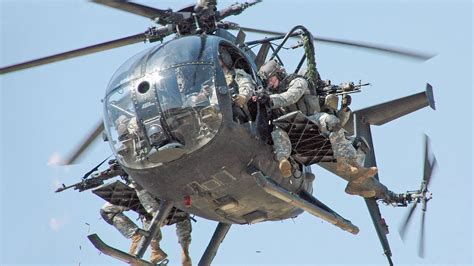
Despite its size, the AH-6 can be equipped with rockets, miniguns, and precision-guided munitions. The cancellation of the Future Attack Reconnaissance Aircraft (FARA) program in 2024 has extended the Little Bird’s relevance, with SOCOM engineering new cockpit upgrades and digital avionics.
7. HH-60G Pave Hawk — Introduced 1982
Derived from the Black Hawk platform, the HH-60G Pave Hawk specializes in personnel recovery and combat search-and-rescue (CSAR). Featuring the Precision Avionics Vectoring Equipment (PAVE) system, it integrates advanced navigation, night vision, and infrared capabilities, allowing safe operation in low-visibility conditions.
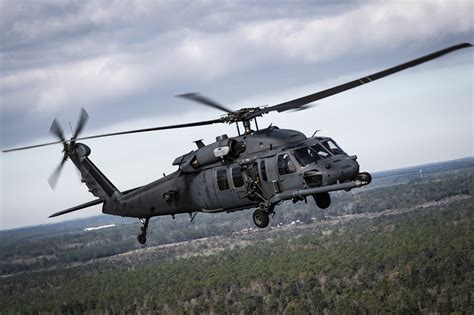
The Pave Hawk has performed missions ranging from Gulf War rescues to humanitarian airlifts during hurricanes. While being phased out in favor of the HH-60W Jolly Green II, its long service history is marked by successful extractions under fire and daring rescues in warzones.
8. MH-60/SH-60 Sea Hawk — Introduced 1984
A naval cousin to the Black Hawk, the MH-60 and SH-60 Sea Hawk series serve as the multi-role workhorses of the U.S. Navy. First deployed in 1984, the SH-60B was designed for anti-submarine and surface warfare, electronic intelligence, and rescue missions. Later variants like the MH-60R and MH-60S brought modernization with sensors, torpedoes, and medical evacuation capabilities.
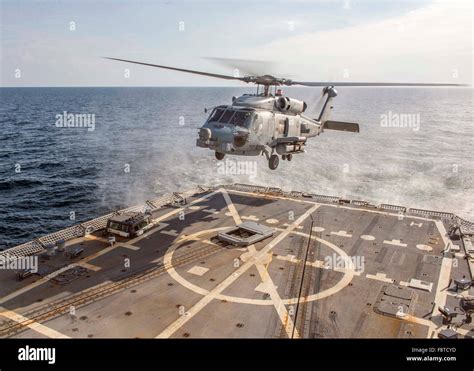
With current deployments aboard carriers and destroyers, the Sea Hawk remains indispensable for naval power projection and reconnaissance. Upgrades will ensure service longevity until at least 2045.
9. MH-65 Dolphin — Introduced 1984
Overlooked in military aviation lists, the U.S. Coast Guard’s MH-65 Dolphin is a vital short-range recovery platform. Based on the French Eurocopter AS365 Dauphin, the Dolphin has been a key element in coastal search and rescue since 1984.
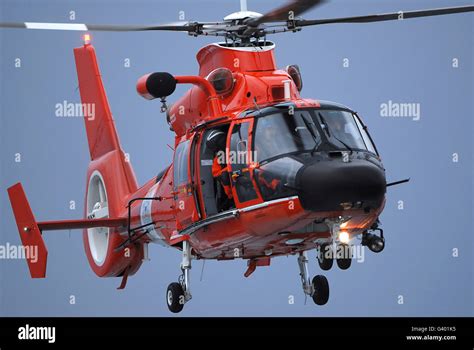
Recent upgrades include a digital weather radar, all-glass cockpit, and precision strike capabilities, allowing the Dolphin to patrol, rescue, and engage threats when necessary. Over 100 Dolphins remain in use, and their reputation for reliability in extreme conditions cements their position in the Coast Guard’s fleet.
10. CH-53E Super Stallion / MH-53E Sea Dragon — Introduced 1986
The CH-53E Super Stallion is the most powerful helicopter in the U.S. military, capable of lifting over 16 tons of cargo. Its naval variant, the MH-53E Sea Dragon, specializes in mine countermeasures and amphibious assault support. Entering service in 1986, these aircraft serve both the U.S. Marine Corps and the U.S. Navy.
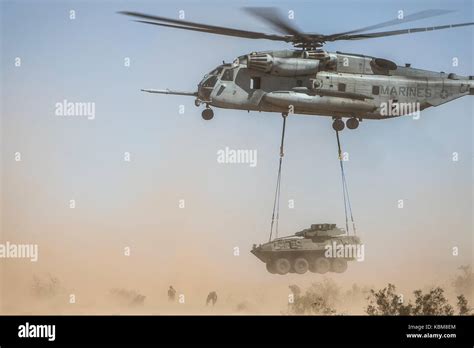
Despite a high operational cost and notorious accident rate, the Pentagon plans to keep the CH-53E flying until at least 2031. A replacement—the CH-53K King Stallion—is already in production but is being slowly integrated.
Conclusion: Proven by Time and Battle
From the Vietnam-era Huey to the Cold War Chinook, these helicopters continue to fly because they still work—and in many cases, no newer alternative matches their specific utility. Their ongoing modernization, modularity, and performance under pressure prove one thing: sometimes old machines aren’t outdated—they’re indispensable.
As the U.S. military transitions toward fifth-generation rotorcraft and hybrid-electric propulsion, these legacy helicopters remain a bridge between generations. Their persistence is not a failure of innovation—but a testament to engineering that endures beyond expectation.