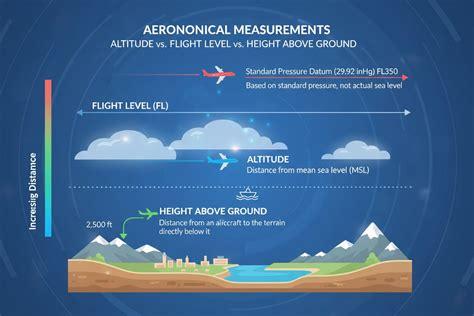
When passengers hear a captain announce that the aircraft will cruise at 35,000 feet, the statement rarely attracts attention. Yet it raises an interesting question. In a world where most countries use the metric system, why does aviation still rely on feet instead of meters to measure altitude? The answer lies in a combination of history, standardization, technology, and safety.
The use of feet in aviation dates back to the very beginning of powered flight. When Orville and Wilbur Wright conducted their pioneering flights in the United States in 1903, they naturally used imperial measurements because those units were standard across America. As aviation expanded from an experimental activity into a global industry, the United States and the United Kingdom became dominant forces in aircraft design, pilot training, navigation systems, and operational procedures.
Because both countries used imperial units extensively, early aviation standards were built around feet. Altitude references, performance calculations, aircraft instruments, and operational manuals all adopted the same measurement system. What began as a practical choice eventually became an international convention.
By the time aviation spread worldwide, thousands of procedures and technical systems were already based on feet. Instead of creating separate standards for different countries, the industry chose consistency. That decision continues to influence every commercial flight today.
The Historical Influence of American and British Aviation
The dominance of American and British aviation during the twentieth century cannot be overstated. Aircraft manufacturers such as Boeing, Douglas, Lockheed, Hawker, and de Havilland helped establish global operating practices. Airlines, military organizations, and aviation authorities across the world adopted many of these standards because they provided a common language for international flight operations.
As aircraft became capable of crossing continents and oceans, international coordination became essential. Pilots flying between countries needed a universal system that eliminated confusion. Feet emerged as the accepted standard for altitude because it was already deeply embedded in aircraft design and operational procedures.
This historical momentum proved powerful. Even as nations converted roads, construction, science, and education to metric measurements, aviation retained the altitude system it had inherited from its earliest pioneers.
Why Feet Remain Safer Than Changing to Meters
At first glance, switching to meters may seem logical. After all, the metric system is used by most countries. However, aviation prioritizes safety above convenience, and changing altitude measurements would introduce enormous risks.
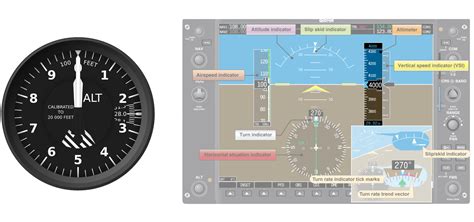
Modern aviation infrastructure is built around feet. Aircraft altimeters, flight management computers, navigation databases, approach charts, training programs, maintenance documentation, and air traffic control procedures all use feet as their primary altitude reference.
A global conversion would require modifying countless systems simultaneously. Every commercial aircraft, cargo aircraft, business jet, helicopter, simulator, and training platform would need updates. Air traffic controllers and pilots would require retraining, while international regulations would need complete revision.
Even a small misunderstanding during the transition could create dangerous altitude deviations. In aviation, a mistake of a few hundred feet can significantly reduce separation between aircraft operating in crowded airspace.
The Massive Cost of a Worldwide Conversion
The financial burden of changing from feet to meters would be staggering. Airlines would face substantial costs related to equipment replacement, software updates, crew retraining, certification processes, and operational disruptions.
More importantly, the benefits would be limited. Aviation already functions effectively with a universally accepted altitude standard. Replacing a working system with a different one would provide little operational advantage while introducing years of complexity.
For this reason, regulators generally prefer maintaining proven systems rather than redesigning fundamental elements of global flight operations.
Why Feet Are Likely Here to Stay
Although a few countries have experimented with metric altitude procedures at various times, international aviation continues to rely overwhelmingly on feet. The unit has become more than a measurement; it is a foundational component of the global aviation ecosystem.
Every day, thousands of aircraft travel through shared airspace using common altitude references that pilots and controllers instantly understand. That consistency improves communication, reduces ambiguity, and enhances safety across international borders.
The reason pilots say “feet” instead of “meters” is ultimately simple. Aviation inherited the practice from its earliest American and British roots, and decades of worldwide standardization transformed it into a critical safety convention. Changing it today would require rebuilding much of modern aviation infrastructure, creating risks and costs that far outweigh any potential benefits. As a result, feet remain the universal language of altitude—and they are likely to remain that way for generations to come.