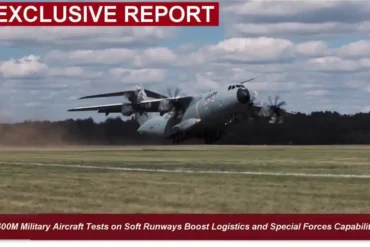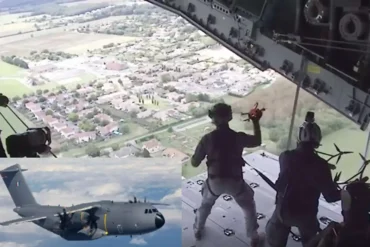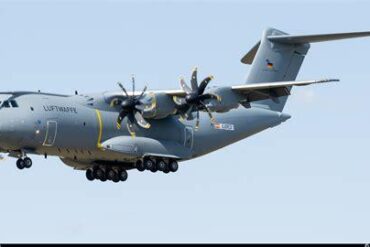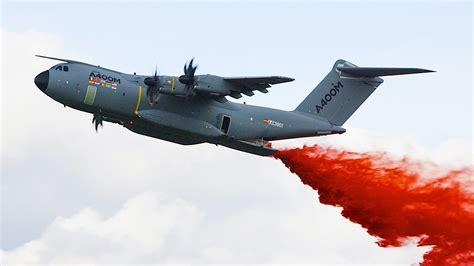
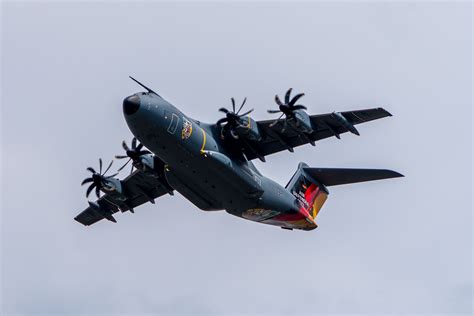
In a bold step toward reshaping the future of aerial wildfire suppression, the Airbus A400M has successfully completed a new series of ultra-low-altitude firefighting tests. Conducted in April 2025 at Nîmes-Garons Airport, France, the campaign was overseen by CEREN (Entente-Valabre’s Test and Research Centre), one of the foremost authorities on forest firefighting equipment and operational standards. The results, unveiled this June, highlight the immense potential of the A400M as a multi-role firefighting platform, especially when outfitted with Airbus’s Roll-on/Roll-off (Ro-Ro) modular firefighting kit.
The trials were part of a broader strategy to evaluate how precisely the 20,000-liter payload of water or retardant could be delivered when dropped from altitudes under 30 meters (98 feet). These results are critical for assessing the viability of the aircraft in real-world conditions, where accurate distribution and speed of deployment can mean the difference between containment and catastrophe.
Precision in the Flames: Low-Altitude Firefighting Comes of Age
Flying at 230 km/h (125 knots), the A400M executed multiple runs over a designated airfield section outfitted with a ‘cup grid’—a meticulous layout of ground containers that capture and measure the spread pattern, droplet distribution, and density of the retardant. The analysis from these tests allows engineers to validate the fluid dynamics of the release system and predict real-world efficacy in rugged terrains.
These trials mark a turning point. Airbus’s Ro-Ro system does not require any structural modification to the aircraft, which means any A400M in the global fleet can be rapidly reconfigured into a high-capacity firefighting tanker. This flexibility ensures that militaries and civil operators alike can respond to wildfire crises within hours, not days—a key differentiator when wildfires now often double in size within 24 hours due to accelerating climate change.
The Ro-Ro Kit: A Modular Revolution in Firefighting Response
At the heart of the demonstrator is a modular, gravity-fed tank system that fits directly into the cargo hold via the A400M’s standard loading procedures. The firefighting tank can hold up to 20,000 liters of water or fire retardant and releases the load through the aircraft’s rear ramp, allowing a clean, directed, and high-volume discharge that maximizes ground coverage.
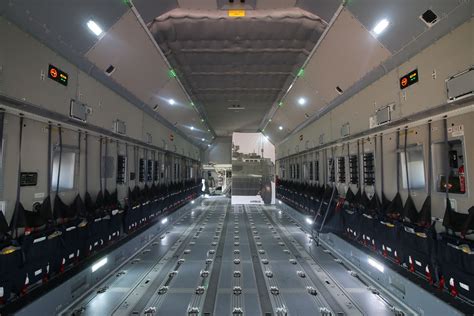
Airbus claims that refilling the system takes less than 10 minutes with conventional ground-based water pumping equipment. The refill speed not only reduces operational downtime between sorties but also emphasizes the system’s adaptability for continuous aerial firefighting operations near active fire fronts.
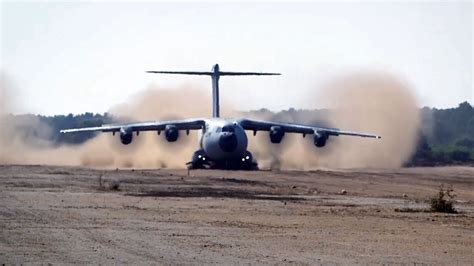
Such modularity opens the door for multinational coalitions to coordinate rapid deployments, particularly in areas where runway infrastructure is limited. The A400M’s ability to operate from short, semi-prepared runways gives it a tactical edge over traditional scoopers, especially during extended wildfire seasons.
CEREN’s Role: Objective Oversight Meets Innovation
The testing was independently monitored and evaluated by CEREN, known across Europe and globally as the premier body for firefighting technology testing and personnel training. Their involvement provides vital credibility to Airbus’s claims of effectiveness, offering data that’s not only technically rigorous but also trusted by international firefighting agencies.
Jo Müller, Head of Sustainability and Communications at Airbus Defence and Space, described the Nîmes trials as “a crucial step forward in our ambition to shape an ecosystem of firefighting capabilities.” He emphasized the multi-domain integration of the platform, hinting at Airbus’s broader vision of firefighting not just from the sky, but in synergy with ground and satellite systems as well.
Firepower vs. Flexibility: A400M vs. CL-415
While the Airbus A400M’s payload dwarfs many traditional firefighting aircraft, it does face comparisons—most notably with the Canadair CL-415, a legendary water bomber that can scoop water directly from lakes and reservoirs. The CL-415’s in-flight refill capability allows it to stay closer to the fireline, particularly in regions where aquatic sources are abundant.
However, the A400M compensates for its lack of scooping ability with a superior payload capacity—over three times the 6,000-liter load of the CL-415—and faster refill turnarounds when operating near established forward bases. More critically, its multi-role design means it can switch between logistical, transport, or medical missions and firefighting roles in less than a day, maximizing return on investment for operators.
Origins and Evolution: From Tactical Transport to Fire Line Asset
The A400M’s journey into the world of aerial firefighting began in July 2022, when Airbus first unveiled the removable demonstrator kit. Born from rising demand across Europe for non-dedicated, scalable firefighting resources, the system emerged as a direct response to the record-breaking fire seasons of the early 2020s, where entire regions faced simultaneous blazes that overwhelmed even specialized firebombing fleets.
By adapting an aircraft that already served in military transport, disaster response, and medevac roles, Airbus engineered a system rooted in logistical versatility. In practice, this means that nations need not purchase dedicated firefighting fleets, which often sit unused for much of the year. Instead, they can repurpose existing airlift capacity during peak fire seasons, especially as part of mutual aid agreements in NATO or EU-led civil protection programs.
Strategic Value: Multinational Response and Rapid Redeployment
Wildfires don’t respect borders. In 2023 alone, cross-border fires affected parts of Spain, Portugal, and southern France. The A400M’s global presence in military fleets—currently operational in Germany, France, Spain, the UK, and several other countries—makes it a prime candidate for multinational fire suppression initiatives.
Imagine a coordinated EU fire response unit capable of dispatching multiple A400Ms, each equipped with Ro-Ro kits, to combat blazes in Greece one week and Northern Italy the next. Because of its strategic airlift DNA, the A400M can fly intercontinental missions, land on rough strips, deploy retardant, and fly out again—all within a compressed timeframe that dedicated bombers cannot match.

What Comes Next: From Prototype to Deployment
Airbus’s next steps will likely focus on refining the targeting precision algorithms, possibly integrating AI-based fluid dynamics modeling to enhance drop efficiency across variable terrain and weather conditions. Future trials may also assess multi-aircraft coordinated drops, involving formation flying for layered suppression over large active fires.
Moreover, Airbus’s reference to an “ecosystem” hints at future integration with satellite reconnaissance, UAV fire mapping, and AI-supported dispatching, where A400Ms are routed in real-time to emergent hotspots detected from orbit. Such a system could mark the beginning of data-driven aerial firefighting, replacing decades of reactive doctrine with a proactive, predictive fire suppression model.
Conclusion: Tactical Heavyweight Meets Wildfire Emergency
The Airbus A400M’s firebusting trials in Nîmes signify more than just another test—they mark the maturation of a platform purpose-built for agility, reach, and scale. With 20,000 liters delivered in under 30 meters, this aircraft is no longer just a military workhorse. It is now poised to become an integral component of future climate resilience and disaster response frameworks across the globe.
As fires burn longer and stronger each year, the need for scalable, flexible, and high-capacity solutions becomes undeniable. Airbus’s Ro-Ro-equipped A400M may well be the aircraft that shifts the paradigm—from bespoke bombers to multi-mission aerial firefighters, ready to launch with just a few hours’ notice.