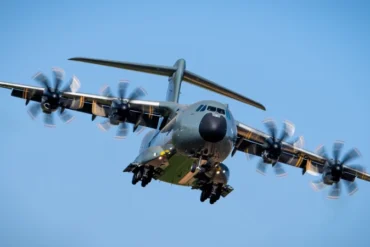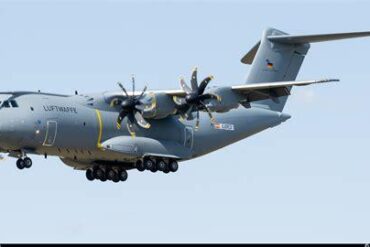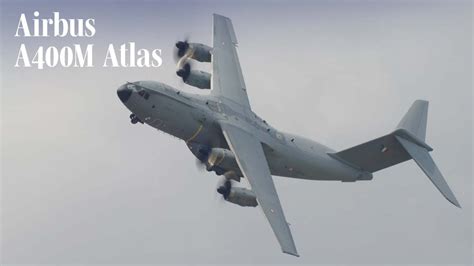
At the 2025 Paris Air Show, Airbus Defence and Space unveiled a crucial upgrade for its A400M Atlas military transport aircraft—an increase in certified payload from 37 tonnes to 40 tonnes. This enhancement, though seemingly modest at 3 tonnes, marks a transformative shift in the aircraft’s operational capacity and versatility. It paves the way for multi-role configurations, ensuring the A400M remains competitive in a rapidly evolving defense and civilian logistics landscape.
The decision reflects Airbus’s strategic pivot toward broader mission applicability without fundamentally altering the aircraft’s structural integrity. The upgrade will be implemented via manageable hardware changes and updated certification, eliminating the need for costly design overhauls.
A400M’s Evolving Role as a Heavy-Medium Airlifter
By crossing the 40-tonne threshold, the A400M Atlas repositions itself within the “heavy-medium transport” segment. This niche allows it to absorb diverse mission kits—from electronic warfare to firefighting—without sacrificing critical performance elements like range, endurance, or fuel efficiency.
More importantly, this expansion comes at a time when military and humanitarian operations demand platforms capable of rapid reconfiguration. Whether it’s disaster relief in remote regions or supporting unmanned aerial operations, the A400M now has the capacity headroom to deliver.
The increased payload allows for mission equipment that previously strained the airframe’s limits. These include:
- Signal jamming arrays and cooling units for EW roles
- Drone launch systems and onboard command consoles
- Fire retardant tanks and plumbing for aerial firefighting
- Additional fuel tanks for enhanced refuelling missions
- Broadband SATCOM arrays and relay hardware
- Weapon systems in strike variants for kinetic missions
Each of these systems introduces significant additional mass, necessitating a higher certified payload to maintain operational realism and crew safety.
New Variants Enabled by the Payload Expansion
Airbus’s 40-tonne payload increase isn’t speculative—it’s a cornerstone enabler for six confirmed or proposed A400M variants, each tailored for distinct mission profiles:
- Electronic Warfare Variant – Designed to carry standoff-jamming equipment, including directional antennas, power amplifiers, and cooling systems. The heavier payload accommodates the increased weight of signal generators without trimming crew or operational fuel.
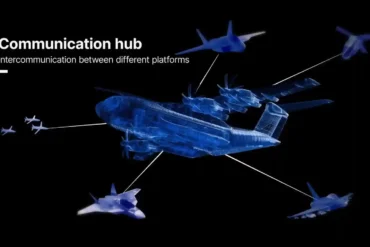
- UAV Mothership – Will host launch-and-recovery systems, enabling the A400M to serve as a high-endurance platform for manned-unmanned teaming (MUM-T). The payload increase allows carriage of additional drones, command stations, and support fuel.
- Aerial Firefighting Aircraft – This version will hold larger retardant tanks, increasing coverage per sortie. Estimates suggest an additional 3 cubic meters of firefighting agent can be carried.
- Enhanced Refuelling Tanker – In addition to underwing hose pods, this configuration integrates cargo hold tanks (CHTs), adding fuel capacity of up to 11,500 kg, enabling refuelling of more aircraft per mission.
- SATCOM Relay Aircraft – Equipped with broadband antennas, thermal systems, and onboard communications gear, this variant offers high-throughput connectivity ideal for network-centric warfare and operations in denied environments.
- Missile-Strike Platform – Under review by the French Army, this variant proposes integrated strike capabilities, such as dropping guided bombs or short-range missiles directly from the aircraft.
Each variant is designed with weight-intensive mission kits, which previously tested the aircraft’s 37-tonne limit. With the upgrade, Airbus is future-proofing the A400M for next-gen battlefield and civilian contingencies.
Technical Specifics and Performance Metrics
The A400M’s cargo bay—measuring 340 cubic meters with a cross-section of 4 by 4 meters—remains unchanged, but the certified weight ceiling enhances what can be done within that space. Here’s a breakdown of performance figures relative to payload:
- 40 tonnes: Range of approximately 3,300 km
- 30 tonnes: Extended range of 4,500 km
- 20 tonnes: Maximum range of 6,400 km
Powered by four Europrop TP400-D6 turboprops, each delivering 11,000 horsepower, the A400M can operate from short and unpaved runways, giving it a distinct advantage over larger jet-powered rivals.
One caveat remains: the ramp loading capacity. As of now, the ramp is certified for single-item loads of around 32 tonnes. Without reinforcement, the 40-tonne payload may only be feasible through distributed loading—for example, across multiple standard pallets.
Competitive Edge: A Strategic Middleweight
The A400M’s new payload capacity places it in a dominant mid-tier position among global transport aircraft:
- C-130J Super Hercules: ~20 tonnes
- Embraer C-390 Millennium: ~26 tonnes
- Kawasaki C-2: ~37.6 tonnes
- Antonov An-70: ~47 tonnes
- Ilyushin Il-76: 48–60 tonnes
- Xi’an Y-20: ~66 tonnes
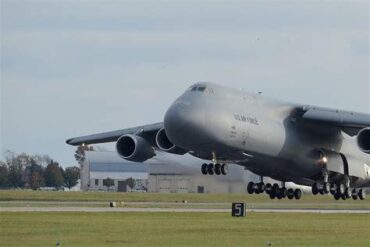
- C-17 Globemaster III: 77.5 tonnes
While it doesn’t match the C-17 in raw lifting power, the A400M’s ability to land on rough strips, carry nine military pallets, and transport helicopters like the NH90 or armored vehicles like the VBCI, gives it a logistical flexibility unmatched by heavier aircraft.
Crucially, it does this at a lower acquisition and operating cost, which is particularly attractive to export customers and countries with budget-sensitive procurement policies.
Export Market and Procurement Strategy
The expanded capabilities serve Airbus’s broader market ambition, particularly in regions with rugged geography or limited infrastructure. The 40-tonne upgrade positions the A400M as a lead candidate in India’s Medium Transport Aircraft (MTA) procurement, which seeks aircraft with payloads between 25–40 tonnes and robust high-altitude performance.
Other nations, such as Indonesia and Kazakhstan, already operate the A400M. With the upgrade, Airbus aims to extend sales campaigns into Africa, South America, and parts of Asia where C-130s or older Soviet-era aircraft are aging out of service.
Regulatory approval is key. Airbus is currently coordinating with EASA and OCCAR for certification of the new payload. Once approved, the increased capacity would be retroactively applicable to existing platforms—pending internal assessments—giving current operators like Germany, France, and Spain a tangible incentive to expand their fleets.
Industrial Outlook and Future Production
As of late 2024, Airbus had delivered 131 A400M units, with production averaging eight aircraft per year. The current roadmap anticipates production continuing through at least 2028, with extensions into 2030 possible depending on variant demand and export success.
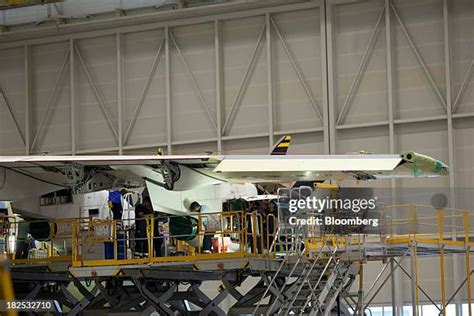
Since its initial €20 billion development contract with OCCAR in 2003, the A400M program has endured cost overruns and delays but has since stabilized. Most capability milestones—including tactical air drop, aerial refuelling, and operations from austere runways—are now certified or nearing final integration.
The 40-tonne payload increase represents a low-risk, high-return modification, enabling Airbus to preserve platform relevance without rebooting its industrial base. More importantly, it offers mission commanders and procurement agencies a clear path to a multi-role, globally deployable transport aircraft with enhanced payload efficiency.
Strategic Conclusion: Versatility as Doctrine
The A400M’s evolution illustrates a broader trend in military and dual-use aviation: modular flexibility over brute strength. In pushing its certified payload to 40 tonnes, Airbus isn’t just increasing numbers on paper—it’s opening doors to entirely new mission paradigms.
From aerial firefighting in Australia, to network-centric command in the Sahel, to missile strikes over contested zones, the A400M is now tailored for a future where aircraft must do more with less.
Airbus has bet wisely on payload scalability as the lever of competitiveness. With this upgrade, the A400M is not merely keeping pace—it’s poised to redefine what a medium-heavy airlifter should be in the next generation of hybrid military and humanitarian missions.