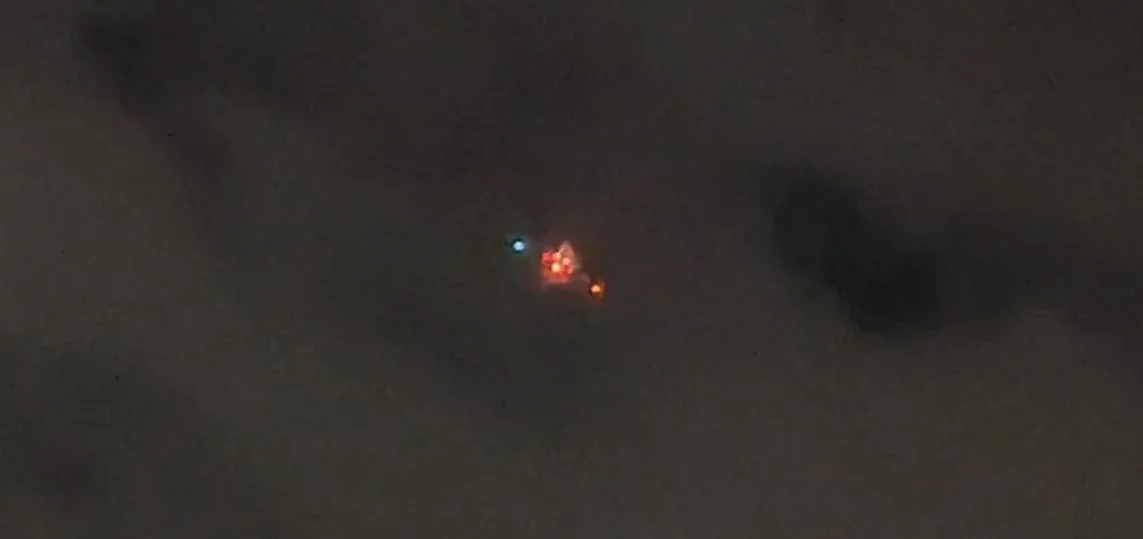
In late 2024 and early 2025, a strange pattern of aerial sightings unfolded across New Jersey and parts of the U.S. East Coast. Dozens of residents reported consistent drone activity, often during nighttime hours, prompting widespread debate. Despite a former high-ranking FAA official stating that there was no solid evidence of large-scale drone incursions, the public discourse, fueled by local testimonies and military silence, has remained divided.
Official Denial Meets Public Confusion
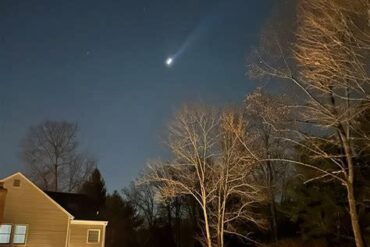
The FAA’s stance, echoed by aviation professionals, emphasized the likely misidentification of normal aircraft—commercial airliners, helicopters, even stars—as drones. This explanation aligns with a common trend of misreporting driven by unfamiliarity with aviation patterns. Indeed, one New Jersey governor mistakenly tweeted about stars being drones, illustrating how easily perception can betray reality.
However, that position hasn’t quelled skepticism. For many, the incidents were too frequent, too widespread, and too structured to dismiss as mass delusion. Several Reddit users, including one with a friend employed at a joint-use military-commercial airport, reported eerie patterns of silence and operational anomalies. That friend, described as someone with high-level security clearance, went dark in communication for 11 days following one of the shutdowns. He gave no explanation, leading peers to conclude that something sensitive and possibly classified had taken place.
A Pattern of Military Silence
Crucially, these events were not isolated. Multiple airspace closures were reported, sometimes accompanied by rapid relocations of military aircraft, including F-35 squadrons. These actions suggested concern at the highest levels, even if public statements remained vague or nonexistent. The suggestion by several posters that the incidents could have involved red team military exercises gained traction, with the theory that simulations were testing how drones could infiltrate U.S. airspace under civilian traffic cover.
Others suspected a more strategic purpose: evaluating the feasibility of smuggling operations, even referencing a scenario involving a compact nuclear device. Though speculative, such scenarios have precedent in military testing and defense simulation.
Surveillance and Cynicism in a Post-Truth Age
Much of the public’s anxiety appears rooted in a broader climate of technological mistrust. Social commentary on the topic highlighted contradictions—citizens express fear of drone surveillance while passively surrendering privacy through smartphones, doorbell cameras, and social media platforms.
This paradox fuels a combustible mix of skepticism and outrage. Some mocked the hysteria as akin to QAnon or Flat Earth beliefs, while others raised concerns about government transparency. When one user sarcastically noted, “If it flies, it spies,” they captured the essence of the cultural anxiety surrounding emerging surveillance technologies.
Clashing Testimonies on the Ground
The discourse was further complicated by conflicting civilian accounts. While one New Jersey native with regular work in the area claimed to know no one who had seen drones, another detailed near-nightly sightings of several drones from November 2024 through spring 2025. According to that account, the drones appeared at consistent time intervals, with peak activity around midnight and just before dawn. These patterns, said to have lasted for months, suggested coordination, not coincidence.
Meanwhile, a drone hobbyist from a town near a reservoir recounted his own sightings—initially deemed strange—only to be debunked when a friend pointed out they coincided with flight paths for Newark (EWR), Teterboro, and long-haul international flights. The implication: some drones weren’t drones at all.
Technical and Military Insights Clash
A significant pivot in the thread came when a former USAF test pilot chimed in, firmly stating that large drone testing does not occur over populated areas. These tests, he claimed, are strictly limited to designated ranges like Patuxent River, Maryland. In contrast, other participants pushed back, arguing that the Navy operates advanced R&D in New Jersey and might deliberately run live exercises in realistic urban environments—because “they know they can get away with it.”
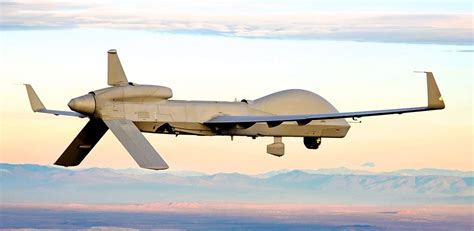
This friction revealed a deeper divide between military protocol and operational reality. Whether it’s ethical or even legal to run surveillance over civilian zones remains debatable. But the question persists: if it wasn’t sanctioned military activity, what was it?
Rebranding UFOs as Drones
One particularly salient theory argued that the military has shifted its terminology from “UFOs” to “drones” to avoid the stigma and media frenzy attached to the former. In this view, drone incursions are not new phenomena but reframed sightings, rebranded for more palatable public digestion.
Others speculated that these sightings could be tied to classified platforms, possibly part of the Collaborative Combat Aircraft (CCA) initiative. The CCA aims to develop AI-enabled autonomous drones to accompany advanced fighter jets such as the F-47. These drones, to be viable in future battlefields, require robust urban and cross-domain training, and civilian airspace might offer just the kind of complex environment needed.
The Problem of Plausible Deniability
Despite widespread theorizing, no company or agency has claimed responsibility for the New Jersey drone activity. Critics argue that commercial drone operators do not conduct repetitive nighttime flights over restricted airspace, and certainly not with drones of significant size. Some Redditors referenced sightings offshore—drones seemingly emerging from the ocean and flying toward land, a tactic aligning eerily well with simulated infiltration scenarios.
One poster shared an anecdote about massive government-labeled crates being transported through a town, escorted by vehicles marked “Special Operations Unit.” Utility crews raised power lines to allow the trucks to pass. The convoy, they claimed, appeared on the same day the sightings ended, hinting at a coordinated extraction of experimental drones.
Civilian Doubt Meets Official Ambiguity
As debate deepened, so did the division between two dominant camps. One, insisting on logic and aviation data, maintained that all of this was mere hysteria—stars and jets mistaken for mystery objects. The other, relying on personal anecdotes and the uncanny silence of those “in the know,” claimed the opposite. For them, the lack of official statements and the overwhelming weirdness pointed to something real and concealed.
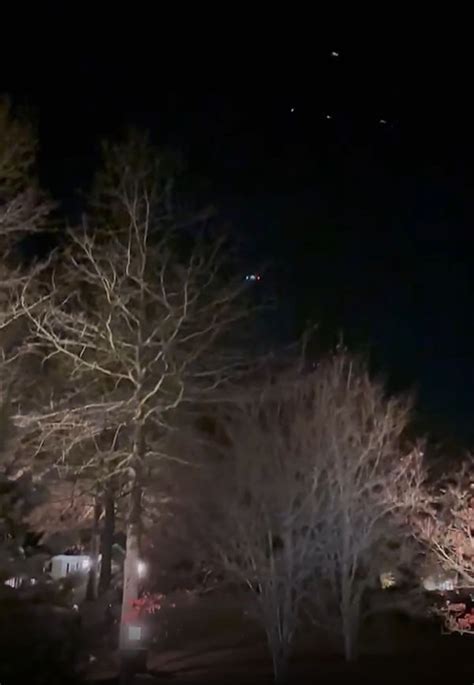
When pressed, defenders of the official line pointed out that the only verified airspace closure due to drones occurred in Ohio in 2024, not New Jersey. Yet, counter-arguments pointed to repeated base-level disruptions and strategic aircraft relocations, none of which align with misidentified stars. “If it was just stars,” one commenter wrote, “why move an entire squadron of F-35s?”
A Battle of Narrative vs. Evidence
Ultimately, the New Jersey drone phenomenon became a cultural Rorschach test. Some saw nothing more than confusion and conspiracy, exacerbated by an internet eager for intrigue. Others saw a smoke screen concealing sophisticated military operations or surveillance testing. Both sides made strong arguments, but the lack of transparency from any official channel has left the debate festering.
Theories ranging from Palantir-led domestic surveillance, to covert nuclear threat detection, to classified drone AI training missions all circulate with no confirmation. Meanwhile, the FAA continues to assert that there’s no credible drone threat in the region, leaving citizens to choose between official comfort and unofficial suspicion.
Conclusion: Truth Still in Holding Pattern
In the absence of firm evidence, the skies over New Jersey remain clouded in uncertainty. Whether the cause was mass hysteria, experimental drone fleets, or strategic defense simulations, the incident underscores a larger issue: the fragility of public trust in an era where secrecy, surveillance, and technology intersect.
We may never know for sure what those lights in the sky were. But in a nation where belief often outpaces evidence, the question may be less about what happened—and more about why so many people are sure it did.