American Airlines has pulled off a striking reversal in the battle for international dominance among U.S. carriers. According to Cirium schedule data, American Airlines operated 138,848 international flights during the first half of 2026, compared with 128,064 for United Airlines. That puts American ahead by 10,784 flights and marks a dramatic change from the second half of 2025, when United held a 4,168-flight advantage.
The numbers are significant, but they need to be understood correctly. This ranking measures international flight departures, not passengers, available seats, revenue, or miles flown. United continues to operate a considerably more long-haul-focused network, meaning its average international flight carries more passengers than an American departure. Still, the shift is not simply a statistical accident. American has been adding meaningful capacity across its international network while United has temporarily reduced some flying in response to higher operating costs.
American Airlines Turns a 3% Deficit Into an 8% Lead
The scale of American’s turnaround becomes clearer when the two six-month periods are placed side by side. During H2 2025, United operated 135,270 international flights while American recorded 131,102. United therefore held a 3.1% advantage. Six months later, American had moved into an 8.4% lead, with 138,848 flights against United’s 128,064.
That represents a 14,952-flight swing in American’s favor. Few changes in the U.S. airline industry happen that quickly at this scale, although seasonality played an important role. American’s network is particularly exposed to winter demand in Mexico, the Caribbean, Central America, and Latin America, markets that generate substantial flying when travelers seek warmer destinations.
The first quarter was therefore especially favorable to American. Between January and March 2026, American operated 69,248 international flights compared with United’s 60,398, giving American a 14.7% advantage. The gap narrowed sharply during the second quarter, however, when American recorded 69,600 flights and United increased its operation to 67,666. American’s lead was just 2.9% by then.
That seasonal pattern matters because United’s network becomes substantially stronger during the peak summer travel period. Its enormous transatlantic operation is built around long-haul markets that expand during the summer months, while American benefits from a broader collection of high-frequency short- and medium-haul international markets.
American’s International Expansion Is About Frequency
One of the most interesting aspects of American’s growth is that it has not depended on launching dozens of entirely new international destinations. The airline added only six new international routes year over year, yet its total international flight count has climbed rapidly because it has increased frequencies on routes already in its network.
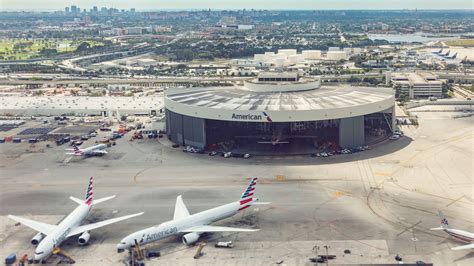
This strategy gives American a distinctive advantage in the flight-count rankings. Its large hubs in Dallas/Fort Worth, Miami, Charlotte, Philadelphia, and New York can support substantial numbers of shorter international sectors. Flights to Canada, Mexico, the Caribbean, and nearby Latin American destinations can be scheduled multiple times a day, creating a long tail of frequent services.
Dallas/Fort Worth-Cancun, for example, generated approximately 2,220 flights in the period covered by the data, while Dallas/Fort Worth-Monterrey produced 2,054. Miami-Havana and Miami-Nassau followed with 1,886 and 1,836 flights respectively. American also maintained strong Canada connectivity, including Chicago-Toronto, Philadelphia-Toronto, New York LaGuardia-Toronto, and Charlotte-Toronto.
These markets may not attract the same attention as a nonstop flight from the United States to Europe or Asia, but they are extremely important to American’s international scale. A high-frequency route operated by a narrowbody aircraft can add hundreds of departures over a season, allowing American to accumulate flight counts faster than an airline concentrating more heavily on long-haul operations.
American Is Also Growing Its Long-Haul Network
It would be misleading, however, to portray American’s international growth as nothing more than an expansion of regional flying. The airline is also strengthening its long-haul schedule, particularly across the Atlantic.
For summer 2026, American added services including Philadelphia-Budapest, Philadelphia-Prague, Dallas/Fort Worth-Athens, Dallas/Fort Worth-Zurich, Miami-Milan, and New York JFK-Edinburgh. The airline says its European schedule has reached as many as 70 daily departures from the United States, while its combined schedule to Italy and Greece has reached a record 18 daily flights.
That combination is important. American is simultaneously adding frequencies in nearby international markets and expanding its presence in major long-haul destinations. The result is a network capable of generating enormous flight volume without depending exclusively on widebody operations.
Its centennial year has also provided a backdrop for what the airline describes as its largest-ever summer schedule. The timing is notable because American is attempting to strengthen its international presence at precisely the moment when United has become more cautious about near-term capacity.
Why United Airlines Temporarily Fell Behind
United’s decline in international flight count does not mean the airline has abandoned its international strategy. Instead, the carrier has made a tactical adjustment to challenging operating economics.
United CEO Scott Kirby told employees in March that the airline would reduce approximately 5% of planned second- and third-quarter capacity, with the reductions concentrated on flying that was temporarily less profitable. Midweek, Saturday, and overnight services were among the areas affected, while some Chicago flying was also reduced.
Higher fuel prices were central to the decision. United’s management essentially argued that there was little financial logic in operating flights that could not generate enough revenue to cover rapidly rising fuel costs. Some Middle East services also remained suspended, further reducing United’s international flight total.
Yet United has not abandoned growth. The airline introduced new summer routes to Split, Bari, Glasgow, and Santiago de Compostela, while expectations remained that a fuller schedule would return in the fall. United is also continuing to take delivery of new aircraft, reinforcing the idea that its capacity reductions are tactical rather than a fundamental retreat from international markets.
This distinction is crucial. American’s rise to No. 1 by flight count is partly the result of American expanding while United temporarily pulls back. It does not necessarily indicate that American has built a larger international passenger operation.
United Still Carries More International Passengers
That becomes obvious when looking beyond the number of departures. Bureau of Transportation Statistics T-100 data for the first half of 2026 show United carrying approximately 18.9 million international passengers, compared with about 17.4 million for American Airlines.
In other words, American operated roughly 8% more international flights, but United carried about 9% more international passengers. The difference reflects the structure of the two networks and the aircraft each airline deploys.
United has historically emphasized long-haul international flying and frequently operates larger aircraft on major transatlantic and transpacific routes. American’s enormous number of international departures includes a much greater proportion of shorter services, where aircraft can complete several international sectors in a single day.
That makes the title of “No. 1 international airline” dependent on the metric being used. By flight count, American currently leads. By international passenger volume, United remains ahead. The same could be true for other measures such as available seat miles or international capacity.
United Retakes the Lead During the Summer
The seasonal nature of the competition becomes even more obvious when looking at the second half of 2026. United is scheduled to operate 68,598 international flights in Q3, compared with 65,882 for American, giving United a 4.0% advantage.
That is the only quarter in the 2026 schedule where United is expected to operate more international flights than American. As winter arrives, however, American is projected to regain the advantage. Q4 schedules show approximately 65,730 American international flights against 64,522 for United.
For the full year, the current schedule points toward 270,460 international flights for American, compared with 261,184 for United. That would give American an estimated 3.6% advantage for 2026.
The full-year result therefore tells a more nuanced story than the headline alone. United can still dominate individual periods, particularly when its transatlantic network reaches peak summer strength. American’s broader exposure to winter sun destinations allows it to build a substantial advantage during the first and fourth quarters.
What American’s No. 1 Ranking Really Means
American Airlines’ rise to the top of the U.S. international flight rankings is more than a temporary statistical curiosity, but it should not be interpreted as a complete reversal of United’s international strength.
American has demonstrated that targeted capacity increases can produce a major change in network scale. By increasing frequencies across Mexico, Canada, the Caribbean, Latin America, and Europe, it has created enough additional flying to overtake United even though United retains a stronger long-haul passenger operation.
United, meanwhile, appears to be prioritizing profitability over short-term flight-count bragging rights. Its decision to trim flights that cannot absorb higher fuel costs may reduce its 2026 schedule temporarily, but the airline continues to invest in aircraft and international expansion.
For American, however, the achievement is still significant. More than 270,000 international flights in a single year would represent an enormous operating footprint, averaging roughly 740 international departures per day. In the fiercely competitive U.S. airline market, that scale matters.
American may not carry the most international passengers, and United’s long-haul network remains formidable. But based on the latest schedule data, American Airlines has seized the No. 1 position by international flight count in 2026. The bigger question now is whether it can turn that impressive increase in flying into equally impressive gains in passengers, revenue, and profitability.