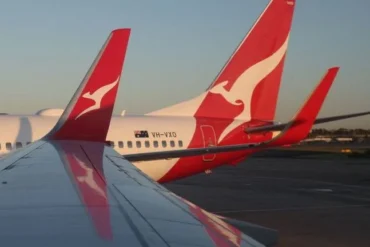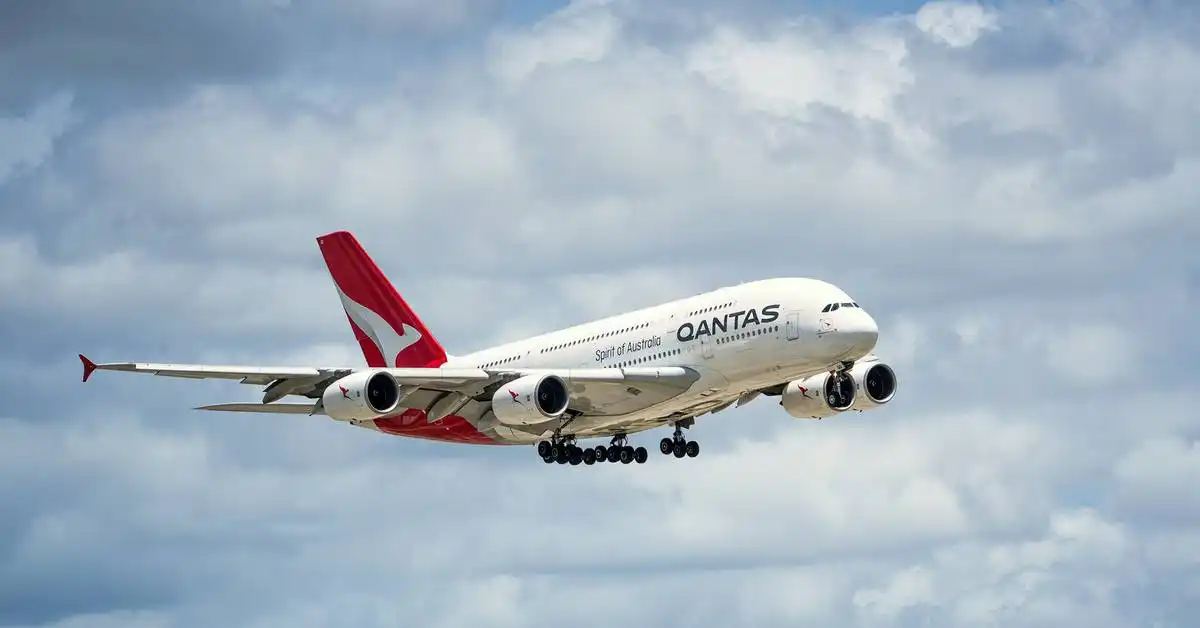
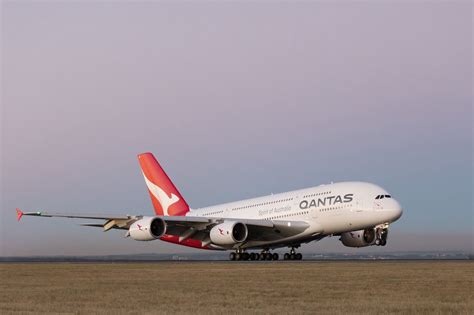
Qantas is making one of its biggest Airbus A380 redeployments in years, and the change says as much about the economics of long-haul flying as it does about the Australian flag carrier’s future strategy. From October, the airline will remove the A380 from its Melbourne–Los Angeles schedule and replace its limited superjumbo operation with the smaller Boeing 787-9. The displaced A380 capacity will instead move to the much shorter Sydney–Singapore route, where Qantas will increase A380 flying to twice daily.
On the surface, this is simply an aircraft assignment change. In reality, it reflects a much broader shift in the transpacific market. Qantas continues to see strong demand for travel from the United States to Australia, but demand moving in the opposite direction has become less balanced, particularly in economy class. At the same time, US airlines have expanded aggressively across Australia, creating a competitive environment that looks very different from the one Qantas faced before the pandemic.
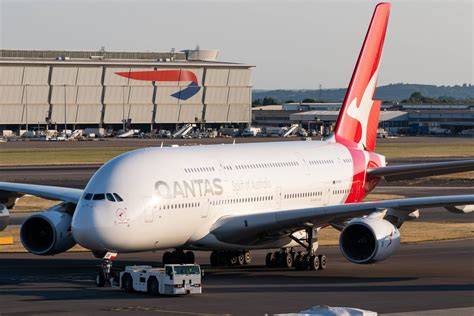
The change is particularly significant because the Airbus A380 remains Qantas’ flagship aircraft, with the airline operating ten examples. The type is still associated with the carrier’s most important international routes, including services connecting Sydney with Los Angeles and Dallas/Fort Worth. Yet the A380 is also an aircraft that demands consistently strong passenger volumes because of its enormous capacity and four-engine operating costs. When demand becomes uneven, the aircraft can quickly become difficult to justify.
That problem is especially visible at Melbourne Airport. Qantas has historically used Melbourne as an important international hub, but its connecting network is smaller than the one centered on Sydney. The airline’s A380 operation between Melbourne and Los Angeles is already relatively limited, with two weekly A380 flights alongside five weekly Boeing 787-9 services. From October, that mixed operation will disappear, leaving the 787-9 to operate the entire seven-flight weekly schedule.
Qantas Moves Its Airbus A380 From Melbourne to Singapore
The aircraft removed from Melbourne–Los Angeles will not simply disappear from the Qantas network. Instead, Qantas will deploy the freed-up A380 capacity on Sydney–Singapore, increasing A380 operations on the route to twice daily.
This is an important distinction. Qantas is not abandoning the A380 because it has suddenly become useless. Rather, it is moving the aircraft toward a market where its large capacity is easier to support economically. Singapore is a major Qantas destination, and the Sydney–Singapore sector is only around half the length of the Melbourne–Los Angeles journey.
That difference matters enormously when fuel prices are elevated.
Qantas already operates one daily A380 from Sydney to Singapore that continues onward to London. The second daily service has historically alternated between the A380 and Airbus A330. Under the new arrangement, the second frequency will use the A380 every day, giving Singapore a more consistent superjumbo presence.
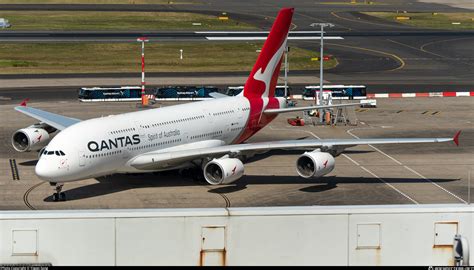
The redeployment therefore creates a much more logical use of the aircraft. The A380 can carry hundreds of passengers while offering Qantas a large premium cabin, but its enormous physical size and four engines make it particularly sensitive to fuel prices and weak load factors. Putting that capacity on a shorter, high-demand regional international route reduces some of the financial pressure associated with using it on an ultra-long transpacific sector.
Why the Melbourne–Los Angeles Route Has Become More Difficult
The Melbourne–Los Angeles route is not necessarily a poor route. The issue is that the A380 may be too large for the demand profile Qantas is seeing today.
Qantas’ first-half 2026 results indicated strong demand for travel from the United States to Australia. However, much of that demand is being captured by US carriers, while Qantas has experienced weaker economy-class demand in the opposite direction. This creates an unusual imbalance for an airline that historically relied heavily on two-way traffic across the Pacific.
The distinction between premium and economy demand is crucial. Qantas has a large premium proposition, including First Class, Business Class and Premium Economy, and those cabins can generate significant revenue. But an aircraft such as the A380 also has 341 economy seats in Qantas’ configuration.
Those seats need to be filled, and preferably filled at fares that support the aircraft’s much higher operating costs.
The Boeing 787-9 provides Qantas with a fundamentally different capacity profile. It does not have a First Class cabin and carries fewer Business and Premium Economy seats, but it also has 175 fewer economy seats than the A380. That reduction gives the airline considerably more flexibility when economy demand is soft.
Instead of trying to stimulate enough demand to fill a very large aircraft, Qantas can operate a smaller aircraft with fewer seats and potentially protect yields more effectively.
The change also demonstrates why aircraft size is not simply a question of passenger numbers. An airline can lose some premium capacity when moving from an A380 to a 787, but if the alternative prevents hundreds of lower-yield seats from going empty, the smaller aircraft may produce a better economic result.
Qantas Faces A Much Larger US Airline Presence
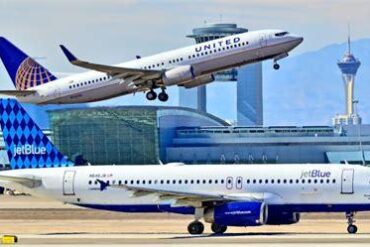
Qantas’ transpacific challenge cannot be understood without looking at the expansion of Delta Air Lines and United Airlines.
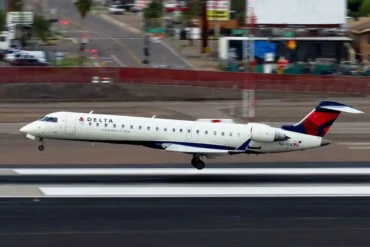
Before the pandemic, Delta’s Australian network was much smaller. In 2019, it operated a single nonstop Australian route, connecting Los Angeles with Sydney using the Boeing 777-200LR. Today, Delta operates as many as two daily flights between Los Angeles and Sydney and also serves Melbourne and Brisbane.
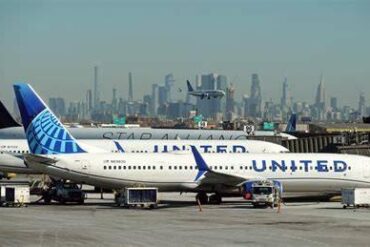
United Airlines has expanded even more broadly. In 2019, its Australian network included Sydney from Los Angeles, San Francisco and Houston, while Melbourne was served from Los Angeles and San Francisco. Its network now includes Brisbane and Adelaide from San Francisco, alongside additional frequencies and larger aircraft on established routes.
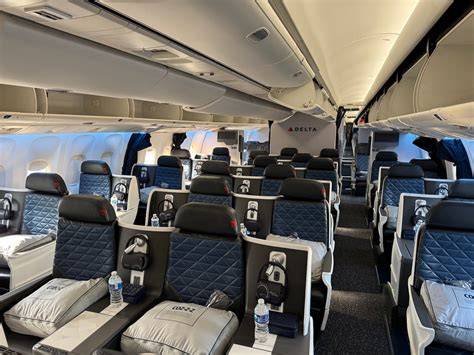
This expansion changes the competitive landscape for Qantas because the growth has not been evenly distributed across both directions. The increase in transpacific demand has been particularly strong from the United States side, meaning US carriers are well positioned to capture American travelers heading toward Australia.
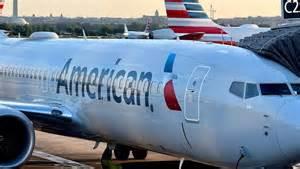
Qantas and American Airlines have an important advantage through their metal-neutral joint venture. The two carriers effectively coordinate their transpacific operations, giving Qantas access to American’s US network while allowing the partnership to offer a broader schedule.
American operates a second daily Sydney–Los Angeles service with a Boeing 777-300ER alongside Qantas. It also operates a seasonal Brisbane–Dallas/Fort Worth route using the 787-9.
Yet Qantas is still competing against US airlines that have substantially increased their own Australian footprints.
Qantas’ Five US Destinations Remain Strategically Important
Despite the adjustments, the United States remains one of Qantas’ most important international markets.
The airline currently serves five US destinations from Australia: Honolulu, Los Angeles, San Francisco, Dallas/Fort Worth and New York JFK. Sydney serves all five, while the New York service operates through Auckland. Melbourne serves Los Angeles and Dallas/Fort Worth nonstop, while Brisbane also has nonstop service to Los Angeles.
The network demonstrates that Qantas is not retreating from the United States. Instead, it is becoming more selective about where it deploys its largest aircraft.
Sydney has an obvious advantage because it is Qantas’ largest hub. The airport provides a much deeper local market and connecting network, making it easier to support high-capacity aircraft. Los Angeles and Dallas/Fort Worth are also among Qantas’ most important US destinations.
Melbourne is different. Although it is a major Australian city and an important Qantas base, its connecting opportunities are not as extensive as Sydney’s. That makes the economics of placing an A380 there more dependent on local demand.
When local economy demand weakens, the distinction becomes increasingly important.
Why the Boeing 787-9 Fits the Current Market
The Boeing 787-9 has become one of the most useful tools in Qantas’ international fleet because it combines long-range capability with substantially lower capacity than the A380.
That flexibility is particularly valuable on routes where demand is strong enough to justify daily long-haul service but not consistently strong enough to fill a superjumbo.
Former Qantas CEO Alan Joyce once noted that operating two Boeing 787s could be cheaper than operating one A380. The statement does not mean two 787s automatically generate the same revenue as an A380. The A380 has a large premium cabin and can generate substantial revenue when demand is strong.
However, operating economics have become more important as the global aviation industry has faced higher fuel costs.
For Qantas, this makes the 787-9 especially attractive on marginal long-haul routes. The airline can maintain daily connectivity while reducing the number of seats it needs to sell.
That is exactly the kind of flexibility required on Melbourne–Los Angeles.
Higher Fuel Prices Make The A380 Harder To Justify
Fuel has become one of the most important factors behind Qantas’ changing A380 strategy.
The airline’s superjumbos were designed for markets where enormous passenger volumes could compensate for the aircraft’s four-engine fuel consumption. When fuel was relatively inexpensive and demand was consistently strong, the A380 could produce compelling economics through sheer scale.
The situation is different when fuel prices approach $100 per barrel.
The Melbourne–Los Angeles sector covers approximately 6,883 nautical miles, or 12,748 kilometers, making it an exceptionally long flight. Every additional unit of fuel consumption becomes more consequential on such a route.
The Sydney–Los Angeles and Sydney–Dallas/Fort Worth A380 services can continue to make sense because they have stronger demand profiles and benefit from Sydney’s position as Qantas’ primary hub. Melbourne–Los Angeles is more marginal.
That does not mean the route itself is disappearing. The seven weekly flights will continue. What changes is the aircraft operating them.
This is an important example of how airlines respond to changing economics without necessarily cutting connectivity. Qantas can retain the route while reducing its exposure to the cost of operating an enormous four-engine aircraft.
The A380 Is Now On A Faster Retirement Path
The Melbourne redeployment is also taking place against the backdrop of a much bigger decision: Qantas plans to retire its Airbus A380 fleet earlier than previously expected.
The airline operates ten A380s alongside 29 Airbus A330s and 14 Boeing 787s. Its future fleet includes orders for 24 Airbus A350s, comprising A350-1000 and A350-1000ULR aircraft, as well as additional Boeing 787s.
Originally, Qantas expected its A380s to remain in service into the early 2030s, with retirement beginning around 2032. The airline has now accelerated that timeline, with the final A380 expected to leave service in mid-2028.
That decision fundamentally changes how the remaining superjumbos should be viewed.
Rather than investing heavily in preserving an extensive network of A380 routes, Qantas is increasingly concentrating the aircraft where its capacity can be used most efficiently during the final phase of its career.
The Singapore redeployment fits that strategy perfectly.
Project Sunrise Will Change Qantas’ Long-Haul Fleet
The A380 retirement also cannot be separated from Project Sunrise, Qantas’ plan for a new generation of ultra-long-haul services.
The Airbus A350-1000ULR aircraft ordered by Qantas will provide the airline with capabilities that the A380 cannot match in terms of nonstop ultra-long-haul operations. Rather than depending on a huge aircraft to move large numbers of passengers through traditional hubs, Qantas will increasingly use smaller, highly capable aircraft to connect Australia directly with distant markets.
This represents a major shift in the airline’s international strategy.
The A380 was built around scale. Project Sunrise is built around range and nonstop connectivity.
That does not make one approach universally superior. They serve different market conditions. The A380 remains useful where passenger volumes justify its enormous capacity, while the A350-1000ULR can open markets where demand may be insufficient for an A380 but valuable enough to support a nonstop premium-heavy service.
Qantas’ fleet evolution therefore reflects the changing economics of long-haul aviation rather than simply a preference for one aircraft type.
What The A380 Redeployment Says About Qantas’ US Strategy
The removal of the A380 from Melbourne–Los Angeles is a relatively small operational change compared with the size of Qantas’ overall network, but it reveals several important trends.
First, US demand remains strategically important, and Qantas is not abandoning its American network. Second, the airline is facing stronger competition from Delta and United than it did before the pandemic. Third, traffic patterns are uneven, with strong US-origin demand not necessarily translating into equally strong Australian-origin economy demand.
Finally, Qantas is becoming more disciplined about matching aircraft size to demand.
The A380 will continue to serve important markets, particularly from Sydney. But its future is now measured in months and years rather than decades. Every redeployment matters because the airline has only ten examples remaining, and their retirement is already scheduled for 2028.
The move from Melbourne–Los Angeles to Sydney–Singapore therefore represents more than a simple aircraft swap. It is a snapshot of Qantas’ broader transition from the capacity-heavy A380 era toward a more flexible long-haul fleet built around the 787, A350 and Project Sunrise.
For passengers, the Melbourne–Los Angeles route will still operate daily. What changes is the size and character of the aircraft providing that service. For Qantas, however, the decision reflects a deeper calculation: when economy demand weakens, fuel prices remain elevated and US competitors expand aggressively, the biggest aircraft in the fleet can no longer automatically be assumed to be the best aircraft for the job.