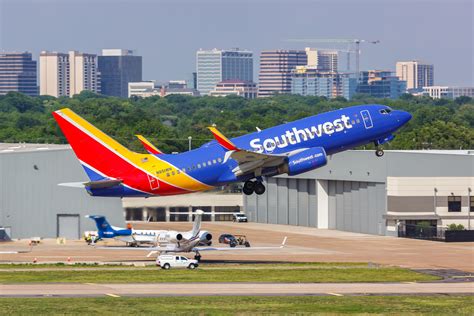
Southwest Airlines, the largest domestic carrier in the United States, is grappling with a serious profitability challenge as weak travel demand continues to strain its financial performance. The Texas-based airline reported lackluster second-quarter earnings, with profit and revenue both falling short of Wall Street expectations, underscoring deeper concerns about its ability to sustain growth in a sluggish domestic market.
Earnings Miss Exposes Struggles in a Challenging Market
Southwest reported an adjusted profit of just $0.43 per share for the second quarter, missing analysts’ estimates of $0.51 per share, according to LSEG data. Operating revenue totaled $7.24 billion, falling slightly below the anticipated $7.29 billion. These results reflect a 3% year-over-year decline in unit revenue, a key measure of airline profitability, driven by a significant drop in passenger volumes and mounting pressure on average ticket prices.
The disappointing quarter prompted Southwest to slash its 2025 earnings target, now forecasting between $600 million and $800 million in earnings before interest and taxes (EBIT)—a staggering downgrade from its previous projection of $1.7 billion. The adjustment highlights the severity of the revenue shortfall and signals that the airline’s recovery remains fragile.
Weak Travel Demand Forces Aggressive Discounting
Historically, summer has been a peak profit season for U.S. carriers, but Southwest’s low-cost model has been severely challenged by subdued demand for standard economy fares. In a bid to attract price-conscious travelers, the airline implemented fare discounts across its domestic network. However, these discounts, while boosting bookings in certain markets, significantly reduced its pricing power and hurt overall revenue per seat.
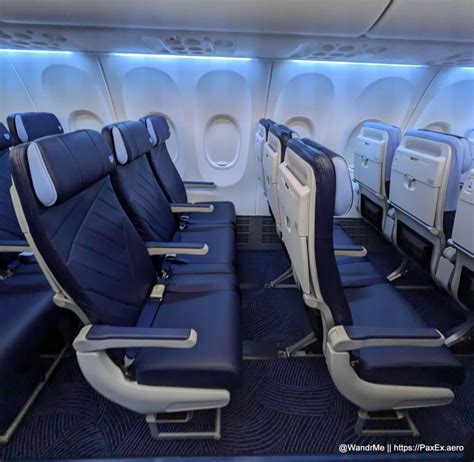
This struggle is emblematic of broader economic uncertainty impacting U.S. travel, exacerbated by rising living costs and lingering trade tensions under President Donald Trump’s administration. While major carriers like Delta Air Lines and United Airlines have successfully leveraged premium cabins to drive revenue growth, Southwest’s focus on budget-conscious passengers has limited its ability to offset revenue declines with high-margin offerings.
New Fare Structures and Fees: A Double-Edged Sword
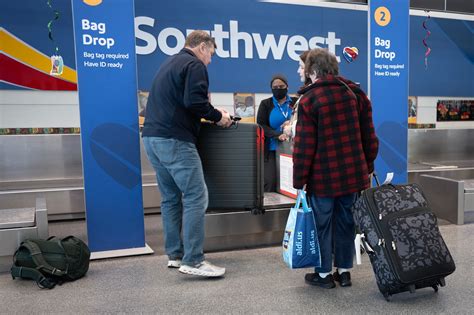
To counter revenue erosion, Southwest has taken the unprecedented step of introducing fees for checked baggage—a significant departure from its long-standing “Bags Fly Free” policy. The company also rolled out a basic economy fare class to attract cost-sensitive travelers. While revenue from baggage fees exceeded internal projections, the basic economy product underperformed, leading to a negative impact on overall unit revenue during the quarter.
Despite these measures, Southwest warned that non-fuel operating costs are expected to rise by up to 5.5% in the third quarter compared to last year, further pressuring margins. With no immediate plans to adjust flight capacity, the airline’s ability to generate significant revenue improvements in the near term appears limited.
Industry-Wide Headwinds and Competitive Pressures
The broader U.S. airline industry is facing similar headwinds, though competitors have fared better in key segments. Delta and United reported robust premium-class performance, thanks to a surge in high-yield business and leisure travelers willing to pay for upgrades. Meanwhile, Alaska Airlines and United have reported modest upticks in bookings, hinting at some recovery momentum that Southwest has yet to fully capture.
Unlike its rivals, Southwest’s point-to-point network structure and dependence on domestic leisure travel make it more vulnerable to shifts in consumer behavior. With price-sensitive travelers cutting back on discretionary spending, low-cost carriers like Southwest are under heightened pressure to balance affordability with profitability.
Downgraded Outlook and Investor Anxiety
The downward revision of its earnings target has amplified investor concerns about Southwest’s future profitability. Analysts point to the airline’s inability to restore pre-pandemic revenue levels as a sign that its current business model may require a significant overhaul. The company has already withdrawn its full-year financial guidance, citing ongoing uncertainty in the travel market, making it difficult to forecast performance with any degree of confidence.

Southwest executives remain cautiously optimistic about the second half of the year, citing stabilization in domestic leisure demand after a steep decline in March and April. However, the airline’s unit revenue guidance for Q3 reflects persistent volatility, projecting a potential fluctuation between a 2% decline and a 2% increase compared to the same period last year. This limited range underscores the unpredictability of travel demand in a fragile economy.
Can Strategic Adjustments Save Southwest?
Southwest’s leadership is banking on industry-wide efforts to manage seat availability and reduce fare wars as a way to restore pricing power. Yet, with capacity expected to remain flat in the third quarter and cost pressures continuing to rise, it is unclear whether such adjustments will be enough to reverse the airline’s financial trajectory.
Some industry experts argue that Southwest must accelerate its diversification strategy, possibly expanding into premium products or enhancing ancillary revenue streams to capture higher-spending travelers. Others emphasize that efficiency improvements and operational cost controls will be critical to navigating the near-term turbulence.
A Pivotal Moment for the Nation’s Largest Domestic Carrier
As Southwest prepares to discuss its earnings in detail with analysts, it faces mounting pressure to articulate a clear path toward sustainable profitability. With domestic demand growth plateauing, competition intensifying, and operational costs climbing, the airline’s next steps will likely define its competitive positioning for years to come.
For an airline long celebrated for its customer-friendly policies and operational resilience, this latest earnings report signals a critical inflection point. Without bold strategic moves, Southwest risks losing its edge in an industry increasingly shaped by pricing agility, premium product differentiation, and evolving traveler expectations.
The coming months will test whether Southwest’s legacy of low-cost leadership can withstand the pressures of a changing market—or if a fundamental business model transformation is the only path forward.