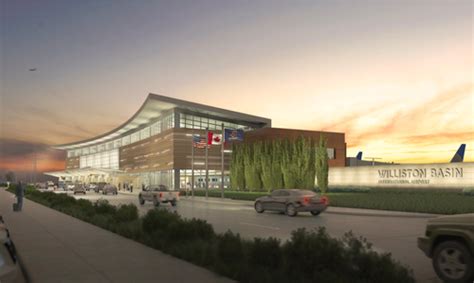
Regional aviation has always depended on a delicate balance between accessibility and commercial viability. While major international hubs process tens of millions of passengers annually and can absorb fluctuations in travel demand, smaller regional airports operate under far tighter margins. A relatively small decline in passenger numbers can quickly transform a once-successful route into an unprofitable operation. That economic reality is now playing out in western North Dakota, where Delta Air Lines has confirmed it will discontinue its long-standing service between Williston Basin International Airport (XWA) and Minneapolis–Saint Paul International Airport (MSP).
The decision marks the end of nearly fourteen years of continuous Delta operations in Williston, bringing an important chapter in the region’s aviation history to a close. Airport officials have openly described the development as disappointing, acknowledging that despite efforts to preserve the route, passenger demand simply failed to remain strong enough to justify continued service.
Delta Air Lines Will Exit Williston in September
Delta’s final scheduled flight between Williston and Minneapolis will operate on September 7, ending a route first introduced in November 2012. Throughout its operation, the service provided residents of western North Dakota with direct access to one of Delta’s largest connecting hubs, opening convenient connections to more than one hundred domestic and international destinations.
For local travelers, the route eliminated lengthy drives to larger airports while offering seamless access to Delta’s extensive worldwide network. Losing that convenience represents a significant change for both business and leisure passengers who have relied on the service for more than a decade.
Airport leadership admitted the announcement was difficult but recognized that airlines ultimately make network decisions based on commercial performance rather than community importance alone.
After years of evaluating traffic trends, Delta determined that maintaining the route no longer aligned with its broader network strategy.
Falling Passenger Numbers Undermined Long-Term Sustainability
Every airline regularly reviews route profitability using a combination of passenger demand, operating costs, aircraft utilization, and expected revenue. Even flights considered strategically valuable may be discontinued if they consistently fail to generate acceptable financial returns.
Officials at Williston Basin International Airport acknowledged that the Minneapolis service had struggled to reach sustainable passenger levels over an extended period. Although SkyWest Airlines continued operating approximately 20 weekly departures on Delta’s behalf, concerns surrounding the route’s future had already emerged months before the official announcement.
Recognizing the growing uncertainty, city and county leaders previously approved financial assistance worth up to $2.7 million in an effort to help preserve the connection. Despite those measures, the economics ultimately proved insufficient.
Airport Director Ryan O’Rear summarized the community’s reaction by describing the loss as disappointing for travelers who had depended on Delta service over many years.
Delta also emphasized that network adjustments are part of its routine planning process, explaining that customer travel preferences continually influence where aircraft and resources are deployed. Passengers affected by the cancellation will receive alternative travel options through the airline.
Regional Aircraft Economics Leave Little Margin for Error
Unlike major trunk routes served by large narrow-body or wide-body aircraft, regional markets often rely on smaller jets carrying only 50 to 70 passengers. These aircraft offer valuable connectivity for smaller communities but leave airlines with very little room for weak bookings.
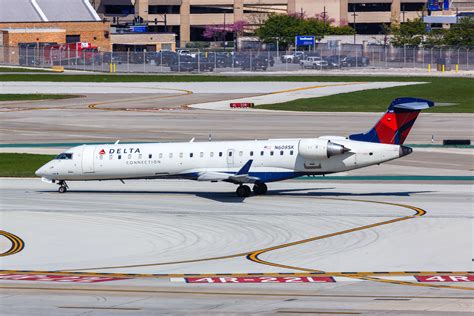
The Williston route had increasingly been operated using the Bombardier CRJ700, configured with 50 seats, including 10 First Class and 40 Economy seats. While suitable for smaller markets, such aircraft require consistently healthy load factors to remain economically viable.
Even modest reductions in average passenger numbers can significantly affect operating margins. Rising labor costs, maintenance expenses, fuel prices, and fleet optimization strategies have further increased pressure on airlines to concentrate regional aircraft where they generate the strongest financial performance.
These realities have become increasingly common across North America as carriers streamline networks and maximize fleet efficiency.
The End of Delta’s Presence in Williston
Once the final flight departs in September, Delta will no longer maintain any scheduled operations in Williston. The Minneapolis route represented the airline’s only destination from the city, making the withdrawal a complete exit from the local market.
The route itself covered approximately 554 miles (890 kilometers) with an average flight time of roughly one hour and 23 minutes. Although relatively short, it played an important role by linking western North Dakota directly to one of the busiest connecting airports in the United States.
When the route first launched, regional economic conditions looked considerably different. The Bakken oil boom generated rapid business growth throughout the area, increasing corporate travel demand and supporting expanded airline services. As energy-sector activity gradually stabilized over subsequent years, passenger demand also evolved, reducing the volume of travelers needed to sustain multiple regional air connections.
The changing economic landscape ultimately influenced airline planning decisions as travel patterns shifted away from previous highs.
What Delta’s Departure Reveals About Regional Aviation
Williston’s experience reflects a broader transformation occurring across the regional airline industry. Airlines continue reporting strong overall passenger growth worldwide, yet that expansion has not benefited every individual market equally.
Instead, carriers increasingly prioritize larger metropolitan regions and high-demand routes where aircraft can operate more efficiently and generate stronger financial returns. Smaller communities, despite their importance to local economies, often struggle to compete for limited regional aircraft capacity.
This trend has resulted in numerous service reductions throughout North America as airlines carefully evaluate each route’s long-term profitability.
Regional partners remain central to this strategy. SkyWest, one of North America’s largest regional airline operators, continues transporting tens of millions of passengers annually on behalf of major airlines including Delta and United. However, even experienced regional operators cannot overcome persistent demand challenges if passenger volumes remain below sustainable thresholds.
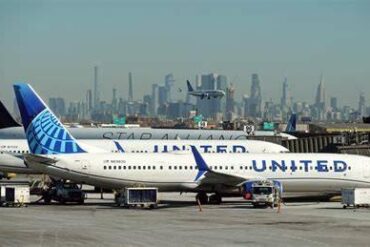
Williston will not lose all commercial connectivity. United Airlines will continue serving the airport through its Denver operation, preserving access to a major connecting hub and allowing travelers to reach destinations throughout the United States and internationally.
Although Delta’s departure represents a significant loss for the community, it also illustrates the increasingly competitive economics shaping modern regional aviation. For smaller airports, maintaining reliable airline service depends not only on infrastructure or public support but ultimately on consistent passenger demand capable of sustaining profitable operations over the long term.