
Delta Air Lines often projects the image of a globally confident carrier, but beneath the polished brand and fortress hubs lies a quieter story told by numbers. In the 12 months ending October 2025, Delta carried 29.1 million international passengers, a respectable figure that nonetheless trails American Airlines’ 37.6 million and United Airlines’ 38.2 million. Capacity discipline is usually Delta’s strength, yet a closer look at US Department of Transportation data reveals a small cluster of international routes where demand struggled badly. These are not marginal underperformers; some flights departed with nearly half their seats empty, a startling contrast to Delta’s otherwise healthy 85.1% average international seat load factor.
What makes these routes especially intriguing is their diversity. They span short Caribbean hops, niche African services, leisure-heavy transatlantic experiments, and even ultra-long-haul Pacific flying. To avoid distortions from one-off charters, only airport pairs with at least 3,000 round-trip passengers were included. The result is a clean snapshot of where Delta’s international network bent, and in some cases broke, under market pressure.
At the bottom of the list sits New York JFK–Kingston, with a stark 52.0% seat load factor and just 3,121 round-trip passengers. The route ended in January 2026, and timing mattered. Jamaica’s hurricane disruptions weighed heavily on demand, turning an already thin market into a near-empty cabin problem. Slightly higher but still troubling was JFK–Lagos at 56.7%, a route that returned briefly in late 2024, disappeared again after March 2025, and now survives as a short holiday-season operation. Despite Nigeria’s strong long-term potential, inconsistent scheduling and heavy competition undermined sustained traffic.
The Caribbean dominates much of the emptiest list, underscoring how fragile seasonal leisure routes can be. JFK–Barbados (62.4%), JFK–St. Kitts (64.6%), and JFK–Antigua (66.3%) all operated mainly as weekly seasonal services. Even small shifts in vacation trends can dramatically skew load factors when frequencies are low. From the Midwest, Minneapolis–St. Maarten (63.9%) and Minneapolis–Mazatlán (64.0%) tell a similar story. Both routes returned in December 2024 after suspensions, and both suffered from limited brand awareness in those leisure markets, compounded by cautious frequencies that restricted pricing flexibility.
One route stands apart for its sheer scale: Miami–Havana. Despite carrying a massive 137,046 round-trip passengers, it still posted a weak 59.7% load factor during the examined period. The explanation lies in overcapacity. Delta operated double-daily flights, flooding the market with seats. Since then, frequencies have been reduced to daily, a strategic retreat likely to lift loads without abandoning a politically and culturally important route.
The most strategically puzzling entry was Orlando–London Heathrow, which averaged just 64.8% before ending in March 2025. Orlando is not a Delta hub, and the route leaned heavily toward price-sensitive leisure travelers. Premium demand, the lifeblood of transatlantic profitability, was thin. More critically, the market was already dominated by Virgin Atlantic, Delta’s own SkyTeam partner and joint venture ally. Virgin filled 86.7% of its seats over the same months, benefiting from far stronger UK brand recognition. Delta’s three-weekly Airbus A330-900 service never stood a realistic chance, and its quiet withdrawal underscored the limits of network experimentation.
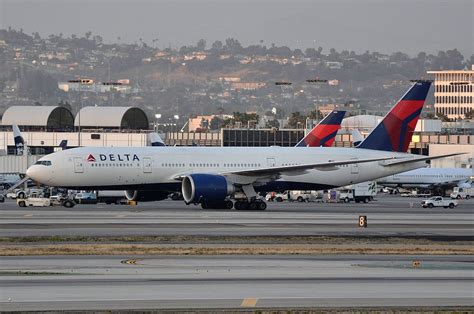
At the long-haul extreme, Los Angeles–Papeete (Tahiti) delivered a 66.9% load factor before ending in June 2025. Ultra-long leisure routes are notoriously volatile, and Tahiti suffered from rapid capacity growth across the US–Pacific market. Delta’s exit coincided with broader pressure on Oceania services, where its overall load factor sank to 77.5%, the weakest of any region in its international network.
What these ten routes collectively reveal is not strategic failure but strategic tension. Delta’s strongest hubs—Atlanta, Detroit, Salt Lake City, and Seattle—are entirely absent from the list. Weak performance clustered instead around non-hub cities, experimental leisure markets, and heavily seasonal flying. Regionally, the contrast is sharp. Central America led with 90.0%, followed by Mexico (87.1%), South America (86.7%), and Europe (85.8%). Even Africa, often considered challenging, averaged 79.1%, well above several Caribbean routes.
In aviation, empty seats speak louder than marketing slogans. These underperforming routes illustrate how even a disciplined carrier like Delta can misjudge timing, geography, or competitive dynamics. The lesson is clear: international growth rewards precision, not ambition alone. Delta’s willingness to cut, pause, or reshape these services suggests a network constantly under revision, a living system that learns, retreats, and recalibrates. In a world where a few percentage points can decide profitability, 52% full is not just a statistic—it is a warning flare visible from cruising altitude.