Breeze Airways likes to move fast. In just a few years, the carrier has stitched together a web of thin, often unserved city pairs, betting that convenience and low fares can awaken latent demand. The growth has been real and loud. Over the twelve months ending November 2025, Breeze carried just over six million passengers, a near 49% jump year over year. Capacity grew almost as quickly, which kept the airline’s overall seat load factor at a respectable 77.4%. That’s slightly below the US domestic average, but healthy for a young airline still tuning its map. The twist in the tale lives in the corners of that map, where some routes limp along with cabins that look more like empty libraries than bustling airplanes.
The emptiest routes reveal a quiet truth about airline strategy: growth is easy to announce and hard to fill. Breeze’s model favors thin markets, places where travelers used to stitch together awkward connections or drive long distances to larger airports. In theory, nonstop service unlocks pent-up demand. In practice, demand does not always show up on schedule. Across more than 267 routes analyzed between December 2024 and November 2025, ten links sank far below the airline’s average load factor, some struggling to fill even half their seats. These aren’t random blips. They are structural stress tests for a network that leans into experimentation, subsidies, and the hope that time will turn curiosity into habit.
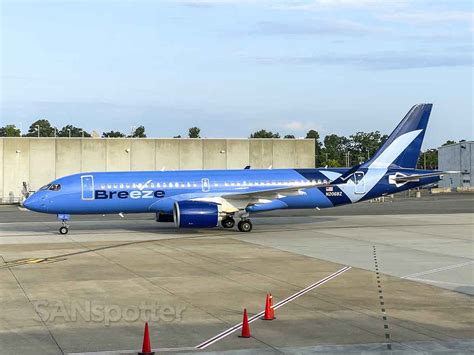
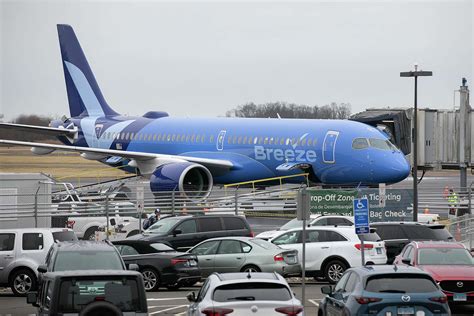
The headline case is Washington Dulles to Ogdensburg, a curious line drawn from a global gateway to a tiny town near the Canadian border. Breeze entered the market in late September 2024 with 137-seat Airbus A220-300s, a sleek jet that feels comically oversized for a place where air service lives and dies by subsidies. Over the following year, the route averaged a startling 24.7% load factor. Some winter months dipped into the low teens, the kind of numbers that make revenue managers wince and accountants reach for aspirin. The flights often featured bargain fares that flirted with impulse-buy territory, yet seats stayed empty. That emptiness tells a story about elasticity: cheap tickets can awaken demand only when demand is asleep, not when it barely exists.
This is where context matters. Ogdensburg is supported by Essential Air Service funding, which cushions airlines from the raw economics of sparse demand. Breeze receives roughly $18 million through September 2026 to keep the route alive. The subsidy explains the courage to deploy a large aircraft into a tiny market, but it also highlights the risk of mismatched tools. United Express once served Ogdensburg with 50-seat regional jets and still struggled to fill them. Breeze’s A220 brings range, comfort, and efficiency, yet it multiplies the pain of empty seats. The route has already been trimmed from daily service to a reduced schedule, a tacit admission that even subsidized flying has a breaking point. Subsidies buy time, not passengers.
Other underfilled routes sketch different kinds of friction. Orange County to Montrose and Raleigh/Durham to Ogdensburg point to the challenge of persuading leisure travelers to adopt unfamiliar pairings. Tweed New Haven to Jacksonville and Fort Myers expose the limits of secondary airports when the sunbelt already brims with alternatives. Orlando to Mobile, which has already ended, shows how quickly thin leisure routes can wither when novelty fades and schedules wobble. In each case, the numbers whisper the same lesson: nonstop service is not a spell that conjures demand. It is an invitation, and invitations are declined more often than airlines admit.
The strategic tension here is deliciously nerdy. Breeze’s brand promise is about bypassing hubs and friction, threading direct lines between cities that legacy networks ignore. The bet is that enough people value the convenience to sustain year-round service. The emptiest routes argue that seasonality, awareness, and airport gravity still rule. A route like Raleigh/Durham to Key West can pop during peak travel windows and sink when calendars flip. Richmond to Charleston, South Carolina, has survived since 2021 but remains stubbornly thin, suggesting that proximity and driving alternatives can quietly sabotage air demand. The physics of geography do not negotiate with marketing copy.
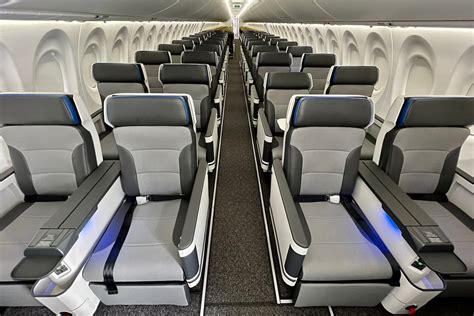
Aircraft choice amplifies every success and failure. The A220-300 is a technological sweetheart: long legs, gentle fuel burn, and a cabin that feels premium in an era of shrinking seat pitches. It is also a blunt instrument for micro-markets. Fill 34 seats on a 137-seat jet and the load factor looks tragic, even if the absolute number of travelers exceeds what older regional aircraft once carried. This is not just optics. Costs scale with size, and revenue must chase them uphill. Breeze’s willingness to test routes with a uniform fleet simplifies operations but raises the stakes of every experiment. Thin markets prefer surgical tools.
There is a hopeful read of the data. Many of these routes are young, some launched late in the measurement window. Awareness takes time to diffuse through communities that have learned to route their trips through hubs. Frequency cuts can stabilize yields, marketing can sharpen its aim, and schedule tweaks can align with local rhythms. Breeze has already shown it can prune aggressively, slashing a large share of routes in the past year to protect the core. The emptiest ten are not verdicts; they are early diagnostics. Airlines evolve by running controlled failures in public view, then keeping the ones that learn fastest.
The larger story is not about embarrassment. It is about how a young airline maps demand in a country where mobility is abundant but attention is scarce. Subsidies, novelty, and sleek jets can open doors, but sustained demand grows from habit, trust, and fit. Routes that respect local travel patterns, connect into broader networks, or capture strong seasonal flows tend to thicken over time. Routes that fight gravity thin out, quietly at first, then abruptly when schedules vanish from booking screens. Breeze’s emptiest routes are the network’s pressure points, the places where ambition collides with reality. The collision is not failure. It is the sound of a strategy being tuned in real time, in a sky that rewards curiosity but charges rent for every empty seat.