At a pivotal moment in the fiercely competitive aviation sector, United Airlines is consciously stepping away from the long-standing battle for margin dominance. Under the leadership of CEO Scott Kirby, the airline is redefining its strategic compass, focusing not on beating rivals like Delta Air Lines at their own game, but on forging a more sustainable and loyalty-driven path to profitability. This recalibrated vision, introduced during United’s Q2 2025 earnings call, signals a deep shift in the airline’s operational and philosophical priorities.
A Loyalty-Led Strategy: Redefining the Traveler’s Experience
Rather than obsessing over quarterly comparisons, United is leaning into what Kirby describes as “absolute profitability” — a strategy that emphasizes long-term customer loyalty, operational dependability, and premium service. This pivot is tangible in the way United is reshaping its high-end offerings.
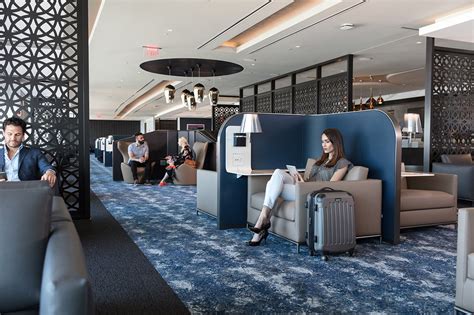
From the elevated Polaris business-class suites on international flights to revamped airport lounges in global hubs like San Francisco (SFO), Newark (EWR), and Washington Dulles (IAD), United is chasing the kind of brand loyalty that has historically been Delta’s domain. These hubs are not just operational epicenters — they are strategic gateways to affluent urban markets and vital international corridors.
Kirby’s emphasis is not merely aesthetic. Every element — upgraded cabin features, enhanced in-flight service, and digital personalization tools — is designed to appeal to frequent flyers who prize consistency, comfort, and reliability over bargain-basement fares. In doing so, United seeks to build a repeat-customer ecosystem, mirroring Delta’s success without replicating its tactics.
Disrupting the Playbook: A Strategic Refusal to Compete Head-to-Head
What sets this evolution apart is Kirby’s explicit disinterest in direct competition. He openly acknowledges Delta’s higher margins and successful business model but rejects the need to chase them. Instead, he argues that United’s unique strengths — its dense, urban-centric network and loyal customer base — provide a different but equally potent foundation for success.
Kirby’s vision disrupts the traditional airline competition narrative. Rather than fighting for supremacy, he is positioning United and Delta as co-dominant players in a soft duopoly, each serving slightly different market needs and consumer profiles. The strategy may lack the fiery rhetoric of a head-on rivalry, but it speaks volumes about Kirby’s confidence in United’s intrinsic advantages.
The Numbers Behind the Philosophy: United’s Q2 2025 Results
For critics who might interpret Kirby’s stance as passive or defeatist, United’s recent financials provide compelling counter-evidence. In Q2 2025, United delivered $1.7 billion in pre-tax earnings and achieved an adjusted margin of 11% — results that underscore the viability of its restrained, loyalty-first approach.
Notably, these numbers are not the result of risky expansion or speculative routes. United has chosen strategic restraint, focusing on high-yield markets and squeezing more value out of existing assets. The company’s full-year earnings guidance has been modestly raised, a reflection of solid demand in both leisure and corporate travel segments.

Kirby’s pledge to maintain double-digit margins regardless of market turbulence is a bet on discipline over reactionary tactics. It’s also a strong signal to investors that United is not pursuing growth at any cost, but rather building resilient profitability.
The Infrastructure Advantage: Strongholds Over Fortress Hubs
From an operational perspective, United’s model stands in stark contrast to Delta’s fortress-style strategy centered on Atlanta (ATL). United’s geographic approach is one of diversified resilience. Its trio of critical hubs — SFO for Pacific routes, EWR for Europe, and IAD for domestic and transatlantic penetration — allows for more adaptable and balanced traffic flow.
This hub structure also gives United a built-in regional hedge, reducing vulnerability to disruptions in any single market. Behind the scenes, investments in crew scheduling algorithms, predictive maintenance systems, and digital infrastructure are further solidifying the airline’s performance metrics.
The result is not just operational efficiency but an increase in on-time performance and fewer customer complaints — intangibles that build long-term brand equity even if they don’t immediately show up on an earnings sheet.
The Art of Understatement: Kirby’s Calculated Calm
Unlike the bombastic strategies of other airline CEOs, Kirby’s leadership is marked by a deliberate calmness. He does not need to outshine or outmaneuver Delta. Instead, he acknowledges Delta’s achievements and chooses not to chase its blueprint, embracing strategic coexistence over aggressive rivalry.
This approach is both refreshing and unusual in a sector long defined by price wars, mergers, and market share brawls. Yet Kirby’s steady hand might prove to be the more visionary one. By focusing on core strength, customer trust, and operational excellence, United may be crafting a brand of leadership the industry sorely needs.
Risks and Criticism: Is Playing It Safe the New Risk?
However, United’s calm waters are not without potential storms. Critics argue that by not aggressively pursuing Delta or reacting to moves from low-cost challengers, United risks becoming complacent. In an industry shaped by disruption — from budget carriers to global alliances — neutrality can feel like stagnation.
Still, United’s refusal to chase headlines might be the very thing that grants it long-term viability. The airline is not ignoring innovation; it is simply choosing to innovate in less sensational, but arguably more effective, ways.
A Future Built on Loyalty and Logic
Kirby’s approach marks a paradigm shift in airline strategy — from volume to value, from rivalry to resilience. It redefines success not as a matter of market conquest but as sustainable, customer-centric growth.
For travelers, this means flights that are more reliable, more comfortable, and more rewarding. For investors, it signals a brand that knows its limits and leans into its strengths. And for the aviation industry, it presents a compelling case study of what mature leadership and strategic patience can achieve.
In a sector that often celebrates the loudest moves, United’s quiet evolution might just be its most powerful. This is not a race to beat Delta — it’s a marathon to outlast, outserve, and outthink the competition. In a sky full of noise, United Airlines is choosing clarity, consistency, and customer commitment as its flight path to the future.