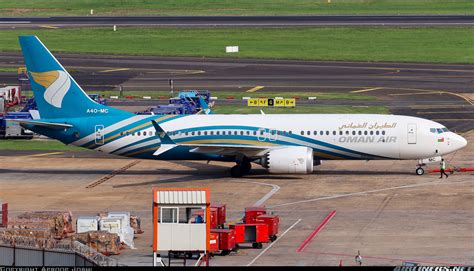
Oman Air has made a bold and unexpected move in the aviation landscape by launching a new fifth freedom route connecting Muscat (MCT) to Copenhagen (CPH) with a stopover in Baghdad (BGW). Beginning December 16, 2025, this new service operates twice weekly and stands out as one of the more unique schedules among Gulf carriers, both for its route composition and geopolitical undertones.
Oman Air’s Tri-City Connection: A Route of Intrigue and Opportunity
The service is structured as follows:
- WY425 departs Muscat at 1:00PM, arriving in Baghdad at 2:55PM. After a one-hour layover, it continues to Copenhagen at 3:55PM, landing at 7:25PM.
- The return leg, WY426, departs Copenhagen at 8:25PM, touches down in Baghdad at 3:25AM the next day, and then resumes the final leg to Muscat at 4:25AM, landing at 8:00AM.
The flight segments span significant distances:
- Muscat to Baghdad: 1,082 miles
- Baghdad to Copenhagen: 2,161 miles
This strategic route serves three direct markets: Muscat–Baghdad, Muscat–Copenhagen, and Baghdad–Copenhagen. The entire Muscat to Copenhagen journey spans over nine hours eastbound, a notably long duration on a narrowbody aircraft.
Aircraft Choice: Narrowbody Aircraft, Big Ambitions
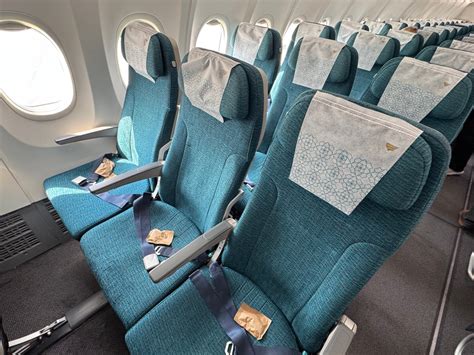
Oman Air has deployed the Boeing 737 MAX 8 on this route. The aircraft is configured with 162 seats, including 12 recliner business class seats and 150 in economy. For such a long multi-leg journey, especially from the Middle East to Northern Europe, the use of a narrowbody jet diverges sharply from the widebody norm of other Gulf rivals.
Strategic Context: A Leaner Oman Air Post-A330 Retirement
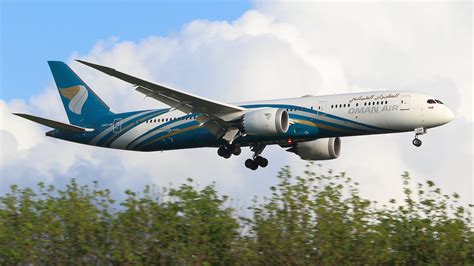
This new route is part of Oman Air’s ongoing restructuring strategy aimed at achieving profitability through network optimization and fleet downsizing. In 2024, the airline retired its entire fleet of Airbus A330s, signaling a significant pivot in long-haul ambitions. With a trimmed-down widebody inventory, Oman Air has increasingly turned to its 737 MAX fleet to serve international markets typically dominated by larger aircraft.
While this approach may limit the airline’s ability to compete with Emirates or Qatar Airways on luxury or scale, it opens doors to cost-effective expansion into underserved or strategically beneficial markets.
Fifth Freedom Flights: The Baghdad–Copenhagen Market
Perhaps the most fascinating feature of this route is its fifth freedom segment—Baghdad to Copenhagen—which is being sold independently. Passengers can now book a flight exclusively between Iraq and Denmark on Oman Air, a Gulf-based carrier with no home ties to either city.
This maneuver isn’t just novel—it’s highly strategic. Fifth freedom flights allow airlines to pick up and drop off passengers in a third country along their route, unlocking new revenue streams and passenger segments. For Baghdad, this means new direct access to Scandinavia. For Copenhagen, it introduces a new route from an airline that isn’t even based in Iraq or Denmark.
Geopolitical Optics: Flying Through Baghdad
For passengers familiar with the intricacies of international travel, Baghdad as a transit point may raise eyebrows. While safety concerns may not be immediate or warranted, public perception plays a significant role in travel decisions. The idea of a stopover in Baghdad—regardless of its actual risk profile—might cause hesitation among travelers unfamiliar with the city’s current security climate.
Furthermore, many passengers, especially those booking discounted connecting itineraries, may not realize they are transiting through Iraq until they examine their itinerary closely. This could trigger a wave of social media confusion or concern, adding an unpredictable public relations element to the airline’s move.
Value Proposition vs. Passenger Experience
There’s a significant trade-off involved in this service model. While cost-conscious travelers may welcome the new options and potential savings, the passenger experience is undeniably impacted:
- Extended journey time compared to nonstop routes
- Transit in Baghdad may not appeal to every demographic
- Narrowbody comfort limitations over long-haul durations
Still, for business travelers, diaspora communities, and passengers traveling to or from Baghdad, this route could be immensely valuable. It fills connectivity gaps and offers a non-European, non-Turkish option for travel between Iraq and Northern Europe.
A Competitive Move or a Calculated Gamble?
This flight symbolizes more than a route addition—it reflects Oman Air’s new operational philosophy. As regional rivals pour resources into expanding premium long-haul networks, Oman Air appears to be carving out a leaner, more tactical footprint:
- Utilizing smaller aircraft to reduce operational cost
- Tapping under-served or unconnected city pairs
- Employing fifth freedom rights to diversify revenue sources
Such moves are rare but not unprecedented. Airlines like Singapore Airlines and Emirates have long used fifth freedom flights to maintain strategic presence across the globe. Oman Air’s version may not have the glamour, but it carries real potential for profitability and influence.
The Long Haul on a Short-Haul Jet
Operating a nine-hour journey with a stopover on a 737 MAX isn’t standard practice among long-haul airlines, particularly when comfort, space, and premium services are paramount. However, this may also indicate the airline’s willingness to experiment, reflecting a pragmatic approach to route development.
Despite the limitations of the MAX’s cabin space, Oman Air’s inflight experience is generally well-regarded, especially for a narrowbody carrier. Passengers can expect:
- A comfortable recliner-style business class
- Above-average inflight service in economy
- A modern, fuel-efficient aircraft with updated cabin interiors
Yet for all its strengths, the aircraft choice reinforces the route’s budget-conscious nature. This service likely targets price-sensitive segments, more than high-end business travelers.
A Window Into the Future of Gulf Aviation?
The Gulf aviation sector is witnessing a moment of recalibration. As mega-carriers like Emirates and Qatar expand their A350 and 777X fleets, Oman Air’s leaner, route-specific tactics offer a different vision: strategic minimalism over brute connectivity.
This Copenhagen–Baghdad–Muscat route may well be a litmus test for similar future services—routes that exploit fifth freedom opportunities, connect underutilized airports, and deliver economic service without the overhead of widebody jets.
Final Thoughts
Oman Air’s new service is nothing short of bold. In connecting Muscat and Copenhagen via Baghdad, the airline ventures into uncharted commercial territory. The route may stir debate, spark headlines, and generate some traveler anxiety, but it undeniably breaks new ground.
Whether it becomes a model for future Gulf airline strategies or remains a curious anomaly will depend on passenger uptake, geopolitical stability, and Oman Air’s own long-term vision. But for now, this flight stands as a unique milestone in global aviation—geographically unlikely, operationally daring, and strategically calculated.
For those willing to book the ticket, it promises to be a journey like few others.