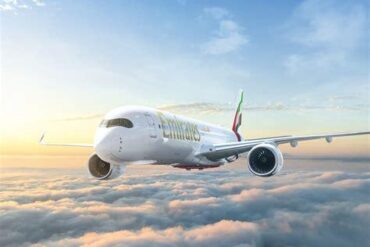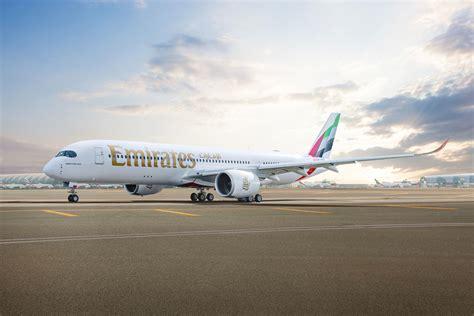
Emirates is set to reshape its Middle East network with the launch of daily Airbus A350 flights to Baghdad beginning January 1, 2026, marking a major fleet consistency shift on one of its busiest short-haul regional corridors. The upgrade replaces the remaining Boeing 777 rotations and establishes an all-A350 schedule between Dubai International Airport (DXB) and Baghdad International Airport (BGW), a move designed to elevate comfort, reduce fuel burn, and align with the carrier’s long-term premium product strategy.
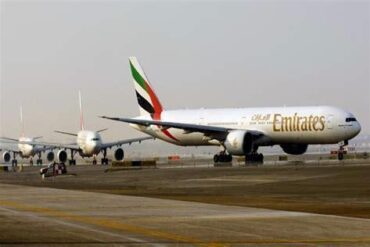
The transition comes as Emirates continues accelerating its A350 rollout, having welcomed its first aircraft only a year ago and now operating thirteen A350-900s fitted with the airline’s newest-generation cabins. Until now, only three of the seven weekly Dubai–Baghdad flights were operated by the A350, while the remainder relied on the airline’s dense two-class Boeing 777-300ER and occasional 777-200LR aircraft. The daily A350 switch sacrifices some raw seat capacity compared to the high-density 777-300ER, yet Emirates is betting on higher premium-cabin yield and more efficient operations to offset the reduction.
The airline emphasized that the exclusive deployment of the A350 underscores its long-standing commitment to Iraq’s air travel market. The move supports Emirates’ broader strategy of unifying the passenger experience under its Fly Better service promise, especially on routes where premium traffic and operational reliability play a defining role. The A350 first appeared on flights EK941/942 in August, and its rapid progression to daily service reflects the aircraft’s favorable performance and customer feedback.
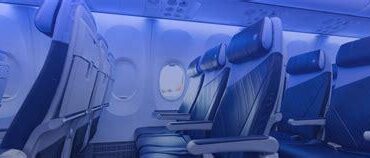
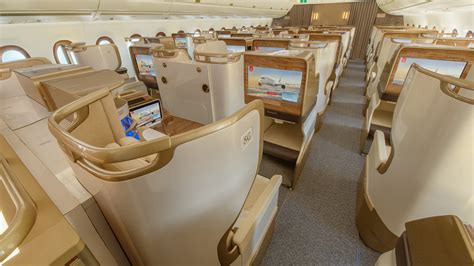
On this short two-hour hop, passengers will enjoy the newest cabin products in Emirates’ portfolio. These include fully lie-flat business-class suites arranged in a 1-2-1 layout with 23-inch 4K entertainment screens, a compact yet upscale premium economy cabin with 40 inches of pitch, and an economy cabin with 13.3-inch displays and 32-inch legroom. While time onboard is limited due to the quick sector length, the A350’s superior cabin airflow, lower noise, and modern lighting still deliver a noticeably different experience from the outgoing 777s.
Inside the Emirates A350: Latest-Generation Cabins and Passenger Experience
Emirates’ A350 fleet represents the airline’s most dramatic cabin refresh in more than a decade. Business class offers expansive personal space with sliding privacy panels and next-generation touch interfaces, while premium economy showcases plush seating, wide armrests, and upgraded dining. Economy travelers benefit from improved ergonomics and quieter cabin acoustics typical of Airbus’ XWB fuselage design.
These enhancements arrive just as Emirates is deepening its investment in widebody modernization. The carrier has firm orders for 73 total A350s, having recently added eight more at the Dubai Airshow 2025. The type now forms the backbone of Emirates’ short- and medium-haul strategy while the airline awaits its next major fleet milestone—the long-delayed Boeing 777X.
Fleet Strategy: A350 Expansion Ahead of the Boeing 777X Era
Emirates continues to hold the world’s largest 777X orderbook with 270 aircraft on order, accounting for nearly half of all global commitments for Boeing’s forthcoming widebody. Despite vocal frustration from Emirates’ leadership about continuing delays, the airline reaffirmed its commitment to the aircraft with a fresh follow-on order worth $38 billion. The first 777X deliveries are not expected until late 2027.
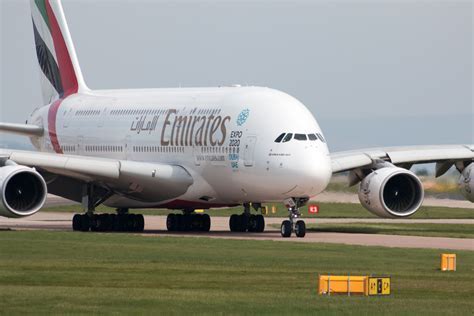
In parallel, Emirates maintains its iconic Airbus A380 fleet, now committed to operating until at least 2040. The addition of the A350 gives the airline a more fuel-efficient and versatile option for thinner long-haul routes and strategic regional markets like Baghdad.
Operational Details: Schedule, Timing, and Market Impact
The daily A350 service will keep the existing timings: a 1:00 PM departure from Dubai, followed by a 4:05 PM return departure from Baghdad. These slots align with Emirates’ afternoon bank of global connections, enabling efficient links to Europe, Asia, and the Americas. Although the aircraft swap slightly reduces overall seat availability, the addition of more premium seating options positions Emirates to target higher-yield corporate and government travel—critical segments on the Baghdad route.
The strategic consistency of operating one aircraft type daily also improves maintenance planning, reliability, and crew scheduling. For customers, the predictable, unified product offering strengthens Emirates’ competitive position in a region where fleet variety can significantly impact the travel experience.
A Milestone for Iraq Routes as Emirates Builds Toward a 73-Strong A350 Fleet
By converting the Dubai–Baghdad route to an all-A350 operation, Emirates signals the accelerating maturation of its newest aircraft type. The shift not only enhances the travel experience but also demonstrates the airline’s confidence in the A350’s place within its global branding and long-term network strategy.
As additional A350s join the fleet throughout 2026 and 2027, more routes across the Middle East, Europe, and Asia are poised to see similar upgrades. Baghdad stands out as one of the first regional beneficiaries of this next-generation product, reinforcing the market’s importance within Emirates’ expanding network design.