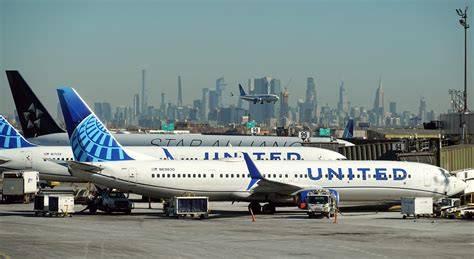
United Airlines has pushed back the return of its nonstop Newark–Dubai route, removing the planned October 2026 restart from its schedule and now targeting March 27, 2027. The decision affects one of the carrier’s longest international services, a 5,962-nautical-mile (11,042-kilometer) link between Newark Liberty International Airport (EWR) and Dubai International Airport (DXB).
The route has been suspended since February 2026, when the war involving Iran created significant uncertainty across the Middle East. Although United had previously expected to resume the service before the 2026–27 winter season, continued concerns about Gulf-region stability and softer demand have prompted another delay.
United’s latest schedule change is therefore more than a routine seasonal adjustment. It highlights how quickly geopolitical developments can reshape long-haul airline networks, particularly on routes connecting major North American hubs with the Middle East.
Why United Suspended the Newark–Dubai Route
United launched its nonstop Newark–Dubai service in March 2023, building a strategically important connection between its largest New York-area operation and one of the world’s most important international aviation hubs. The route operated daily and was strengthened by a partnership with Emirates.
That relationship was particularly important because United and Emirates offered reciprocal benefits involving codesharing, loyalty programs, and lounge access. The arrangement effectively allowed passengers to use Newark and Dubai as gateways into much larger networks, giving the nonstop flight value beyond passengers traveling solely between New York and Dubai.
However, the outbreak of war in Iran in February 2026 fundamentally changed the operating environment. United stopped flying to Dubai, while Emirates maintained connectivity between the two markets through Athens International Airport rather than operating its normal nonstop service.
Until the latest schedule update, United planned to restore the nonstop flight on October 24, 2026. That date would have placed the restart immediately before the northern-hemisphere winter schedule transition. The airline has now removed that plan and shifted the anticipated return to March 27, 2027.
United’s 15-Hour Dubai Route Is Not Permanently Gone
The latest schedule does not indicate that United has abandoned Dubai permanently. Instead, the airline appears to be taking a cautious approach to a market whose economics and operating conditions remain difficult to predict.
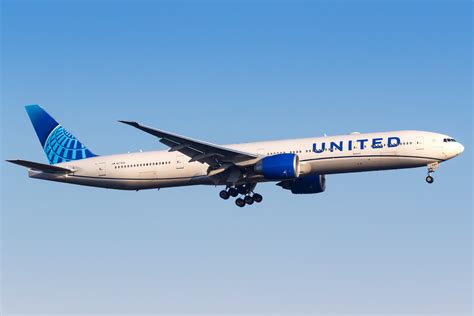
If the current plan holds, United will resume daily Newark–Dubai flights on March 27, 2027, using its high-capacity Boeing 777-300ER. The aircraft is particularly appropriate for the route because of its combination of passenger capacity, premium seating, range, and substantial belly-freight capability.
The 777-300ER planned for the route has 350 seats, including 60 Polaris business-class seats in a 1-2-1 configuration, 24 Premium Plus seats, 62 Economy Plus seats, and 204 standard Economy seats. That large premium cabin is significant because profitability on an ultra-long international route depends heavily on premium demand rather than simply filling the aircraft.
The route is also lengthy in both directions. The planned Newark-to-Dubai schedule takes approximately 13 hours and 15 minutes, while the westbound Dubai-to-Newark flight is scheduled at about 14 hours and 45 minutes. Those flight times explain why the service is often described as a roughly 15-hour long-haul operation.
Demand Was Reasonable Before the Suspension
United’s decision is particularly interesting because the Newark–Dubai market was not performing badly before the suspension.
From March 2025 through February 2026, United carried approximately 169,212 round-trip passengers between Newark and Dubai, according to U.S. Department of Transportation data. That made Dubai the airline’s ninth-busiest transatlantic market from New Jersey during that period.
The route recorded an 83.1% load factor, roughly matching United’s overall transatlantic operation from Newark. On the surface, that suggests the service had a solid customer base before geopolitical conditions disrupted it.
The passenger data also reveals why the route was strategically valuable. Approximately 42% of passengers connected through Newark, originating elsewhere in North America or Latin America before continuing to Dubai. Houston was reportedly the largest connecting market.
Another 26% connected onward at both Newark and Dubai, while approximately 23% traveled directly between the two airports. Around 9% began or ended their journey at Newark but connected onto Emirates services in Dubai.
That network effect mattered. Approximately 34% of United’s passengers also traveled on Emirates, demonstrating how closely the two airlines’ networks had become intertwined.
Why United Is Waiting Until March 2027
The biggest issue is not necessarily whether passengers want to travel between Newark and Dubai. It is whether enough passengers are currently willing to commit to a long-haul journey through a region affected by continuing geopolitical uncertainty.
The experience of Emirates illustrates the problem. During March and April 2026, Emirates carried about 31,675 round-trip passengers between Newark and Dubai via Athens. Traffic was 11% higher than during the same two months of 2025, while the load factor increased seven percentage points to 72.8%.
That increase makes sense because United’s nonstop capacity had disappeared. Yet the relatively modest growth also suggested that the market was not recovering with the strength airlines might normally expect after losing a competitor.
For United, operating a large 777-300ER daily requires confidence in both passenger demand and the wider operating environment. A flight of nearly 6,000 nautical miles ties up an expensive aircraft for many hours, while the enormous premium cabin requires strong business and premium-leisure demand.
The Newark–Dubai Route Could Return With A Different Strategic Role
When United eventually brings the route back, the Emirates partnership should remain an important part of its commercial logic. Dubai is not simply an endpoint; it provides access to destinations throughout the Middle East, South Asia, Africa, and beyond.
That connecting potential helped make the Newark route viable before the suspension. But United’s decision to postpone the restart demonstrates that network value alone is not enough when geopolitical risks and customer confidence change.
For now, March 27, 2027 is the target rather than a guarantee. Airline schedules can change repeatedly as circumstances evolve. If stability improves and demand returns, the United Airlines Newark–Dubai nonstop could once again become a major component of the carrier’s international network. If uncertainty persists, however, another delay would not be surprising.