For travelers facing a long international flight, the choice is no longer limited to standard economy or an expensive business-class seat. Delta Premium Select occupies the increasingly important middle ground, offering passengers more personal space, upgraded dining, priority services, and additional comfort without requiring the full price of Delta One. For journeys lasting eight, 10, or even 15 hours, those differences can become particularly valuable, turning what might otherwise be an exhausting flight into a considerably more manageable experience.
Delta Air Lines introduced Premium Select as part of its effort to expand its premium-cabin offering and respond to growing demand for a more comfortable alternative to economy. The product was announced in 2016 under CEO Ed Bastian and entered service in October 2017, when an Airbus A350-900 operated the airline’s first Premium Select-equipped flight between Detroit and Tokyo Narita. Since then, the cabin has become an important part of Delta’s long-haul network, sitting between Main Cabin and Delta One in the carrier’s cabin hierarchy.
The central appeal of Delta Premium Select is relatively straightforward: passengers receive many of the features that make premium travel attractive while avoiding the enormous price difference that can separate economy from business class. The experience starts with a larger seat and additional room, but it extends well beyond the seat itself. Enhanced meals, amenity kits, priority services, power outlets, improved entertainment options, and a quieter premium-cabin environment all contribute to a journey that feels substantially different from standard economy.
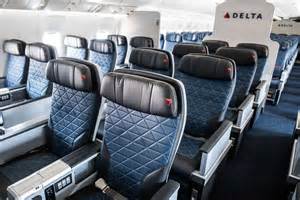
More Space With a Wider Delta Premium Select Seat
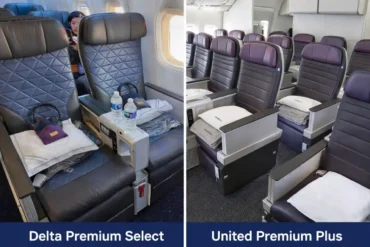
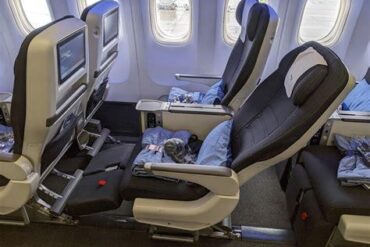
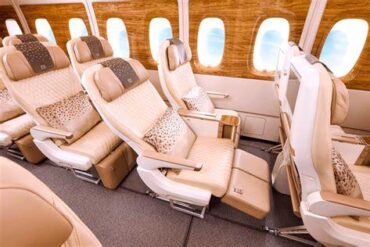
The most obvious benefit of Delta Premium Select is the physical space passengers receive during the flight. On long-haul services, having additional room can make an enormous difference because passengers spend many consecutive hours in the same position. Delta Premium Select seats generally provide around 38 inches of pitch and approximately 19 inches of width, giving travelers more space than they would normally receive in the Main Cabin.
The additional pitch is especially useful for passengers who want to stretch their legs, change position, or work during a long flight. A seat with more room in front can also make it easier to stand up without disturbing a neighboring passenger, which becomes increasingly important on overnight services when travelers are trying to sleep or simply avoid feeling confined.
Delta also equips Premium Select seats with features designed specifically for longer journeys. Adjustable headrests and leg rests provide additional ways to customize the seating position, while approximately seven inches of recline allows passengers to settle into a more relaxed posture. These features do not transform the seat into a lie-flat business-class bed, but they can make a meaningful difference during a long overnight flight.
Different Aircraft Bring Different Premium Select Layouts
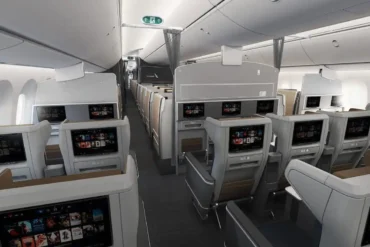
The precise Premium Select experience depends partly on the aircraft operating the route. Delta uses different cabin configurations across its widebody fleet, meaning passengers should not assume that every Premium Select seat will feel identical. On the Airbus A350-900, for example, Premium Select is arranged in a 2-4-2 configuration, providing a dedicated premium-economy cabin with relatively generous personal space.
The Boeing 767 family uses a different arrangement. On Delta’s 767-300ER and 767-400ER aircraft, Premium Select is arranged in a 2-2-2 configuration. One notable advantage of this layout is that every passenger has direct access to the aisle. For travelers who dislike climbing over a seatmate during an overnight flight, that can be an important practical benefit.
The aircraft itself therefore matters when choosing a Premium Select ticket. Travelers booking a particular route can benefit from checking which aircraft is scheduled to operate the flight because cabin dimensions, seat arrangement, and the overall feel of the premium section can vary. This is one reason why Premium Select should be viewed not simply as a fare category, but as a complete cabin product whose details depend on the aircraft and route.
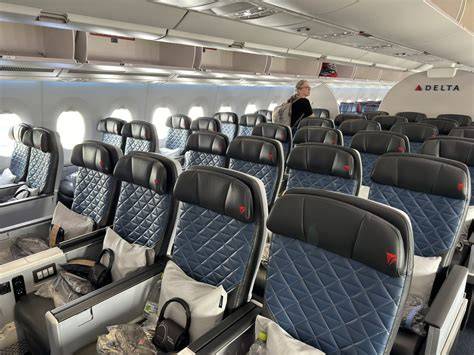
Upgraded Dining Makes Long-Haul Flights More Comfortable
Another important benefit of Delta Premium Select is the enhanced meal service. Food is rarely the main reason someone chooses premium economy, but on an overnight international flight, the quality and presentation of meals can have a noticeable impact on the overall experience.
Premium Select passengers are welcomed onboard with a drink and snacks before the main meal service. Meals are presented in a more refined manner than standard economy offerings, with details such as linen napkins, real silverware, glassware, and plates made from sugarcane fiber contributing to a more premium atmosphere.
Delta also gives passengers an opportunity to make their meal experience more personal by allowing them to pre-select their main course through the Fly Delta app up to 24 hours before departure. This can be particularly useful for travelers who have a specific preference and want greater certainty about their meal choice before boarding.
The dining service does not attempt to replicate the restaurant-style experience associated with an international business-class cabin, but that is not really its purpose. Instead, Premium Select provides a clear improvement over the standard economy meal experience while matching the broader objective of the cabin: more comfort and convenience without the cost of a fully premium business-class ticket.
Amenity Kits and Extra Comfort During the Flight
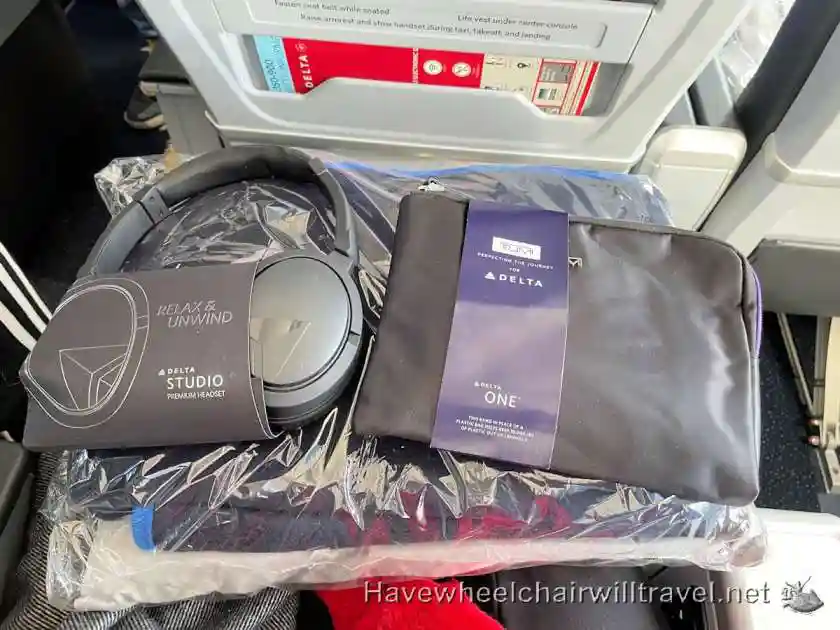
Delta Premium Select also adds a collection of smaller features that can become surprisingly important as a flight progresses. Passengers receive a branded amenity kit containing items such as lip balm, hand cream, an eye mask, and socks. Individually, none of these items represents a major upgrade, but together they make the cabin feel more thoughtfully designed around the needs of long-haul passengers.
Noise-canceling headphones are another useful addition. Long flights can expose passengers to a constant combination of engine noise, cabin announcements, conversations, and other sounds, so having better headphones can make it easier to watch a movie, listen to music, or simply create a quieter environment for resting.
Power availability is equally practical. With smartphones, tablets, laptops, and other devices playing such a large role in modern travel, having in-seat power means passengers can keep their electronics charged throughout the journey. For someone working during a long flight or using a tablet for entertainment, that convenience can be more valuable than a purely cosmetic premium feature.
Priority Airport Services Start Before Boarding
One of the less obvious benefits of Delta Premium Select is that the experience does not begin when passengers sit down on the aircraft. Eligible Premium Select travelers receive SkyPriority services, bringing priority treatment into several stages of the airport journey.
Priority check-in can reduce the amount of time spent waiting before security, while priority security access is available at participating airports. Priority baggage handling can also help passengers at the other end of the journey by allowing checked luggage to be processed ahead of many other bags.
Boarding is another area where the premium experience becomes noticeable. Priority boarding gives passengers more time to reach their seats, organize their belongings, place larger carry-on items in the overhead bins, and settle in before the main boarding flow becomes crowded.
These benefits may sound relatively modest compared with a larger seat or better meal, but they address one of the most frustrating parts of air travel: the airport process itself. A more organized beginning and end to the journey can make Premium Select feel like a broader travel upgrade rather than simply a better seat.
Where Can You Fly Delta Premium Select?
Delta does not offer Premium Select on every route or every aircraft. The cabin is primarily associated with long-haul international services, particularly major transatlantic and transpacific routes. Examples include flights connecting Los Angeles with London, New York with Paris, Seattle with Taipei and Shanghai, Detroit with Seoul, and Los Angeles with Melbourne.
The product has also expanded beyond traditional intercontinental routes. Delta has introduced Premium Select on selected services to Reykjavík from Detroit and Minneapolis/St. Paul, while certain flights from Atlanta to destinations such as Quito and Bogotá have also featured the cabin.
The airline has additionally expanded Premium Select onto selected long domestic services. Hawaii is one example, including flights between New York and Honolulu. Since September 2024, the product has also been available on selected transcontinental services, particularly flights linking New York with Los Angeles and San Francisco operated by Boeing 767 aircraft.
Because availability depends on the specific aircraft and schedule, passengers should check the cabin configuration of their individual flight rather than assuming that a route will always offer Premium Select. Aircraft substitutions can also potentially change the cabin experience.
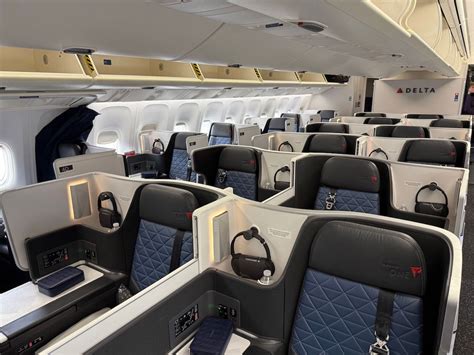
How Delta Premium Select Fits Between Economy and Delta One
The easiest way to understand Premium Select is to consider what it does not attempt to provide. It is not a replacement for Delta One. Business-class passengers receive a substantially more private and spacious experience, including lie-flat seating on many long-haul aircraft and a significantly higher level of personal space.
At the same time, Premium Select is designed to go considerably further than Main Cabin. The seat is wider and offers more legroom, the service is more polished, meals are upgraded, airport processing receives priority treatment, and passengers receive additional comfort items.
That positioning makes Premium Select particularly relevant to travelers who value the physical experience of a long flight but do not necessarily need every feature included in business class. A passenger who can sleep comfortably in a reclining premium-economy seat may find the additional cost easier to justify than the much larger premium associated with a lie-flat business-class cabin.
Is Delta Premium Select Worth Considering for Long Flights?
The value of Delta Premium Select depends heavily on the length of the journey, ticket price, aircraft, and individual travel priorities. On a short flight, the difference between economy and premium economy may be relatively easy to overlook. On an overnight transatlantic or transpacific flight, however, 38 inches of pitch, a wider seat, additional recline, leg support, upgraded meals, priority services, and an amenity kit can collectively become much more meaningful.
For travelers who want to arrive at their destination feeling less physically worn out, the extra personal space is arguably the most important advantage. The upgraded food, headphones, power access, and priority airport services then build around that foundation, creating a more consistent premium experience from check-in through arrival.
Delta Premium Select therefore occupies a distinctive position in the airline’s long-haul cabin lineup. It does not promise the privacy or sleeping experience of Delta One, but it offers a substantial collection of improvements over Main Cabin. For passengers facing a long international journey, that middle ground can provide a practical combination of comfort, convenience, and upgraded service, making the flight itself an important part of the travel experience rather than simply a means of reaching the destination.