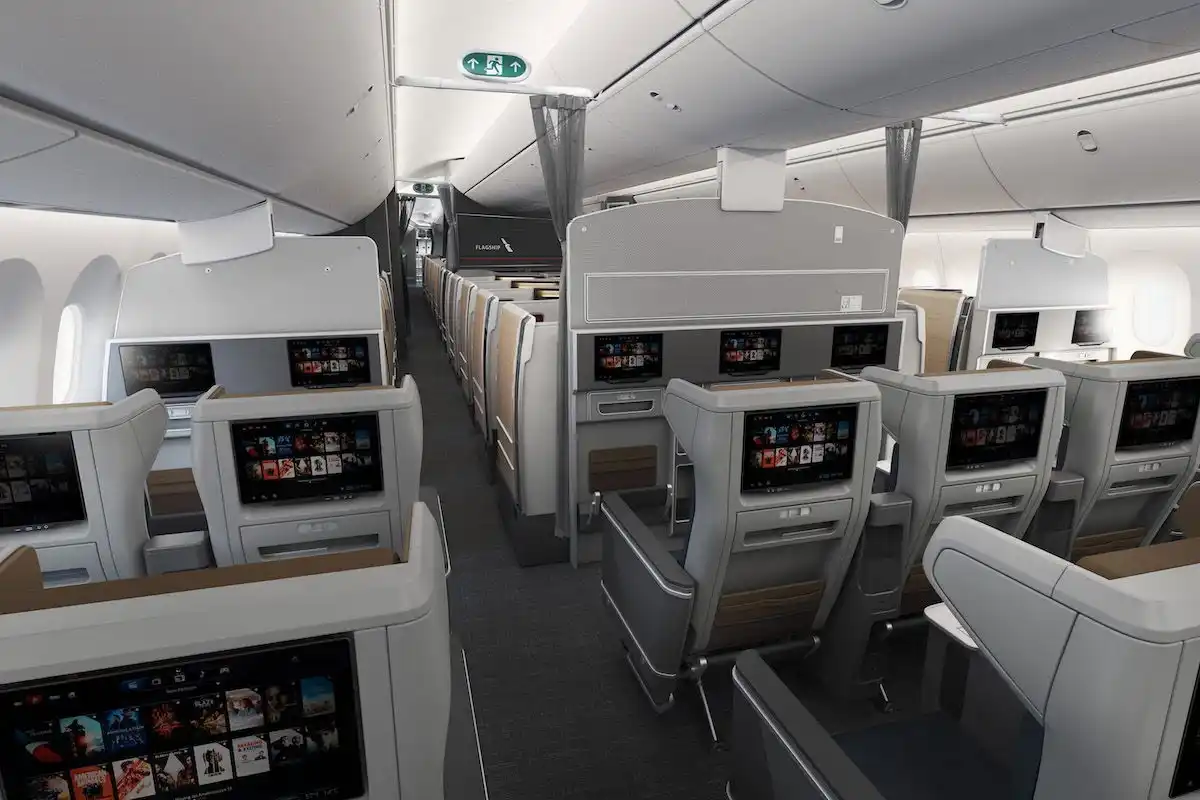
Long-haul flying has always been a game of trade-offs: cost versus comfort, endurance versus arrival sanity. For years, travelers either squeezed into economy or paid a steep premium for business class. American Airlines’ new Premium Economy quietly reshapes that equation. It is not a theatrical reinvention of air travel, but a carefully engineered middle ground designed for people who want to arrive functional, fed, and uncrumpled without detonating their travel budget. This refreshed cabin, now rolling out across American’s newest aircraft, signals a deliberate shift in how the airline thinks about value, comfort, and modern expectations.
Premium economy is often described with faint praise—“better than economy,” “not quite business.” That framing misses the point. On American Airlines, the new Premium Economy product is about consistency, personal space, and thoughtful design rather than champagne theatrics. For frequent flyers accustomed to economy, the upgrade feels substantial. For seasoned business-class travelers paying their own way, it can feel surprisingly rational.
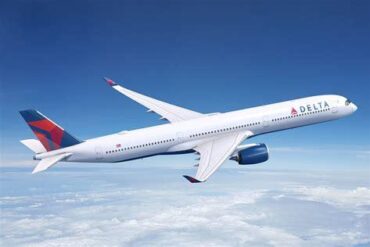
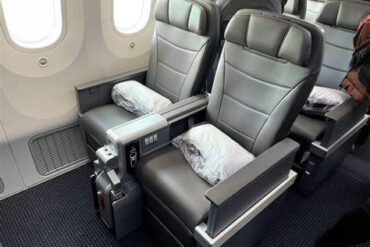
American Airlines’ refreshed Premium Economy seats are debuting primarily on the Boeing 787-9 Dreamliner (787-9P configuration), with additional installations planned for the Airbus A321XLR and retrofitted Boeing 777-300ERs. These cabins are not just new upholstery on old bones; they reflect a broader rethink of how people actually sit, sleep, work, and pass time at 35,000 feet.
A New Title, But Also a New Philosophy of Comfort
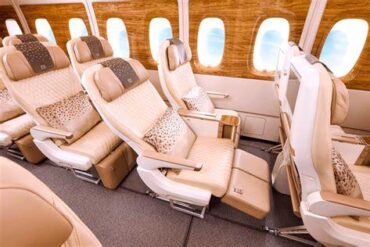
The older Premium Economy seats introduced in 2016 were functional, even austere. They did the job, but nobody wrote home about them. The new design pivots sharply toward privacy, warmth, and modern utility, borrowing cues from premium cabins without pretending to be one.
On the 787-9P, American configures the aircraft with 51 business class seats, 32 premium economy seats, and 161 economy seats. This layout signals intent. Premium Economy is no longer an afterthought wedged between cabins; it is a defined space with its own logic and identity.
The first of these aircraft entered service in mid-2025, initially on a domestic Chicago–Los Angeles flight. That detail matters because it shows American’s confidence in the product. Airlines typically reserve their best hardware for international routes, but American chose to showcase Premium Economy on a flagship domestic corridor where expectations are high and comparisons are inevitable.
Space That Actually Feels Like Space
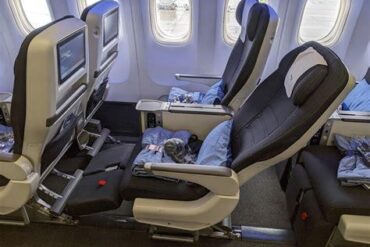
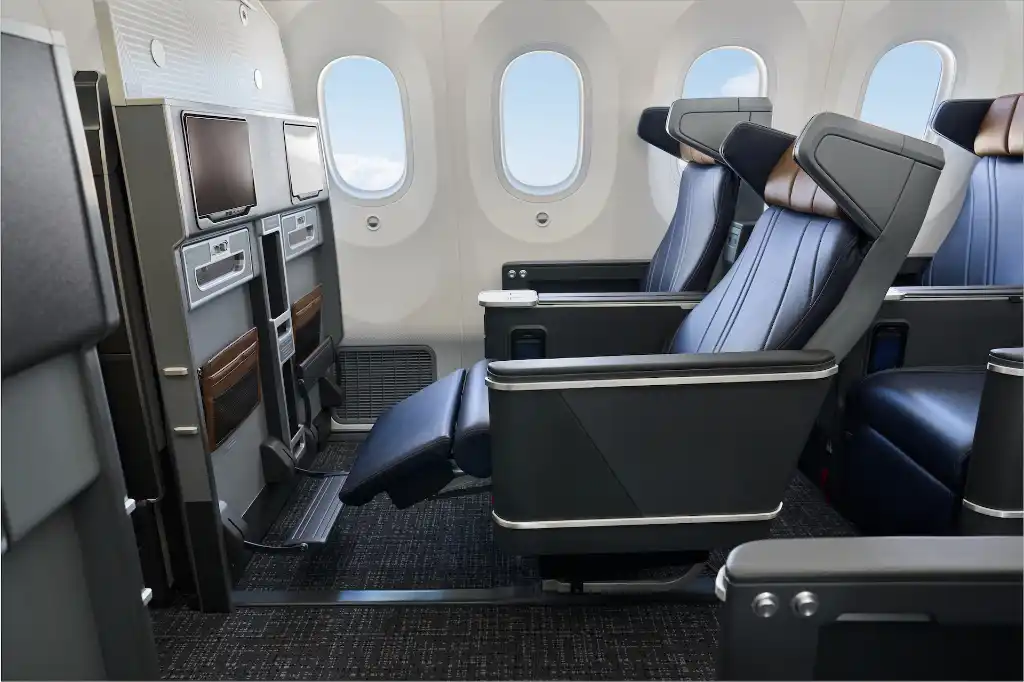
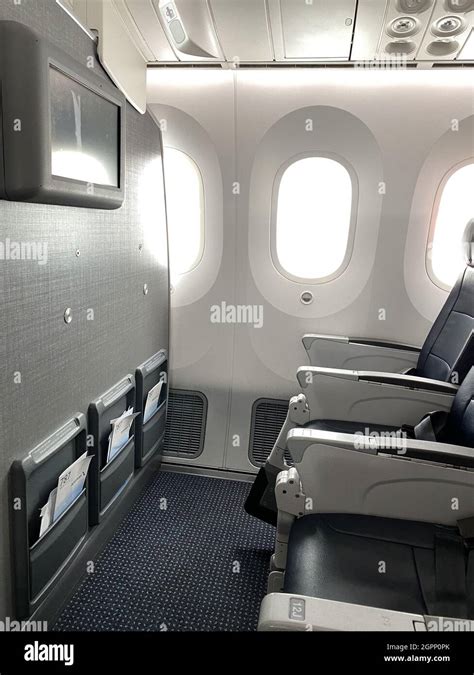
The headline benefit of American Airlines’ new Premium Economy is physical room that changes how your body experiences the flight. The standard seat pitch is 38 inches, already generous by modern airline standards. When reclined, the pitch extends to over 43 inches, creating a noticeably more relaxed seating posture.
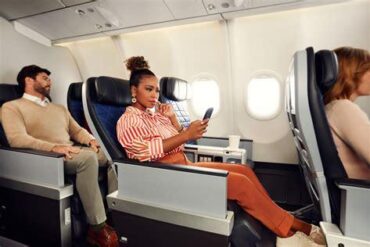
Seat width also increases, which sounds minor until your shoulders are no longer locked in a silent turf war with the armrests. The redesigned headrest wings provide lateral support and a subtle sense of enclosure, especially valuable when trying to sleep in a brightly pressurized tube full of strangers.
One detail that quietly sets American apart is the presence of both a calf rest and a footrest. Across the industry, most premium economy seats offer one or the other. Having both allows passengers to adjust leg support dynamically, reducing pressure points during long flights. It is the difference between tolerating a seat and settling into it.
Recline That Respects Your Spine
Recline has become a contentious topic in modern aviation, often because it is poorly executed. American’s new Premium Economy seats use a cradle-style recline designed to mimic a natural “Z-position.” Instead of simply dumping your upper body backward, the seat subtly shifts your weight, supporting the lower back and hips.
This matters on flights crossing oceans and time zones, where poor lumbar support can turn mild discomfort into lingering pain. The redesigned recline makes it easier to rest without feeling like you are fighting the seat’s geometry.
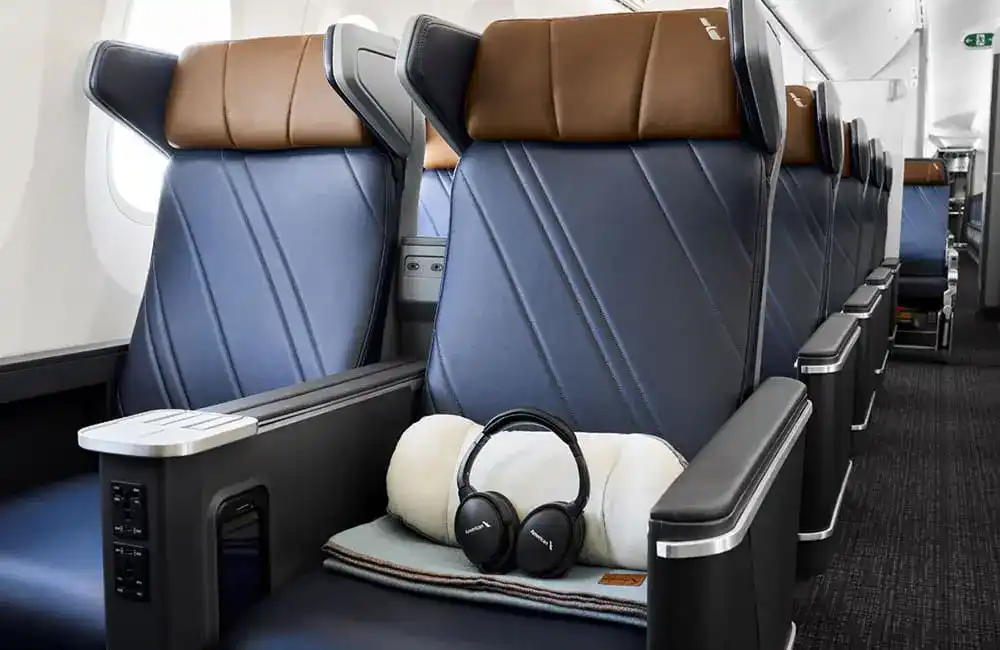
While movement is still slightly constrained—especially for window-seat passengers when the aisle seat is occupied—the overall experience is dramatically more forgiving than standard economy.
Technology That Feels Current, Not Catch-Up
American Airlines has invested heavily in modern in-seat technology, and Premium Economy is where it becomes most visible. Each seat features a 13.3-inch 4K QLED touchscreen, a meaningful upgrade from the older 10–11 inch displays. The screen is sharper, brighter, and more responsive, reducing eye strain during long viewing sessions.
Bluetooth audio connectivity allows passengers to pair their own headphones directly with the screen, eliminating the need for airline-issued equipment. This small change feels liberating once you experience it.
Power is plentiful and sensibly arranged. USB-C ports, traditional USB-A, and AC outlets are all available, making it easy to keep phones, tablets, and laptops alive simultaneously. A wireless charging pad built into the seat console reduces cable clutter and adds a quiet sense of modernity.
The entertainment system itself is faster, smoother, and includes a dark mode for night flights, a thoughtful touch that acknowledges how people actually use screens in dim cabins.
Storage That Understands Real Travelers
Premium Economy seats often fail on storage, offering little more than a seat-back pocket. American’s refreshed design adds dedicated water bottle storage, a side slot sized for a laptop or tablet, and more usable personal space around the seat.
These are not dramatic changes, but they reduce friction. You spend less time digging, less time standing up, and less time apologizing to neighbors. Over a ten- or twelve-hour flight, that matters.
Ground Experience: The Calm Before the Cabin
The benefits of Premium Economy on American Airlines begin before boarding. Passengers receive priority check-in, priority security access where available, and earlier boarding. These privileges do not turn airports into spas, but they meaningfully reduce stress during peak travel periods.
Checked baggage allowances are also improved. Premium Economy passengers typically receive two checked bags up to 50 pounds (23 kg) each, a tangible benefit for international travelers and anyone carrying more than a minimalist wardrobe. After landing, bags are tagged for priority delivery, often appearing on the carousel well before economy luggage.
Dining That Acknowledges the Upgrade
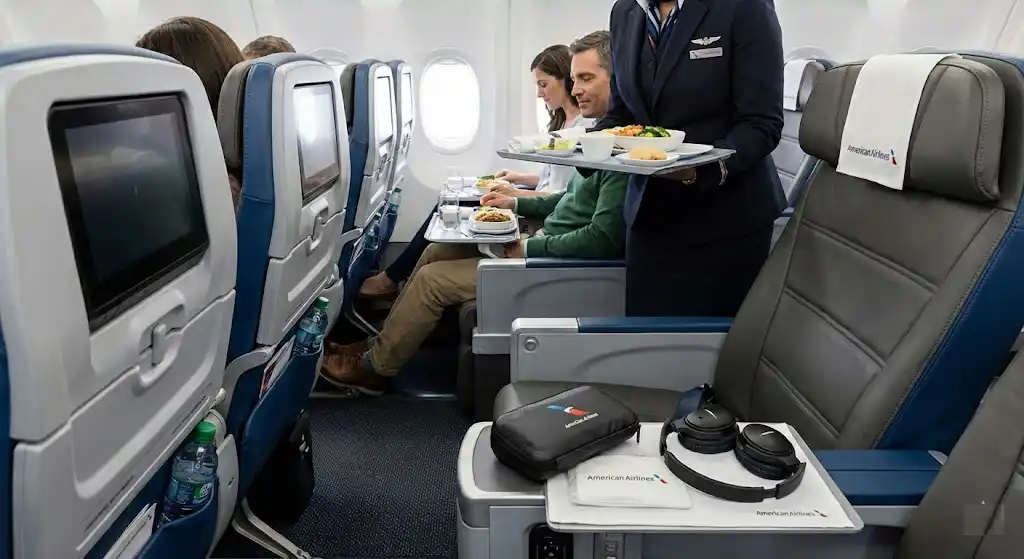
In-flight dining in Premium Economy is not business class, but it is distinctly elevated. Meals are chef-inspired, plated with more care, and paired with a full drink service, including alcoholic beverages on many routes. The difference is not just in taste but in pacing and presentation.
Flight attendants typically serve Premium Economy before the main economy cabin, which means meals arrive hotter and with fewer interruptions. The psychological effect of being served earlier should not be underestimated; it subtly reinforces the feeling of being valued rather than processed.
Menu quality varies by route, but on long-haul international flights, the experience consistently exceeds standard economy offerings.
Amenity Kits and Bedding That Actually Get Used
On international routes and select premium domestic transcontinental flights, American provides Premium Economy amenity kits featuring sustainably sourced travel essentials and rotating skincare products from brands such as Joanna Vargas and Relevant. These kits are practical rather than flashy, designed to be used during the flight rather than admired and forgotten.
Bedding is another area where the upgrade becomes tangible. Premium Economy passengers receive a crepe-weave blanket and an Ostrichpillow lumbar pillow, a combination that makes resting noticeably easier. This is not lie-flat sleep, but it is real rest.
A Cabin That Feels Quieter, Even When It Isn’t
One of the underrated benefits of Premium Economy is acoustic psychology. Being seated farther forward, away from galleys and lavatories, reduces ambient noise and foot traffic. The cabin layout itself feels calmer, even when the aircraft is full.
On the Boeing 787 Dreamliner, known for its quieter engines and smoother ride, this effect is amplified. The result is a flight that feels less fatiguing, even if the actual duration is unchanged.
Route Availability and What “International” Really Means
American Airlines uses the term “international” in a way that often confuses passengers. In practice, it refers less to geography and more to aircraft configuration. Long-haul routes—such as flights to Europe, South America, Asia, and Oceania—are almost always considered international for Premium Economy purposes.
Select domestic routes also qualify, particularly New York–Los Angeles, New York–San Francisco, and certain Hawaii mainland routes. These flights use widebody aircraft or specially configured narrowbodies like the Airbus A321XLR, which includes Premium Economy seating.
Conversely, many short-haul international routes to Canada, Mexico, the Caribbean, and parts of Central America operate with domestic-style configurations that do not offer Premium Economy at all.
Pricing Reality: Value Depends on Perspective
Premium Economy on American Airlines is priced higher than equivalent cabins on many international carriers. On transatlantic routes, fares often land at two to three times the price of economy, compared with 1.5 to 2 times on many European airlines.
This pricing strategy is intentional. US carriers aim to protect business class revenue by ensuring Premium Economy does not become a cheaper substitute. For travelers loyal to American’s AAdvantage program, the higher cost may be offset by mileage earning, status benefits, and network convenience.
For others, the value proposition hinges on personal priorities. If sleep, space, and sanity matter more than raw price efficiency, the premium can feel justified.
Loyalty, Miles, and Hidden Upside
Premium Economy tickets earn more miles and Loyalty Points than standard economy fares, accelerating elite status qualification. For frequent flyers, this can meaningfully shorten the path to benefits such as lounge access, complimentary upgrades on domestic flights, and additional baggage allowances.
When combined with occasional promotional offers or mileage upgrades, Premium Economy can become a strategic tool rather than a one-off indulgence.
The Bottom Line: A Rational Upgrade for Real Humans
American Airlines’ new Premium Economy is not about spectacle. It is about reducing friction across every phase of long-haul travel. From boarding to baggage claim, from lumbar support to screen clarity, the experience is engineered to respect the passenger’s time, body, and attention.
It costs more than economy, sometimes significantly more. But it also delivers more than incremental comfort. For travelers who arrive tired of being tired, Premium Economy offers something quietly radical: the chance to step off a long flight feeling mostly like yourself.
In an industry obsessed with extremes—ultra-low-cost austerity on one end and luxury theatrics on the other—American Airlines’ refreshed Premium Economy occupies a sensible middle. It is not aspirational travel. It is practical, modern, and humane.