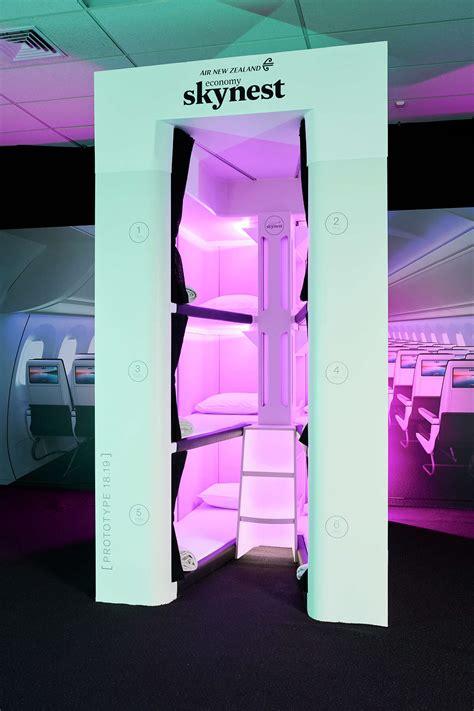
The aviation world rarely produces a concept that genuinely reshapes how passengers think about long-haul travel. Yet that is exactly what Air New Zealand has attempted with its bold Skynest economy bunk beds—a product that sounds deceptively affordable at $292, but carries far more nuance when placed beside Premium Economy fares.
At first glance, the idea feels almost revolutionary: lie-flat sleep pods for economy passengers. But the deeper reality reveals a carefully engineered pricing strategy designed not to replace premium cabins—but to bridge the gap between discomfort and affordability.
Understanding what passengers actually get—and what they don’t—is where the real story begins.
The $292 Illusion: Why the Headline Price Isn’t the Full Cost
The number $292 is powerful marketing. It positions Skynest as an accessible luxury, a kind of aviation loophole where economy travelers can briefly taste business-class comfort without the usual financial shock.
But this is where expectations must be recalibrated.
That price is not a ticket. It is an add-on—a temporary upgrade layered on top of an existing fare. Passengers must still purchase either an economy or premium economy seat first. Only then can they reserve a four-hour sleep slot inside one of the six pods onboard.
This distinction transforms the economics completely. Instead of comparing $292 to a full Premium Economy ticket, the real comparison becomes:
- Economy fare + Skynest add-on(s)
- vs Premium Economy full fare
And suddenly, the gap begins to shrink—or in some cases, disappear entirely.
Understanding the Skynest Concept: Sleep as a Standalone Product
Traditionally, airlines bundle comfort into tiers. If you want a bed, you buy Business Class. If you want space, you upgrade cabins. Everything is packaged together.
Skynest breaks that model.
Rather than forcing passengers into a full upgrade, Air New Zealand isolates one key element: sleep.
This approach is particularly relevant on ultra-long-haul routes such as:
- Auckland to New York
- Flights exceeding 15–18 hours
- Journeys where fatigue becomes the dominant passenger complaint
Instead of paying for champagne, priority boarding, and expanded dining, travelers can purchase rest itself—nothing more, nothing less.
That idea is deceptively simple. And commercially, it’s extremely clever.
Inside the Skynest: A Purpose-Built Sleep Environment
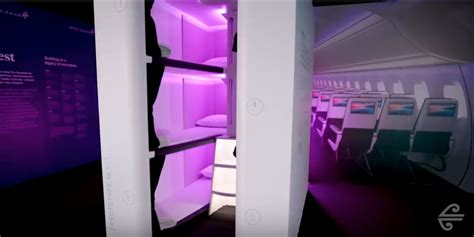
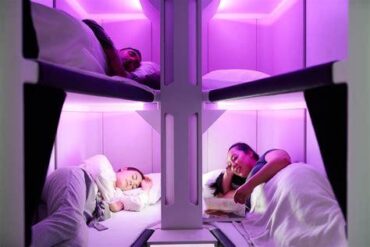
Step inside the Skynest, and it becomes immediately clear that this is not just a modified seat—it is a dedicated sleeping zone.
Installed aboard the Boeing 787-9 Dreamliner, the Skynest consists of six stacked pods, arranged in a compact, three-tier configuration. The design prioritizes horizontal rest, not lounging or entertainment.
Each pod includes:
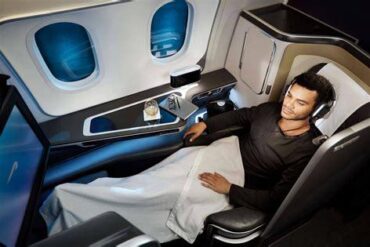
- A full-length flat sleeping surface
- Pillow, sheets, and blanket
- Privacy curtain for isolation
- Ambient lighting and reading light
- USB charging ports
- Ventilation controls
- Seatbelt for turbulence safety
Notably absent are distractions. There is no in-flight entertainment screen. Food and beverages are restricted. Even the environment subtly signals its purpose: sleep, not indulgence.
This clarity of function is intentional. Skynest is not trying to compete with Business Class—it is trying to optimize one single outcome: rest efficiency.
The Real Cost Equation: Economy + Skynest vs Premium Economy
This is where the decision becomes genuinely interesting.
Let’s construct a realistic scenario for an ultra-long-haul route:
Option 1: Economy + Skynest
- Economy ticket: $1,200–$1,800 (route dependent)
- One Skynest session (4 hours): ~$292
- Two sessions (8 hours): ~$584
Total: $1,492–$2,384
Option 2: Premium Economy
- Premium Economy ticket: $2,500–$3,500+
At first glance, Skynest still appears cheaper. But this comparison misses key variables:
- Premium Economy provides comfort for the entire flight
- Skynest provides comfort for only part of the journey
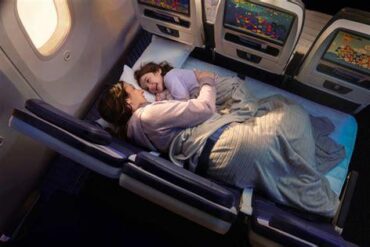
- Economy seating still applies outside the booked sleep window
This means a passenger could spend 10+ hours upright in economy, even after paying for Skynest access.
And that changes the psychological—and physical—experience dramatically.
The Comfort Trade-Off: Continuous vs Fragmented Experience
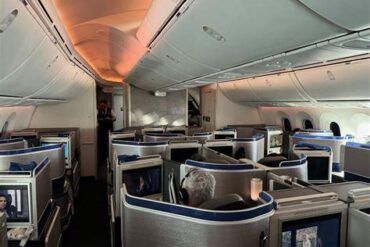
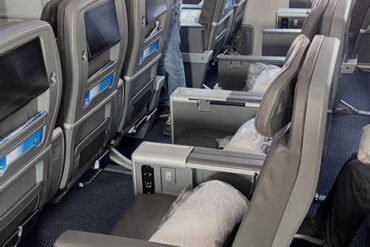
Premium Economy offers consistency. From takeoff to landing, passengers enjoy:
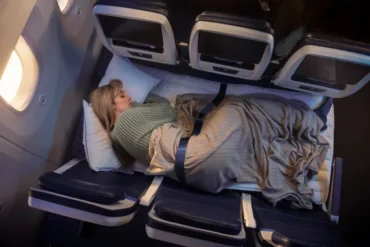
- Wider seats
- Increased legroom
- Enhanced recline
- Better meal service
- Additional baggage allowance
Skynest, by contrast, delivers intense but temporary relief.
It’s the difference between:
- A continuous comfort baseline
- vs a short-term recovery boost
This distinction matters more than it first appears.
Passengers must decide whether they prefer:
- Steady comfort throughout the flight, or
- A concentrated block of deep rest, followed by a return to standard economy conditions
For some travelers, four hours of real sleep may outweigh twelve hours of moderate discomfort. For others, the inconsistency may feel disruptive.
Why Skynest Appeals to a Specific Type of Traveler
The Skynest is not designed for everyone—and that’s exactly why it might succeed.
Its ideal customer is highly specific:
- Price-sensitive but comfort-aware
- Travelers who prioritize sleep over luxury
- Passengers with immediate commitments after landing
- Long-haul flyers who struggle with fatigue more than space
For these individuals, Skynest represents something unique: targeted value.
Instead of paying thousands for incremental upgrades, they can invest directly in the one factor that matters most—rest and recovery.
It’s a surgical approach to comfort spending.
A Strategic Revenue Play by Air New Zealand
From a business perspective, this is where the concept becomes even more compelling.
Rather than converting economy seats into premium seats, Air New Zealand is creating a new revenue layer entirely.
Each Skynest pod can be sold multiple times per flight:
- 6 pods
- Multiple 4-hour sessions
- Potentially 12–18 bookings per long-haul flight
This transforms unused cabin space into a high-yield micro-product, without cannibalizing Premium Economy or Business Class pricing.
It also introduces a new pricing dimension:
- Not just where you sit
- But when you sleep
That level of segmentation is rare in aviation—and highly profitable if executed correctly.
Historical Context: Sleeping in the Sky Isn’t New—But This Is
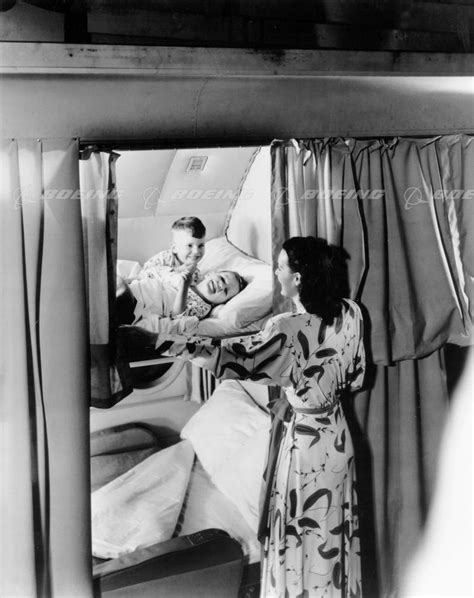
Airborne sleeping berths have existed before. Aircraft like the Stratocruiser offered beds decades ago, and early long-haul travel often leaned toward luxury rather than efficiency.
But modern aviation shifted toward density and cost control. Beds became exclusive to premium cabins.
Skynest flips that evolution.
Instead of returning to luxury, it introduces modular comfort—a system where passengers can selectively purchase specific benefits.
That modularity is what makes it genuinely innovative.
The Hidden Limitations Passengers Must Consider
Despite the excitement, Skynest comes with constraints that could impact real-world value:
- Only six pods per aircraft
- Limited availability per flight
- Strict time-slot scheduling
- No guarantee of consecutive sleep sessions
Passengers may find themselves waking up mid-flight and returning to an economy seat for extended periods.
There’s also the logistical element: coordinating sleep windows, managing expectations, and adapting to a shared resource environment.
This is not a private suite. It is a shared sleep infrastructure.
Premium Economy Still Holds a Critical Advantage
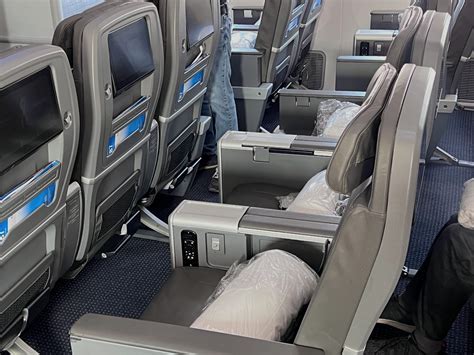
For all its innovation, Skynest does not replace Premium Economy—it complements it.
Premium Economy still dominates in areas that matter across the full journey:
- Personal space consistency
- Improved posture and ergonomics
- Enhanced dining experience
- Reduced fatigue accumulation over time
In many cases, especially for travelers who value predictability and uninterrupted comfort, Premium Economy remains the more logical choice.
The key difference is simple:
- Skynest is episodic comfort
- Premium Economy is continuous comfort
And on flights lasting nearly a full day, continuity has real value.
The Psychological Factor: Perceived vs Actual Value
Here’s where things get subtle.
Skynest feels revolutionary because it introduces something new. But novelty can distort perceived value.
Passengers may overestimate how much four hours of sleep improves a 16-hour journey—or underestimate the toll of returning to an economy seat afterward.
Conversely, Premium Economy may seem less exciting, but delivers steady, reliable benefits that accumulate over time.
The decision ultimately hinges on how travelers perceive value:
- Is it peak comfort moments, or
- Overall journey quality?
There is no universal answer—only personal priorities.
Final Verdict: Which Option Actually Wins?
The answer is not as straightforward as the $292 headline suggests.
Skynest wins when:
- Sleep is the top priority
- Budget constraints prevent full cabin upgrades
- Travelers are willing to tolerate mixed comfort levels
Premium Economy wins when:
- Consistency matters more than intensity
- Passengers value space, service, and stability
- The price gap is not significantly higher
In reality, Skynest is not a competitor—it is a strategic middle ground.
It captures a segment of passengers who previously had no viable upgrade path. And in doing so, it redefines how airlines think about monetizing comfort.
The real brilliance lies not in the bunk beds themselves—but in the idea that comfort can be unbundled, priced dynamically, and sold in pieces.
That concept may reshape long-haul travel far beyond a single airline.
And once passengers experience it, expectations across the entire industry may never be the same again.