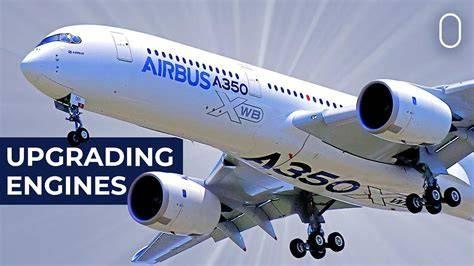
Airbus builds two widebody families that, on paper, compete for the same long-haul dollars. One is a clean-sheet composite flagship launched to answer the Boeing 787 head-on. The other is a deep refresh of a 1990s aluminium workhorse, re-engined, re-winged and re-avionics’d rather than redesigned. Conventional wisdom says the newer, faster, lighter aircraft always wins the value argument. The order books tell a more interesting story: the A330-900 has quietly become the pragmatic choice for operators who need capacity, range and reliability without paying a premium for technical perfection. The A350 is not a failure—it is one of the most successful twin-aisle aircraft ever built—but its success is a story of capability at a price. The A330-900’s success is a story of best value, and for a surprising number of airlines that is the metric that actually decides fleet plans.
The A330-900 exists because Airbus made a calculated bet on incremental engineering. Instead of developing a clean-sheet aircraft to replace the ageing A330ceo, Airbus took two decades of technological progress and applied it where it delivered the most return: new engines, new wings, modernized avionics and aerodynamic refinements. The result is an aircraft that remains, at its core, a 1990s airliner—and that lineage is precisely why it is cheap to buy, cheap to integrate and fast to deliver. This entry sits at the intersection of everything that makes the type tick, from its origin in the cancelled A350-800 programme to the lease rates, commonality savings and delivery timelines that make it operationally attractive to almost 150 existing A330 operators.
From The A350-800’s Collapse To The A330-900’s Rise
Airbus originally planned three A350 variants: the shortened A350-800, the standard A350-900 and the stretched A350-1000. Hawaiian Airlines was among the carriers that signed up for the smallest model. As the programme evolved, Airbus cancelled the A350-800, refocused on the larger variants and pivoted to upgrading the legacy A330ceo in two guises: the shortened A330-800 and the stretched A330-900, collectively the A330neo. Hawaiian switched its order to the A330-800, but the variant never gained traction, and carriers grew wary of committing to an airframe few other airlines wanted. Hawaiian ultimately moved to the Boeing 787-9, only for its future parent Alaska Airlines to take those aircraft away. By September 2026, Airbus had accumulated roughly 511 firm orders for the A330-900, with the residual 13 A330-800 orders rounding out the family. The irony is sharp: the article celebrating the A330-900’s commercial triumph must also acknowledge that its sibling ranks among the worst-selling airliners in history.
Why The A350 Is Successful Without Being The Value Leader
The A350 has amassed around 1,628 firm orders, roughly three times the A330neo’s total, and it deserves every one of them. It is a clean-sheet design built primarily from advanced composites and titanium, which makes it lighter, more fuel-efficient and capable of a higher cabin pressure than an aluminium airframe can achieve. It was engineered to compete directly with the 787 on the most demanding long-haul missions, and it does so credibly. The distinction that matters is not performance but expectation. The A350 is optimized to be the best possible aircraft for a certain mission profile; the A330-900 is optimized to be the best possible aircraft per dollar for a different one. Airbus claims the A330neo delivers around a 25% improvement in fuel burn per seat versus older-generation aircraft such as the Boeing 767-300ER, and up to 7% lower operating costs per seat than the rival Boeing 787. That second figure deserves caution—Boeing almost certainly runs different assumptions and reaches the opposite conclusion—but the direction of the claim is consistent with what operators report on medium-haul sectors.
The Capital Cost Advantage Of A Brand-New A330-900
The most immediate advantage of the A330-900 is its purchase price. List prices are a marketing instrument, because airlines negotiate deep discounts, particularly on bulk orders, so the useful numbers are market values and lease rates—what carriers actually pay. Acumen’s five-year market values cluster the Boeing 787-9, 787-10, A350-1000 and A350-900 around $120 million to $130 million. A five-year-old A330-900 trades near $87 million, a gap of roughly $35 million to $45 million per airframe. Brand-new, the 2026 ICLG Aviation Finance & Leasing report published in June 2026 puts a new A330-900 at about $118.5 million, against $168 million for the A350-900, $181 million for the A350-1000, $160 million for the 787-9 and $168 million for the 787-10. A carrier buying twenty aircraft faces a capital decision worth three-quarters of a billion dollars before a single seat flies, and that is before financing costs, which scale with the asset price.
This capital efficiency compounds through lease rates, which largely mirror market values. Factory-new A330-900s lease in the range of $902,000 to $975,000 per month. The A350-900 counterpart sits around $1.19 million to $1.25 million per month, the A350-1000 higher still, the 787-9 at roughly $1.07 million to $1.15 million and the 787-10 at $1.13 million to $1.23 million. On a ten-year lease, the monthly delta pays for a great deal of fuel, crew and ground handling. Legacy assets—the 777-300ER at around $110 million, the 787-8 just under $100 million, and the ageing A330-200 and A330-300—trade lower still, but they arrive with older engines, higher maintenance bills and weaker fuel efficiency, which erodes the nominal saving over a full operating cycle. The A340-300 and A340-600 have effectively left the comparison entirely, as the quad-jet family has almost completely retired from mainline scheduled passenger service; Lufthansa has withdrawn its last A340-600.
The Commonality Dividend That The A350 Cannot Match
Fleet commonality is one of the most underrated levers in airline economics, because maintenance dominates the cost base and shared parts, shared tooling and shared training shrink it dramatically. The A330-900 shares around 95% of its airframe spare parts with the A330ceo, which means the nearly 150 airlines already flying the A330ceo can add or transition to the neo with minimal disruption. Pilots moving from ceo to neo need only half a day of computer-based self-study. Airbus estimates this commonality can save airlines around $6 million per aircraft in maintenance, although the exact figure varies by carrier, network and existing inventory. The A350-900, by contrast, is a genuinely new type: new systems, new handling characteristics and a new maintenance programme, all of which carry real transition costs.
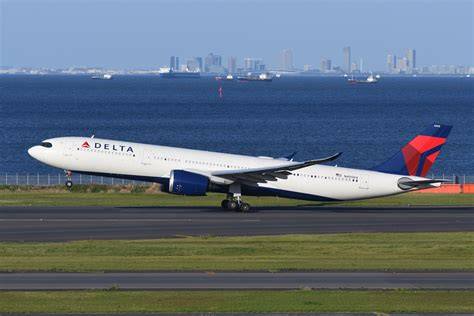
The neo also retains partial commonality with the A350, which matters for dual-type operators such as Delta, which is replacing its A330ceos with a mixed fleet of A330-900s and A350s, while China Eastern is swapping its A330ceos for A330neos and Qantas has chosen A350s and 787s. Where the argument inverts is for airlines already committed to Boeing: the A330neo’s advantages do nothing for a carrier whose pilots, engineers and supply chain are built around the 737 and 787, and for those operators the 787-9 remains the natural incremental upgrade.
Delivery Timelines And The Strange Gift Of Rival Success
One of the A330-900’s most potent selling points is a direct consequence of its rivals’ popularity. Massive A350 and 787 backlogs mean a carrier ordering today joins a queue that may not clear until the mid-2030s. Using Airbus’ September 2026 production guidance of roughly 12 A350s and five A330neos per month, a new A350-900 order placed now is likely to deliver around 2032–2034, or six to eight years out. An A330-900 ordered today may arrive roughly a year earlier, in the 2031–2034 window. That is not a dramatic gap in calendar terms, but it is meaningful for fleet planning, because aircraft ordered to replace retiring ceos need to arrive when the retirement wave does, and an extra twelve months of availability can be the difference between a smooth transition and expensive bridging leases.
Understanding What The A330-900 Is Not
The honest caveat is that these are not interchangeable aircraft. The A330-900 is not a one-for-one substitute for the A350-900. Their capacities, ranges and payload-range curves differ, and each was optimized for a different mission. The A330-900 shines on medium- and long-haul sectors where its economics beat a larger, heavier aircraft, while the A350-900 and A350-1000 own the very long routes where range and payload are non-negotiable. The overlap is real, and for many trunk routes either type would work. But the moment a network strays into ultra-long-haul territory—the kind of eighteen-hour missions now entering the Qantas planning horizon—the A350’s performance envelope is worth every dollar of its premium. Choosing between them is therefore a mission-matching exercise, not a beauty contest, and the A330-900’s 500-plus order book reflects carriers who ran that exercise and found the answer in favour of the cheaper, common, available airframe.