For decades, First Class was the unquestioned pinnacle of commercial air travel. It promised more space, better food, greater privacy, and a level of personal service that business class could not realistically match. In 2026, however, that distinction has become much less straightforward. Modern Business Class cabins have adopted many of the features that once defined international First Class, including fully flat beds, direct aisle access, privacy doors, premium dining, upgraded lounges, and increasingly sophisticated suites.
That evolution has changed the value equation. First Class can still deliver an extraordinary experience, but the additional cost does not always produce a proportionally better journey. On some airlines, passengers paying substantially more are primarily buying additional space, exclusivity, and service, rather than a fundamentally different way to travel.
The shift is particularly important for travelers purchasing tickets with cash. If Business Class already provides a comfortable bed, excellent food, lounge access, and a private environment, spending two or even three times as much on First Class requires a compelling reason. For travelers who want premium comfort without paying for every possible luxury, Business Class can therefore be the more intelligent choice.
This does not mean First Class has become irrelevant. Products such as Emirates First Class, Singapore Airlines Suites, Air France La Première, and Lufthansa First Class remain among commercial aviation’s most prestigious experiences. Instead, the issue is whether the difference between the two cabins is large enough to justify the price on a particular journey.
Five airlines demonstrate this changing relationship especially well: Cathay Pacific, Air France, Lufthansa, Singapore Airlines, and Emirates. Each has an exceptional First Class product, yet each also offers a Business Class experience that can make the cheaper ticket surprisingly difficult to resist.
Cathay Pacific: Aria Suite Makes Business Class Feel Like First
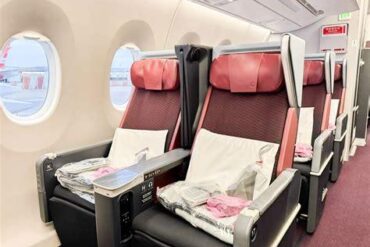
Cathay Pacific is perhaps one of the clearest examples of how modern Business Class has narrowed the traditional gap with First Class. The airline’s Aria Suite gives Business Class passengers a level of privacy that would have been almost unimaginable in a conventional business cabin only a few years ago.
The suite uses a 1-2-1 configuration, meaning every passenger has direct access to the aisle. More importantly, each seat includes a sliding privacy door. Once closed, the passenger has a much more secluded personal space, making the cabin feel less like a traditional aircraft seating area and more like a compact private suite.
The fully flat bed is the other crucial element. For long-haul travelers, sleeping horizontally is often the single most valuable feature of a premium cabin. Cathay Pacific has already solved that fundamental problem in Business Class. A passenger can work, dine, relax, and then convert the seat into a proper bed without needing to pay First Class prices simply to sleep comfortably.
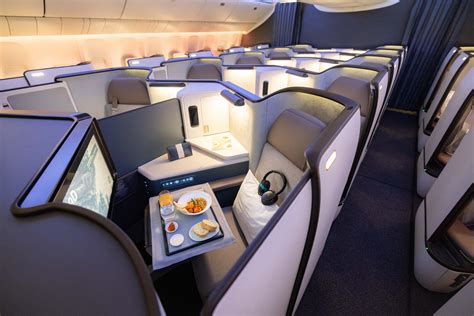
Cathay has also strengthened the soft product surrounding the seat. Its Business Class dining service allows greater flexibility over when passengers eat, while its meal-selection initiatives and collaborations with Hong Kong restaurants add a distinctly local character to the experience. This matters because premium travel is not only about seat dimensions. Food, timing, service, and the atmosphere created by the crew can significantly influence whether a long flight feels luxurious.
Cathay Pacific First Class nevertheless retains meaningful advantages. Where available, the cabin provides considerably more personal space and a more exclusive environment. The service is also designed around a smaller number of passengers, allowing greater individual attention. For travelers who place an unusually high value on space and exclusivity, those benefits can absolutely justify the upgrade.
For everyone else, however, the equation is different. When a Business Class passenger receives a private suite, direct aisle access, a fully flat bed, premium dining, and an excellent lounge experience, First Class becomes an enhancement rather than a necessity. That is a critical distinction for anyone spending their own money.
Air France: La Première Is Brilliant, But Business Class Is Easier to Find
Air France presents a fascinating value dilemma because its First Class product, La Première, is genuinely exceptional. Unlike some First Class cabins that mainly offer a wider seat and slightly better service, La Première attempts to create a premium journey from the airport entrance to the aircraft door.
The ground experience is particularly important. First Class passengers can receive highly personalized treatment, premium airport services, and a level of attention designed to minimize the frustrations normally associated with international travel. On board, La Première combines exceptional French dining with a highly private seating environment.
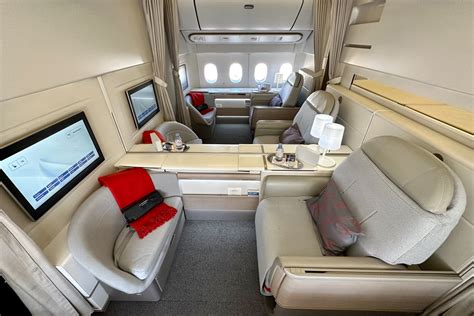
The problem is availability. Air France does not offer La Première throughout its fleet. The cabin is installed on selected Boeing 777-300ER aircraft, so merely booking a route associated with La Première does not guarantee that every departure will provide the product. Aircraft assignments can matter enormously.
That creates an unusual weakness for First Class. A traveler may be willing to spend substantially more for La Première, only to discover that the aircraft operating the desired flight has Business Class but no First Class cabin. Business Class, by contrast, is widely available across Air France’s long-haul network.
Air France’s Business Class product has also become substantially stronger. Modern seats provide lie-flat sleeping capability, while the airline’s French culinary identity remains an important part of the premium experience. Travelers receive lounge access and other priority services without needing to coordinate their plans around one of the relatively limited La Première aircraft.
For a special anniversary, milestone trip, or once-in-a-lifetime journey, La Première can be worth every extra dollar. But if the objective is simply to arrive in Europe rested and comfortable, Business Class captures many of the benefits that matter most.
This is where value becomes more important than prestige. A traveler who spends thousands of additional dollars primarily to obtain greater privacy and a superior ground experience may have an incredible journey, but the financial return is difficult to justify when a strong Business Class seat already provides a flat bed and high-quality French service.
Lufthansa: The First Class Terminal Is the Real Luxury
Lufthansa may have the most unusual Business-versus-First value proposition on this list. The airline’s most compelling First Class advantage is not necessarily the seat itself. It is what happens before the passenger even boards the aircraft.
At Frankfurt Airport, Lufthansa operates its famous First Class Terminal, a dedicated facility that transforms the airport experience. First Class passengers can receive personal assistance, move through dedicated security and passport-control procedures, dine à la carte, relax in private rooms, shower, and spend time away from the crowds of the main terminal.
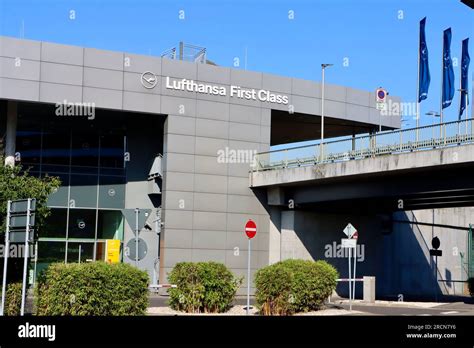
Perhaps the most memorable element comes at boarding. Passengers using the First Class Terminal can be transported directly to their aircraft by chauffeur. Instead of walking through a conventional terminal, waiting at a gate, and boarding with hundreds of other travelers, the passenger can effectively move from a private lounge environment straight to the aircraft.
That is a spectacular benefit, especially for travelers with a long connection at Frankfurt. Someone who genuinely dislikes airports may value this experience more than an additional few inches of seat width.
Yet the onboard Business Class product makes the decision less obvious. Lufthansa Business Class has historically had shortcomings compared with the newest generation of fully private business suites, and not every seat on every aircraft offers direct aisle access. Nevertheless, long-haul Business Class provides a lie-flat sleeping environment and a substantial improvement over economy.
Lufthansa First Class is therefore heavily dependent on soft product and ground service for its premium appeal. Once the aircraft is airborne, the difference between First and Business may not feel as dramatic as the price difference suggests.
For passengers connecting through Frankfurt who have enough time to enjoy the First Class Terminal, paying for First Class can make sense. For passengers whose priority is simply a comfortable overnight flight, Business Class may deliver the essential benefit at a much lower cost.
The distinction is subtle but important: Lufthansa First Class can be an extraordinary airport experience, while Business Class can be a perfectly rational flying experience.
Singapore Airlines: Suites Are Incredible, but Business Class Solves the Sleep Problem
Singapore Airlines is arguably the most difficult airline on this list to criticize for offering First Class. Its Suites Class on the Airbus A380 has become one of commercial aviation’s most famous luxury products for good reason.
The experience is built around privacy and personal space. Depending on the configuration, passengers receive a substantial private suite with separate seating and sleeping arrangements. The cabin can feel closer to a luxury hotel room than a conventional aircraft cabin, and that distinction is particularly powerful on an overnight flight.
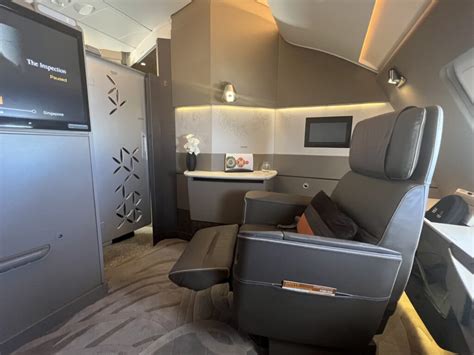
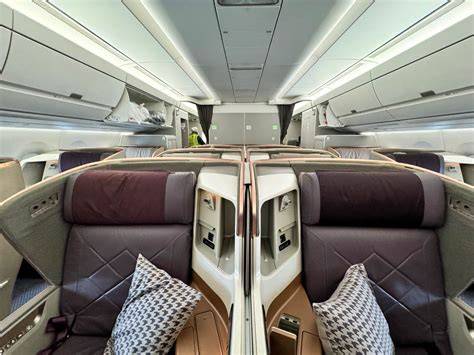
But Singapore Airlines has also created an extremely strong Business Class product. Its long-haul Airbus A350 Business Class cabin uses a 1-2-1 layout, providing direct aisle access for every passenger. The seat converts into a fully flat bed, meaning the most fundamental reason many people pay for premium cabins—getting genuine sleep—is already addressed.
That matters enormously.
If a traveler is spending an additional several thousand dollars primarily because they want to sleep comfortably, Singapore Airlines Business Class can be difficult to beat. The passenger gets a proper bed, privacy, premium dining, excellent service, lounge access, and direct aisle access without paying for the much more extravagant Suite.
First Class adds something different: space as an experience. The separate bed, larger personal environment, and greater exclusivity create a journey that Business Class cannot completely reproduce. For travelers fascinated by aviation luxury, that difference may be precisely the point.
For practical travelers, however, Business Class is remarkably complete. It does not feel like a compromise cabin where passengers tolerate obvious deficiencies to save money. Instead, it is a genuinely premium product that handles the essentials exceptionally well.
That is why Singapore Airlines makes such a strong case for Business Class. The airline’s ability to offer both one of the world’s most celebrated First Class products and one of the world’s strongest Business Class cabins demonstrates how dramatically premium aviation has changed.
Emirates: Business Class Already Has the Bed and the Bar
If there is one airline where Business Class most clearly represents the smart buy, it is Emirates.
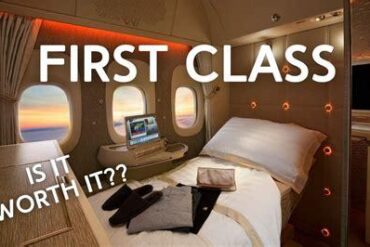
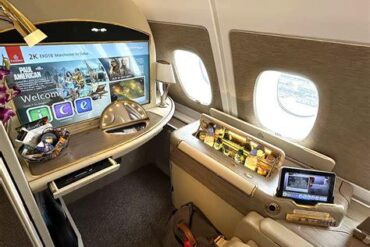
The airline’s First Class reputation is legendary. Selected Boeing 777 aircraft feature enclosed First Class suites, while the Airbus A380 First Class cabin offers private suites and access to the famous onboard shower spa. The combination of privacy, fine dining, premium service, and aviation theater makes Emirates First Class an experience rather than simply a seat.
Yet Emirates A380 Business Class already provides two of the most important ingredients of premium long-haul travel: a fully flat bed and access to the onboard lounge.
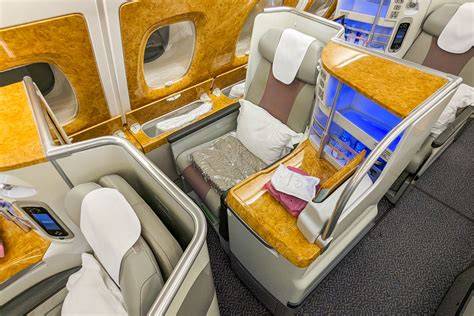
The upper-deck A380 bar and lounge gives Business Class passengers a social environment unavailable on most aircraft. Travelers can leave their seats, stretch their legs, have a drink, and interact with fellow passengers during the flight. Meanwhile, the Business Class seat converts into a fully flat bed, supported by bedding and premium amenities.
First Class adds the enclosed suite, more elaborate dining, greater personal space, and—on the A380—the extraordinary shower experience. Those are genuine improvements, but they are not equally valuable to every passenger.
For a traveler boarding a daytime flight and arriving at the destination after several hours, the shower may be an enjoyable novelty rather than a necessity. Likewise, someone who intends to sleep for most of the flight may find that the Business Class bed already provides the principal benefit they wanted.
The economics become especially important when cash fares are involved. Depending on the route and demand, First Class can cost dramatically more than Business Class. Paying that premium makes sense if the First Class experience itself is the destination. It makes much less sense when the traveler simply wants comfort, privacy, good food, and sleep.
Emirates Business Class therefore represents an unusually complete premium package. It may not provide the same level of personal space as First Class, but it delivers enough luxury that many travelers will struggle to justify spending substantially more.
Why Business Class Is Winning the 2026 Value Battle
The five airlines reveal a common pattern. Business Class has improved faster than First Class has been able to justify its premium. Airlines have invested heavily in business suites because the cabin serves a much larger market, particularly among corporate travelers and affluent leisure passengers who still care about value.
The result is a new generation of Business Class seats with doors, direct aisle access, flat beds, premium bedding, sophisticated entertainment systems, high-quality dining, and increasingly private cabin layouts. Features that once separated First Class from Business Class have gradually migrated downward.
First Class, meanwhile, has become more specialized. Instead of simply offering a bigger seat, the strongest products increasingly sell an entire luxury ecosystem: exclusive airport facilities, private transfers, exceptional dining, personal assistance, chauffeur services, separate beds, showers, and highly personalized service.
That can be wonderful. But it also changes what travelers are paying for.
If the main objective is to sleep comfortably, avoid the middle seat, enjoy premium food, and arrive rested, Business Class is often enough. If the objective is to experience the airline’s ultimate expression of luxury, First Class remains unmatched.
The distinction becomes even clearer for cash-paying passengers. A Business Class fare can already represent a significant expenditure, but the additional First Class premium can become difficult to defend when the practical benefits are relatively limited. Business Class can therefore provide an unusually strong balance between comfort and cost.
There are exceptions. Travelers using miles may find a First Class redemption unusually attractive, particularly when the additional points required are modest. Ultra-long-haul flights can also make additional space more valuable. And for celebrations, honeymoons, milestone birthdays, or bucket-list aviation experiences, the emotional value of First Class can outweigh conventional calculations.
But for an ordinary premium journey in 2026, Business Class is increasingly the rational luxury choice.
The Smarter Cabin Depends on What We Actually Value
First Class is not disappearing because it has become bad. Quite the opposite. The strongest First Class products remain spectacular. The problem is that Business Class has become spectacular too.
Cathay Pacific’s Aria Suite demonstrates how privacy doors can erase one of First Class’s traditional advantages. Air France shows that an exceptional First Class product can be constrained by limited aircraft availability. Lufthansa demonstrates how much First Class value can exist on the ground rather than in the seat. Singapore Airlines proves that an outstanding Business Class bed can sit beneath an extraordinary Suite without feeling like an inferior experience. Emirates shows perhaps most clearly that a flat bed and onboard lounge can satisfy many travelers before First Class’s additional luxuries enter the equation.
The smartest purchase, therefore, is not automatically the cheapest premium cabin. It is the cabin whose benefits match the reason for traveling.
For someone who wants the ultimate aviation experience, First Class can still be worth it. For someone who wants privacy, sleep, excellent food, lounge access, and a comfortable arrival without spending several thousand extra dollars, Business Class is increasingly the sweet spot.
In 2026, that may be the most important change in premium aviation. First Class still represents the top of the hierarchy, but Business Class has moved so close to it that travelers now have to ask a more sophisticated question: not which cabin is better, but which luxury actually matters enough to pay for.