American Airlines has spent the past several years reshaping its long-haul premium strategy around the Boeing 787 Dreamliner. In 2026, the aircraft is no longer simply another widebody in the carrier’s fleet. It has become the backbone of American’s international network, operating everything from dense transatlantic services to ultra-long-haul flights across the Pacific and deep into South America. For travelers shopping for a lie-flat seat, the question is no longer whether American offers a competitive business class product. The real question is how much passengers actually need to pay to sit in it.
The answer varies wildly depending on route, season, demand, aircraft type, and booking window. On some routes, a one-way business class ticket can briefly dip below $2,300. On others, especially during peak travel periods, fares soar past $15,000 for a single seat. That enormous range reflects the increasingly dynamic world of premium airline pricing, where algorithms adjust fares constantly based on demand and competition.
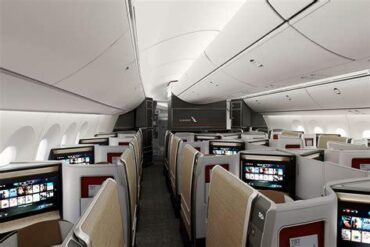
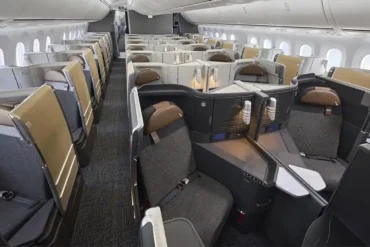
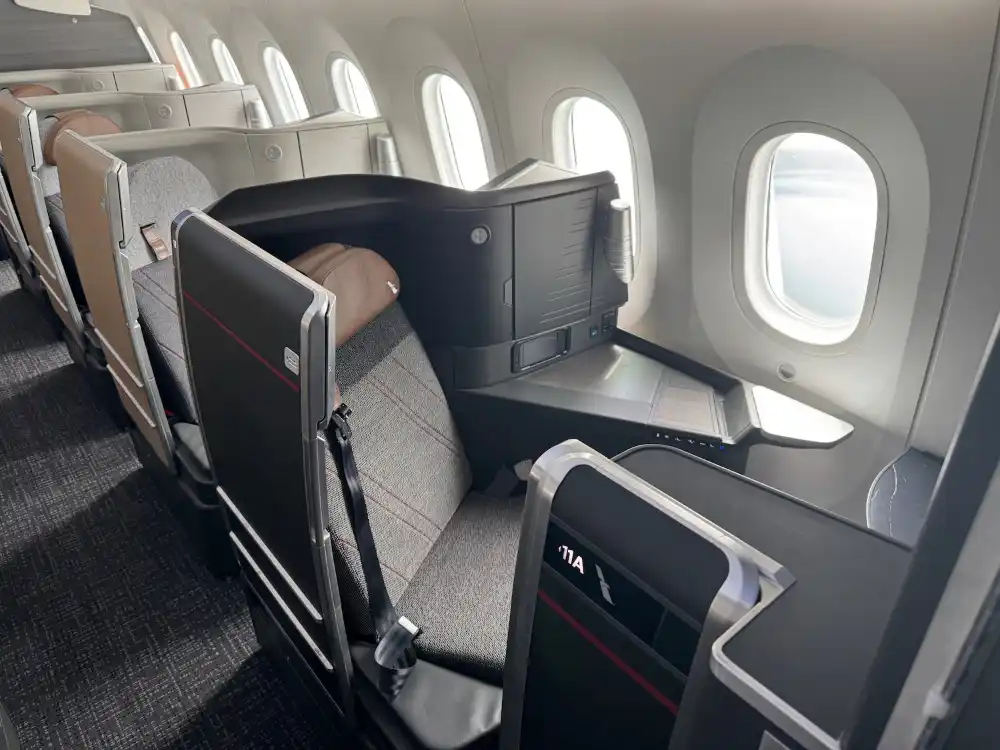
American Airlines markets its long-haul premium cabin as Flagship Business, and across the Boeing 787 fleet, the experience is remarkably consistent. Every Dreamliner includes direct aisle access seating, lie-flat beds, premium dining, lounge access, and upgraded bedding. Yet not all Boeing 787s are equal. Some aircraft feature older reverse-herringbone seats, while newer deliveries include the airline’s latest Flagship Suites with sliding privacy doors and premium-heavy cabin layouts.
For premium travelers in 2026, understanding the differences between routes, aircraft configurations, and pricing patterns can mean the difference between securing a strong value or massively overpaying.
Why The Boeing 787 Is Central To American Airlines’ Premium Strategy
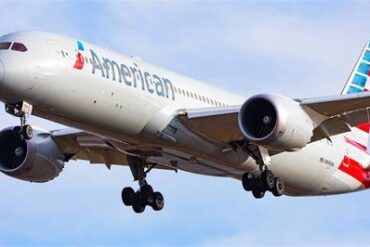
American Airlines currently operates 70 Boeing 787 aircraft, divided between 37 Boeing 787-8s and 33 Boeing 787-9s. Another 19 Dreamliners are scheduled for delivery, signaling that the carrier is doubling down on the aircraft as its future long-haul workhorse.
The smaller Boeing 787-8 primarily handles thinner international markets and secondary European destinations, while the larger 787-9 is used on premium-heavy trunk routes. The newest versions of the 787-9 represent a particularly dramatic shift in strategy. Rather than maximizing economy capacity, American is now prioritizing high-yield premium travelers.
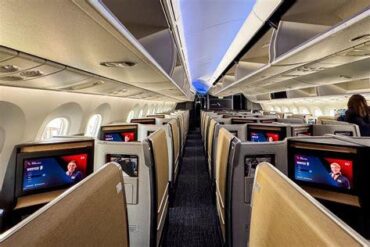
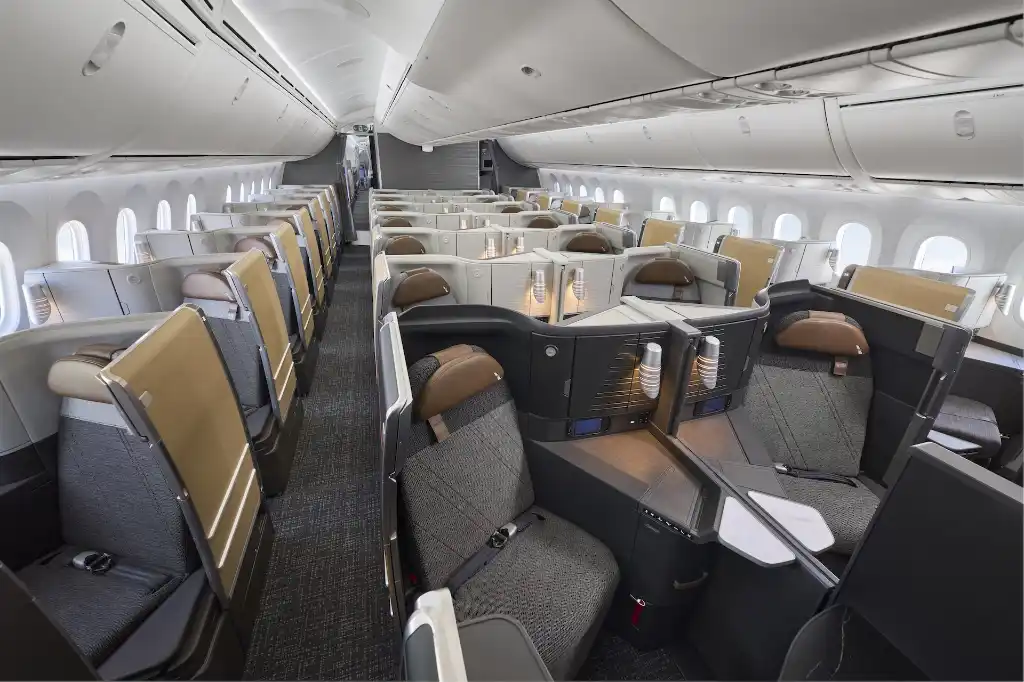
Its newest “789P” Dreamliners feature only 244 seats, dramatically lower than the older 285-seat layout. Those additional square feet are dedicated largely to premium cabins, including 51 Flagship Business suites. That is a massive business-class footprint for a U.S. airline.
The logic is simple. Premium demand has rebounded far faster than economy demand since the pandemic era, and airlines increasingly make their largest profits from travelers paying for comfort, flexibility, and privacy. Corporate travelers, affluent leisure passengers, and mileage redeemers are all competing for the same limited number of premium seats.
How Much American Airlines Charges For Business Class To Europe
Europe remains American Airlines’ most extensive international market, and it is also where travelers see some of the airline’s most volatile business class pricing.
One-way Flagship Business fares between the United States and Europe typically range between $2,200 and $11,000 in 2026. The lower end of that spectrum generally appears during off-peak travel periods or promotional fare windows. The upper end often emerges during summer demand spikes, holiday periods, or last-minute bookings.
Philadelphia continues to function as American’s primary transatlantic gateway for the Boeing 787 fleet. From there, the airline serves destinations including:
- Athens
- Dublin
- Milan
- Prague
- Copenhagen
- Nice
- Budapest
- Naples
- Zurich
- Barcelona
- Madrid
- Rome
- Paris
- Lisbon
- Edinburgh
- London Heathrow
Flights from Chicago O’Hare also rely heavily on the 787, particularly because the airport lacks a Boeing 777 base for American Airlines.
One of the most interesting patterns in 2026 pricing is the significant disparity between U.S.-originating and Europe-originating tickets. Business class fares starting in Europe are frequently far cheaper than equivalent itineraries beginning in the United States. Travelers willing to structure round-trip itineraries originating overseas can sometimes save thousands of dollars.
The London Heathrow market remains especially expensive. Premium demand between London and major U.S. business hubs consistently pushes fares upward, particularly from New York and Los Angeles.
Business Class Prices To Asia Are Surprisingly Competitive
Despite the much longer distances involved, American Airlines often charges less for business class flights to Asia than it does for premium seats to Europe.
Typical one-way fares range between $3,100 and $8,500, depending on route and season. That pricing reflects American’s weaker competitive position in Asia compared with Delta Air Lines and United Airlines. Unlike its rivals, American maintains a relatively limited Asian network and lacks the same level of market dominance.
Dallas/Fort Worth serves as the airline’s primary Asian gateway. From there, American operates Boeing 787-9 services to destinations including Tokyo Haneda and Shanghai. Additional Dreamliner routes connect:
- New York JFK to Tokyo Haneda
- New York JFK to Delhi
- Los Angeles to Tokyo Haneda
American previously maintained a larger Asian network from Chicago, but those operations have been scaled back significantly. In 2026, Chicago no longer hosts any American Airlines routes to Asia.
The reduced network has forced the airline to compete more aggressively on pricing. That creates occasional opportunities for travelers searching for premium cabins without paying the astronomical fares often associated with Pacific routes.
However, flights to Oceania tell a very different story.
Flights To Australia And New Zealand Can Exceed $15,000
While American Airlines maintains only a modest presence in Oceania, demand on those routes is consistently intense. Flights to Australia and New Zealand are among the airline’s most expensive business class offerings.
Routes include seasonal Boeing 787-9 service from Dallas/Fort Worth and Los Angeles to Auckland, along with Brisbane service from Dallas/Fort Worth during winter months. Sydney remains the flagship Oceania route, though it is primarily operated using the Boeing 777-300ER.
One-way business class fares on these routes can exceed $15,000, particularly during Australia’s summer season and around major holidays.
Several factors drive those extraordinary prices. Aircraft utilization on ultra-long-haul flights is expensive, competition remains limited, and premium demand from both leisure and corporate travelers remains exceptionally strong. Travelers flying between North America and Australia are also often willing to pay heavily for comfort because flight times regularly exceed 14 hours.
South America Delivers Some Of The Best Premium Value
South America is where American Airlines arguably offers its strongest combination of network scale and pricing competitiveness.
Thanks largely to the power of its Miami hub, the airline dominates many North-South America markets. Boeing 787 routes include Buenos Aires, São Paulo, Rio de Janeiro, and Santiago.
Typical one-way Flagship Business fares range between $2,300 and $5,400, making South America significantly cheaper than Europe or Asia despite comparable flight durations on some routes.
Miami’s geographic position gives American a major structural advantage. The airport functions both as a destination market and a highly efficient connecting hub for Latin American traffic. That combination allows the airline to maintain multiple daily frequencies on key routes while still generating strong premium demand.
Yet operating economics on these routes remain challenging. Most passengers prefer overnight flights in both directions, meaning aircraft frequently sit idle during daytime hours before returning northbound. That inefficiency limits profitability despite relatively healthy demand.
The New Flagship Suites Are Transforming The Experience
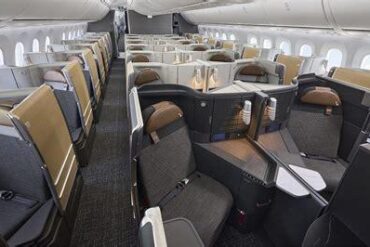
The biggest change to American Airlines’ Boeing 787 business class product in 2026 is the arrival of the new Flagship Suites.
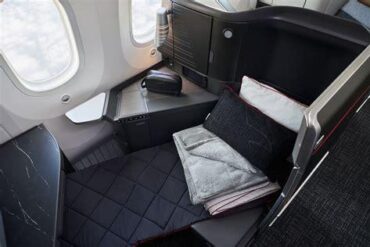
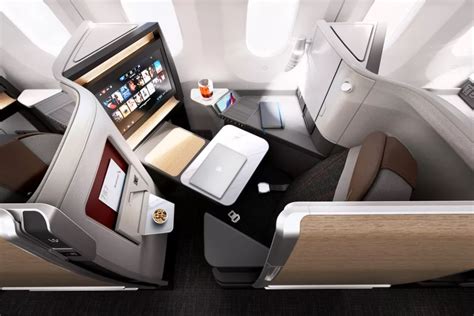
Installed on the newest premium-heavy 787-9 aircraft, these suites represent a substantial improvement over previous business class seats. Each suite includes a sliding privacy door, upgraded storage, enhanced lighting, wireless charging, and larger entertainment screens.
The design is based on the Adient Elevate Ascent platform, which has rapidly become one of the most competitive business class products in commercial aviation.
American also introduced larger front-row “Flagship Preferred” suites with additional personal space. At present, these seats do not carry a surcharge, although industry analysts widely expect that to change as the airline monetizes premium seating more aggressively.
The difference between old and new cabins can be substantial.
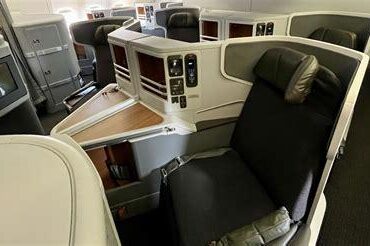
Older Boeing 787 aircraft still use either the Safran Concept D seat or the Collins Super Diamond seat. While both provide lie-flat comfort and direct aisle access, the Concept D configuration has faced criticism for years because seat movements can transfer vibrations between paired passengers.
The newest suites solve many of those issues while creating a significantly more private experience better aligned with global competitors such as Qatar Airways, Delta One Suites, and British Airways Club Suites.
Which Boeing 787 Has The Best Business Class Cabin?
For travelers specifically targeting the best onboard experience, the aircraft type matters enormously.
The newest Boeing 787-9 “789P” aircraft are unquestionably the top choice. They include:
- 51 Flagship Suites
- Sliding privacy doors
- Larger premium cabins
- New cabin finishes
- Upgraded lighting systems
- Flagship Preferred front-row suites
Older 787-9 aircraft still offer solid business class seating through the Collins Super Diamond product, but without doors or the same sense of privacy.
The oldest 787-8 aircraft equipped with Safran Concept D seats are generally considered the weakest option in the fleet. While still fully lie-flat, the alternating forward-and-rear-facing layout feels dated compared with modern suite products.
Travelers booking premium cabins increasingly research aircraft configurations before purchasing tickets, and American’s fleet inconsistency means seat selection can dramatically impact overall satisfaction.
Using AAdvantage Miles For Business Class Can Still Deliver Huge Value
Cash fares in business class are often difficult to justify outright, which is why many travelers turn to airline miles instead.
American Airlines uses dynamic pricing for award tickets, meaning mileage costs fluctuate alongside cash demand. While the airline publishes “starting from” redemption rates, real-world pricing is frequently much higher.
Typical baseline redemption levels include:
- Europe from 75,000 miles one-way
- South America from 90,000 miles
- Asia and South Pacific from 95,000 miles
In practice, however, many premium routes price well above those thresholds during peak periods.
Still, excellent value opportunities occasionally appear, especially when award inventory opens close to departure or during seasonal demand lulls. Redeeming 75,000 to 95,000 miles for a seat that might otherwise cost $6,000 or more can deliver exceptional cents-per-mile value.
The broader strength of the AAdvantage program comes from its extensive partner network. Travelers can use miles not only on American Airlines but across the oneworld alliance and numerous non-alliance partners, including Qatar Airways, Japan Airlines, Cathay Pacific, Etihad Airways, and Qantas.
That flexibility makes AAdvantage particularly valuable for international premium travelers seeking alternatives to American-operated flights.
Why American Airlines Is Betting Big On Premium Travelers
The transformation of American’s Boeing 787 fleet reflects a broader reality reshaping global aviation in 2026. Airlines are increasingly prioritizing premium revenue over maximum passenger volume.
The newest Dreamliners contain dramatically more premium seating because those passengers generate disproportionately higher profits. A single business class ticket can produce the same revenue as multiple economy passengers combined.
Corporate travel has evolved as well. Companies now send fewer employees on trips, but those who do travel are often flying in higher cabins. Meanwhile, affluent leisure travelers have shown a growing willingness to spend heavily on comfort, especially for long-haul journeys.
American Airlines clearly believes that trend is permanent.
Its premium-heavy 787 strategy positions the airline to compete more effectively against Delta and United while also defending itself from increasingly sophisticated international rivals. The addition of Flagship Suites, enhanced lounges, and upgraded premium dining reflects an airline attempting to move further upscale after years of criticism about product inconsistency.
For travelers, the result is a business class experience that has improved substantially — but one that can also command breathtakingly high fares depending on when and where they fly.
In 2026, flying business class on an American Airlines Boeing 787 is no longer just transportation. On many routes, it has become a luxury product priced accordingly.