As commercial aviation moves into 2026, first class travel sits at a crossroads between timeless luxury and modern scrutiny. The cabin that once symbolized the unquestioned peak of air travel is now rarer, more expensive, and increasingly contrasted against business class products that have evolved at a breathtaking pace. For travelers willing to pay a significant premium, the real question is no longer whether first class is luxurious—it undeniably is—but whether that luxury still justifies its cost in a world where the alternatives are better than ever.
Airlines themselves appear divided. Some carriers have quietly phased out first class entirely, reallocating space to larger business class cabins that sell more reliably. Others have gone in the opposite direction, refining first class into an ultra-exclusive experience with enclosed suites, hyper-personalized service, and ground offerings that feel closer to private aviation than commercial travel. The result is a fragmented landscape where first class in 2026 can either be astonishingly good or surprisingly redundant, depending on who you fly with and where you are headed.
Understanding whether first class is worth it requires looking beyond marketing slogans and into the tangible realities of the journey, from curbside at the airport to the final moments before landing. Value, in this context, is not universal. It is shaped by comfort, time, privacy, psychology, and how much friction a traveler is willing to tolerate along the way.
By the time most travelers step into the terminal, their impression of the flight has already begun to form. For first class passengers, this is where the experience quietly separates itself from everything else.
The Ground Experience: Where First Class Quietly Earns Its Reputation
The most underrated advantage of international first class is not the seat or the champagne, but the way it reshapes the airport experience itself. In 2026, major hubs are more crowded than ever, security lines are unpredictable, and premium travelers increasingly value time and calm over spectacle. First class is engineered precisely around these priorities.
Dedicated check-in areas remove the chaos of the main terminal, often placing passengers into serene, lightly staffed zones where formalities are handled swiftly and discreetly. Many airlines extend this advantage further through fast-track security and immigration channels, eliminating the most stressful elements of modern air travel. At select airports, first class travelers may never even see a standard security line.
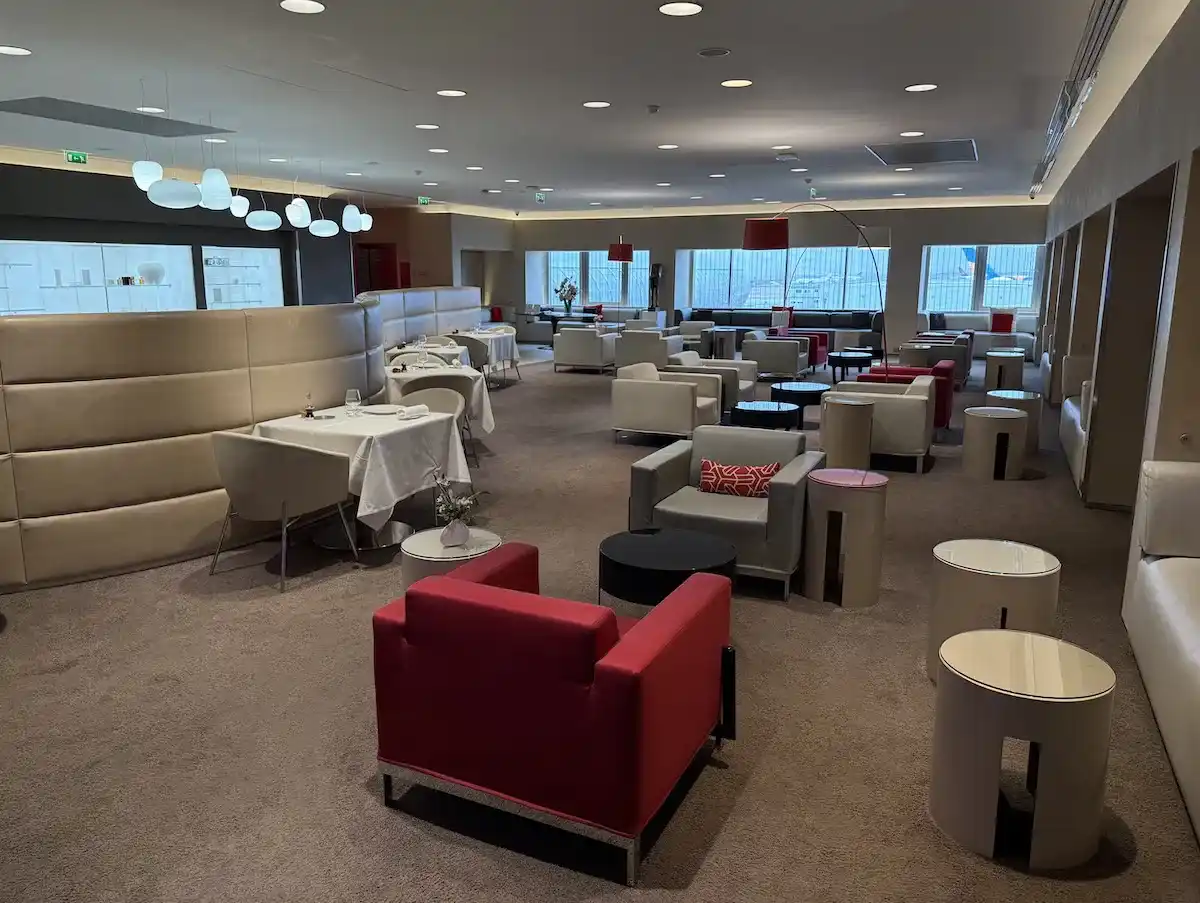
Lounge access is where the distinction becomes unmistakable. First class lounges are not upgraded waiting rooms; they are destinations in their own right. Lufthansa’s First Class Terminal in Frankfurt operates independently from the main terminal, complete with restaurant-quality dining, premium bars, cigar lounges, and private rooms. Emirates’ first class lounge at Dubai International spans an entire concourse, offering à la carte meals, spa services, and direct boarding from the lounge to the aircraft. Singapore Airlines’ Private Room at Changi Airport remains a benchmark for discretion and refinement, emphasizing silence, space, and culinary quality over spectacle.
What elevates this further is personalized ground service. Chauffeur-driven transfers, discreet escorts through immigration, and staff trained to anticipate rather than react all contribute to a sense that the journey has been curated rather than processed. For travelers who fly frequently or value privacy, this frictionless transition can matter as much as anything that happens in the air.
First Class in the Air: Space, Silence, and the Psychology of Control
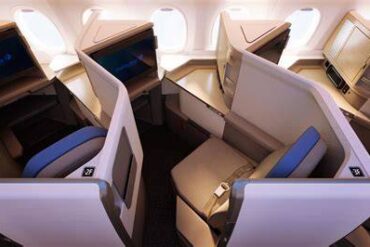
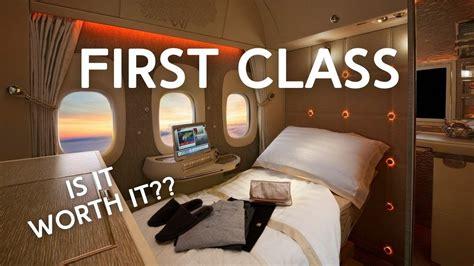
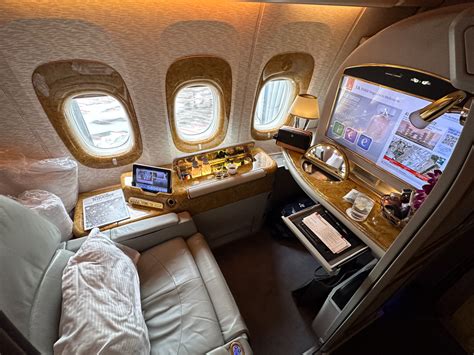
Once onboard, first class cabins deliver an environment that feels fundamentally different from the rest of the aircraft. Space is the most obvious factor, but it is how that space is used that defines the experience. In 2026, the best first class products offer fully enclosed suites with floor-to-ceiling doors, expansive seating areas, and beds designed for uninterrupted long-haul sleep.
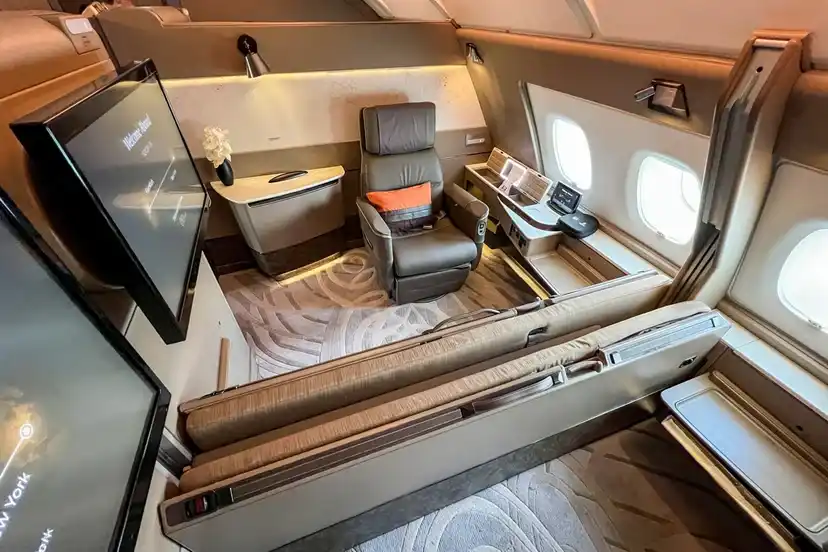
Emirates’ latest first class suites on select Boeing 777 aircraft exemplify this philosophy, with virtual windows for center suites, refined lighting controls, and on-demand service that minimizes interruptions. Singapore Airlines’ A380 suites elevate the concept further, allowing passengers to dine face-to-face or convert separate seats into a full double bed. These are not seats that become beds; they are private rooms in the sky.
Dining is another pillar of the first class value proposition. Meals are served when the passenger chooses, not when the cabin dictates. Menus are often developed in collaboration with renowned chefs, supported by premium tableware and extensive wine lists. Emirates’ continued partnership with Dom Pérignon underscores the indulgent tone, while Singapore Airlines’ Book the Cook service allows travelers to pre-select gourmet dishes tailored to their preferences.
Service in first class is shaped by ratios. With only a handful of passengers in the cabin, flight attendants can deliver highly individualized attention, remembering preferences, adjusting service pace, and maintaining a sense of privacy throughout the flight. Add in spacious lavatories, luxury amenity kits from high-end brands, and, in rare cases, onboard showers, and the result is an experience designed to feel effortless.
Business Class Has Changed the Equation
The reason first class is questioned in 2026 is not because it has become worse, but because business class has become dramatically better. Over the past decade, airlines have poured investment into business class as their primary revenue driver, transforming it into a product that delivers many of the comforts once reserved exclusively for first.
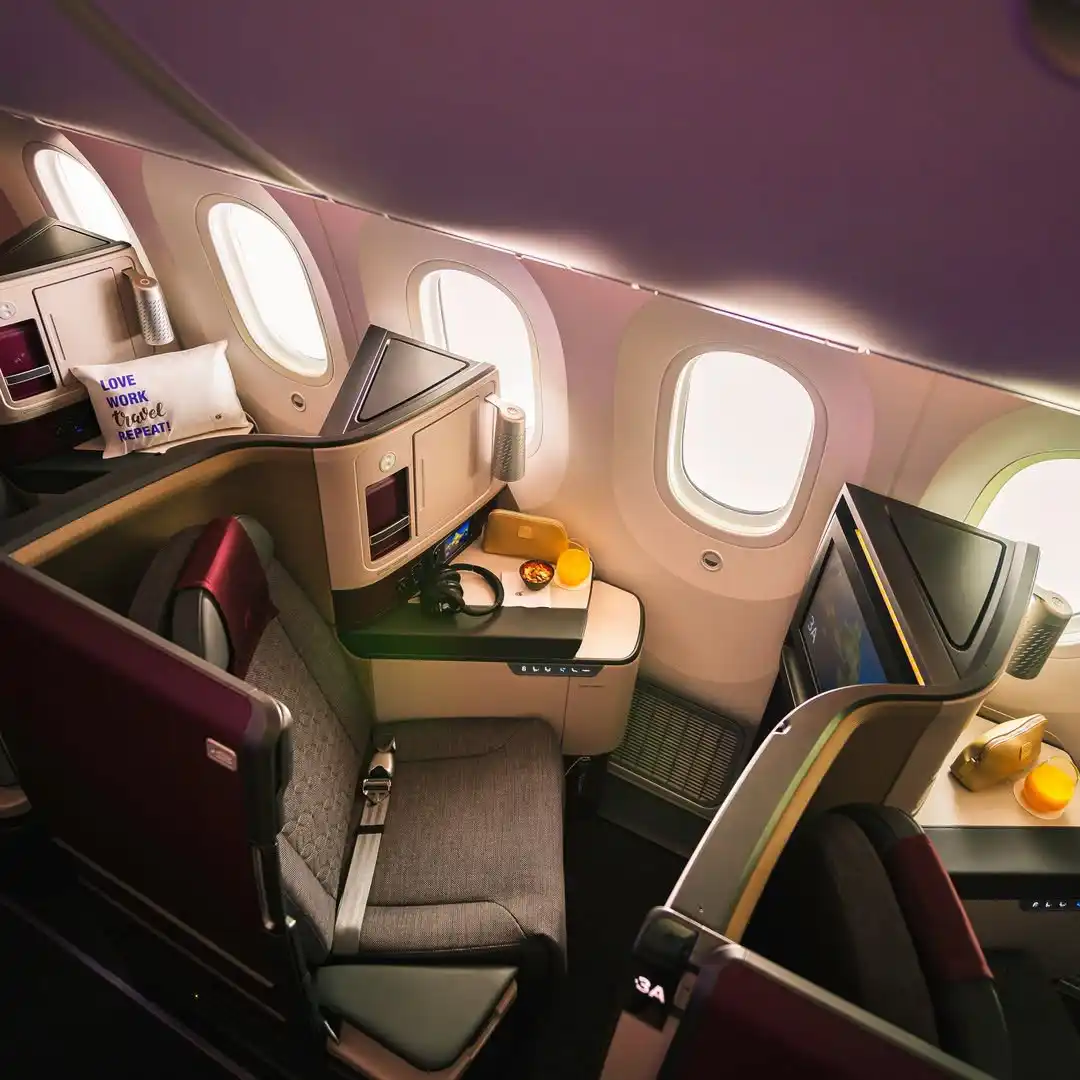
Qatar Airways’ Qsuite is often cited as the turning point. With sliding doors, direct aisle access, and modular layouts that allow for shared spaces or double beds, it redefined expectations of what business class could be. Airlines such as Delta Air Lines, All Nippon Airways, and British Airways have followed with their own enclosed or semi-enclosed designs, emphasizing privacy, storage, and high-quality materials.
Dining in business class has improved in parallel. Multi-course meals, dine-on-demand options, upgraded wines, and more attentive service have narrowed the experiential gap significantly. For many travelers, especially on overnight flights where sleep is the primary goal, modern business class delivers everything they actually need.
As first class disappears from more fleets, business class is increasingly positioned as the flagship product. This shift has made the jump from business to first harder to justify unless the traveler values the specific intangibles that only first class can provide.
The Airlines That Still Make First Class Matter
Despite its reduced presence, first class in 2026 is far from irrelevant. A select group of airlines continues to invest heavily in maintaining and refining truly exceptional products. Singapore Airlines consistently leads global rankings, praised for its balance of space, service, and understated luxury. Emirates remains synonymous with extravagance, offering features that no business class product can replicate.
Air France has quietly elevated its La Première experience, emphasizing French gastronomy and tailored service, while Japan Airlines and All Nippon Airways focus on serenity, craftsmanship, and impeccable attention to detail. Lufthansa’s first class offering, particularly on the ground, remains one of the most distinctive in the world.
These products share a common trait: they are designed as end-to-end experiences, not just premium seats. When executed at this level, first class still feels unquestionably special.
The Reality of US Domestic First Class
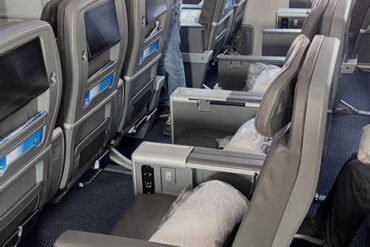
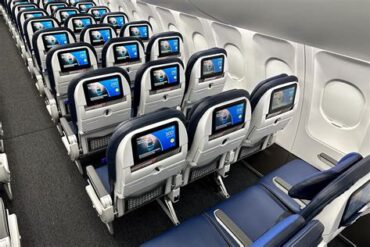
It is important to distinguish between international first class and the product labeled as first class on most US domestic routes. In the United States, first class is largely a comfort upgrade rather than a luxury experience. Seats are wider, legroom is improved, and service includes complimentary drinks and meals on longer flights, but the fundamentals remain closer to premium economy than to global first class standards.
Lounges are not always included, catering can vary widely, and there is little sense of exclusivity. For short-haul flights, this may still represent good value, particularly for frequent flyers seeking space and convenience. However, it should not be confused with the immersive luxury offered by international first class cabins.
So, Is First Class Worth It in 2026?
The answer depends less on price alone and more on what a traveler values most. First class is worth it in 2026 when the journey itself matters as much as the destination, when privacy is non-negotiable, and when time, calm, and personalization justify the premium. On the right airline and route, first class remains unmatched.
For travelers focused on comfort, sleep, and efficiency, today’s best business class products often deliver near-equivalent satisfaction at a far lower cost. The gap has narrowed, but it has not disappeared. First class has become a precision product, not a default aspiration.
In 2026, flying first class is no longer about status. It is about intention. Those who choose it know exactly what they are paying for, and when the experience aligns, the value is unmistakable.