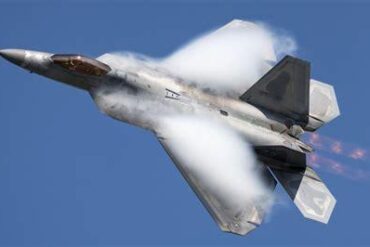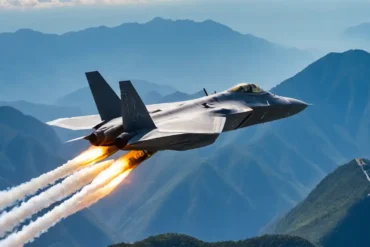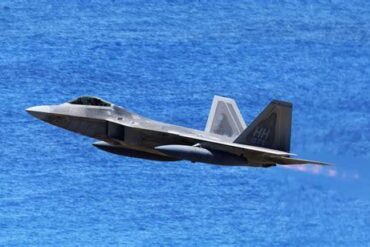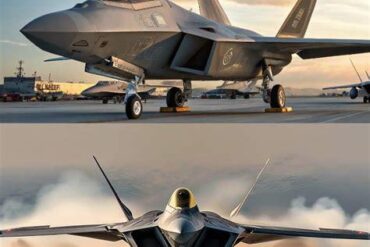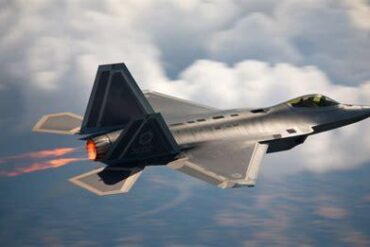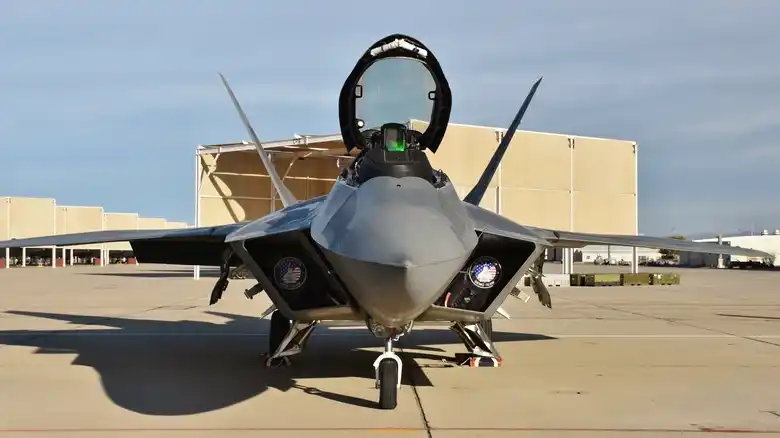
From the moment you first see the Lockheed Martin F-22 Raptor, there’s an unmistakable sense that you’re not just looking at an aircraft—you’re looking at the pinnacle of air superiority. With its sleek, radar-deflecting angles, curved aerodynamic surfaces, and that distinct golden canopy, the Raptor projects technological supremacy. But what truly sets this fighter apart isn’t just what you can see from the outside—it’s what happens inside the cockpit that defines the F-22’s legacy.
The F-22 Raptor Cockpit: A Glass-Dominated Digital War Room
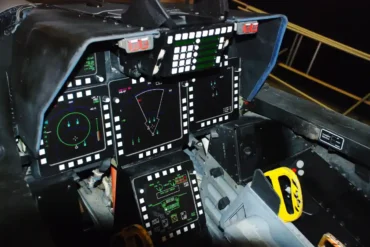
Climbing into the cockpit of the F-22 means entering a world where analog has vanished. The days of rows of dials and clunky switches are long gone. In their place sits a fully digital, all-glass cockpit that integrates high-resolution liquid crystal displays (LCDs) capable of shining bright under direct sunlight—a necessity given that dogfights and evasive maneuvers often play out against a bright sky.
There are six multifunctional displays (MFDs) in total, designed to present critical information at a glance. At the center of the layout is a large primary display for tracking, threat detection, and weapons targeting. The user interface emphasizes situational awareness—making sure the pilot can synthesize rapidly changing combat variables in real time. The display system prioritizes relevance: threats, navigation data, and mission-specific metrics dominate the visual hierarchy, while less immediate data fades in prominence.
This digital environment is more than futuristic—it’s strategic. The absence of traditional gauges contributes not just to reduced pilot workload, but to greater cognitive efficiency in moments of high stress.
HOTAS: Control Without Letting Go
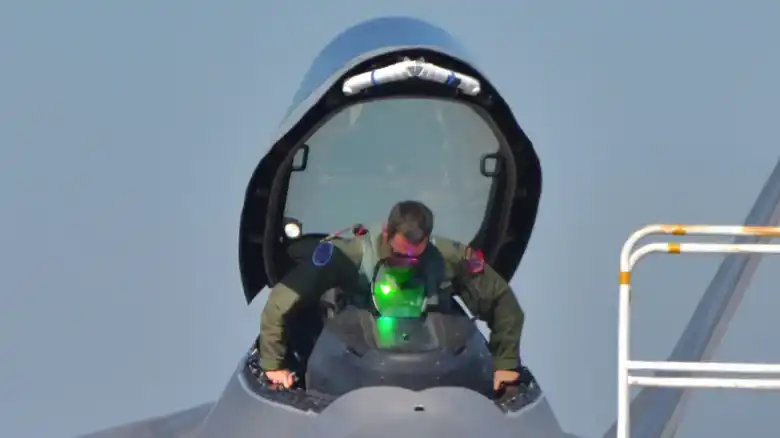
Everything in the F-22 cockpit is engineered to minimize delay. That philosophy culminates in the HOTAS (Hands-On Throttle-And-Stick) system, which lets the pilot manipulate virtually every critical function without removing hands from the flight controls. Buttons and switches on both the throttle (left hand) and control stick (right hand) allow direct access to weapons systems, radar modes, communication channels, and target acquisition—all without disrupting maneuvering.
The Raptor’s HOTAS system embodies a pilot-centric combat philosophy: trust the operator, reduce interface friction, and keep the focus forward. With no weapons systems officer (WSO) in the backseat, as found in older aircraft like the F-15E, all decision-making lies with the person in the cockpit—and the F-22’s design gives them the tools to manage it singlehandedly.
Supercruise and Flight Envelope: Breaking Sound Barriers with Grace
Where other jets rely on raw thrust and afterburners to reach and sustain supersonic speeds, the F-22 can supercruise—maintaining supersonic flight without the energy-draining afterburner. The result is a smoother, more efficient ride at speeds above Mach 1.5, offering strategic advantages in both fuel economy and radar signature.
This capacity gives the pilot not only operational stealth and speed but also remarkable comfort—something rare in the often violent and rattling world of high-speed aerial combat. The F-22’s flight control system utilizes a fly-by-wire interface that constantly corrects for instability, keeping the aircraft balanced while performing maneuvers that would be impossible for most airframes.
Living in the Cockpit: The Pilot Experience
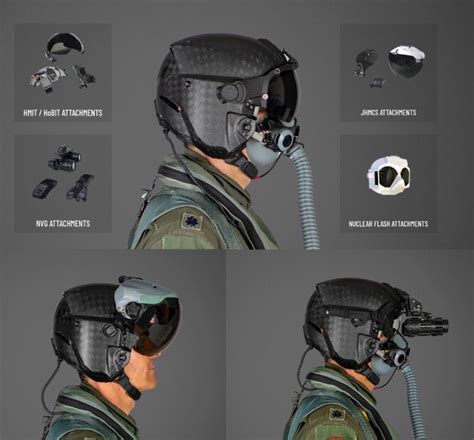
The interior of the Raptor isn’t spacious, but it’s ergonomically tailored for peak combat performance. Every inch is functionally purposed. When seated, pilots don’t just wear their uniform—they wear the cockpit. Standard gear includes a G-suit to combat the strain of high-speed turns, which in the F-22 can reach up to +9 Gs and down to -3 Gs.
Layered over the G-suit is a survival harness and a flotation vest, which doubles as both life-saving and tactical gear. The pilot’s helmet, custom-fitted and integrated with oxygen supply and encrypted communications equipment, completes the ensemble. Once strapped in, the pilot becomes a node in a lethal network, ready to act as a solitary command center within enemy airspace.
The Commander’s Chair: A Seat of Unilateral Authority
Unlike legacy fighters, the F-22 was designed for individual battlefield authority. Pilots aren’t just given the mission—they’re given the discretion. With access to data from onboard systems and external sources via secure datalinks, they can make real-time decisions on tactics and targeting without waiting for a command from higher-ups or another aircraft.
This level of independence is a fundamental shift in aerial combat doctrine. The Raptor’s software allows pilots to triage threats, manage weapons, and respond to evolving battlespaces, whether over foreign terrain or amid the layered complexity of modern warfare. The cockpit enables this autonomy by providing layered, prioritized information that lets the pilot act as both hunter and strategist.
The Canopy: More Than Just a View
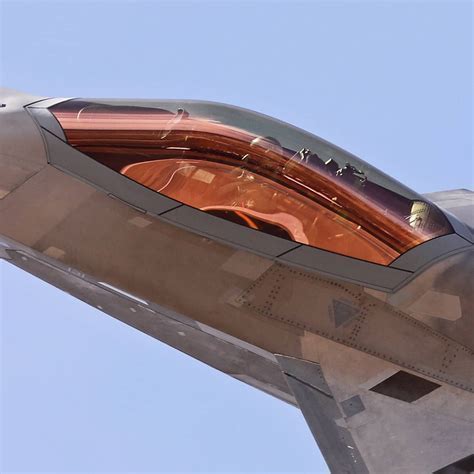
That gold-tinted bubble canopy isn’t just for looks. Made from polycarbonate composite and coated with a thin layer of gold, the canopy serves several purposes: it blocks electromagnetic emissions, helps maintain stealth by minimizing radar signature, and offers 360-degree visibility.
This panoramic view is especially critical in high-G engagements, where visual tracking and spatial orientation can make the difference between life and death. The canopy is also built to withstand bird strikes at supersonic speeds, a necessity for an aircraft that regularly pushes the edge of the flight envelope.
Avionics and Situational Awareness
At the core of the F-22’s supremacy lies its fusion of advanced sensors and computer systems. The AN/APG-77 radar system, designed to operate in the low probability of intercept (LPI) mode, provides stealthy but powerful detection capabilities. This radar feeds data into the Integrated Avionics Suite, where information from electronic warfare systems, radar, and navigation tools converge into a cohesive battlefield image.
Pilots aren’t flooded with raw data—they’re given actionable insight. The system filters through noise, highlighting relevant information. It’s as if the cockpit speaks a language of tactical prioritization, translating millions of lines of sensor feedback into clear choices.
Stealth in the Details: Cockpit and Covert Design
Everything from the shape of the displays to the materials used for the seat lining is filtered through the lens of stealth. The cockpit has been engineered to limit infrared and electromagnetic emissions, ensuring the pilot remains as invisible to detection systems as the jet’s airframe does to radar.
Additionally, internal weapon bays—controlled from the cockpit—keep missiles and bombs hidden until deployed, further reducing radar signature. Even routine actions, such as gear deployment or auxiliary fuel tank control, are executed with stealth in mind.
Psychological Edge: Flying the F-22 Means Owning the Skies
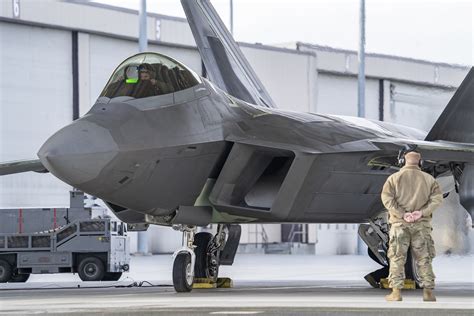
F-22 pilots often describe the experience as overwhelmingly empowering. Knowing you’re flying a machine with thrust vectoring, supersonic maneuverability, and virtually invisible radar signature transforms confidence into an operational weapon. The pilot isn’t just flying the jet—they’re fused with it.
That connection translates into confidence in combat. With threats constantly evolving, a pilot needs more than a fast jet—they need a cognitive advantage, and the F-22 delivers that from the seat up.
Final Thoughts: Where Man Meets Machine
The cockpit of the F-22 Raptor isn’t just a control center—it’s an augmented reality battlefield, a sphere where hardware meets instinct, and software meets strategy. While much about the aircraft remains classified, what’s clear is this: inside the golden canopy of the Raptor lies not just a seat, but a throne for 21st-century air dominance.
Flying the F-22 isn’t simply a matter of skill—it’s a convergence of technology, training, and tactical autonomy. And inside that cockpit, it’s not hard to see why the Raptor still reigns supreme nearly three decades after its debut.