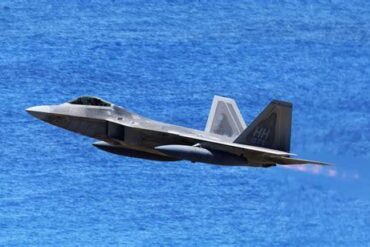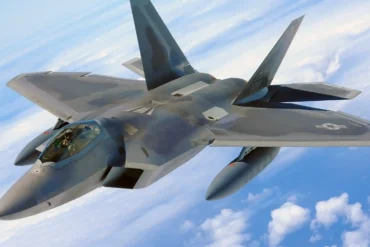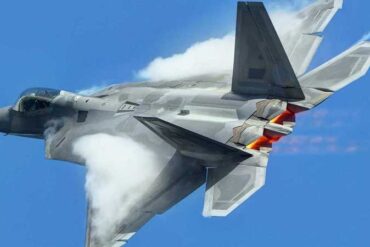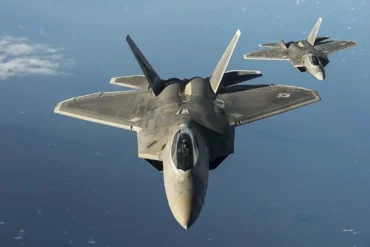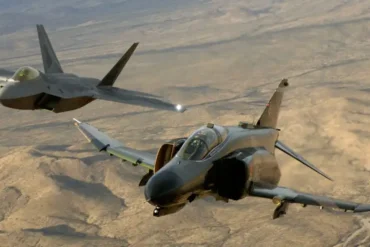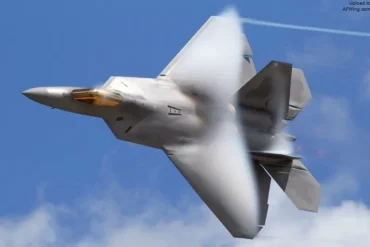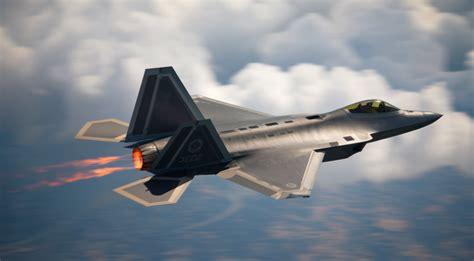
In the heart of America’s air dominance strategy lies a glaring vulnerability — the crippling shortage of F-22 Raptors, a problem the U.S. Air Force now admits can’t be fixed. Once envisioned as a linchpin of aerial superiority, the limited number of operational F-22s exposes a strategic oversight with potentially catastrophic implications. As geopolitical tensions with China and Russia intensify, the United States finds itself locked in a numbers game it can’t win with quality alone.
A Strategic Blunder That Echoes Through Decades
When the Lockheed Martin F-22 Raptor first entered service in 2005, it was the pinnacle of fifth-generation air superiority fighters — a revolutionary machine capable of dominating any adversary in the skies. Yet, production was halted at just 186 units, far below the originally planned fleet of 750. Why? A premature judgment by U.S. defense strategists who believed that post-Cold War peace would persist indefinitely.
Only about 150 of those Raptors are combat-coded, with the rest allocated to training or rendered non-operational. This decision, once justified by shifting budget priorities and geopolitical optimism, is now widely regarded as one of the most shortsighted moves in modern military aviation history.
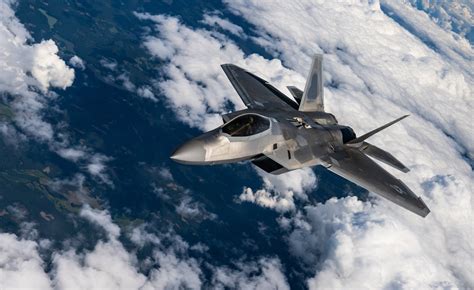
The F-22: Still the Apex Predator of the Skies
Despite its age, the F-22 remains unrivaled in air combat. It was the first true fifth-generation fighter, offering a suite of unmatched capabilities:
- Stealth: With a radar cross-section far smaller than even the F-35 and an estimated 100 times smaller than China’s J-20, the Raptor remains nearly invisible to enemy sensors.
- Thrust Vectoring: Its two Pratt & Whitney F119-PW-100 engines allow for extreme maneuverability, enabling feats like vertical climbs, flat spins, and supercruise (supersonic flight without afterburners).
- Sensor Fusion: Advanced avionics integrate multiple inputs into a single battlespace picture, giving pilots unparalleled situational awareness.
But even the best fighter in the world cannot win a war alone. Quality doesn’t trump quantity when your resources are stretched thin.
The Numbers Problem: Not Enough Raptors for a Two-Front War
Military analysts argue that a two-theater war — against China in the Pacific and Russia in Eastern Europe — would stretch America’s limited F-22 fleet to its breaking point. The Raptors would be forced to pick and prioritize one conflict over the other.
Some analysts claim the U.S. could manage with its current F-22 fleet, especially when combined with F-35s. But this is wishful thinking. The F-35 is a multirole aircraft — versatile, yes, but not a pure air superiority platform like the F-22. The Raptor was designed to eliminate enemy fighters before they could even see it. In contrast, the F-35 was built to penetrate defenses, conduct ground strikes, and operate in joint force scenarios.

Aging Raptors, Soaring Costs
The limited fleet is not just small — it’s also aging rapidly. Most of the aircraft are over 20 years old. According to government audits, the F-22 fleet failed to meet aircraft availability goals for a decade (2011–2021), hampered by high maintenance demands and logistical bottlenecks.
Moreover, the cost to keep the fleet competitive is staggering. In 2023, over $10 billion was earmarked for upgrades, equating to more than $72 million per combat-ready aircraft. As military writer Alex Hollings pointed out, that’s enough to buy 132 brand-new F-35As and still have funds left over.
And these upgrades are not trivial. They include:
- Enhanced radar systems
- Improved data links for joint operations
- Electronic warfare updates
- Cockpit modernization
But each dollar spent propping up this legacy fleet is a dollar not spent preparing for the future.
Why Restarting F-22 Production Isn’t an Option
Calls to reopen the F-22 production line have come too late. The specialized tooling has been dismantled, the manufacturing base has dispersed, and Lockheed Martin has pivoted fully to newer platforms, including the F-35 and upcoming F-47.
Reviving production would cost tens of billions and take years — precious time and money the Pentagon simply doesn’t have as it shifts focus to the Next Generation Air Dominance (NGAD) initiative.
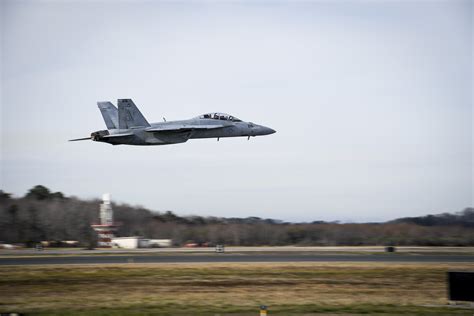
The F-47 and NGAD: A Promising But Distant Future
The Air Force’s hope now lies in the F-47, part of the NGAD program aimed at developing a family of systems to dominate the skies beyond 2030. The F-47 is expected to include:
- Sixth-generation stealth technology
- Optional unmanned operation
- Hypersonic weapon integration
- AI-assisted target recognition
- Possibly even laser-based directed energy weapons
Yet, even in the best-case scenario, full operational capability for NGAD aircraft is years away. And that leaves a dangerous interim gap — a vacuum in air superiority that adversaries could exploit.
A Geopolitical Risk the U.S. Can’t Ignore
With China dramatically expanding its fighter fleet, including the J-20 Mighty Dragon, and Russia maintaining a large inventory of Su-35s and Su-57s, the United States must contend with the reality that its most elite fighters are both too few and too precious to risk.
Strategists warn that in a high-intensity conflict, attrition could quickly erode the limited Raptor fleet. Each F-22 lost would be irreplaceable, further tilting the balance of power.
To counterbalance this, the U.S. is leaning more heavily on:
- F-35 deployment in larger numbers
- Force multipliers like AWACS and tanker aircraft
- Strategic alliances and joint exercises in Asia and Europe
However, these are compensatory measures, not replacements for a true air dominance fleet.
Divesting the Block 20 Raptors: A Risky Proposition
Adding to the strain is the proposed retirement of the Block 20 F-22s, which are used for training rather than combat. While they lack full combat capabilities, their loss would reduce the pipeline for pilot proficiency and threaten operational readiness.
The U.S. Government Accountability Office (GAO) warned that retiring these airframes without a replacement training system would create a shortfall in experienced Raptor pilots — a weakness that could take years to mend.
Conclusion: A Diminished Sword in America’s Arsenal
The F-22 Raptor shortage is a cautionary tale in modern defense planning. It reflects a failure to anticipate future needs, a reliance on short-term savings over long-term security, and a misreading of geopolitical trends. Now, the U.S. faces the consequences: a critically small fleet of air superiority fighters that, while technologically unmatched, cannot be in two places at once.
While the F-22 will remain a dominant force for years to come, its shrinking numbers guarantee that it will never again be the strategic backbone of America’s aerial might. The hope rests now on seamless integration with the F-35, rapid deployment of the F-47, and a global network of allied forces to offset the glaring gap left by a fighter that came too few, too early, and was retired too soon.