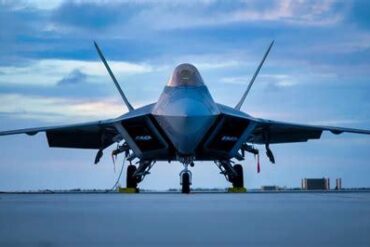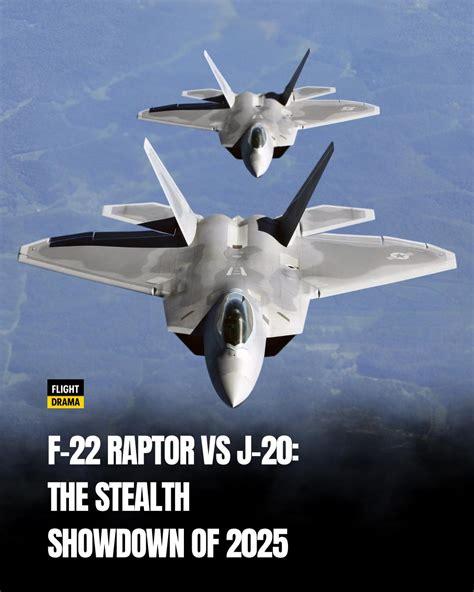
For years, American air dominance rested on a paradox. The United States possessed the world’s most advanced fighter aircraft, yet fielded them in relatively small numbers. The F-22 Raptor, unmatched in air-to-air combat and stealth performance, became an elite asset rather than a large operational backbone. Instead of replacing legacy fighters across the force, it remained a rare and precious capability. That era is ending.
The next decade is shaping into the largest modernization wave in modern U.S. tactical aviation history. Between the F-35 Lightning II, the new F-47 Next Generation Air Dominance fighter, the Navy’s upcoming F/A-XX, and more than a thousand autonomous combat drones, America could soon operate an air superiority ecosystem dramatically larger than anything seen since the Cold War.
This is not simply a procurement story. It is a strategic reset driven by growing competition, especially in the Indo-Pacific, where airpower scale matters almost as much as technology. The future fleet will be faster, stealthier, smarter, and far more numerous than the force built around the Raptor.
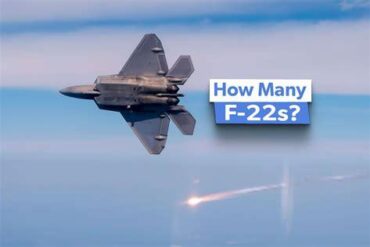
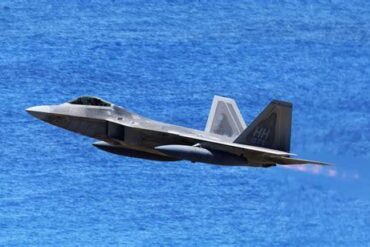
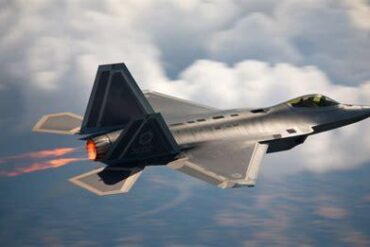
The F-22 Raptor Was Brilliant, But Too Few Were Built
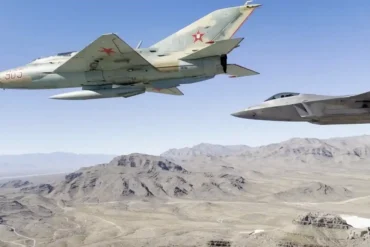
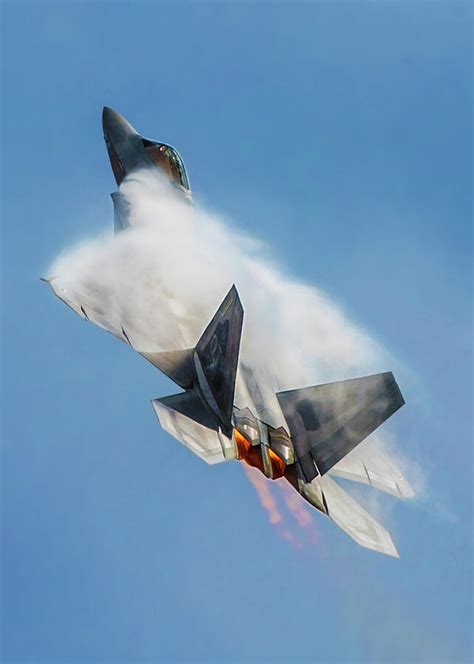
When the F-22 entered service in 2005, it changed fighter aviation. Supercruise, low observability, sensor fusion, and extreme maneuverability made it the benchmark for fifth-generation air combat. In a direct engagement, few aircraft anywhere in the world were considered credible rivals.
Yet production decisions limited its long-term impact.
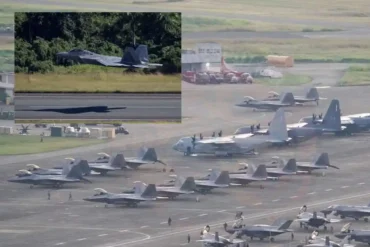
Only 186 F-22s were ultimately built, far below earlier ambitions that envisioned hundreds more. Even more striking, only a fraction of those aircraft are typically mission-ready at any given time because of maintenance cycles, upgrades, and attrition. In practical terms, the number of combat-available Raptors can fall far below headline totals.
That created a structural weakness. America had the best air superiority fighter, but not enough of them to cover every theater, contingency, or sustained conflict scenario. The F-22 became a strategic silver bullet—deadly, but scarce.
Why the United States Ended F-22 Production
The shutdown of the Raptor line remains one of the most debated procurement choices in Pentagon history. At the time, budget pressure collided with changing priorities. The wars in Iraq and Afghanistan demanded systems optimized for irregular warfare, surveillance, logistics, and counterinsurgency rather than expensive peer-war fighters.
The F-22 was also costly. Unit prices and sustainment burdens made expansion politically difficult. Decision-makers calculated that a smaller fleet of elite aircraft, paired with upgraded fourth-generation fighters, was acceptable for the threat environment of that era.
History moved quickly.
China accelerated military modernization. Russia pursued stealth programs. Advanced air defenses spread globally. Electronic warfare and long-range missile threats intensified. Suddenly, the assumption that America could dominate the skies with a boutique fleet looked less comfortable.
The F-35 Changed the Numbers Game
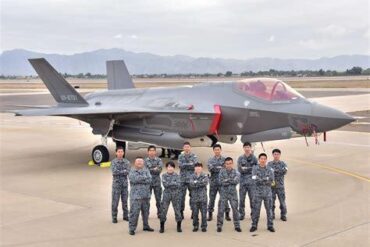
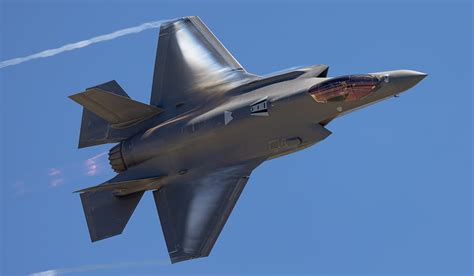
If the F-22 represented exquisite quality, the F-35 Lightning II represents scalable fifth-generation mass.
The F-35 program has already delivered aircraft on a scale the Raptor never approached. Across the Air Force, Navy, Marine Corps, and allied operators, the jet has become the common stealth backbone of Western tactical aviation. Its role is broader than the F-22’s: strike missions, electronic warfare support, sensor networking, suppression of enemy defenses, and air combat.
For the United States, this matters because numbers restore operational flexibility. Instead of relying on dozens of Raptors, planners can distribute hundreds of stealth aircraft across regions and missions.
The F-35 is not a pure replacement for the F-22, but it solved a central problem: America once had world-class stealth fighters in limited quantity. Now it has stealth at scale.
Enter the F-47: America’s Sixth-Generation Spearhead
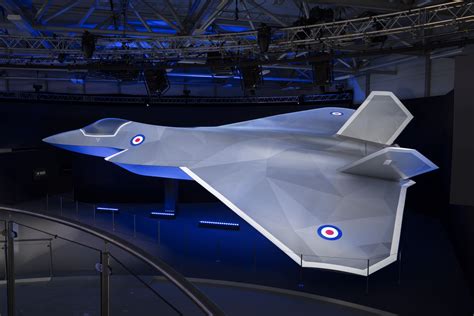
The next leap comes with the F-47, the Air Force’s selected Next Generation Air Dominance fighter. While many specifications remain classified, the concept points toward a system built for contested airspace against advanced adversaries.
Expected features include:
- Greater range for Pacific operations
- Advanced stealth beyond current standards
- AI-assisted battle management
- Sensor dominance across multiple domains
- Manned-unmanned teaming with autonomous wingmen
- New propulsion technologies for speed and endurance
Unlike the F-22, the F-47 is being shaped in a strategic environment where quantity is again recognized as critical. Current expectations suggest around 200 aircraft, potentially more depending on future budgets and threat conditions.
That alone would exceed the number of Raptors produced.
The Navy’s F/A-XX Could Multiply Sixth-Generation Strength
The Air Force is not alone in pursuing next-generation fighters. The U.S. Navy’s F/A-XX aims to replace portions of the Super Hornet fleet with a carrier-based sixth-generation platform designed for long-range maritime warfare.
Carrier aviation faces unique demands: catapult launches, arrested recoveries, saltwater corrosion, and integration into naval strike groups. Yet the mission is strategically vital. In a Pacific conflict, sea-based airpower may be the most flexible American response tool.
If the Navy acquires roughly 200 or more F/A-XX aircraft over time, then combined U.S. sixth-generation inventories could approach 400 to 500 manned fighters.
That would represent a transformational shift from the tiny F-22 era.
The Real Revolution Is Autonomous Combat Aircraft
The most dramatic expansion may not come from piloted jets at all.
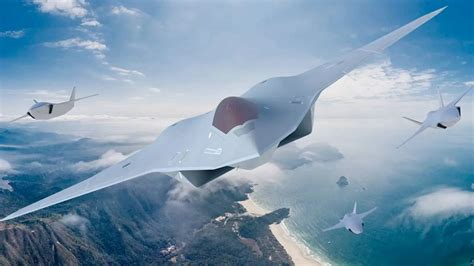
The Pentagon’s Collaborative Combat Aircraft (CCA) program is developing stealthy autonomous drones designed to fly alongside crewed fighters. Think of them as force multipliers that can scout, jam radars, carry missiles, act as decoys, or even strike targets.
Instead of sending one fighter into danger alone, commanders could send a package:
- One F-47 controlling two CCAs
- One F-35 teamed with multiple drone escorts
- Carrier fighters supported by autonomous electronic warfare platforms
This changes combat math instantly. A fleet of 500 advanced fighters paired with 1,000+ drones becomes a distributed combat network rather than a traditional aircraft inventory.
It also preserves human pilots for the most complex decisions while pushing machines into the highest-risk zones.
Why China Is Driving the Urgency
No serious analysis of U.S. airpower expansion can ignore China.
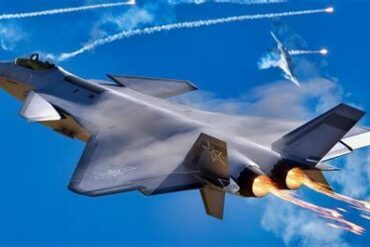
The People’s Liberation Army Air Force has rapidly increased the production of the J-20 Mighty Dragon, now the most numerous non-American stealth fighter in service. Additional programs such as the J-35 suggest China intends to field multiple stealth types for both land-based and carrier aviation.
That matters because numbers create pressure. Even if American aircraft maintain qualitative advantages, a regional contest involving large Chinese inventories forces the United States to think in terms of sortie generation, attrition replacement, tanker support, basing resilience, and sustained combat tempo.
The answer is no longer “build the best jet and stop there.” It is “build the best system and build enough of it.”
Industrial Capacity Is Now a National Security Issue
Another lesson from the F-22 shutdown was industrial fragility. Once production lines close, restarting them is brutally expensive. Suppliers disappear. Specialized workers retire or move on. Tooling is dismantled. Skills erode.
Modern airpower is not just about pilots and aircraft. It depends on:
- Engine manufacturing
- Radar production
- Composite materials fabrication
- Avionics supply chains
- Precision weapons output
- Software integration ecosystems
The new fighter wave helps preserve and expand those capabilities. In strategic terms, factories are now part of deterrence.
Could America Reach 2,000 Advanced Tactical Aircraft?
When combining projected F-35 numbers, legacy fighters still in service, future F-47 fleets, Navy F/A-XX inventories, and autonomous combat aircraft, the United States could field a tactical aviation force far larger and more lethal than the Raptor-centered structure of the past.
A plausible future mix may include:
- Over 1,000 F-35s in U.S. service
- Around 200 F-47s
- Hundreds of F/A-XX naval fighters
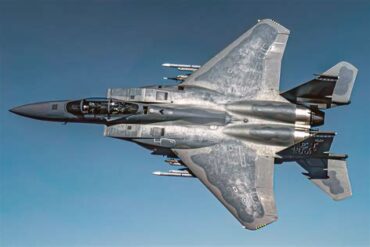
- Remaining upgraded fourth-generation aircraft
- 1,000+ Collaborative Combat Aircraft
That does not mean every aircraft is identical in mission or capability. It means the total combat ecosystem becomes deep, layered, and resilient.
Challenges That Could Slow the Vision
Ambitious programs rarely move smoothly. The road ahead includes serious obstacles.
Advanced engines remain technically demanding. Software-heavy aircraft require constant cyber hardening and updates. Unit costs can balloon. Congress can reshape funding priorities. Delays in one subsystem can ripple across the entire program.
There is also the question of pilot training, maintenance manpower, and basing infrastructure. Owning advanced jets on paper is easier than sustaining them at wartime readiness.
Still, momentum appears stronger now than in previous modernization cycles because the threat environment is clearer and bipartisan concern over strategic competition is higher.
From Boutique Dominance to Massed Dominance
The central story is philosophical.
For two decades, American airpower often prioritized a small number of premium systems. The future points toward something different: high-end quality combined with meaningful scale.
The F-22 proved technological superiority. The F-35 expanded stealth numbers. The F-47 aims to restore air superiority leadership. Autonomous wingmen promise affordable mass. Together, they form a layered model of warfare built for long-range peer conflict.
That is a much stronger position than relying on a few dozen available Raptors.
Final Assessment: How Much Larger Could the Fleet Get?
Compared with the era when only around 76 combat-ready F-22 Raptors might be available at a given moment, the coming force could include hundreds of sixth-generation fighters, more than 1,000 stealth manned aircraft, and over 1,000 combat drones.
That is not a modest upgrade. It is a generational expansion.
If executed successfully, the United States will move from a limited elite stealth force to the most sophisticated large-scale air superiority network ever assembled. In future wars, victory in the sky may belong not just to the fastest jet—but to the nation that combines stealth, autonomy, production capacity, and numbers better than anyone else.