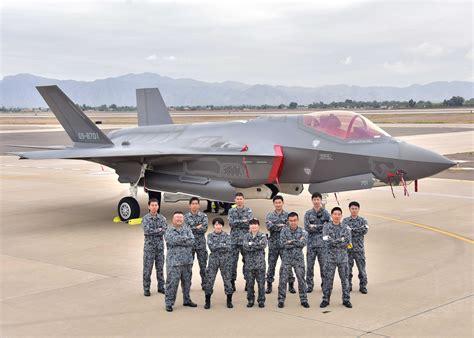
Japan’s defense capabilities have taken a significant leap forward with the recent delivery of three F-35 Lightning II fighter jets from the United States, marking a new era of air superiority for the Japan Air Self-Defense Force (JASDF). The arrival of these advanced stealth aircraft at Komatsu Air Base in Ishikawa underscores Tokyo’s commitment to modernizing its defense infrastructure amid growing regional tensions and evolving security challenges.
The newly delivered F-35s are equipped with the latest TR-3 avionics suite, a cutting-edge upgrade that enhances the aircraft’s processing power and combat efficiency. This sophisticated system includes an upgraded display, a high-speed core processor, and advanced memory modules, ensuring the jets can handle complex battlefield data with unprecedented speed and accuracy. These enhancements not only bolster Japan’s operational readiness but also align the JASDF with the most advanced air forces worldwide.
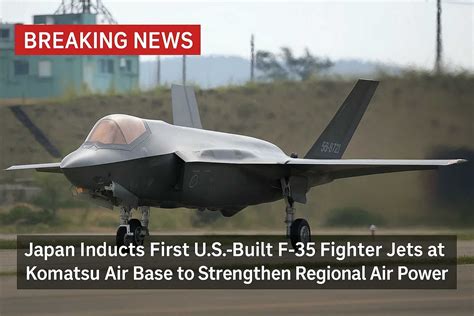
Strategic Significance of the F-35 Acquisition
The acquisition of these F-35s is not an isolated event but part of a broader strategic initiative. Japan has been intensifying its defense collaborations, as seen in last year’s interoperability exercises with the United States and Italy. Notably, the JS Kaga (DDH-184), a formidable Izumo-class helicopter destroyer, was deployed to the western coast of the US to conduct joint drills, showcasing Japan’s growing maritime and aerial combat synergy.
This coordinated approach reflects Japan’s foresight in anticipating security threats in the Indo-Pacific, where China’s rapid military modernization and increasing assertiveness have raised concerns. Lieutenant Colonel Ogino Masaki, JASDF’s F-35 Program liaison officer, highlighted this urgency, stating, “The security environment around the Indo-Pacific is becoming more dynamic and unstable, and the significant refinement and enhancement of our air power is an urgent requirement for Japan.”
Inside the F-35 Lightning II: Power and Precision
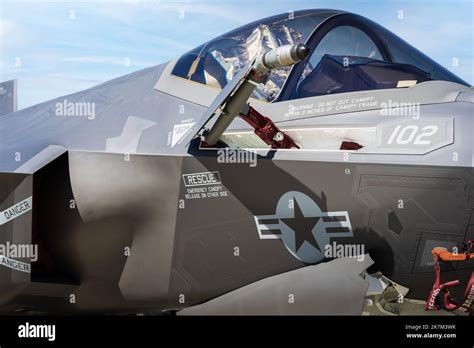
The F-35 Lightning II stands as a testament to fifth-generation fighter technology, blending stealth, agility, and advanced systems integration. The latest delivery includes the F-35A variant, renowned for its versatility and combat effectiveness. Each jet boasts a maximum speed of Mach 1.6 (1,228 miles or 1,976 kilometers per hour), with a formidable service ceiling of 50,000 feet (15,240 meters).
Operationally, the F-35A is designed for deep strike missions, featuring an air-to-surface missile configuration that allows it to engage targets within a combat radius of 770 miles (1,240 kilometers). In air-to-air combat scenarios, its range can extend up to 870 miles (1,410 kilometers), giving the JASDF a significant strategic edge over potential adversaries.
The $23.11 Billion Deal: A Closer Look
Japan’s procurement of the F-35s is part of a landmark $23.11 billion agreement approved in 2020, representing one of the most substantial defense deals in the country’s history. The package encompasses 63 units of the conventional F-35A and 42 units of the F-35B, the latter being a short-takeoff and vertical-landing (STOVL) variant designed for operations from shorter runways and amphibious assault ships.
This balanced fleet composition reflects Japan’s dual-domain strategy, integrating land-based and maritime air power to achieve comprehensive defense coverage. The versatility of the F-35B, in particular, enables Japan to project air power from its Izumo-class destroyers, transforming them into de facto aircraft carriers and significantly expanding Japan’s reach across the Pacific.
Enhancing Regional Security: The Broader Implications
The arrival of these F-35s carries regional and global implications. For allies such as the United States and other Indo-Pacific partners, Japan’s enhanced capabilities serve as a powerful deterrent against aggression and a pillar of collective security. The F-35’s seamless interoperability ensures that Japan can effectively coordinate with allied forces, contributing to a cohesive and resilient defense posture across the region.
Moreover, the deployment of these advanced jets is a clear signal to China and North Korea, reinforcing Japan’s readiness to defend its sovereignty and uphold the rules-based international order. The jets’ stealth capabilities, combined with their advanced sensors and weapons systems, enable Japan to preempt emerging threats and maintain air superiority even in contested environments.
Looking Ahead: Future Developments
Japan’s commitment to its F-35 program is expected to deepen in the coming years. Plans are underway to integrate new weapon systems and software updates, ensuring that the fleet remains at the forefront of technological advancements. Additionally, Japan is exploring indigenous upgrades and potential collaborations with other allies to further enhance the jets’ capabilities.
The strategic deployment of the F-35s is also expected to influence Japan’s defense doctrine, prompting a shift toward more proactive and flexible defense strategies. This evolution aligns with Tokyo’s broader vision of transforming the JASDF into a more agile, resilient, and technologically advanced force capable of responding to the full spectrum of modern threats.
Conclusion
The delivery of the new F-35 Lightning II fighters marks a pivotal moment for Japan’s defense landscape. With cutting-edge avionics, unmatched stealth, and superior combat performance, these jets significantly enhance Japan’s air power and strategic deterrence. As geopolitical tensions continue to mount in the Indo-Pacific, the integration of these formidable aircraft into the JASDF underscores Japan’s unwavering resolve to safeguard its national security and contribute meaningfully to regional stability.