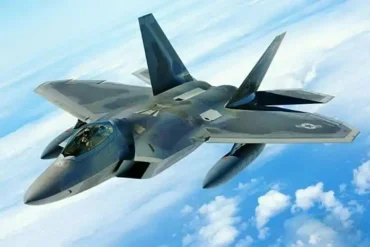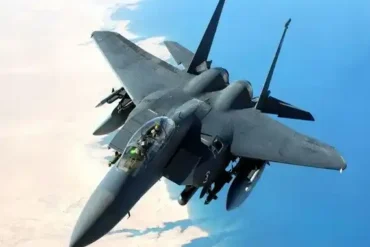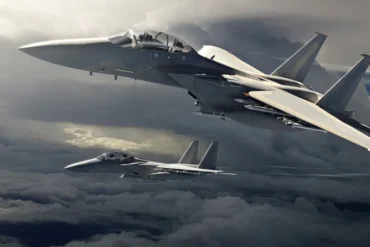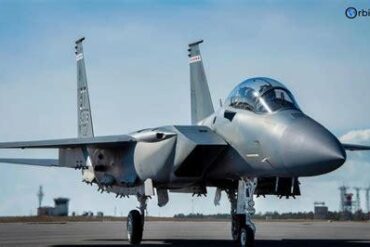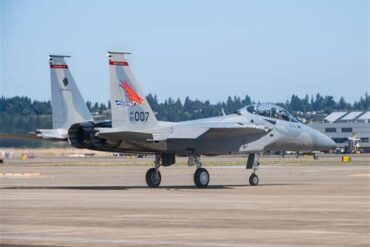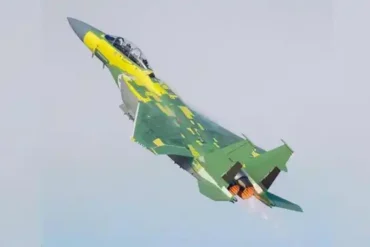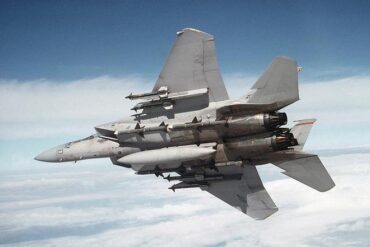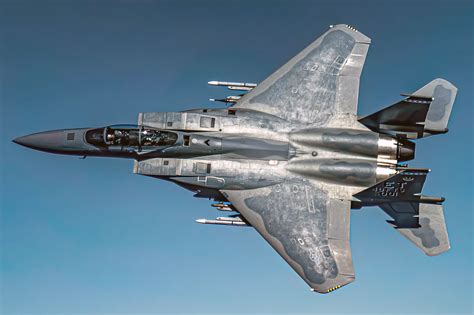
The F-15EX Eagle II and the J-35 stealth fighter represent two vastly different approaches to modern air combat. While the American-built F-15EX is a 4.5-generation powerhouse optimized for speed, payload, and operational endurance, the Chinese J-35 focuses on fifth-generation stealth capabilities and advanced avionics. In a hypothetical head-to-head clash, these differences in design philosophy and mission priorities create a compelling debate over which platform would prevail.
Strategic Context
With growing tensions in the Indo-Pacific region—especially in flashpoints like Taiwan, the South China Sea, and the East China Sea—there is a realistic possibility that U.S. and Chinese air forces could face each other in combat. The likely scenario would not be limited to fifth-generation matchups between F-22/F-35s and J-20/J-35s, but also include engagements between advanced fourth-generation fighters and stealth adversaries. This places the F-15EX vs. J-35 scenario into the realm of genuine military planning rather than mere speculation.
J-35 Stealth Advantage
The most decisive edge the J-35 holds is its stealth profile. Designed to minimize its radar cross-section (RCS), the J-35 incorporates blended wing-body shaping, canted twin vertical stabilizers, and trapezoidal mid-mounted wings. Its fuselage is optimized for internal weapons storage, reducing radar reflections, while radar-absorbent materials (RAM) cover critical surfaces.
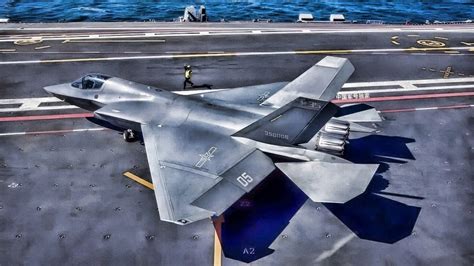
Key stealth-oriented design features include:
- Diverterless supersonic inlets (DSI) to reduce radar signature and improve airflow efficiency.
- Internal bays accommodating up to six air-to-air missiles (AAMs) without increasing RCS.
- Smooth aerodynamic lines that reduce detectability across multiple radar frequency bands.
In beyond-visual-range (BVR) combat, this translates to the “see first, shoot first” doctrine. The J-35 can lock onto and engage the F-15EX long before the latter’s radar can return a target track.
F-15EX Performance Superiority
The F-15EX Eagle II lacks stealth, but it compensates with raw performance. Its maximum speed of Mach 2.42 (1,854 mph / 2,983 km/h) dwarfs the J-35’s Mach 1.8. This allows the Eagle II to disengage or reposition rapidly—a critical factor in survivability when stealth is absent.
Engine Power
Powered by two General Electric F110-GE-129 afterburning turbofans, the F-15EX generates 29,500 lbf (131 kN) of thrust each, outperforming the Guizhou WS-21 on the J-35, which maxes out at 21,000 lbf (93.2 kN).
Range and Endurance
- F-15EX: 2,485 miles (4,000 km) on internal fuel.
- J-35: 780 miles (1,250 km) internal, ~1,200 miles (1,931 km) with external tanks or aerial refueling.
This enormous disparity means the F-15EX can sustain long-range patrols and deep strike missions without immediate tanker support, a logistical advantage in contested airspace.
Service Ceiling
The Eagle II’s 59,055 ft (18,000 m) service ceiling allows for superior high-altitude engagements, potentially granting a tactical diving attack advantage over the J-35, whose ceiling is 52,000 ft (16,000 m).
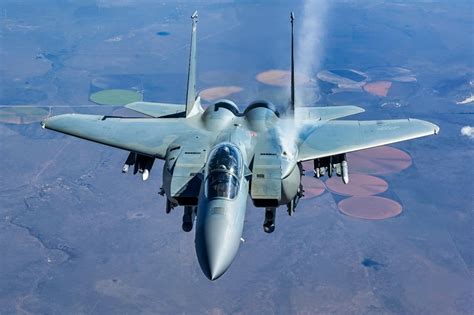
Weapons Capacity and Firepower
The F-15EX’s unmatched missile capacity—up to 22 air-to-air missiles—makes it a true missile truck in the sky. This includes a mix of AIM-120 AMRAAMs for long-range engagements and AIM-9X Sidewinders for close combat. The J-35, even when utilizing both internal and external hardpoints, maxes out at 12 missiles.
Critically, the Eagle II retains an internal M61A1 Vulcan 20mm cannon with 500 rounds, offering a last-resort option in close-quarters dogfights. The J-35 omits any internal gun, relying solely on missiles, which limits its versatility in within-visual-range (WVR) encounters.
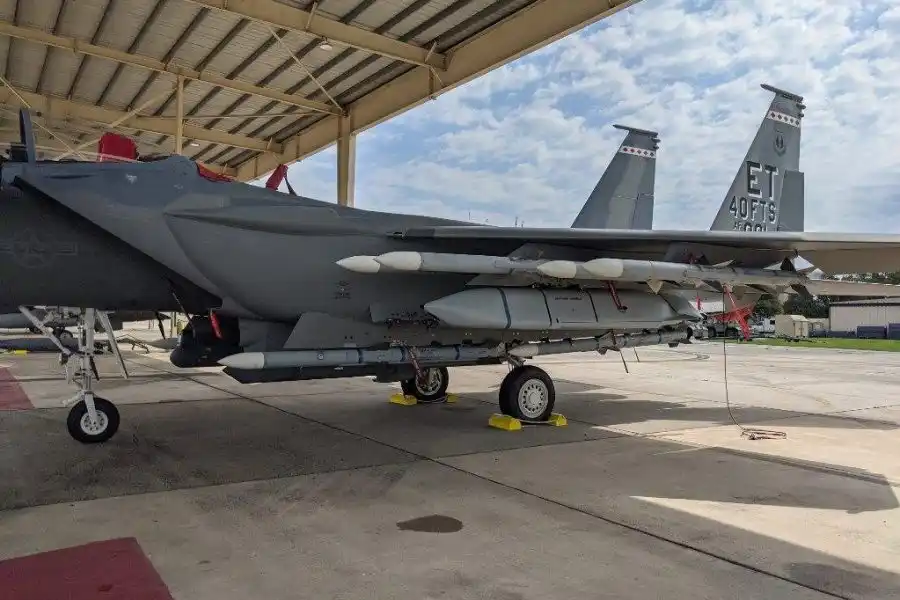
Production and Operational Status
- F-15EX: Operational since July 2024, with 144 units produced and active in USAF service.
- J-35: Estimated 8 prototypes built; unclear if it has reached full production or initial operational capability.
The combat experience gap is also striking. The F-15 platform’s 104:0 kill ratio over decades of service gives U.S. pilots unmatched confidence and tactical doctrine. The J-35, like the J-20, has no combat record, and Chinese pilots have not fought in a major war since 1979.
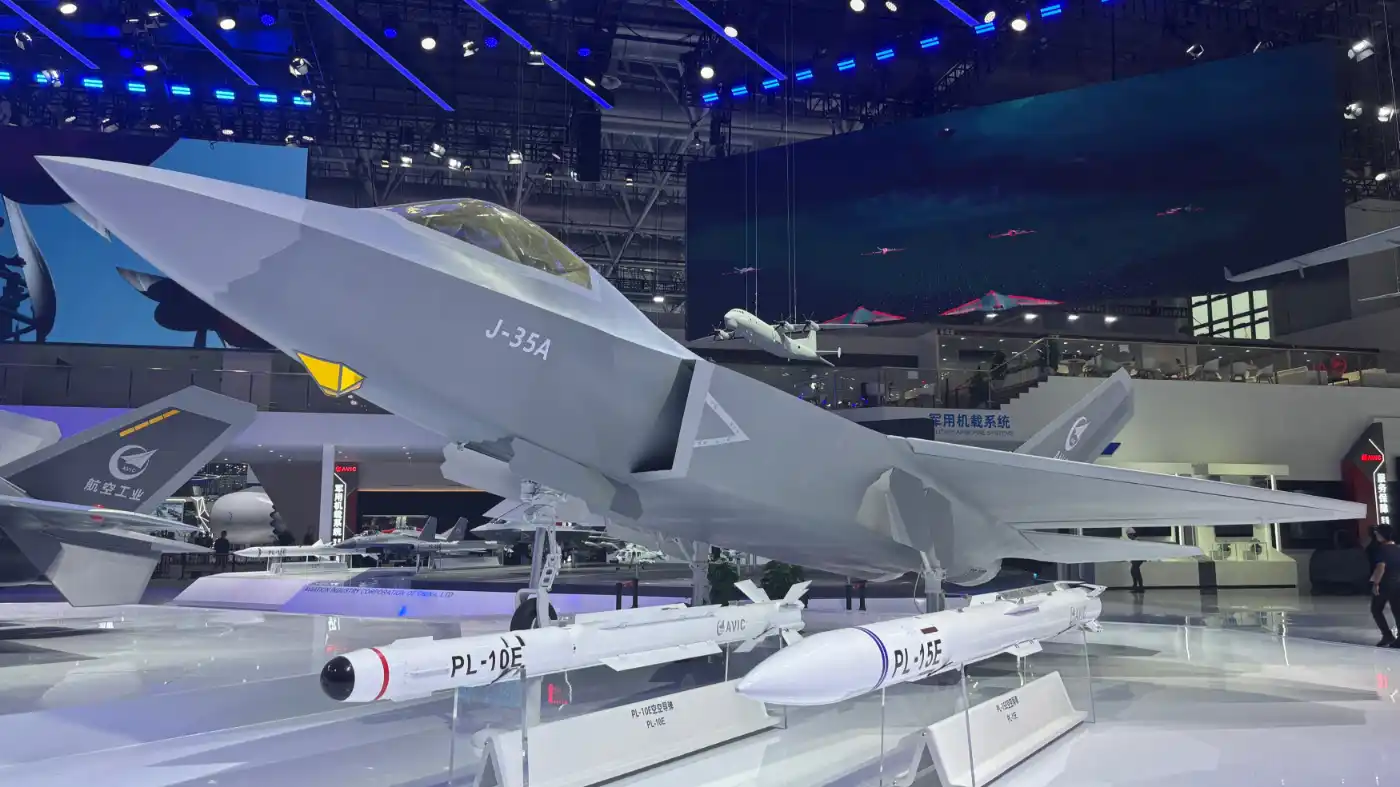
Hypothetical Combat Outcome
Despite the F-15EX’s superiority in speed, altitude, range, and payload, modern air combat prioritizes detection and engagement before visual contact. The J-35’s stealth advantage could allow it to fire first at BVR ranges, potentially neutralizing the Eagle II before it can respond.
In a single one-on-one duel, the J-35 would likely hold the edge. However, in a force-on-force scenario where the F-15EX operates alongside AWACS, electronic warfare assets, and stealth fighters like the F-35, the American side could offset the J-35’s stealth advantage.
Technical Specifications Table
| Specification | F-15EX Eagle II | J-35 Stealth Fighter |
|---|---|---|
| Generation | 4.5 | 5th |
| Country of Origin | USA | China |
| Manufacturer | Boeing | Shenyang Aircraft Corporation |
| Max Speed | Mach 2.42 (1,854 mph / 2,983 km/h) | Mach 1.8 (1,381 mph / 2,222 km/h) |
| Engine Thrust (each) | 29,500 lbf (131 kN) | 21,000 lbf (93.2 kN) |
| Range (Internal Fuel) | 2,485 miles (4,000 km) | 780 miles (1,250 km) |
| Service Ceiling | 59,055 ft (18,000 m) | 52,000 ft (16,000 m) |
| Missile Capacity | Up to 22 | Up to 12 |
| Internal Gun | M61A1 Vulcan 20mm (500 rounds) | None |
| Operational Status | Active, 144 units built | Prototype phase, ~8 units |
| Combat Record | 104:0 (F-15 family) | None |
Conclusion
The F-15EX Eagle II vs. J-35 matchup is a contest between kinetic performance and stealth dominance. The Eagle II can outfly, outclimb, and outgun the J-35 in most metrics, but in an era where first detection often determines the victor, stealth becomes the ultimate advantage. Without radar cross-section reduction measures, even the most capable fourth-generation fighter risks being neutralized before entering firing range.
If the United States seeks to counter the J-35 directly, it will require either stealth escorts or a shift toward sixth-generation platforms like the NGAD fighter to fully neutralize the threat.
FAQs
1. Can the F-15EX defeat the J-35 in close combat?
Yes—if the F-15EX can close the distance, its superior maneuverability, higher missile capacity, and internal gun would give it a decisive edge in a within-visual-range dogfight. The challenge lies in surviving the J-35’s BVR missile engagements before reaching close range.
2. How significant is the stealth advantage in modern air combat?
Stealth is critical in beyond-visual-range warfare, as it delays or prevents detection, allowing the stealth fighter to fire first. Even highly capable non-stealth fighters face major risks against opponents they cannot see in time.
3. Is the J-35 in full operational service?
No. Current estimates suggest the J-35 remains in the prototype and limited testing phase, with fewer than a dozen airframes built. It may take several more years before it reaches full operational deployment with the PLA Navy or Air Force.