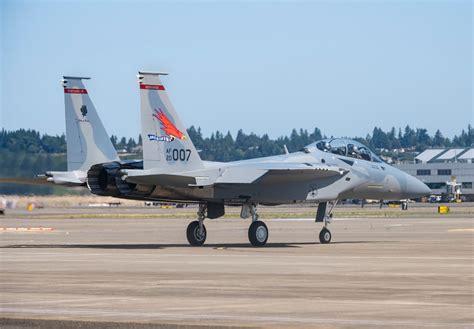
The United States is escalating its aerial deterrence posture in the Indo-Pacific, confirming the permanent deployment of its most lethal fourth-generation-plus fighter jet, the F-15EX Eagle II, to Kadena Air Base in Okinawa, Japan. This move comes at a critical time when the Taiwan Strait is rapidly transforming into the geopolitical flashpoint most likely to ignite direct conflict between Washington and Beijing.
The decision reflects not only a tactical response to growing Chinese military aggression but also a symbolic statement: American air dominance will not be ceded lightly in the Western Pacific.
The Eagle Has Landed: First Steps Toward Full Deployment
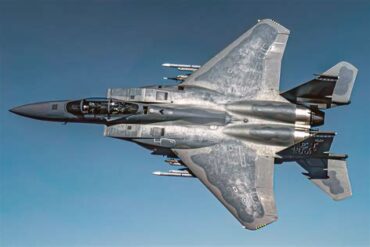
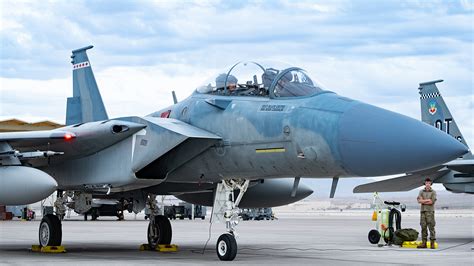
On July 12, 2025, two F-15EX Eagle II aircraft touched down at Kadena for familiarization training, marking the initial phase of a strategic deployment that will replace 48 aging F-15C/D Eagles with 36 cutting-edge F-15EXs by spring 2026. These aircraft are assigned to the 85th Test and Evaluation Squadron, part of an effort to integrate the advanced fighter seamlessly into the Pacific theater.
This interim visit, though short-term, serves a long-term goal: preparing Kadena personnel and infrastructure for the arrival of a platform designed for sustained superiority. Kadena, strategically located within the so-called First Island Chain, provides the shortest tactical reach to Taiwan and is pivotal for quick-response airpower in case of conflict.
A Legacy of Lethality: 104 Kills, Never Shot Down
The F-15 platform, originally introduced in 1976, has achieved a legendary air-to-air kill ratio of 104:0, making it the most successful modern air superiority fighter in history. Its invulnerability in dogfights is unmatched, and the Eagle II takes this legacy a step further with significant avionics, survivability, and weaponry upgrades.
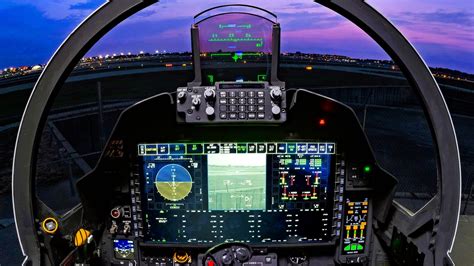
The F-15EX is based on the formidable F-15E Strike Eagle and enhanced by technology first incorporated into the Qatari F-15QA variant. It integrates digital fly-by-wire systems, an APG-82 AESA radar, Joint Helmet-Mounted Cueing System (JHMCS), and the Eagle Passive/Active Warning Survivability System (EPAWSS).
These systems collectively deliver real-time data sharing, faster enemy targeting, and greater situational awareness in contested airspace—key capabilities for defending the Taiwan Strait.
Speed, Range, Payload: A Triad of Superiority
The F-15EX’s combat performance is defined by three core metrics: superior speed, extended range, and unmatched payload. Capable of carrying up to 22 air-to-air missiles, it surpasses the F-22 and F-35 in this category. It also has the longest stand-off air-to-air engagement range in the USAF’s inventory, allowing it to strike threats before they come within reach.
Despite its size and loadout, the F-15EX boasts a low per-flight operating cost, making it not just a deadly platform but also a sustainable one. Its Open Mission System (OMS) architecture ensures rapid software upgrades, enabling the jet to adapt to emerging threats without requiring new airframes.
Strategic Urgency: The Chinese Challenge in the First Island Chain
In recent months, the urgency of bolstering American airpower in the Pacific has grown exponentially. Admiral Samuel Paparo, commander of U.S. Indo-Pacific Command, issued a stark warning to Congress: China now possesses the capability to deny U.S. air superiority across the First Island Chain.
This buffer zone—which stretches from Japan through Taiwan and down to the Philippines—is essential to projecting U.S. force and defending allies. But China’s breakneck modernization threatens that balance.
China’s Accelerating Air Arsenal
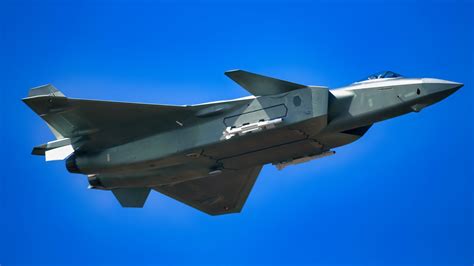
China has amassed a fleet of over 2,100 fighters, including more than 200 fifth-generation J-20 stealth aircraft, alongside 200 H-6 long-range bombers. It is currently flight-testing two sixth-generation prototypes, the J-36 and J-50, and has revealed a carrier-capable stealth jet, the J-35.
Its production rates are unprecedented: for every fighter the U.S. rolls out, China builds 1.2. It reportedly produces 100 J-20s annually, in addition to rapidly scaling up the J-10C and J-16. Moreover, legacy jets like the J-6 and J-8 are being retrofitted into Unmanned Aerial Vehicles (UAVs), drastically increasing attrition tolerance.
Hardened Infrastructure: China’s Airfield Advantage
China isn’t just adding aircraft—it’s fortifying the airfields they operate from. According to the Hudson Institute, Beijing has more than doubled its hardened aircraft shelters (HAS) since the early 2010s. It now possesses over 3,000 shelters, 20 new runways, and 40 runway-length taxiways.
By comparison, U.S. expansion has been sluggish. Within 1,000 nautical miles of Taiwan, American and allied forces have added only two HASs, 41 individual shelters, and one new runway. In raw capacity, China’s infrastructure dwarfs U.S. and allied facilities 3-to-1, and without airfields in South Korea and the Philippines, that advantage grows.
American Response: Crash Programs and Congressional Alarm
The imbalance in production and infrastructure has not gone unnoticed. Bipartisan calls in Washington are intensifying for a “crash program” to reinforce air defenses. These include:
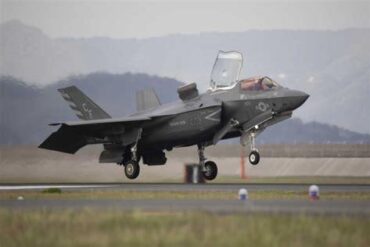
- Increasing the deployment of F-35s to Guam and smaller Pacific islands
- Constructing more hardened shelters and dispersal airstrips
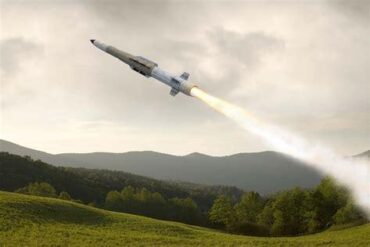
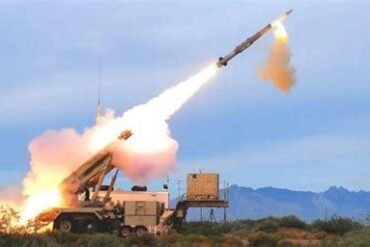
- Enhancing missile defense with Aegis Ashore systems and PAC-3 deployments
A March 2024 CSIS report echoed this urgency, noting that China’s capacity to sustain combat attrition now exceeds what the U.S. can counter from its current Indo-Pacific positions.
Why the F-15EX Is the Right Jet at the Right Time
Amid this rising tide of strategic uncertainty, the F-15EX stands out as the USAF’s most viable rapid-deployment solution. It does not require entirely new infrastructure or training, making it a seamless replacement for the F-15C/D fleet.
The twin-seat configuration also future-proofs the jet for crew-intensive missions, such as electronic warfare, loyal wingman drone coordination, or combat management roles. With open software systems and Suite 9.1 updates, these jets can remain at the technological forefront for decades.
Moreover, with the F-22 program capped and the F-35 facing high procurement costs and operational kinks, the F-15EX offers an affordable, mature, and combat-tested bridge to the sixth-generation Next Generation Air Dominance (NGAD) initiative.
Conclusion: A Pivot Toward Deterrence and Readiness
The permanent deployment of the F-15EX Eagle II to Kadena Air Base marks more than just an aircraft swap. It symbolizes a strategic pivot in U.S. posture, a message to both allies and adversaries that air dominance remains a red line in the Taiwan Strait.
As Beijing builds both quantity and quality, America is choosing proven lethality and adaptability. With 104 kills and zero losses, the F-15EX doesn’t just guard the skies—it owns them. And in the tense chessboard of Indo-Pacific power politics, owning the air means shaping the outcome.