Taiwan has taken a significant leap forward in autonomous warfare by unveiling its new suicide drone, Overkill, designed to mirror the battlefield effectiveness of Ukraine’s drone operations against Russia. As geopolitical tensions with China continue to escalate, this move represents one of the clearest signs of Taiwan’s strategic pivot towards unmanned precision weaponry that can be deployed at scale.
Taiwan’s Overkill Drone: A Direct Reflection of Ukraine’s Wartime Innovation
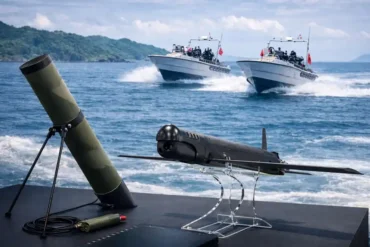
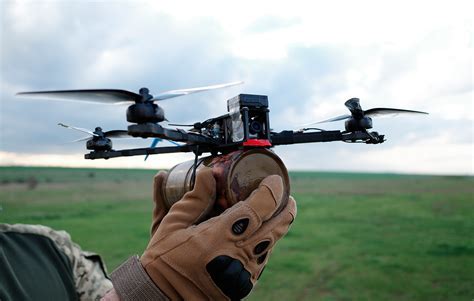
The Overkill drone—a first-person view (FPV) suicide drone—marks a critical milestone in Taiwan’s military modernization. Unlike larger fixed-wing or switchblade drones, Overkill is operated directly by an individual, offering exceptional maneuverability and real-time strike precision. Its design and operational capacity are deeply influenced by the tactical successes Ukraine has achieved using similar platforms in combat against Russian armor and naval installations.
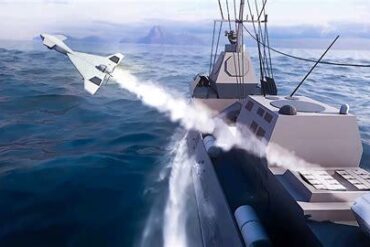
The Overkill drone is powered by Auterion’s advanced AI strike system, the same technology suite that Ukraine used to destroy T-90M Russian tanks and radar units on offshore oil rigs. This AI integration enables autonomous target recognition, high-speed precision attacks, and dynamic battlefield decision-making, effectively transforming it into a smart munition.
Auterion Partnership: Embedding Combat-Tested Software into Taiwan’s Arsenal
Developed jointly by Thunder Tiger and the National Chung-Shan Institute of Science and Technology (NCSIST), Overkill leverages software and vision systems from Auterion, a US-German software powerhouse specializing in military-grade drone solutions. Lorenz Meier, CEO of Auterion, underscored the strategic equivalence between Overkill and Ukraine’s FPV drones, stating, “This is the exact weapon used to disable high-value targets on the frontlines in Ukraine. Replace a Russian oil rig with a Chinese destroyer, and the tactical value becomes obvious.”
Auterion and NCSIST have already inked a multi-year collaboration agreement, highlighting the long-term ambition of both parties to scale Taiwan’s autonomous drone capabilities. According to Meier, the collaboration has already moved past the prototyping stage. Thunder Tiger has committed to purchasing Auterion software licenses for 25,000 drones, with a portion allocated for export—an indication of Taiwan’s aggressive scale-up plans.
Strategic Value: Overkill as a Force Multiplier in Asymmetric Warfare
As the threat from China intensifies, Taiwan’s defense strategy increasingly relies on asymmetric warfare capabilities that can neutralize superior numbers and hardware with agility and innovation. Suicide drones like Overkill provide a cost-effective and scalable deterrent that can target enemy naval vessels, radar systems, and tanks without risking pilot lives or expensive fighter jets.
In terms of combat application, Overkill is expected to operate in swarm configurations, overwhelming enemy defenses with high-speed, AI-directed attacks. The FPV format enhances both stealth and precision, allowing operators to fly low, fast, and directly into the most vulnerable points of an enemy target.
Production Scale-Up: From 10,000 to 25,000 Units — A Massive Leap
Despite Taiwan’s strategic ambitions, its domestic drone production has lagged. As of April, the country had produced under 10,000 drones in the past year, barely 6% of its 2028 target, according to the Research Institute for Democracy, Society and Emerging Technology. The planned acquisition of 25,000 Auterion software licenses marks a sharp escalation and signals an imminent expansion of production capacity.
Thunder Tiger’s general manager Gene Su called the 25,000 figure a “ballpark,” but confirmed active negotiations with multiple export customers. “We think export is a very big opportunity, especially in Southeast Asia,” he said, naming Vietnam, the Philippines, Indonesia, and India as key prospects. These countries, wary of dependence on Chinese military components, view Taiwanese drones as a politically neutral, reliable alternative.
Export Ambitions: Taiwan’s Drone Diplomacy in Asia-Pacific
Taiwan’s drone strategy also functions as a tool of diplomatic influence, especially in Southeast Asia where territorial disputes and Chinese military assertiveness have stoked regional tensions. Nations like Vietnam and the Philippines—locked in maritime disputes with Beijing—are actively looking to diversify their defense procurement channels. The fact that Overkill is built entirely without Chinese components makes it a compelling offering.
The drone’s export potential could serve dual purposes: enhancing Taiwan’s defense manufacturing base and embedding it more deeply within international security partnerships. Such partnerships could include joint manufacturing arrangements or technology transfer agreements that further isolate Beijing diplomatically.
U.S.-Taiwan Defense Tech Collaboration: Strengthening the Supply Chain
Taipei’s collaboration with Auterion isn’t just about battlefield performance—it’s also about supply chain resilience. The U.S. has grown increasingly wary of Chinese-made drone components embedded in critical military systems. Taiwan’s effort to create a 100% domestic and allied-based drone ecosystem aligns neatly with Washington’s goals.
As part of this evolving ecosystem, Taiwan hopes that its growing capacity to produce high-tech drones like Overkill will open doors for exports to the U.S. defense sector, or at the very least, serve as a reliable supplier of modular components and AI software. Over time, this could bolster Taiwan’s standing as a key node in the Western military-industrial complex, particularly in unmanned systems.
Budgetary Support: Awaiting Legislative Greenlight
Despite the successful development and testing of Overkill, full-scale deployment awaits parliamentary approval of a special arms procurement budget. Taiwanese lawmakers are expected to receive the budget proposal in the autumn. Once approved, Taiwan’s military is poised to acquire these drones in large numbers, embedding them across its ground, naval, and possibly airborne operations.
This approval is not expected to be contentious, as bipartisan support for increasing defense spending has grown in tandem with rising threats from the Chinese mainland. Taiwan’s 2024 defense budget was already the highest in its history, but Overkill could mark a new phase of autonomous warfare investment.
Future Implications: A New Era of Island Defense Doctrine
The debut of Overkill is more than a tactical upgrade; it signals a doctrinal shift in Taiwan’s military philosophy. Traditional methods of deterrence—jet intercepts, missile batteries, naval patrols—are now being complemented with agile, cost-effective drone fleets that are capable of striking without warning.
If Overkill and its successors are deployed effectively, they could reshape how Taiwan handles a potential blockade or amphibious landing scenario. Instead of relying solely on legacy weapons systems, Taiwan would gain the ability to strike Chinese naval or airborne targets before they close the distance, thus flipping the operational calculus.
In a region defined by flashpoints and military brinkmanship, Taiwan’s move to embed AI-powered, combat-tested drones into its arsenal isn’t just a technological evolution—it’s a strategic revolution. The fusion of FPV agility, AI targeting, and mass production potential could ultimately become the cornerstone of Taiwan’s asymmetric warfare doctrine in the coming decade.