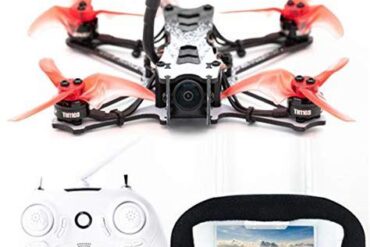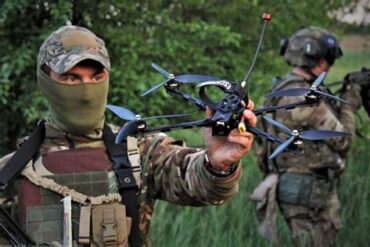
The Russian Army is preparing to field a new class of rifle-calibre ammunition designed specifically to counter the rapidly evolving threat posed by low-flying first-person-view drones on the modern battlefield. Announced by the state-owned defense conglomerate Rostec in late January 2026, the new munition reflects a growing recognition that small unmanned aerial systems have fundamentally altered frontline combat dynamics, forcing infantry units to assume roles once reserved for dedicated air defense assets.
Unlike improvised solutions or stopgap adaptations, the newly revealed ammunition—designated Mnogotochie—is intended to integrate seamlessly into existing Russian small-arms inventories. By allowing ordinary soldiers armed with standard Kalashnikov rifles to engage aerial targets at tactically relevant ranges, the system aims to close a critical vulnerability exposed during prolonged combat operations in Ukraine, where FPV drones have become a persistent and often lethal presence.
The development also highlights a broader trend in military innovation driven directly by battlefield experience rather than long-term doctrinal planning. As drone threats continue to proliferate faster than traditional countermeasures can be deployed, ammunition-level solutions offer a rare combination of speed, scalability, and logistical simplicity that appeals to forces operating under constant pressure.
A Battlefield-Driven Response to the FPV Drone Menace
Rostec’s announcement frames Mnogotochie as a direct response to the realities of contemporary combat, where small, agile drones routinely operate at altitudes and speeds that challenge conventional counter-drone systems. FPV platforms, often modified for strike or reconnaissance missions, exploit gaps between electronic warfare coverage and short-range air defense, placing infantry units at continuous risk even when no enemy troops are visible.
The new ammunition is being developed under Rostec’s High Precision Systems holding company, an entity traditionally associated with guided weapons and advanced munitions rather than small-arms cartridges. This alone signals how seriously the drone problem is being treated at the strategic-industrial level. According to Rostec, the development cycle has been completed, including testing and preparation for serial production, allowing for rapid transition from prototype to frontline issue.
A defining requirement of the program was compatibility. The ammunition is designed for use with standard-issue Kalashnikov assault rifles without any modifications, attachments, or changes to established training routines. This ensures that units already deployed can adopt the new capability immediately, without waiting for new weapons or specialized equipment to arrive in theater.
Technical Design and Ammunition Variants
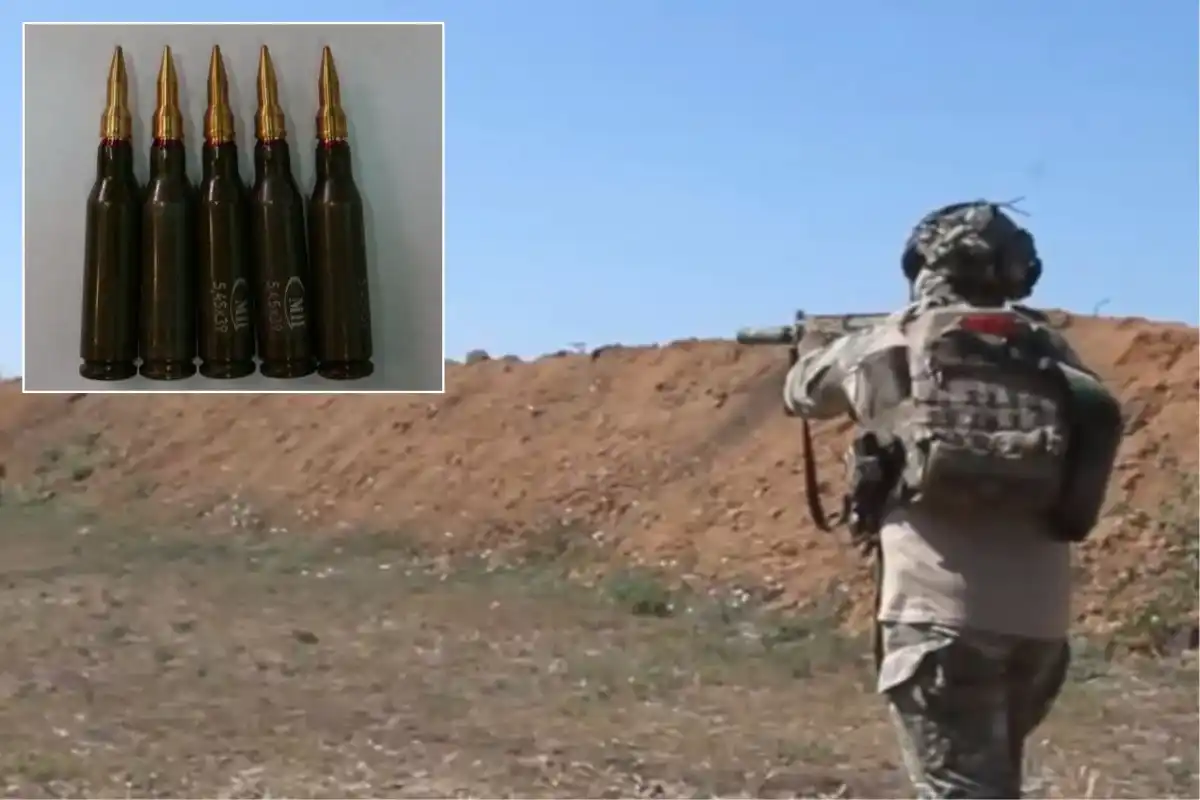
The Mnogotochie family consists of two variants tailored to the most common Russian service calibres: the 5.45×39 mm SC 226 and the 7.62×54 mm SC 228. Both cartridges deliberately retain the same cartridge cases and propellant charges used in standard service ammunition. This decision simplifies production by allowing existing manufacturing lines to be used with minimal retooling, a crucial factor when scaling output under wartime conditions.
The innovation lies entirely in the projectile. Each round incorporates a three-element bullet that separates after leaving the barrel. Rather than behaving like a traditional single projectile, the bullet divides in flight to create a controlled dispersion pattern. This increases the probability of hitting small, fast-moving aerial targets without turning the weapon into a wide-area hazard unsuitable for use near friendly forces.
Rostec claims that testing has demonstrated a 2.5-fold increase in effectiveness against maneuvering drones compared to conventional AK ammunition. While such figures inevitably depend on engagement conditions, shooter proficiency, and target behavior, they underscore the intent to deliver a meaningful improvement rather than a marginal tweak.
Extending Engagement Range Beyond Shotgun Solutions
One of the most significant aspects of Mnogotochie is its stated effective range of up to 300 meters. This places it far beyond the practical envelope of shotgun-based counter-drone methods, which many frontline units have adopted out of necessity. Shotguns can be effective at very close range, but they impose severe limitations on engagement distance, accuracy, and ammunition carriage.
Earlier Russian experiments with fragmenting rifle rounds reportedly achieved effective ranges of around 100 meters, offering only limited improvement over shotguns. By tripling that distance, the new ammunition allows soldiers to engage drones earlier in their approach, increasing reaction time and reducing the likelihood of successful FPV strikes against personnel or equipment.
Crucially, the ammunition can be fired from modern service rifles such as the AK-12, including configurations fitted with suppressors. This preserves the soldier’s primary weapon setup and avoids the need to carry a secondary firearm solely for counter-drone defense. In practical terms, a dedicated magazine loaded with Mnogotochie rounds can be swapped in seconds when a drone threat is detected.
Evidence of Field Testing and Early Operational Use
Rostec has indicated that the ammunition has already undergone trial operation within the so-called special military operation zone, confirming that limited field use preceded the public announcement. Although details regarding unit distribution and production volumes remain undisclosed, statements from senior officials suggest that the results were sufficiently convincing to justify serial production.
Bekkhan Ozdoev, Industrial Director of Rostec’s Armament Cluster, has stated that the ammunition demonstrated strong performance against small and highly maneuverable air targets during these trials. This implies that testing went beyond controlled range conditions and into environments more representative of actual combat.
Russian media has circulated video footage showing a soldier reportedly shooting down a drone with a single shot from an AK-12K at a distance of approximately 65 meters. While such demonstrations are inherently anecdotal, they serve a clear messaging purpose, reinforcing the claim that ordinary infantry weapons can now play a direct role in countering aerial threats.
Implications for Infantry Doctrine and Modern Warfare
The introduction of Mnogotochie reflects a deeper shift in how modern armies conceptualize air defense at the tactical level. As drones become cheaper, more numerous, and more expendable, the burden of countering them increasingly falls on individual soldiers rather than specialized units alone. This blurs the traditional boundary between infantry combat and close-range air defense.
Russia’s approach mirrors parallel efforts observed in other armed forces, where electronic warfare, small-arms adaptations, and procedural changes are layered together to mitigate drone threats. Ammunition-based solutions are particularly attractive because they leverage existing weapons and skills, allowing rapid adaptation without waiting for entirely new systems to mature.
In this context, Mnogotochie represents more than a technical curiosity. It is a tangible example of how battlefield pressure accelerates innovation and reshapes priorities, forcing militaries to rethink even the most basic components of their arsenals. As low-altitude aerial threats become a permanent feature of future conflicts, the ability of individual soldiers to respond effectively may prove decisive, turning incremental improvements in ammunition design into factors with strategic consequences.